Does the NFL discriminate against Black coaches? What a Miami Herald analysis found
READ MORE
At the center of the Flores lawsuit
Brian Flores’ bombshell lawsuit against the Dolphins and the NFL puts Miami and team owner Stephen Ross at the center of the league’s latest racial reckoning.
Expand All
Does the NFL discriminate against Black coaches? What a Miami Herald analysis found
Flores: Attempts to tank ‘attack the integrity of the game.’ How, exactly, is it done?

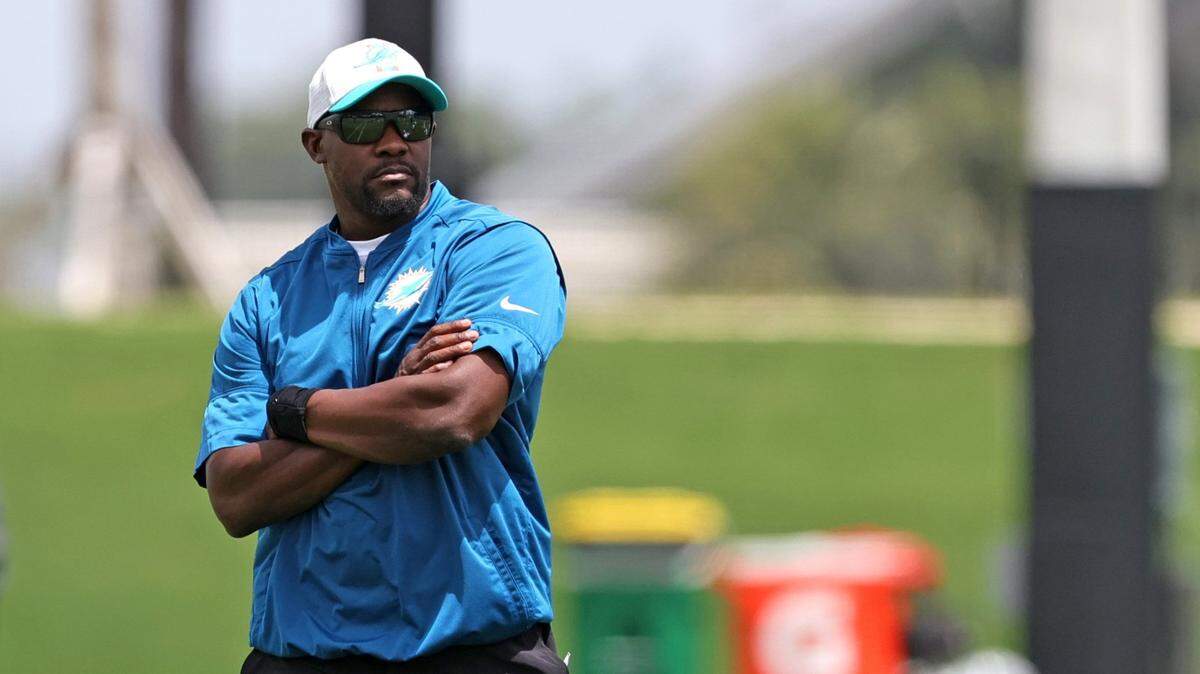
Brian Flores, ‘a man of principle,’ is an unlikely face for NFL’s latest racial reckoning

How Dolphins owner Stephen Ross went from average Miami Beach High student to $8.3 billion
Miami Dolphins’ 10 biggest scandals, and where Brian Flores/Stephen Ross bombshell ranks | Opinion
In his explosive lawsuit, Brian Flores, who was recently fired as the head coach of the Miami Dolphins after turning a rudderless franchise into a winning team, alleged widespread racial discrimination in the NFL’s hiring process.
The suit points out that the NFL, a league made up overwhelmingly of Black players, currently has only one Black head coach. The disparity exists despite the so-called Rooney Rule, which requires teams to interview “minority” candidates and has been in place since 2003.
The league does not publish the data necessary to analyze why increasing diversity in the interviewing process has not produced a more diverse coaching staff — namely, data on everyone who interviews for head coaching jobs.
The Miami Herald is doing so.
The Herald compiled a dataset showing each candidate who interviewed for at least one of the 17 openings for NFL head coaching jobs filled since 2020. Four other jobs had not been filled as of Saturday afternoon. The data shed light not just on who is being hired, but also on who is being passed up for the NFL’s top coaching spots — in some cases repeatedly.
The Herald’s analysis, which did not factor in the unfilled jobs, found that one out of every three white coaches who interviewed for an opening was hired as a head coach at some point in the past two years. In comparison, one out of every six coaches of color interviewed was hired in that same time frame. That was the case even though the coaches of color had more years of NFL experience on average.
”There is a double standard” for coaches of color, acknowledged Troy Vincent, a top NFL official and former Miami Dolphins cornerback, after Flores’ firing. “It is part of the larger challenges that we have.” (Vincent’s quotation — striking in its bluntness given his key role in the league — was featured prominently in the Flores lawsuit.)
The Herald found 49 people who have interviewed a total of 110 times for the 17 head coaching positions filled since 2020.
Although based on a single snapshot in time, the Herald’s data showed indications of racial discrimination in the NFL’s hiring process for head coaches, experts who reviewed the Herald’s data said.
▪ Of the 49 interviewees, 33% were people of color (16 individuals), and 65% were white (32 individuals). In one case, ethnicity could not be determined.
▪ Only three people of color were hired as head coaches, filling only 18% of the head coaching openings. They were David Culley, Ron Rivera, and Robert Saleh.
▪ Interviewees of color had an average of 22 years of NFL experience (determined by combining years spent playing and coaching in the league), while white interviewees had an average of 15 years of professional experience. Of those who were hired, coaches of color had an average of 25 years of NFL experience, while white coaches had an average of only 13 years of experience.
▪ Coaches of color found themselves repeatedly called in to interview for jobs they didn’t get. Candidates of all races who were ultimately hired as a head coach interviewed for an average of three openings. But of those who weren’t hired, the candidates of color still interviewed for an average of three jobs while the white coaches interviewed for only one.
“This is opening the spotlight on something that is really important,” said Richard Lapchick, director the Institute for Diversity & Ethics in Sport at the University of Central Florida, after reviewing the Herald’s data.
Who got the NFL head coaching jobs and who didn't?
This flow chart, which is broken down by race, shows the jobs held most recently by each head coaching candidate, and whether or not they were hired for any head coaching position.

In its annual Diversity and Inclusion reports, the NFL gives a racial breakdown of new hires but the report does not include data on everyone interviewed and their qualifications. Without the complete data, it’s impossible to determine whether discrimination is taking place in the hiring process, Lapchick said.
The Herald’s analysis, Lapchick said, supports a widespread belief that NFL coaches of color must outperform their white counterparts in order to get interviews and jobs. He also said the analysis buttresses the claims in Flores’ lawsuit — which he calls a “smoking gun” for racism in the NFL.
He said the NFL should publish its own interviewing data in order to show a commitment to transparency at a time when the league’s diversity rules are clearly not working.
Get the Herald’s data on all candidates for head coach openings filled since 2020
In terms of head coaches of color, the situation is now “as bad as it was before the Rooney Rule,” Lapchick said. “That is astonishing given that we’re in a period of racial reckoning. That has to be very frustrating for the NFL.”
The NFL did not immediately respond to a request for comment. Both the league and Dolphins owner Stephen Ross have denied claims of racial discrimination. But NFL Commissioner Roger Goodell called the league’s track record on minority head coaches “unacceptable,” according to a league-wide memo he sent Saturday that was obtained by ESPN.
Hiring a coach is a “subjective” process, said Janice Madden, a professor of sociology at the University of Pennsylvania whose research paved the way for the Rooney Rule. There is no formula teams use to determine who is the best candidate — allowing racial prejudice, even if unconscious, to thrive, Madden said.
“When you’re making decisions with your gut, like an NFL owner, that’s where latent bias can come into play,” she said.
Madden’s later research found that Black head coaches performed better than white coaches, even when controlling for team quality.
“The only thing that would account for that is that they had to be better to get the job in the first place,” she said.
Two of the three coaches of color hired since 2020 had more NFL experience than all of the white hires, the Herald’s data showed. Rivera, who is Hispanic, played for nine years and coached for 23. And David Culley, the only Black coach hired in the past two years, coached for 27 years before getting a job leading the Houston Texans. (He was fired after one year, despite starting with one of the weakest rosters in the NFL.)
Coaches of color struggle to get second chances as head coaches in the NFL — opportunities routinely afforded to white coaches.
Rivera, who is Hispanic, was the first coach of color to get an immediate second chance as a head coach when the Washington Commanders hired him in 2020 after he left the Carolina Panthers, according to the Global Sport Institute, a program at Arizona State University that studies societal issues involving sports. Most Black coaches have to wait years to get a second chance, if they ever do, with the majority returning to positions as defensive coordinators. Compared to Black coaches, “white head coaches were more likely to move to another head coaching position in either the NFL or college,” GSI found.
And no Black coach has ever led three NFL teams as a head coach. White coaches like Bill Parcells and Marty Schottenheimer have coached as many as four.
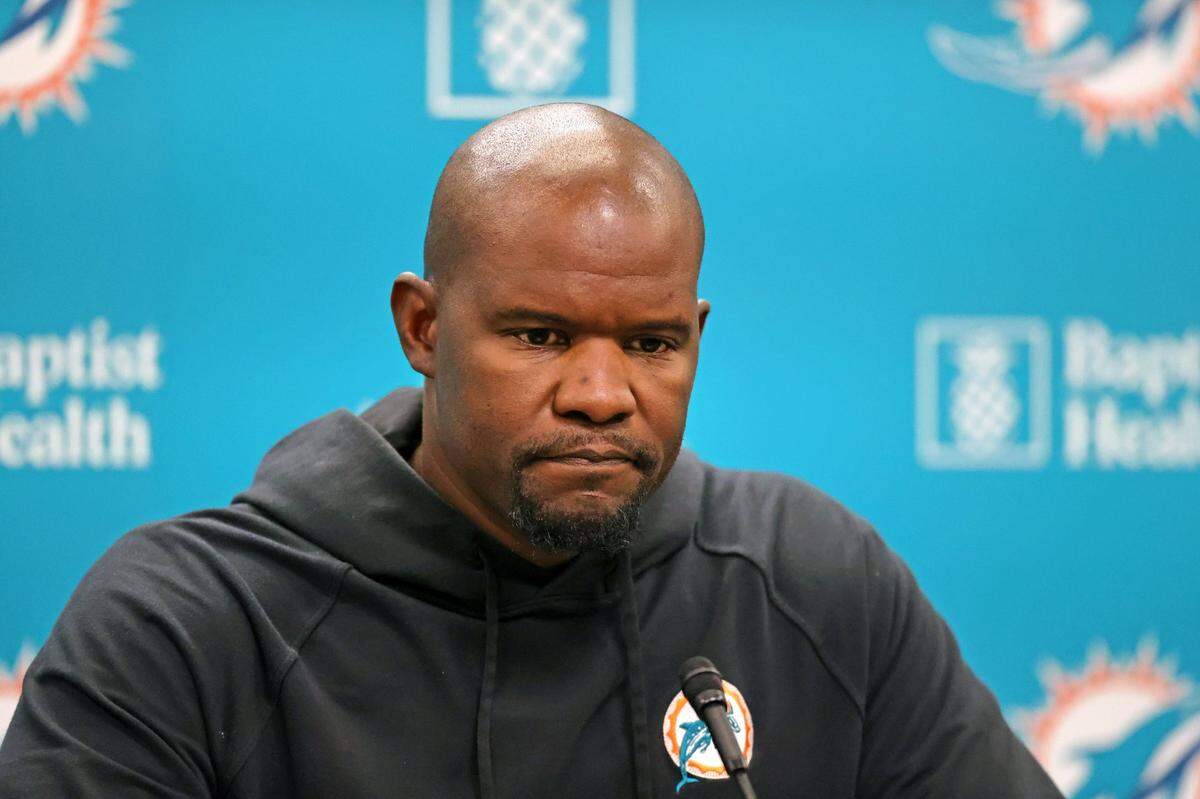
There’s little doubt Flores built some head coaching credibility during his tenure with the Dolphins.
The Dolphins roster that Flores inherited was historically awful, with some speculating it could be the worst team ever after losing by a combined 92 points in its first two games. But Flores was able to win five games that season and compile two winning seasons after that, including victories in eight of his last nine games before being fired.
Flores’ record of 24-25 in his first three seasons is superior to that of Bill Belichick, the superstar coach of the New England Patriots, who is white and went 20-28 in his first three seasons as a head coach, with the Cleveland Browns, but wasn’t fired. He ultimately led the Patriots to six Super Bowl championships.
It was Belichick who inadvertently alerted Flores, now a finalist for the Houston Texans head coaching job, that he had lost out on a chance to coach the New York Giants after the Dolphins fired him. In his lawsuit, Flores, a former Belichick assistant, claims the Giants brought him in as a sham candidate to satisfy the Rooney Rule after the team had already decided to hire a white coach. He learned this after Belichick mistakenly sent him a text message of congratulations meant for another Brian, Brian Daboll, the white Buffalo Bills offensive coordinator who got the job.
Flores had not yet interviewed with the Giants, although he did end up attending the interview, a process he described in the lawsuit as humiliating.
Experienced coaches of color repeatedly passed over
Even without filing a lawsuit against his former employer, Flores and his 18 years of NFL experience may not be enough to get him a second job.
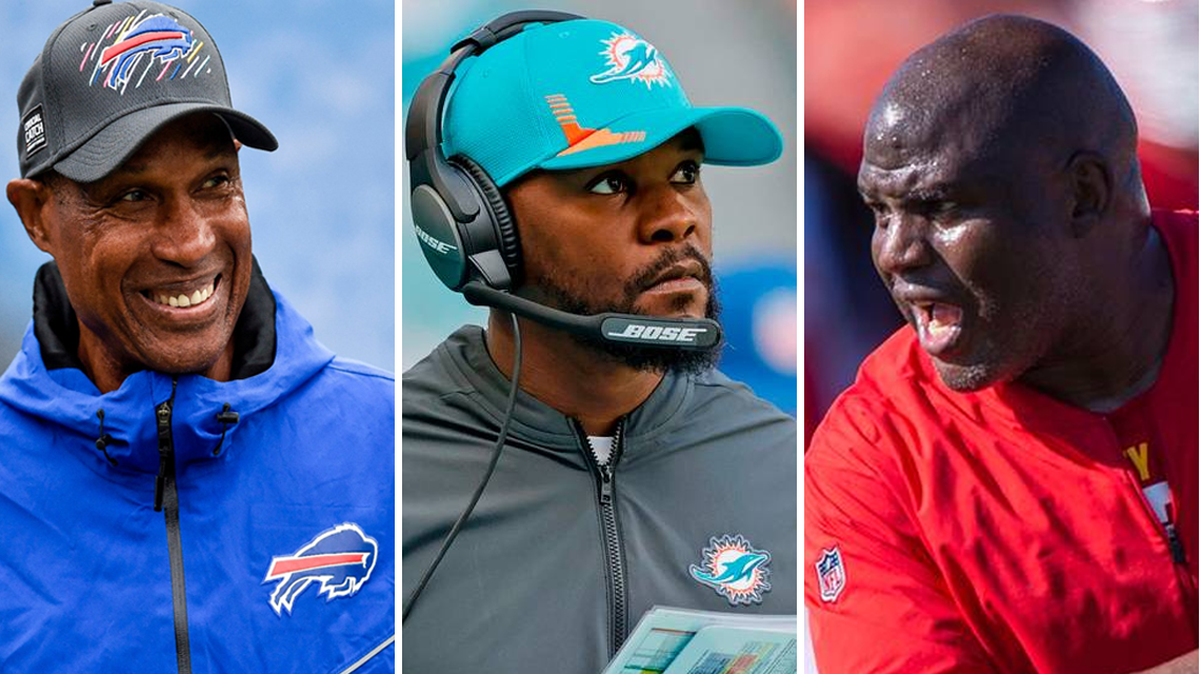
The Herald’s data showed three Black coaches who recently interviewed without success — Todd Bowles, Leslie Frazier and Marvin Lewis — had more years of experience than all of the white coaches who were ultimately hired.
Lewis, who spent 16 seasons as the Cincinnati Bengals head coach but hasn’t worked in the NFL since being fired in 2018, told ESPN this past week that Black coaches have been subjected to sham interviews for decades.
Years of experience don’t always correlate to successful head coaches, experts caution, saying that recently decision makers have seemed to give more weight to experience in a specific role.
“Owners seem to be looking for the next fresh, young offensive coordinator,” said Kenneth Shropshire, a professor at Arizona State who heads the Global Sport Institute, studies race in football and works as a consultant for the NFL.
Offensive coordinators made up 40% of head coach hires since 2009, according to a 2020 report by the institute on the NFL’s hiring and firing trends. That preference is another obstacle for Black coaches who are far less likely to work as offensive coordinators than whites, the report shows.
And even those that do have struggled to get head coaching jobs.
No coach has interviewed for more jobs in the past two years than Kansas City Chiefs offensive coordinator Eric Bieniemy, the Herald found. Bieniemy — who is Black and helped lead the Chiefs to a Super Bowl victory in 2020, as well as another shot at the title this year — has sat down for at least nine interviews in the past two years.
He still has not gotten a head coaching job.
Nor has Byron Leftwich, the only other Black offensive coordinator who the Herald’s data showed interviewed for head coaching positions in recent years.
Lapchick, the UCF professor, pointed to Bieniemy as a prime supporting example of discrimination in hiring.
“His case is a perfect example of the reluctance of teams to hire Black head coaches,” Lapchick said. “He is eminently qualified and would be a great head coach and it hasn’t happened.”
Bieniemy’s boss, Chiefs head coach Andy Reid, expressed similar surprise.
“It disappoints me that someone hasn’t hired him, obviously, because he’s so good,” Reid said recently.
“We are still looking for that grace to be afforded to Coach Bieniemy that has been afforded“ to white coaches, agreed Vincent, the NFL’s executive vice president of football operations, while appearing on ESPN. “He’s gone to a fourth straight [conference] championship game.”
Bieniemy’s agent did not respond to a request for comment.
The Rooney Rule gets its name from Dan Rooney, the Pittsburgh Steelers’ owner and head of the NFL’s Workplace Diversity Committee at the time of its passage. The league has tweaked the rule in recent years, responding to the failure of teams to hire Black head coaches. (The rule applies not just to African Americans but other non-white ethnic minorities, including Hispanics, and is intended to promote diversity in among coaches and executives.)
In 2020, team owners agreed to award third-round draft picks to teams that lose a minority coach or executive to another team. The next year, the league mandated that teams interview at least two external minority candidates for head coaching positions, instead of one under the previous provisions, and at least one minority candidate for open coordinator positions.
But the league has so far decided against incentivizing teams to hire minority coaches — for instance by awarding extra draft picks to teams that do so.
Shropshire, of ASU, said he believes the Flores lawsuit will spur a national debate about discrimination in coaching.
“When people saw the George Floyd video, they said ‘Wow, that really happens’,” Shropshire said. “This is another one of those moments.”
Few people have done more for the development of Black players and coaches in Miami-Dade than Luther Campbell.
Campbell, the former rap star turned Miami high-school football coach, is an icon in youth coaching circles in Miami, having founded the youth football program Liberty City Warriors in a Miami neighborhood that may churn out more NFL stars than any other in the country. Campbell, who regularly talks to Black coaches at all levels of the game, said the Flores case is exposing a morale crisis among Black coaches — from pee-wee to the NFL.
“Unfortunately, this world is not the best man wins or gets the job,” he said. “At the end of the day, they’ll bring a little white kid in and make him your boss after you train him.”
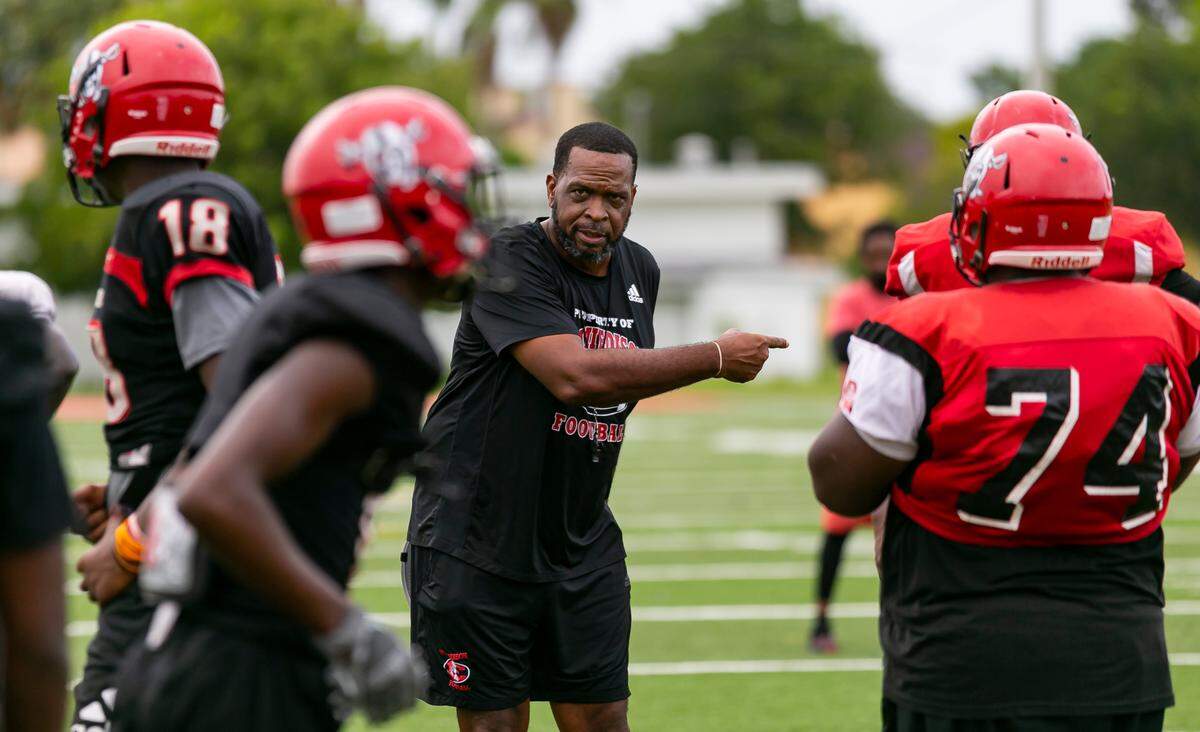
Some coaches have even started questioning their careers.
“They are struggling. They are are frustrated. They feel like their voices are suppressed,” Campbell said. “They feel like they don’t have opportunities. They know that they’re stuck in a bottle where their job is to go recruit a kid from Liberty City to what some of these guys consider a plantation with a white head coach.”
And he asked why the only current Black head coach in the NFL — Mike Tomlin of the Steelers, who has held the job since 2007 — hasn’t done more to elevate Black assistant coaches.
“I love Mike Tomlin to death,” Campbell said. “But at the same time he’s never hired an African American to be a coordinator.”
BEHIND THE STORY
MOREThe Miami Herald created a database showing candidates who interviewed for each NFL head coaching vacancy that was filled in 2020, 2021 and 2022.
In order to do so, the Herald first collected a list of each vacancy from media reports. Then it used additional media reports to determine every publicly identified candidate who had interviewed for at least one of the jobs.
The coaches’ previous jobs, including whether they possessed head coaching experience, were determined from media reports, NFL team websites and statistics maintained by the website Pro-Football-Reference.com. Their years of playing and coaching experience were determined from Pro-Football-Reference.com.
Total NFL experience is the sum of coaching and playing experience.
The Herald used two primary sources to determine the race of the head coaching candidates: the NFL’s annual Diversity and Inclusion Report and data collected by Arizona State University’s Global Sport Institute 2021 NFL Field Study Update. In cases where those sources did not identify the race of a head coaching candidate, the Herald sought instances in news reports or social media where the candidates self-identified their racial identity. Failing that, the Herald relied on news reports that identified the race of candidates. If no sources existed, the candidate’s race was marked “unknown.” (Luke Getsy is the only coach on the list whose ethnicity could not be verified.)
This story was originally published February 6, 2022 at 6:30 AM.