The many lives of ‘Coach Luke’: Luther ‘Uncle Luke’ Campbell has revived Edison football
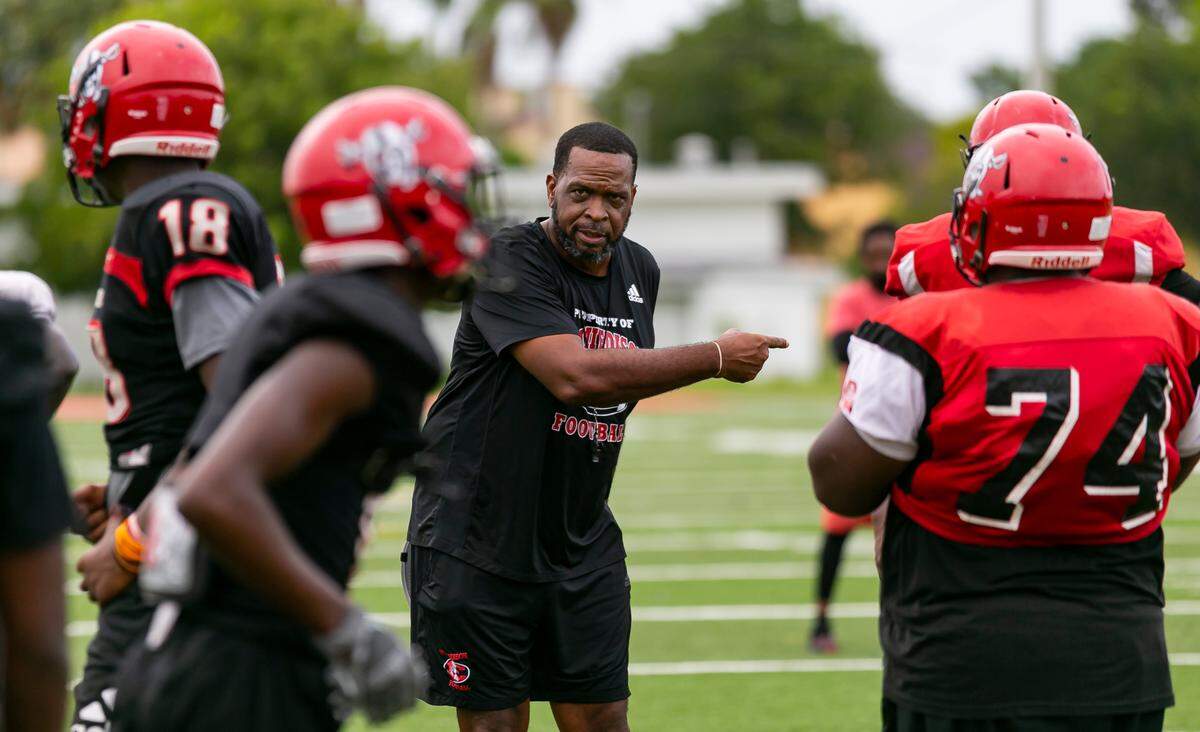
Luther Campbell pulls his black Range Rover into a parking spot reserved for “Coach Luke” at Miami Edison Senior High School and, for Edison’s 50-plus varsity football players, salvation from a steamy South Florida afternoon is in his trunk.
Uncle Luke, as he is better known, hops out of the driver’s seat and a stream of assistant coaches meet him in the small lot next to the Red Raiders’ locker room. He pops the trunk to reveal his bounty: five or six giant cases of Gatorade. Each of his assistants grab one, then Campbell heaves out the last 24-pack and lugs it behind them.
“Gatorade machine broke,” he explains as he carries pallet of red bottles into his locker room. He smiles as the door to his locker room swings open and the stench of sweat pours out into the Little Haiti neighborhood. “It’s the beautiful life of a football coach.”
At 60, Campbell finally has the job he deep down sort of knew he always wanted, even if he won’t admit it. The rapper-turned-philanthropist-turned-coach is in his fourth year as the coach at Edison and his Red Raiders (2-1) are a legitimate factor in Class 3A after falling one win short of a trip to the 3A semifinals last season.
“I got suckered into coaching high school football,” Campbell joked, “but, then again, whatever direction God takes me, that’s where I go.”
Those directions can’t be counted on even two hands. He was a cook at Mount Sinai Medical Center before he was famous and a concert promoter at the same time. He worked in public radio at WDNA and he managed musicians. He’s most famous as Uncle Luke, a rapper and the face of the 2 Live Crew, and he parlayed his fame into a VH1 show, an ill-fated venture into the adult film industry and a publicly traded entertainment company. He appeared in a “Grand Theft Auto” game, wrote columns for the Miami New Times, fought the Supreme Court of the United States over free speech and even ran for mayor of Miami-Dade County. (He finished fourth and got 11 percent of the vote.)
But before there was any of that, there was football. It helped define his childhood, much like it still does for so many boys from the Liberty City neighborhood of Miami. When he grew up, he had to take the bus out to Miami Beach to play in youth leagues and he even played defensive back for Miami Beach in high school. He was, he will readily admit, nothing special, but he crossed paths with players who were. When Campbell was in high school, future Pro Bowlers Lomas Brown, William Roberts, Eddie Brown and David Little were also at Miami-Dade County Public Schools.
If music and entrepreneurship were his way out, football was theirs, and it has been for countless Miamians since, whether it meant going on to the NFL, getting a college scholarship or even just providing structure and discipline to keep kids out of trouble.
“It’s a rite of passage. For New York, it’s basketball. Detroit is basketball. Here in South Florida, we are the football capital of the world,” Campbell said. “What it means to me — it means everything. It means life, it means teaching accountability and responsibility, it means learning to work among each other, learning to work with each other and learning to be your brother’s keeper.”
It’s why he founded the Liberty City Optimist Club at Charles Hadley Park in 1994.
Liberty City warrior
Campbell grew up eight blocks from Hadley Park when it was just a park. Now it’s the home of arguably the most famous Pop Warner Little Scholars team in the country. The Liberty City Warriors have won four national championships since 2005, been the subject of a Starz documentary series and served as the breeding ground for literally dozens of future NFL players. Chad Johnson was part of the inaugural class of Warriors and All-Pros Antonio Brown, Lavonte David and Devonta Freeman all came through the program in more recent years.
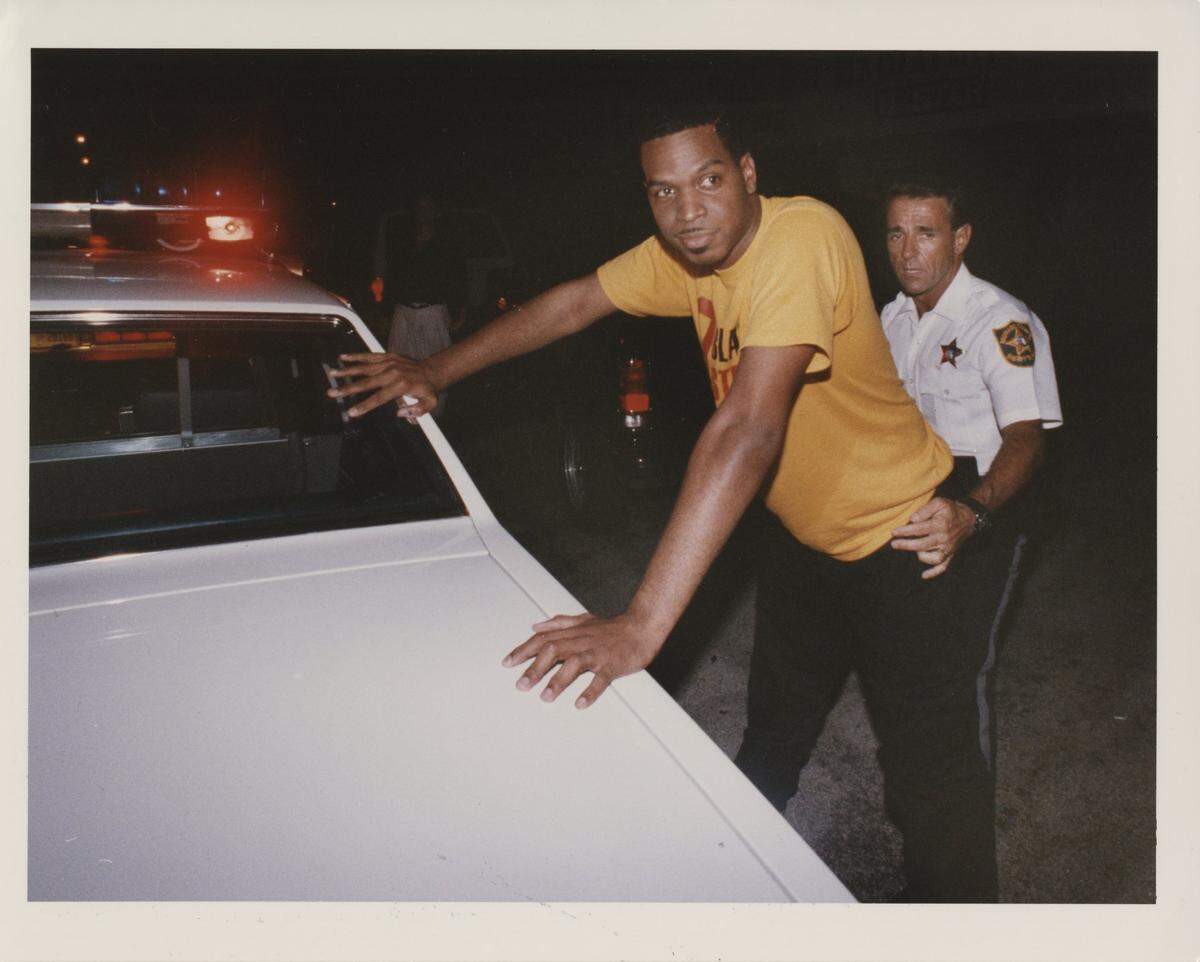
For most of the country, he was Uncle Luke — infamous for allegedly funding a bounty-style system for the Miami Hurricanes with cash rewards for big hits and for producing rap songs so raunchy he once got arrested on obscenity charges. In Liberty City, he’s “Coach Luke” — famous for his work in the community and for being one of the first coaches in Miami to take athletes on van tours to look at colleges all across the Southeastern United States.
His players still get all sorts of reactions when they tell someone he’s their coach.
“You get different looks,” star linebacker Leon Hart said. “It depends where they know him from.”
Said star wide receiver Nathaniel Joseph, who orally committed to the Clemson Tigers on Sept. 10: “He’s got two separate lives. When he comes here, we’re coming to work and then when he does his thing, he does his thing.”
It’s a dichotomy that has defined him now for more than 10 years, at least since Telly Lockette hired Campbell as his linebackers coach at Miami Central in 2009.
“It was a very hostile environment downtown from the community,” said Lockette, who’s now the running backs coach for the Marshall Thundering Herd. “You sure you want to hire this guy, the backlash you’re going to get for hiring this guy? The man is a great football coach. He’s a great leader and a pillar in the community. Why not?
“He was in the park and doing a lot of good things, working with a lot of young men, was a positive future in the community, so I thought it was a great idea for him to take the next step and he didn’t disappoint me.”
Lockette sort of understood: The best way to describe Campbell is probably as a provocateur — it defined his music and it still defines him on social media, where he too-casually tosses around allegations of racism regarding the Hurricanes and has recently taken to tweeting about his COVID-19 vaccine aversion. The hire sounded like a gimmick or, at the very most, a move based more on relationships than ability — perhaps a pathway to lure Liberty City players to Central.
In their second year together, Lockette and Campbell helped guide the Rockets to their first state title. Campbell was more than just a figurehead — he was good. He landed a job as the defensive coordinator at Northwestern, then made stops at Norland and Jackson before Edison reached out to him about its opening in 2018. The Red Raiders were coming off a one-win season and had fallen to the bottom of the football food chain in Miami’s inner city. Campbell was ready for his shot.
On his first day at Edison, he had eight players. The Red Raiders won three games his first year, then went .500 in Year 2. Last season, Edison reached the region championship for only the third time this century and brought back the bulk of its core, including Joseph and All-American defensive lineman Francois Nolton.
“My first day here, I was like, What the hell is happening here? Why am I here? I have eight players,” Campbell said. “I always like a challenge.”
Uncle Luke’s college tours
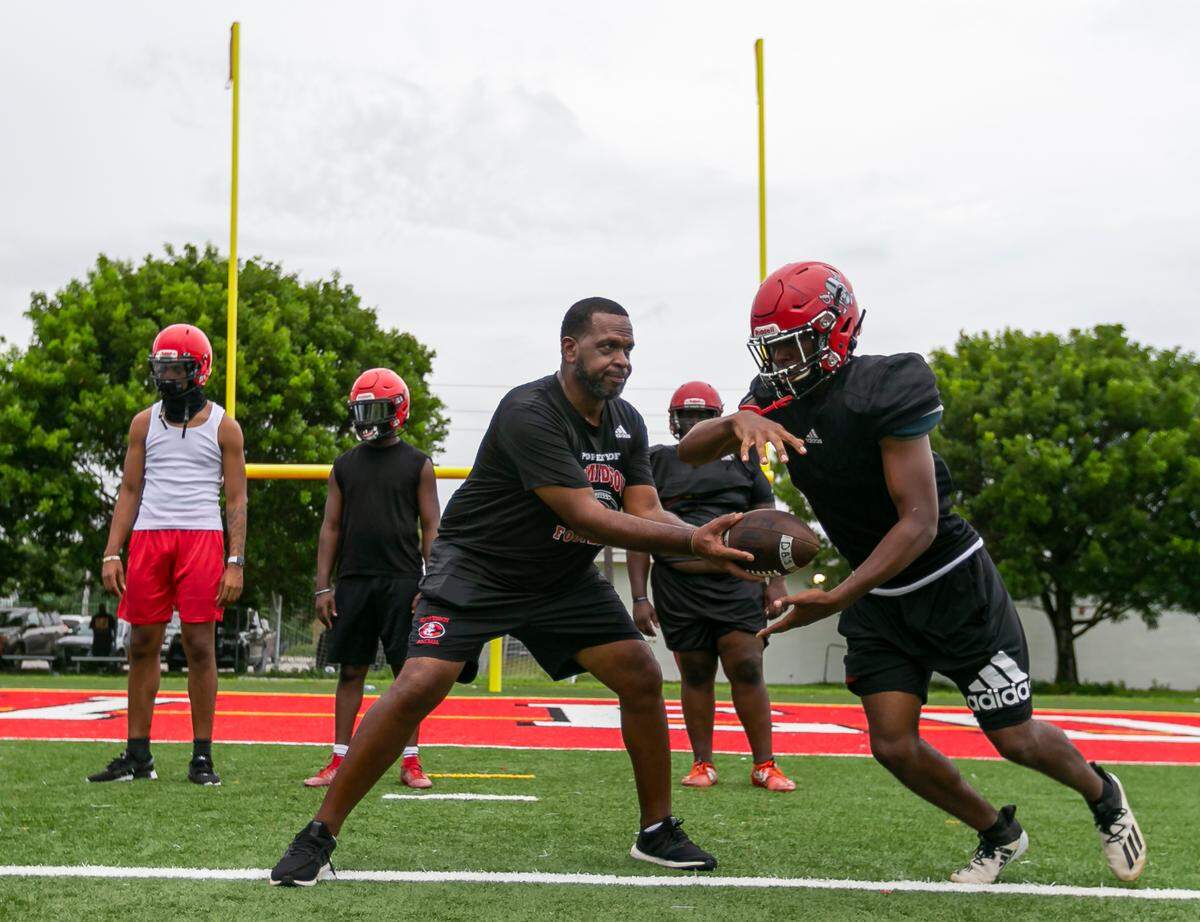
The Red Raiders are preparing to defend an option offense, and Campbell isn’t content to just be hands on. He wants to be hands in.
He arranges his linebackers on one side of the line of scrimmage and walks across it the quarterback position, with scout-team running backs all around hi.m. Campbell fakes a handoff in one direction and lunges in the other, pantomiming like he’s an 18-year-old quarterback rather than a middle-aged semi-retired rapper.
It was only a few days earlier he was on stage at the FPL Solar Amphitheater at Bayfront Park for a pregame concert ahead of the Orange Blossom Classic on Sept. 4. In the morning, he was in coach mode. By the evening, he was ready to entertain, and serve as an ambassador for the meeting between Historically Black Colleges and Universities at Hard Rock Stadium. On Monday, he was back into coach mode.
“I didn’t know how good I was going to be as a coach,” Campbell said, “but, then again, anything I do I’m going to try to be a perfectionist.”
Sometimes, he was there to ask specific questions. Sometimes, he just wanted to be a fly on the wall to watch how Shannon operated. He would watch cut-ups with the defensive-minded coach and use those same cut-ups to dummy play for his kids at his Optimist International club.
He interned with NFL teams, including the New York Giants, just to get to sit and watch practice. When college coaches used to be allowed to hold satellite camps, Campbell would volunteer when they came to Florida as an excuse to go sit in the linebackers room and learn from the position coaches, just as if he was one of those kids trying to get recruited and learn from college coaches.
He became close with Lane Kiffin when the Ole Miss Rebels coach was leading the FAU Owls. He learned how to run a spread offense from Kendal Briles, who’s now the offensive coordinator for the Arkansas Razorbacks and worked for Kiffin at FAU. His Rolodex of coaches he claims as mentors includes Miami tight ends coach Stephen Field, Owls running backs coach Chris Perkins and even Carolina Panthers coach Matt Rhule.
“Most coaches are open. A lot of guys don’t take advantage of it. I know, yeah, I’m Uncle Luke. I can go walk in there and [expletive] like that, but I wanted them to treat me like a coach,” he said. “I’m sitting up in there — Why you do this? Why you do that? How you move the ball fast?”
It helped him build a program from scratch in Liberty City and play a role in building another one at Central. At Edison, he has the same vision.
Forget about the music and the court cases, and the politics and the short-lived business ventures. Campbell’s legacy runs through the football fields in Miami’s inner city, and he can cement it with his Red Raiders.
“I always like a challenge, so I already knew once my career died down, when I started my youth program that eventually I was going to end up coaching,” Campbell said, “because that’s my passion.”
This story was originally published September 21, 2021 at 11:54 AM.