Brian Flores, ‘a man of principle,’ is an unlikely face for NFL’s latest racial reckoning

READ MORE
At the center of the Flores lawsuit
Brian Flores’ bombshell lawsuit against the Dolphins and the NFL puts Miami and team owner Stephen Ross at the center of the league’s latest racial reckoning.
Expand All
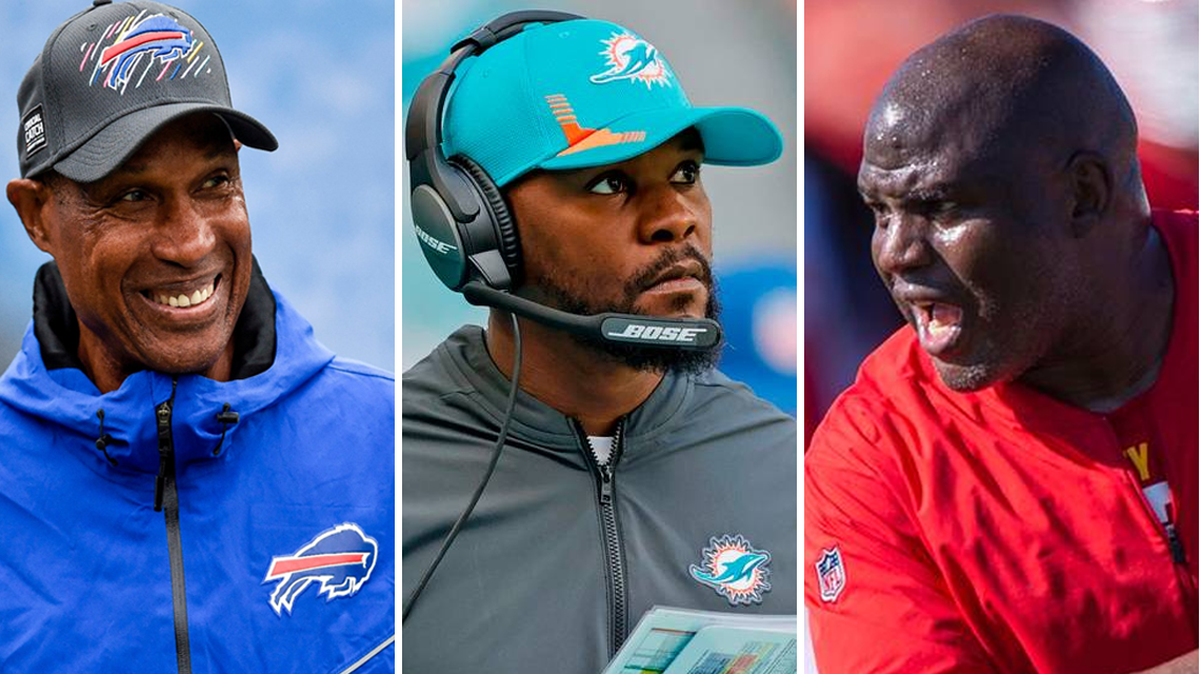
Does the NFL discriminate against Black coaches? What a Miami Herald analysis found
Flores: Attempts to tank ‘attack the integrity of the game.’ How, exactly, is it done?
Brian Flores, ‘a man of principle,’ is an unlikely face for NFL’s latest racial reckoning
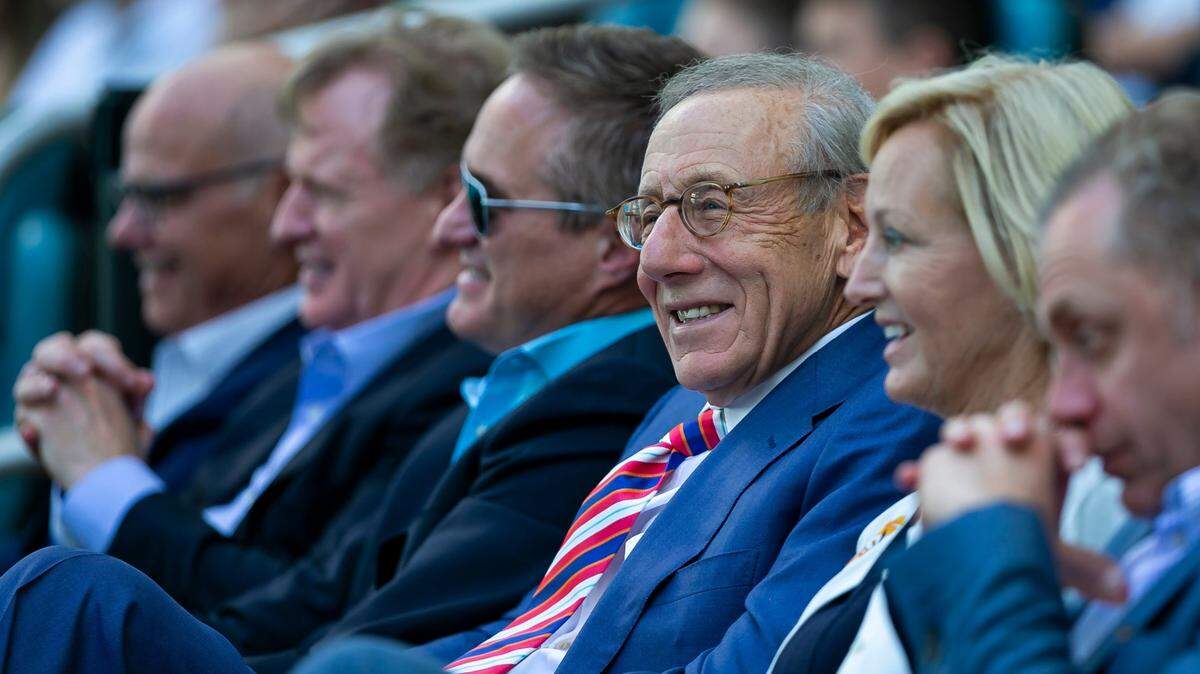
How Dolphins owner Stephen Ross went from average Miami Beach High student to $8.3 billion
Miami Dolphins’ 10 biggest scandals, and where Brian Flores/Stephen Ross bombshell ranks | Opinion
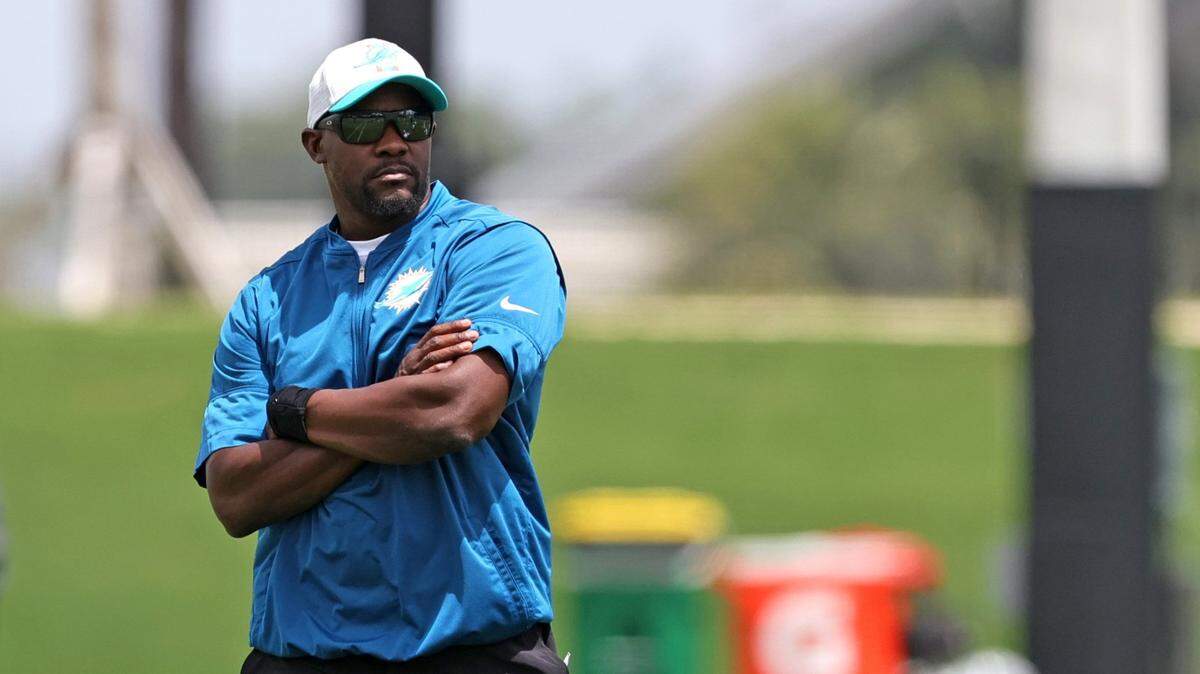
Brian Flores, for better and worse, has always been the same.
At Poly Prep Country Day in Brooklyn, he was serious about getting good grades and getting good enough at football to make it out of the inner city. With the Boston College Eagles, he was serious about perfecting his craft to make up for his lack of size at linebacker, and his perfectionism helped him land on Bill Belichick’s staff with the New England Patriots.
With the Miami Dolphins, he spent three years in the spotlight, amassing a 24-25 record and leading the Dolphins to back-to-back winning seasons before getting fired last month. He was not necessarily a natural on the podium or in the spotlight — he often felt like he was mirroring Belichick, who’s famously stone-faced and aloof with the media — and he seldom discussed social issues.
Now Flores, who is Black and the son of Honduran immigrants, is an unlikely figure at the center of the NFL’s latest racial reckoning.
Flores, 40, proved to be a pretty good coach, even if he too frequently butted heads with some of his best players, including All-Pro safety Minkah Fitzpatrick. Miami’s decision to fire Flores in January shocked the NFL and made him, on paper, one of the most attractive candidates for the league’s many vacancies.
There has always been a feeling — and the data point to it — that minority coaches don’t get a fair shake in the NFL. But, until this week, there was little actual proof. Then Flores got a misfired text from Belichick, which suggested the New York Giants had already made a decision for their next coach before they even interviewed Flores.
The result has been a bombshell lawsuit in which Flores accuses the NFL of racial discrimination, and claims Dolphins owner Stephen M. Ross offered him $100,000 for every game he lost to ensure a better draft pick the following year, and tried to set up a 2020 meeting between Flores and “a prominent quarterback” in a manner that would have violated league tampering rules.
Though Flores is at the middle of this firestorm, the unlikelihood, in some ways, also makes him perfect for it.
“He’s a man of principle, and believes in what’s right and what’s fair,” said Dino Mangiero, who was Flores’ high school coach at Poly Prep and, coincidentally, took over as the coach at Archbishop McCarthy in Southwest Ranches last week. “I was very proud of him. Someone had to stand up for this change.”
Flores, as a product of Belichick’s coaching tree, was often reserved throughout his three seasons in South Florida, at least with the media. He very infrequently discussed social-justice topics — not that many coaches in the NFL do — and was even at one point somewhat critical of former Dolphins receiver Kenny Stills after Stills criticized Ross’ support of Donald Trump in 2019.
Simply put, Flores was not a natural fit for a rapid-fire tour of morning talk shows, like the one he went on Wednesday after filing the lawsuit. Flores, who is married with three children, would typically like to stay out of the spotlight, and there’s no broad history of impassioned social-justice speeches to cull for context.
For Flores, the suit came about because of where he comes from, the principles he sticks to and an unlikely smoking-gun piece of evidence from the mentor he models himself so much around.
“He doesn’t want it to be about him,” said Mangiero, who said he has not spoken to Flores since he filed the suit. “He’ll sacrifice his career if he can help everybody else be treated fairly. That’s what this is about. It’s not about him.”
Flores’ complicated social-justice history
Flores and his attorneys started drafting up the 58-page lawsuit last week after Belichick inadvertently revealed Flores was about to go on what Flores felt was “a sham interview.”
Three days before Flores interviewed with the New York Giants for their coaching vacancy last Thursday, Flores got a text from Belichick. The Patriots coach congratulated Flores for landing the Giants job, only he actually meant to text Brian Daboll, who is white and wound up officially getting the job Friday.
When Belichick realized his mistake, he texted Flores, “I [expletive] this up,” according to screenshots shared in the lawsuit. “I think they are naming Daboll.”
Flores said he felt his interview with the Denver Broncos in 2019 was a sham, too, but this, he hoped, was the piece of evidence Black coaches had been lacking for decades, even when the league’s problems with minority hiring were obvious.
“The numbers speak for themselves as far as the hiring, firing, and the lack of opportunities for minority and Black head coaches,” Flores said on CNN’s “New Day” on Wednesday.
“It was humiliating, to be quite honest. There was disbelief,” he said of the text exchange. “This is why we filed the lawsuit.”
On one of the rare occasions Flores spoke out on social-justice issues, it involved police discrimination. In the 2020 aftermath of the shooting of Jacob Blake — the Kenosha, Wisconsin, man who was paralyzed after he was shot seven times in the back in front of his children — the Dolphins opted to practice anyway. Flores spoke about the issue of police violence afterward.
“I’ve had guns pointed at me by police officers,” he said. “This is not something I take lightly. We need change. That’s where I’m at on that situation.”
Until then, he usually stayed silent and even urged at least one former player to do the same. Mangiero said he never remembers Flores being particularly outspoken about social-justice matters and “he was just as concerned about things as anybody else.”
When Flores got to Miami, Stills was one of the league’s foremost social-justice activists. He was still kneeling during the national anthem and, in Flores’ first preseason with the Dolphins, Stills ripped into Ross after the owner held a fundraiser for Trump.
While Flores said he did “understand kind of where Kenny is coming from,” he also said he wished Stills had just talked to Ross.
A few weeks later, he and Stills butted heads again. Stills criticized Jay-Z after he announced a partnership with the NFL and Flores responded by playing eight straight Jay-Z songs at practice the next day.
Nine days later, Miami traded Stills to the Houston Texans.
Stills, who now plays for the New Orleans Saints, said Wednesday on Twitter, “What Flo is doing now takes courage.”
“This is a lesson in empathy,” Stills wrote in a later tweet, “let’s not wait until the situation affects us personally to take action.”
The ‘angry black man’
The Dolphins’ role in the suit is much less cut and dried than the Giants’.
Flores claims Ross offered to pay him to lose games in 2019 and urged him to break league rules by meeting with an opposing quarterback in 2020, and when Flores didn’t comply it left him in bad standing within the organization.
On the day Miami fired Flores last month, Ross said the organization needed better “communication and collaboration.” He painted Flores as a difficult figure to work alongside.
Stills was far from the only player to become disgruntled with the Dolphins during Flores’ tenure.
They traded Fitzpatrick to the Pittsburgh Steelers in 2019, in part, because he and Flores didn’t get along, with Fitzpatrick feeling he was being misused by Flores’ staff. They dealt Kenyan Drake to the Arizona Cardinals later in the season after Flores ejected the running back from practice, two sources told the Miami Herald in 2019. He and quarterback Tua Tagovailoa yelled at each other during a blowout loss to the Tennessee Titans last month, a source told the Herald, and a close associate of multiple young Dolphins said players complained Flores “doesn’t understand dealing with men.”
“He’s not approachable,” the source said last month.
Flores’ lawsuit now accuses Miami of running a smear campaign against Flores in the media in the aftermath of his firing.
“He was labeled by the Dolphins brass as someone who was difficult to work with,” the suit said. “This is reflective of an all too familiar ‘angry black man’ stigma that is often casted upon Black men who are strong in their morals and conviction.”
From ‘the trenches’
Flores’ interview with CNN on Wednesday came in the middle of a whirlwind Wednesday media tour. The normally private coach made three stops on national TV shows and shared pieces of his life story along the way.
Flores grew up in the housing projects in the Brownsville neighborhood of Brooklyn — “the trenches,” as the lawsuit described it by quoting an unnamed friend — and he used football as his way to get out. It took him to college, where he played linebacker at Boston College, and eventually to the NFL, albeit never as a player.
An injury kept Flores from getting a real shot to play in the NFL, but Flores, who scored 1140 on his SAT, had all the traits New England was looking for.
“When it came to football in high school, when it came to his grades in high school,” Mangiero said, “he was very serious about it. He doesn’t kid around about those things. He knew that this was his ticket out of the inner city, and he was going to make the most of it.”
At 23, Flores got a job with the Patriots as a scouting assistant and he rose through the ranks, eventually getting a job as a special teams assistant in 2008. He was part of four championships and the mastermind of their 2018 defense, which held the Los Angeles Rams to three points in Super Bowl 53.
Miami hired him the next day and Flores led the Dolphins to five wins in his debut season, exceeding expectations and ultimately costing Miami its shot at landing star quarterback Joe Burrow in the 2020 NFL Draft. The offseason at the end of Flores’ first season has proved to be a decisive one for the franchise — the Dolphins didn’t sign Tom Brady, reportedly the “prominent quarterback.” That same quarterback mentioned in the lawsuit was supposed to meet with the Dolphins owner and Flores at an unnamed marina after the 2019 season. Tagovailoa has been underwhelming so far after going fifth in the 2020 Draft — and Flores, in the suit, claims a series of decisions to win instead of purposely lose for a higher draft pick in his first year made the situation in Miami unsalvageable.
For a moment, Flores was one of the lucky ones, though. In a league in which 70 percent of the players are Black, now only one coach is. Flores defied those long odds and, considering roughly half of all the Black coaches in NFL history have been former players in the league, he was a major outlier.
He fought his way through all of those hurdles to make it. Now his suit asks: How many more coaches such as Brian Flores is the league ignoring?
This story was originally published February 4, 2022 at 11:34 AM.