
More developers looking for building room, want urban boundary moved in Miami-Dade
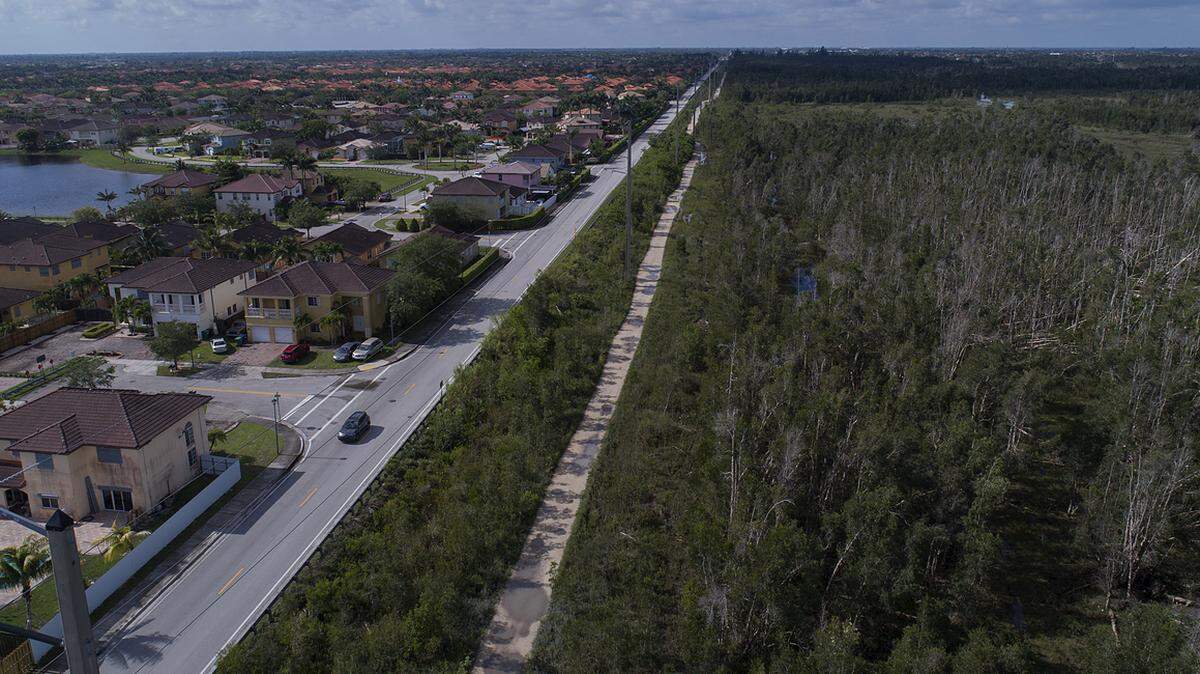
Developers hope 2021 will be the year Miami-Dade County relents on growth restrictions and allows residential subdivisions and industrial parks where farmland mostly sits today.
Two new applications to move the county’s Urban Development Boundary are awaiting recommendations from a zoning department that now reports to Mayor Daniella Levine Cava, elected in November with the support of environmentalists and others who want the growth line to stay put.
Developers point to a recent report from the Levine Cava administration declaring the county nearly out of buildable land for new single-family homes as an example of how growth restrictions pressure housing prices.
The two sides are gearing up for another round of “UDB” fights under Levine Cava and a county commission where six of the 13 seats are filled with newcomers.
One of the new commissioners, District 9’s Kionne McGhee, proposed moving the boundary line to include farmland near Homestead, but that plan stalled this spring for lack of support from fellow board members.
New UDB applicants: Green City, MIA West
Meanwhile, at least three development groups are pursuing boundary changes. The first one to try — pitching an 800-acre industrial park near Southwest 268th Street, called the South Dade Logistics and Industrial District — submitted its request to the county in March.
Now two more developers want boundary changes. One proposed project, a 320-acre development called Green City, sits just west of the Villa Josefa subdivision off Southwest 72nd Street, on farmland that’s east of Krome Avenue. Limonar Development wants to build a mix of residential, office and hotel there.
Limonar representatives were not available for interviews. The developer’s application cited a “deficiency” of land for affordable housing as justification for expanding the urban boundary west enough to incorporate the property.
Miami-Dade almost out of construction lots for houses
Earlier this year, county planners concluded Miami-Dade has capacity within the development boundary to create enough new homes to accommodate population growth through 2040. But the planners also concluded buildable land within the boundary won’t keep up with demand for more than 5,000 newly built single-family homes per year. The report concluded land suitable for new houses, given preferences for detached single-family homes in the current market, would be built out by 2024 within the development zone.
The planners noted switching from houses to townhomes would let Miami-Dade boost supply, and hinted that land beyond the urban boundary should be part of future plans to expand residential supply.
“The County should aim to strategically increase the diversity of housing options, focusing primarily within the UDB, while maintaining the character of established neighborhoods,” read the March report by the county’s Department of Regulatory and Economic Resources.
Green City has been the subject of a requested boundary change before. In 2015, its developers proposed a larger project in the area but failed to win political support. The development sits where former Mayor Carlos Gimenez and others want to bring a $1 billion expansion of the 836 Expressway into West Kendall, a toll road the Green City developers opposed. The new expressway would run through the area planned for Green City.
Another applicant, Terra137 LLC, is pitching an industrial and logistics project outside of the UDB that would require building on wetlands on a 40-acre lot just west of Southwest 137th Avenue, between Southwest Eighth Street and Northwest Sixth Street in unincorporated Miami-Dade. The area is located near a ramp serving State Road 836. Terra wants the county to change the future land-use designation of that area to “Special District” from “Open Land.”
The project, called MIA West Logistics Park, is marketed as a “natural extension of local logistics and distribution centers that dominate the region and provide a major part of the County’s revenue,” according to the application. The developer said the project would create about 1,500 on-site jobs and another 500 indirect workers.
But the land is within an area identified as Wetlands of Regional Significance, where development should be avoided according to county rules. Terra137 said wetlands in the property “are of mixed value,” according to a preliminary inspection.
“Much of the site acreage consists of relatively good quality wetlands while other portions contain significant coverage of undesirable exotic species, which can be expected to expand over time,” said the application.
The project will require environmental approvals from the county’s regulatory wetland permitting programs as well as state and federal approvals, which will likely result in mitigation requirements before any permits can be issued.
Terra137 representatives weren’t immediately available to comment.
Everglades buffer or source of affordable homes?
Like the South Dade industrial park, Green City and MIA West sit in areas the county has already designated for growth once Miami-Dade runs out of commercial or residential land. Known as Urban Expansion Areas, the four zones span nearly 7,000 acres. The pockets of mostly undeveloped land sit just outside the existing development boundaries in the western and southern edges of the county.
Laura Reynolds, part of the Hold the Line Coalition that has opposed past proposals to expand the development boundary, said any consideration of new development should be along existing transit lines — and in western areas that rely on already clogged highways for commuting.
“If you are looking for new places to develop, you would want to choose places that are near infrastructure — that wouldn’t require new infrastructure to support, “ she said. “We already have enough trouble supporting infrastructure within the UDB.”
She said western projects like Green City want growth in an area that’s a valuable shield against sprawl. “That’s the buffer line between us and the Everglades,” she said.
This story was originally published June 10, 2021 at 5:10 PM.