
The 836 extension is a boondoggle. DeSantis, Cabinet should reject it and save Florida’s Everglades | Editorial
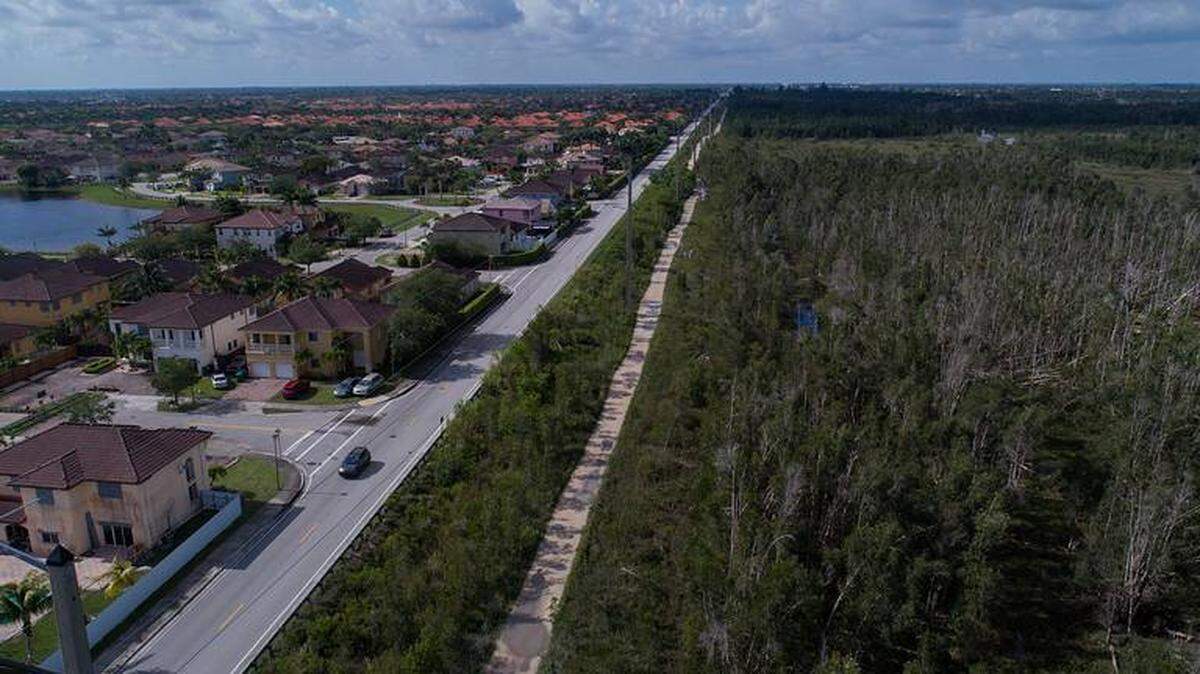
The proposed extension of 836/Dolphin Expressway into West Kendall would have a projected price tag of $1 billion and hurt Everglades restoration, wildlife habitat and Miami-Dade’s water supply.
All of that to save only an estimated six minutes on a typical two-hour round-trip commute from West Kendall to downtown, according to the county’s own expert.
Despite the project’s dubious effectiveness and its environmental impacts, the Miami-Dade County Commission in 2018 voted to change development rules to allow the proposed 14-mile toll road to extend outside the Urban Development Boundary, an invisible line drawn by county planners to protect farmland and the Everglades from urban encroachment.
The approval drew a lawsuit spearheaded by the Tropical Audubon Society. An administrative judge last year ruled against the project, citing its impacts on Everglades preservation and “meager” traffic relief after Miami-Dade’s planning chief, sitting as an expert witness for the county, testified the proposed Kendall Parkway would reduce travel times by just 5 percent.
The plaintiffs in this case told the Editorial Board they expect the Dolphin extension to go before the Florida Cabinet on June 15. The Cabinet, chaired by the governor, includes as its officers the commissioner of agriculture, attorney general and the state’s chief financial officer. They will decide whether to uphold the judge’s opinion. The losing side could appeal that decision in court.
It’s only fitting that Gov. Ron DeSantis, who campaigned on preserving the Everglades, should say No to a road that would incentivize more development abutting the River of Grass. He should follow the lead of Republican Sen. Marco Rubio, who opposes the project because of its impact on restoration efforts.
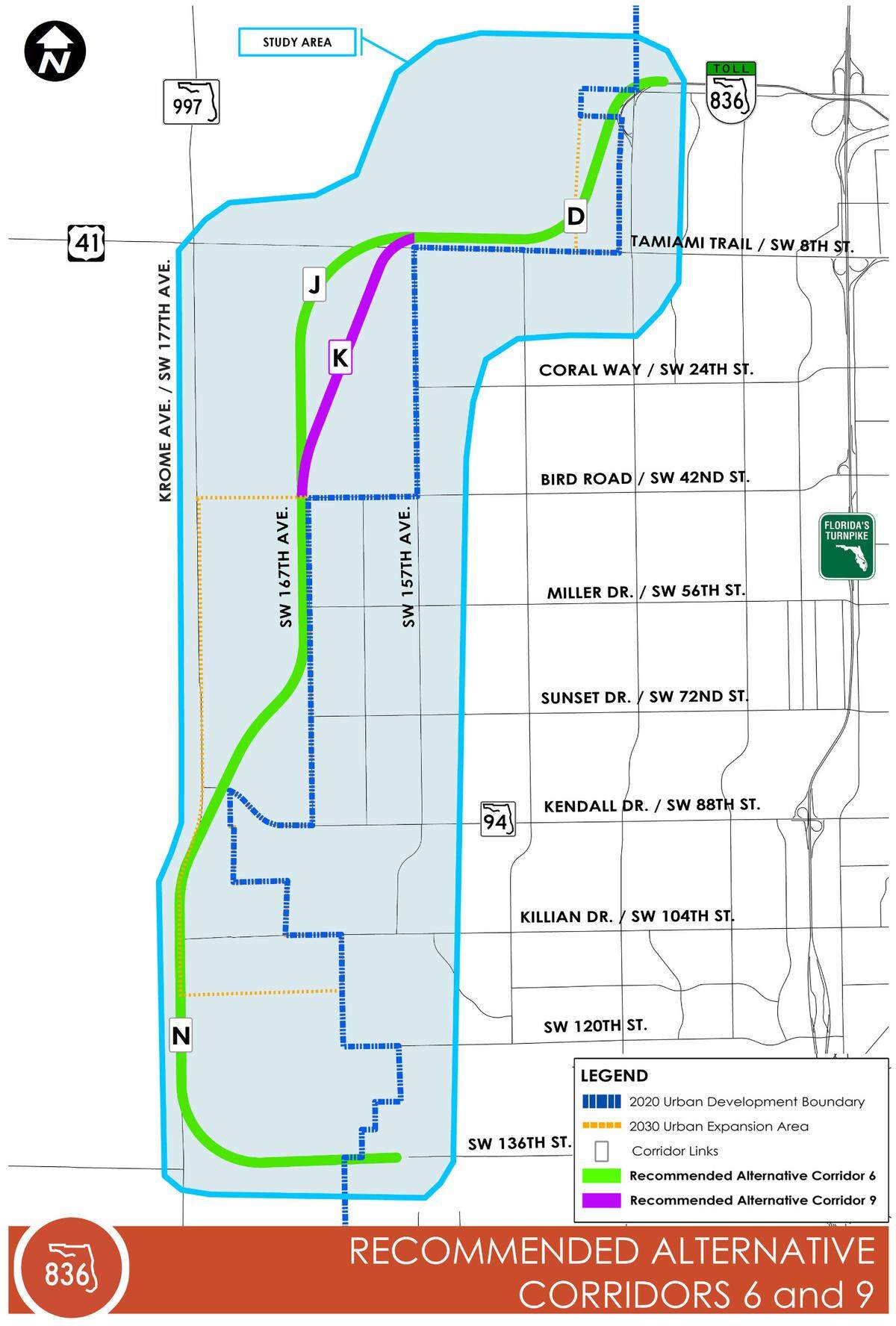
The extension would run south of the existing Dolphin Expressway, along 137th Avenue, and end at Southwest 136th St. It would be built over the Bird Drive Basin and the Pennsuco wetlands, which are key to guaranteeing drinking water for Miami and the Keys.
These wetlands are recharge areas for Miami-Dade’s western wellfield, which protects the county’s drinking-water supply, the Biscayne Aquifer, Paola Ferreira, Tropical Audubon’s executive director, told the Editorial Board. Without Bird Drive Basin, efforts to restore the historic flow of water from Lake Okeechobee to the Everglades and Florida Bay would also be compromised, and the land has been earmarked by the state and federal governments for a restoration project. The area is home to native animals, such as the indigo snake and Florida Panther, wading birds, in addition to rare plants.
“[The extension] will be just another toll road and it’s unlikely to accomplish its goal,” County Mayor Daniella Levine Cava, who voted against the project as a commissioner, told the Editorial Board. “The information that was provided suggested it did not reduce drive time significantly. It would also take a toll on agriculture and the environment.
“Finally, it undermines our transit oriented goals in the SMART Plan,” she said.
Focus on transit
Levine Cava is referring to the Strategic Miami Area Rapid Transit (SMART) Plan, which would expand the Metrorail and Tri Rail north, south and west using different kinds of rail and bus systems. A “Kendall Corridor” is planned to connect the Dadeland South Metrorail Station to West Kendall along 88th Street. Instead of building a new highway, a consultant hired by the lawsuit plaintiffs suggested adding Bus Rapid Transit, light rail or commuter rail going north and south along 137th Avenue and connect it with the Kendall Corridor once it’s built.
The plaintiffs also contend that adding lanes to existing surface roads will alleviate traffic. Another transportation planning consultant used by the plaintiffs wrote in a report that the extension’s improvements to non-highway roads projected for 2050 could be accomplished by adding “one lane in each direction of just eight miles” of major streets.
If the county’s goal is to take cars off the streets through public transportation — and it should be — then why would it build more highways over wetlands? Many experts believe that road expansion leads to the “induced traffic” phenomenon where more roads spur more driving and, therefore, more congestion.
Supporters of the project deny that’s the case. Then-Mayor Carlos Gimenez said after the judge’s ruling last year that the “meager” traffic projections were “hypothetical” and brought a consultant to say travel times to Dolphin Expressway could be cut in half. May we point out this projection is also “hypothetical,” as most traffic estimates are.
Extension backers also disputed that it would lead to more development in west Miami-Dade. That’s because of a rule prohibiting developers within an 80-square-mile zone from using the new expressway in traffic calculations for future projects. But what would stop developers from pressuring future county commissioners from waiving that rule with a two-thirds vote once the highway is up and running?
It’s a fantasy to believe that, in ever-expanding Miami-Dade County, a new road wouldn’t lead to more development and more pressure on our natural resources.
And let’s not forget the political nature of this project. Gimenez used his position as the chair of the entity that would be in charge of building the extension, the Miami-Dade Expressway Authority, to push for the project. The Authority was dissolved by the Legislature in 2019, and a new one was created, which Gimenez said at the time put the 836 extension at risk.
Let’s hope Gimenez was right. But in case he’s not, it would be prudent for DeSantis and the Florida Cabinet to hand the 836 extension another defeat.
BEHIND THE STORY
MOREWhat's an editorial?
Editorials are opinion pieces that reflect the views of the Miami Herald Editorial Board, a group of opinion journalists that operates separately from the Miami Herald newsroom. Miami Herald Editorial Board members are: opinion editor Amy Driscoll and editorial writers Isadora Rangel and Mary Anna Mancuso. Read more by clicking the arrow in the upper right.
What's the difference between an op-ed and a column?
How does the Miami Herald Editorial Board decide what to write about?
The Editorial Board, made up of experienced opinion journalists, primarily addresses local and state issues that affect South Florida residents. Each board member has an area of focus, such as education, COVID or local government policy. Board members meet daily and bring up an array of topics for discussion. Once a topic is fully discussed, board members will further report the issue, interviewing stakeholders and others involved and affected, so that the board can present the most informed opinion possible. We strive to provide our community with thought leadership that advocates for policies and priorities that strengthen our communities. Our editorials promote social justice, fairness in economic, educational and social opportunities and an end to systemic racism and inequality. The Editorial Board is separate from the reporters and editors of the Miami Herald newsroom.
How can I contribute to the Miami Herald Opinion section?
The Editorial Board accepts op-ed submissions of 650-700 words from community members who want to argue a specific viewpoint or idea that is relevant to our area. You can email an op-ed submission to oped@miamiherald.com. We also accept 150-word letters to the editor from readers who want to offer their points of view on current issues. For more information on how to submit a letter, go here.
This story was originally published May 28, 2021 at 4:00 PM.