
Project in South Miami-Dade sets up 2021’s first fight over urban development boundary
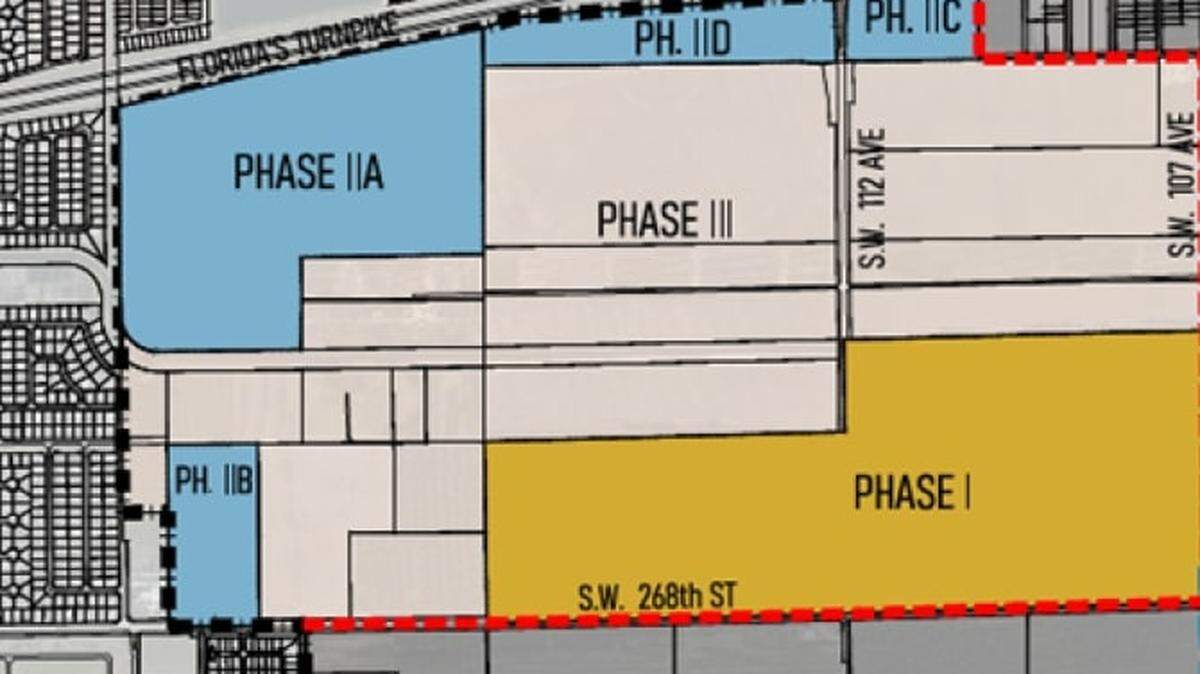
Developers want to expand Miami-Dade County’s Urban Development Boundary past farmland just south of the Florida Turnpike near Homestead to build an 800-acre commercial complex.
The project, dubbed the “South Dade Logistics and Technology District,” comes from developers Stephen Blumenthal, Jose Hevia, and others. It sets up a clash between builders touting economic growth and environmental groups warning of more suburban sprawl and traffic.
Approving the project would require county commissioners to move the invisible line known as the “UDB,” a growth barrier that divides land reserved for farming and Everglades from property suitable for housing developments, office buildings, shopping centers and other urban staples. Moving the UDB requires a two-thirds vote.
The proposed project sits north of Southwest 268th Street, between 107th Avenue and 122nd Avenue. The northern boundary is the Turnpike extension that connects Homestead with the expressway.
An economic impact study submitted by the developers to the county’s planning division predicts 5,000 jobs on the property when it opens, and the project’s advocates are pitching it as a way for residents to find work nearby and “reverse traditional commuting routes.”
“Increasing the amount of industrially designated land in the southern portion of the County ... would provide much-needed employment opportunities for the area’s under-utilized workforce,” consultant Andrew Dolkart wrote in the economic impact study.
A spokesperson for Blumenthal and Hevia said the developers weren’t available for interviews. Blumenthal is a partner at Coral Rock Development, and Hevia is founder of Aligned Real Estate Holdings.
Another study submitted by the developers says traffic is already bad enough in the area that U.S. 1 and other nearby roads will hit capacity even without the project.
The study by Langan Engineering & Environmental Services found nine of the 30 surrounding roadways would be “significantly impacted” from the proposed UDB expansion and opening up the land for development. The application said the developers would pay for improvements to handle the increased traffic flow.
The developers’ application relies on Miami-Dade’s planning staff reversing past conclusions that the county has enough industrial space and vacant land to meet demand through at least 2040, making a UDB expansion unnecessary. Dolkart wrote he “has serious doubt” about the findings. Miami-Dade plans to update its forecast in the coming weeks.
Laura Reynolds, an environmental consultant involved in the “Hold the Line” coalition, said it’s too early to deliver a detailed opinion on the proposal.
Generally, Reynolds said Miami-Dade needs to focus on existing streets, transit systems, sewer infrastructure and other needs within the urban-development zone before looking at unspoiled land beyond it. “How we could consider continuing to sprawl is really the problem,” she said.
The project would have a 150-room hotel, and about six-million-square feet of office and warehouse space, according to the proposal. The economic impact study filed by the developers said the project would have 5,000 jobs on site during the first phase of about three million square feet. Dolkart said those assumptions assumed most of the project would go to warehouse space, with offices accounting for 10% of the building space.
The land in question sits just outside the UDB, in an “urban expansion” area already designated for development once county planners conclude Miami-Dade needs more land for expansion. Developers routinely push to accelerate that finding, while environmental groups resist and encourage construction be focused within the existing boundaries.
The proposed development site is near the Homestead Air Reserve Base. That raised alarms from groups already fighting Miami-Dade over a proposal to bring civilian aircraft to that facility — a move critics worry will open the door to a new cargo operation to serve a budding distribution center in the area, with a FedEx and Amazon facility nearby.
“We’re concerned about the proximity to the Homestead Air Reserve Base. ... It raises lots of questions and concerns,” Reynolds said.
Hevia said the project doesn’t need any changes in air facilities to be successful.
“Our application has nothing to do with, and does not depend upon, any private aviation at Homestead Air Reserve Base now, or in the future,” he said in a statement.