If you live in a Miami high-rise, should you stay or leave before a storm arrives?
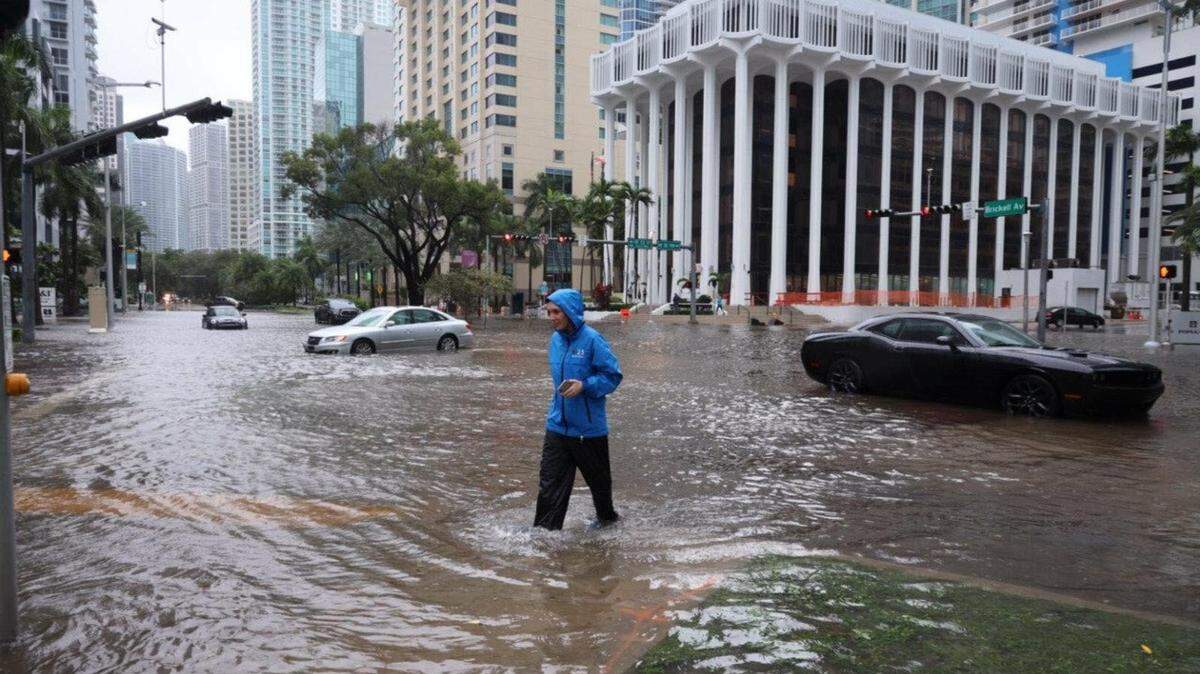
Buildings in Miami are getting taller, and more people than ever are living in high-rises in the city’s urban core.
And with Atlantic hurricane season upon us, people living in these buildings may be wondering: Is it safe to weather the storm at home?
Although living in a high-rise may keep you above a dangerous storm surge — and modern buildings in Miami-Dade County are built to withstand wind speeds of at least 165 mph — experts advise leaving ahead of a hurricane.
Several buildings that will be over 1,000 feet tall are under construction in downtown and Brickell. The city will get its first crop of “supertall” buildings in the coming years, meaning people will be living higher in the sky than ever before in Miami.
The Downtown Development Authority estimates that the population of downtown Miami, where much of the city’s high-rise development is concentrated, nearly doubled between 2012 and 2023. The organization estimates about 100,000 people live downtown.
Hurricane season starts on June 1 and runs until Nov. 30. The National Oceanic and Atmospheric Administration announced last week that it’s predicting fewer storms than usual this year, but NOAA administrator Neil Jacobs warned people not to let their guard down during a briefing last week.
“Even though we’re expecting a below-average season in the Atlantic, it’s very important to understand that it only takes one,” he said.
What buildings can withstand
High-rises, especially new ones, are generally safe during storms because South Florida has some of the strictest hurricane building codes in the country. Florida has designated Miami-Dade and Broward counties as High Velocity Hurricane Zones, which means buildings here must meet high standards for structural integrity.
The Okan Tower, a hotel and condo building under construction in downtown Miami, will be 902 feet tall when it’s completed. And winds are stronger at higher elevations.
Serkan Cortuk, the head of construction for the project, said one of the most important considerations with skyscrapers is the strength of the glass because it’s more delicate than a building’s concrete or rebar.
All materials on a building’s exterior, including windows, must get approval from the county. Buildings must be designed to withstand wind speeds ranging from 165 mph to 195 mph, depending on type. Most apartment buildings must be able to withstand 175-mph winds. A Category 5 storm has sustained wind speeds of 157 mph.
Andrea Travani, a structural engineer and member of the Surfside Town Commission, said his background in engineering makes him more confident in the strength of South Florida’s buildings. He said because he knows buildings here were designed to withstand hurricane-force winds, he doesn’t worry as much as he would if he were in an area where buildings weren’t designed with hurricanes in mind.
Travani doesn’t live in a high-rise now, but he said he and his family waited out Hurricane Sandy in their Brooklyn condo in 2012. He said they could feel the building sway and see the water in the toilet sloshing around.
Experts recommend leaving
Florida Division of Emergency Management Director Kevin Guthrie told the Miami Herald in 2024 that he doesn’t recommend waiting out a hurricane at home, even if you live in a skyscraper. A storm surge or rising waters can flood your building’s lobby or garage, trapping you inside, or preventing emergency services from reaching you if you need help. That means that even once a storm passes, you may be stuck in your building for several days.
“If there’s ever a doubt in your mind as whether or not to evacuate ... then go ahead and evacuate,” Guthrie said in 2024. “That’s a good rule of thumb. Based on the situation you’re facing at hand, if there’s a doubt — ‘Should I stay or should I go?’ — always go.”
The potential for a power outage is another reason you might want to leave your building ahead of a hurricane. A power outage means elevators, air conditioning and other essential amenities won’t be available, even once the storm is over. Often condo towers will shut off their cooling towers, which keep the AC running, for safety during a hurricane.
Allison Crawford lives on the top floor of a 14-story building on the Miami River near downtown. Crawford is from Washington, D.C., and didn’t grow up experiencing hurricanes. So when Hurricane Irma was barrelling toward South Florida in 2017, she packed up her two cats and drove to Atlanta.
When she returned after the storm, the power was out in her building. She said she quickly realized she couldn’t stand the late summer heat without air conditioning, and she checked into a hotel until her power was restored a few days later.
Tristan Lin, a professor at the University of North Texas who researches emergency management, said people’s previous experiences with storms often determine whether they will evacuate during a hurricane. For someone like Crawford, the fact that she’d never experienced a hurricane before motivated her to leave. And for some, previous frightening experiences with storms may cause people to take evacuation orders seriously.
But sometimes, Lin said, people who have successfully waited out a storm at home may be more likely to do it again in the future, even if the next storm is much stronger.
Lin said in places like Miami that have large populations of newcomers who may have never experienced a hurricane, it’s especially important for local governments to be proactive in sharing information ahead of a storm. People who moved to Miami during the pandemic have not yet experienced a major hurricane here and may not know how to prepare.
As a storm approaches, you should check your evacuation zone and monitor county websites and social media accounts for up-to-date information about evacuations. To check if your Miami-Dade neighborhood is in an evacuation zone, visit miamidade.gov/hurricane. You can also find your zone at FloridaDisaster.org/Know. Coastal areas like Miami Beach, Brickell and downtown are more prone to flooding and more likely to be evacuated first.
If your neighborhood is under an evacuation order, the county website will have information on evacuation centers and bus pickup locations. If you don’t want to stay at a storm shelter, you can stay with friends or family.
What to do if you stay
While you should always follow the county’s evacuation orders, officials can’t force you to leave your home. If you decide to stay in your high-rise, you should be prepared to be there for a while.
Having a hurricane kit is good advice for anyone living in South Florida, not just if you live in a high-rise. A hurricane kit should contain supplies like water and nonperishable food that can sustain your household for several days. Other items to keep in your hurricane kit include flashlights, batteries, radios and a first aid kit.
Make sure you close all your windows and balcony doors tightly. They must remain closed throughout the storm, even if you’re without AC and your unit is getting hot.
If you’re worried your doors and windows are not secured, you should move to a room without windows, like a bathroom. If you don’t have a windowless room in your unit, you may want to move to your building’s stairwell.
Crawford said that once during an intense storm she stayed in her unit, a “scary” experience for her and her cats. The building did not sway in the wind, but the sound of the wind buffeting the building was loud, and she could see the water moving in her toilet.
But even as the wind howled, all Crawford could do was wait for the storm to pass.
Some information in this article comes from a 2024 Herald article written by staff writer Michelle Marchante.