‘Supertall’ towers are coming to Miami. How will the skyline change?
If it seems like buildings in Miami are getting taller, that’s because they are.
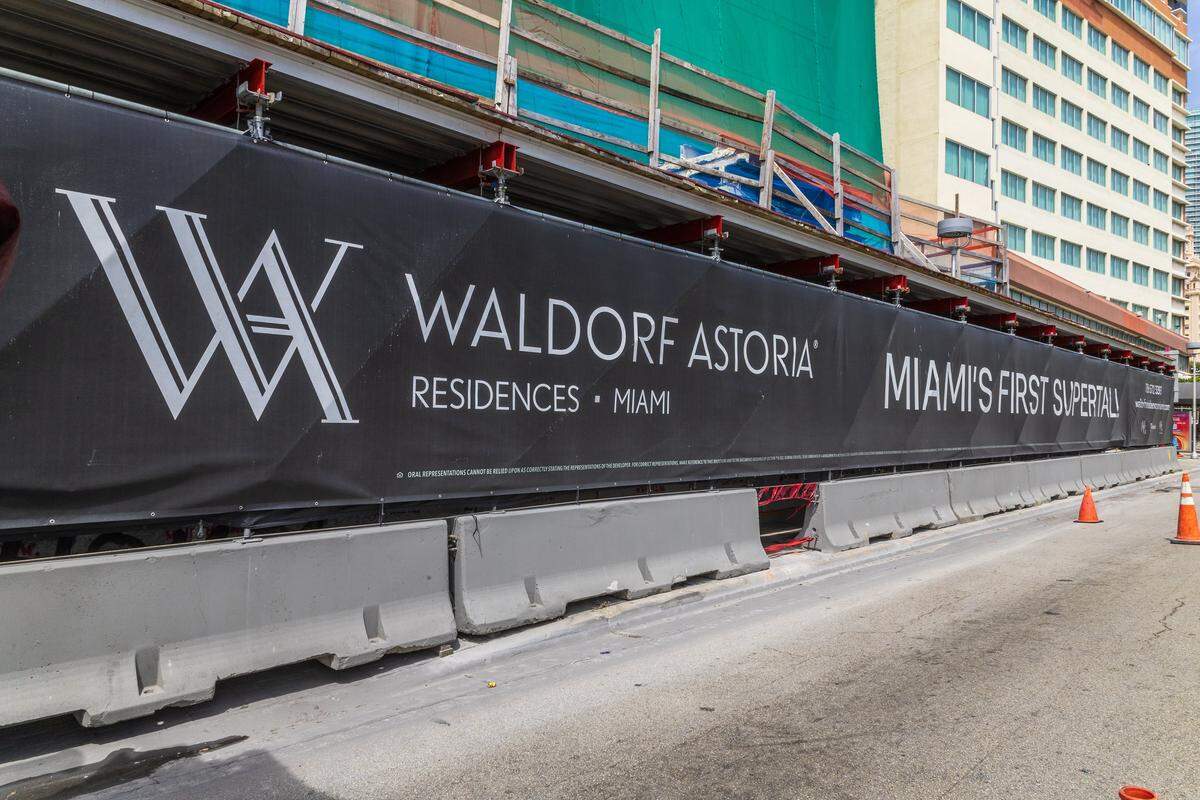
The Waldorf Astoria Hotel & Residences Miami, a skyscraper designed to resemble a stack of offset blocks, will tower above its downtown neighbors once it’s completed in 2028.
At 100 stories and 1,049 feet, the Waldorf Astoria will be Miami’s tallest building and the city’s first “supertall” skyscraper. The designation applies to buildings over 984 feet.
But the Waldorf Astoria won’t be Miami’s only supertall for long. It’s one of several tall buildings planned for Miami in the coming years.
This parade of coming supertalls and near-supertalls seems to reflect the demand for “aspirational” luxury real estate in Miami, said Ryan Shear, a managing partner at PMG, the developer behind the Waldorf Astoria. And some developers say these towers signal that Miami is becoming a truly global city.
But building tall comes with unique challenges in engineering and urban planning, experts say.
PMG is also developing the Delano Residences Miami, a 985-foot hotel and condo tower to be built near the Waldorf Astoria in downtown Miami. The building is expected to be completed in 2030, said Christian Tupper, PMG Residential’s vice president of sales.
The two towers, 300 Biscayne Blvd. and 400 Biscayne Blvd., are intended to complement one another in the Miami skyline, Tupper said. The Delano will have Miami’s first public observation deck.
Remaking the skyline
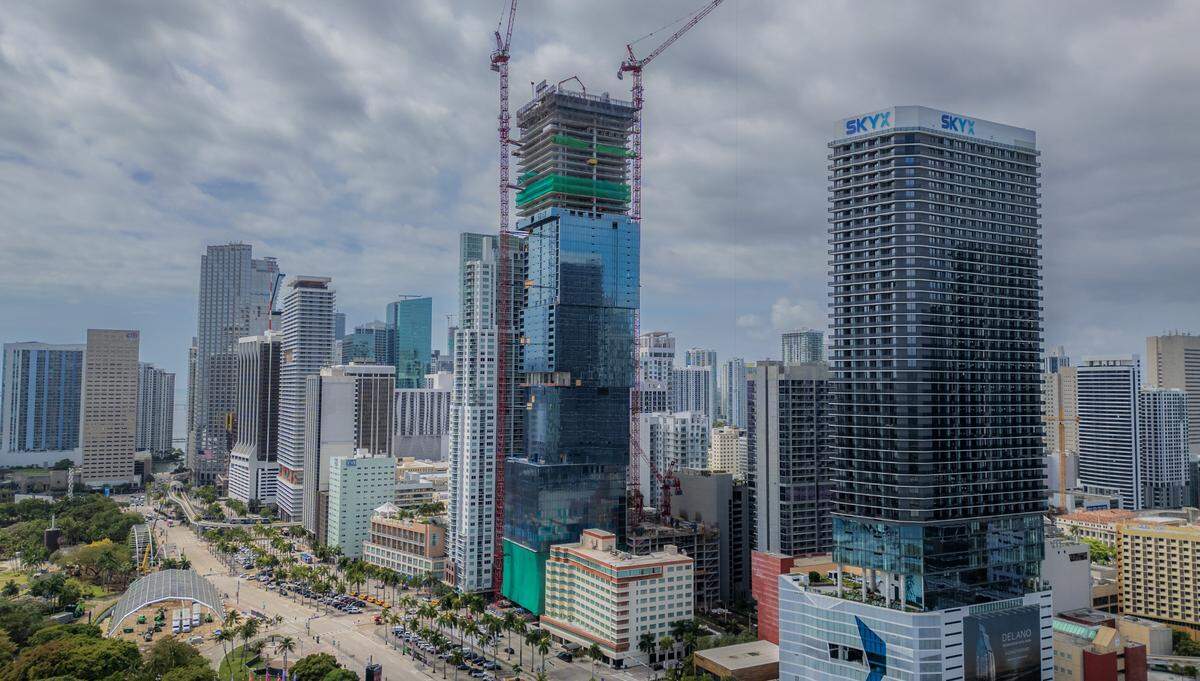
Until recently, Miami’s tallest building was the Panorama Tower in Brickell, an 85-story, 868-foot skyscraper. The Cipriani Residences Miami, which will be around 950 feet when completed, recently surpassed the Panorama. The building, a project of the developer Mast Capital, currently stands at 872 feet.
Camilo Miguel, Jr., the founder and CEO of Mast Capital, said in a statement that this wave of tall skyscrapers represents a “shift in the market,” as important companies and “discerning” buyers come to Miami.
“Height is one outcome of that shift,” Miguel said, “but more importantly, it speaks to a growing confidence in the city’s long-term trajectory and the caliber of what is now being built here.”
Soon the Cipriani will in turn be surpassed by the Waldorf Astoria and the Delano, as well as the new Citadel global headquarters, a planned 1,049-foot tower that Citadel spokesperson David Millar said broke ground in the first quarter of 2026.
Other proposed supertall projects in Brickell and downtown include One Bayfront Plaza, Regalia on the Bay, Miami Riverbridge and 888 Brickell by Dolce & Gabbana. Plans for all four buildings exceed 1,000 feet.
Okan Tower, a residential and hotel building under construction in downtown Miami, will be 902 feet tall, just missing the cutoff for supertall status. But it will still stand nearly 50 feet taller than any of Miami’s current skyscrapers.
The building, which is the Turkish developer the Okan Group’s first project in the U.S., reached its 50th floor out of 70 last month. The building will have a Hilton hotel in addition to condos.
Building icons
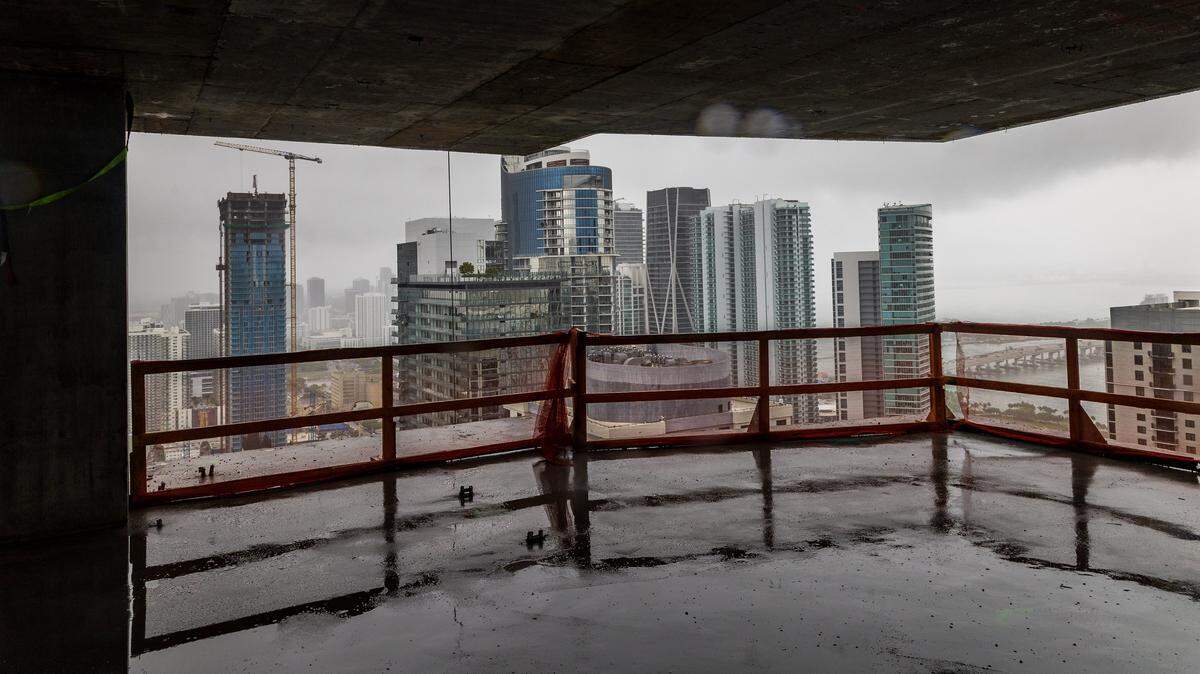
Miami’s skyline already has the third most skyscrapers of any city in the U.S. after New York and Chicago. And developers seem to be jostling to build the city’s next iconic skyscraper, from the Waldorf Astoria’s tower of blocks to the Okan Tower’s tulip-shaped design. Michael Sadov, the head of sales for Okan Tower, said the design was inspired by Turkey’s national flower.
Shear said he hopes PMG will “help shape” the Miami skyline with its two coming supertall projects.
“It’s great for the city. The more supertalls, the better,” Shear said. “A lot of them have beautiful architecture. It helps to define a skyline.”
Eric Firley, a professor of architecture at the University of Miami, said supertalls and uniquely designed skyscrapers can be an act of branding, both for a developer and for a city.
Developers hope their buildings’ stand-out designs are a selling point for buyers. Cities may also hope these buildings will make their skylines distinctive, drive tourism and signal their status as important global hubs. In the Middle East and Asia, some cities directly fund developers to build landmark skyscrapers.
“We have reached a new phase of marketing,” Firley said.
Firley pointed to the Aston Martin Residences, a sail-shaped building with a large triangular cutout. Though not a supertall at 820 feet, the building has become one of the most recognizable structures in Miami’s skyline.
The idea of standing out in the skyline appeals to some buyers, said Jonathan Wingo, the global head of real estate and residential programs for Hilton. He said living “high in the clouds” is a selling point for some buyers at the Okan Tower. Some like that they can see the building from all over the Miami area, he added.
“Whether it’s an ego thing or just a reflection of themselves standing out in the crowd,” Wingo said, “I do think it draws an appeal to certain buyers.”
Challenges of building tall
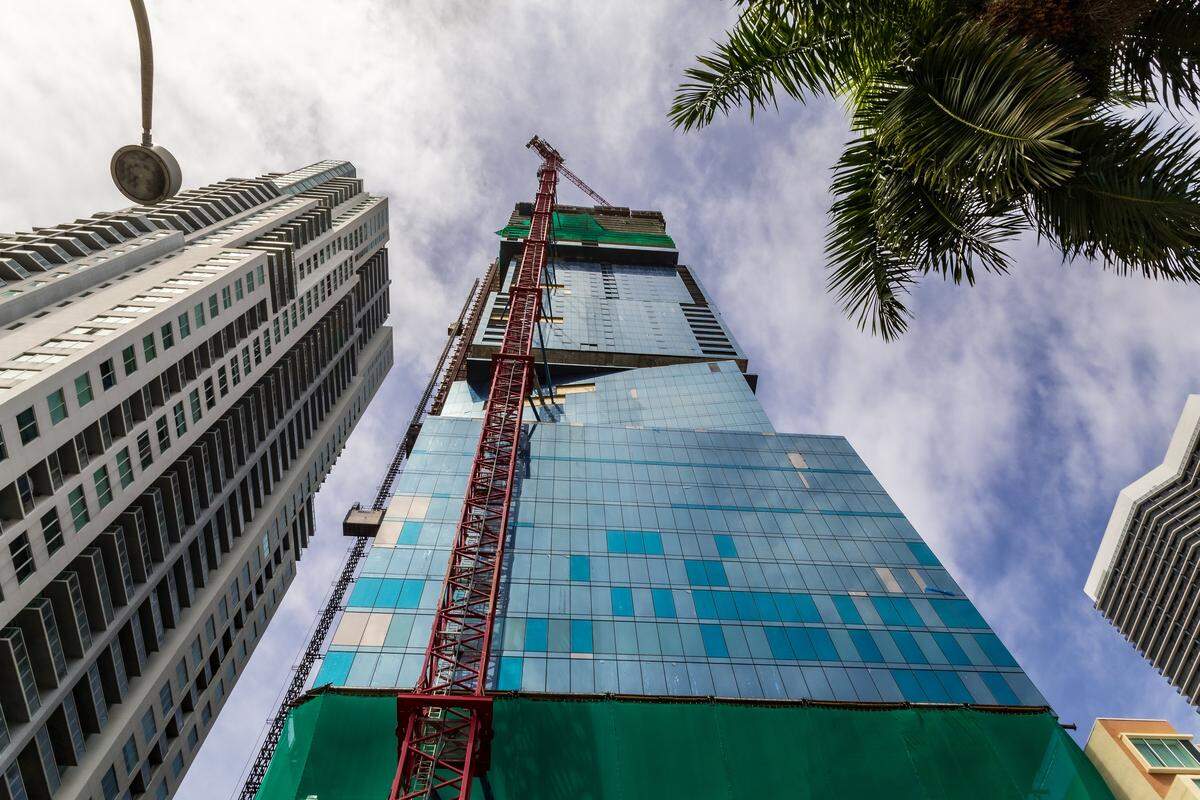
Building tall skyscrapers is expensive and energy intensive, Sadov said. Construction slows down and becomes more expensive as the building grows taller. For instance, it takes more time and energy for construction workers to ride an elevator to the 80th floor than to a lower floor.
At these heights, construction crews also have to contend with strong winds. Once winds reach 35 miles per hour, cranes at a site automatically shut down, which can slow construction considerably, said Sadov.
Shear said building a supertall can often take twice as long as building a shorter skyscraper.
“Because of their sheer size, everything is more complicated,” said Shear, “the financing, the sales, the construction, longer time horizons.”
Shear said he thinks his firm benefits from its previous experience building supertalls in New York. PMG built the Steinway Tower, a 1,428-foot residential building in Manhattan.
Supertalls can also come with “externalities” for the surrounding community, like blocking views and worsening a neighborhood’s traffic, Firley said. He thinks building near public transit hubs is important to help cut congestion.
The Waldorf Astoria, Delano and Okan are all near the downtown Brightline station, and the Citadel headquarters will be near a Metrorail station in Brickell.
Juan Mullerat, the founder of urban planning firm Plusurbia, said the most important thing about building skyscrapers is “how they meet the ground,” or how they appear to pedestrians at street level. He said building skyscrapers without shops, restaurants or other public-facing ground-floor amenities is “a missed opportunity for a city.”
The Waldorf Astoria, Delano and Citadel will all have ground-floor lobbies. But street-level plans for the Citadel tower also include a public bayfront walking path, and renderings of the building show a restaurant at ground-level.
Limits to Miami’s supertall boom
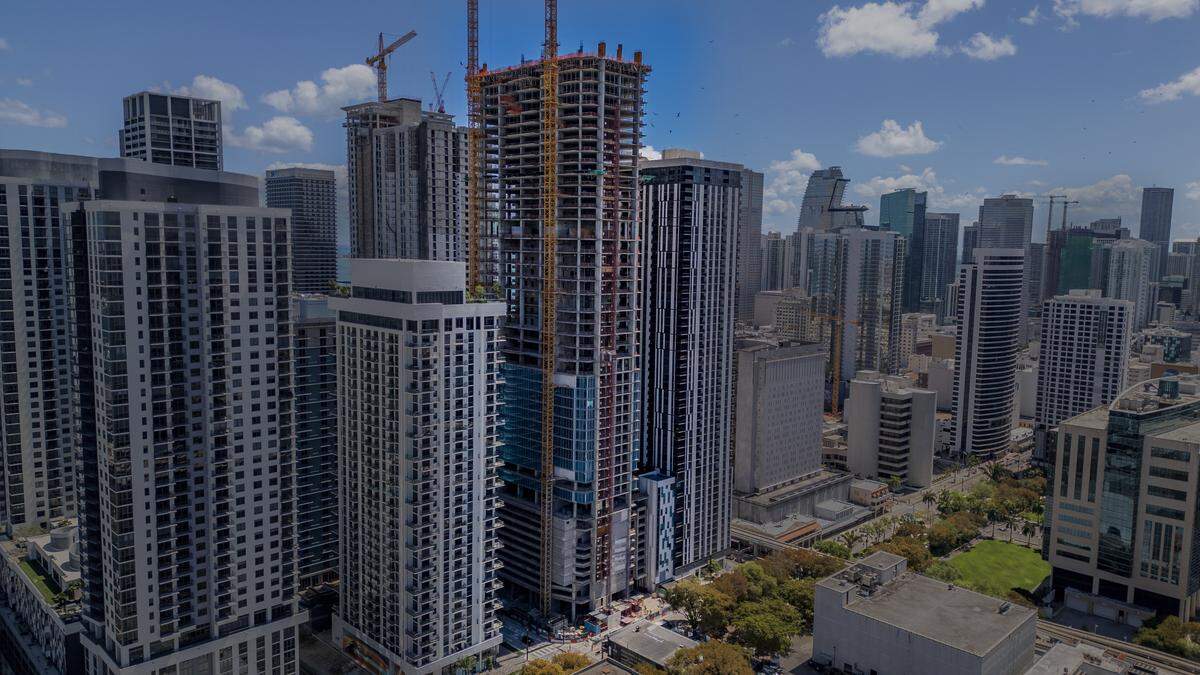
Although Miami’s skyline is growing with this new crop of supertalls, the height of its buildings remains restricted because of the city’s proximity to Miami International Airport. Downtown Miami is about nine miles southeast of the airport.
The Federal Aviation Administration has rules for how tall buildings near airports can be.
The maximum height in Miami is 1,049 feet in parts of Brickell and downtown. The Waldorf Astoria and the Citadel tower will take full advantage of the 1,049-foot maximum. Once completed, these buildings are expected to be the tallest in the Southeast, unseating Atlanta’s 1,023-foot Bank of America Plaza, the region’s only other supertall.
While a height cap at 1,049 feet is certainly enough for Miami to join the ranks of cities with supertalls, it means cities like New York and Chicago will continue to dwarf even the tallest of Miami’s skyscrapers.
Note: This story has been updated to reflect that the under-construction Cipriani Residences Miami is the tallest building in Miami.
This story was originally published April 17, 2026 at 11:00 AM.