Money laundering fuels ‘rampant criminality,’ senator says. Will lawmakers do something?
READ MORE
The FinCEN Files
A massive leak of bank documents connects the dots between money laundering, the pilfering of public funds, terror-financing and ponzi schemes. The documents were leaked to BuzzFeed News, which shared them with the International Consortium of Investigative Journalists. ICIJ recruited a global team of journalists, including reporters from the Miami Herald, el Nuevo Herald and McClatchy.
Expand All
Federal Reserve Chairman Jerome Powell goes before the Senate Banking Committee on Thursday, his third time testifying on Capitol Hill this week and perhaps the first time he’ll get a question about The FinCEN Files.
The global journalism collaboration involving leaked secret banking documents from the Treasury Department’s Financial Crimes Enforcement Network has drawn instant action across the globe but a yawn from many members of Congress.
The collaboration involves documents obtained by online news outlet BuzzFeed News and shared with the International Consortium of Investigative Journalists.
It put together a team — including the Miami Herald, el Nuevo Herald and parent McClatchy — whose combined reporting documented how banks across the globe, including in South Florida, have flagged as suspicious transactions that triggered little or no reaction from U.S. law enforcement.
Global banking giants Deutsche Bank and HSBC, among others, continued with suspect activity even after being hit with regulatory penalties for faulty anti-laundering programs, according to Suspicious Activity Reports, or SARs, filed to FinCEN.
The Treasury Department, not Powell’s Fed, writes the rules for combating money laundering. The actual oversight is done by a patchwork of regulators, including the Office of the Comptroller of the Currency, the Fed, the Federal Deposit Insurance Corp. and states, which regulate their own state-chartered banks.
The Federal Reserve does not police money laundering at banks the way it might look at loan performance and capital on hand at a bank. But the Fed has been active, bringing penalties in recent years against Deutsche Bank, Citigroup, JPMorgan Chase, BNY Mellon, HSBC, and Standard Chartered for anti-money-laundering violations.
Staffing at FinCEN remains a chronic issue.
FinCEN employs only around 300 people and has an annual budget of roughly $117 million. That’s a smaller sum than many of the bank customers’ accounts flagged in SARs that it receives from banks.
“More journalists reported [and] analysed the limited sample in the leak than the entire staff of FinCEN for its broad range of regulatory, analysis, and international liaison mandates,” wrote James Freis, director of FinCEN from 2007 to 2012, in a LinkedIn post.
Freis recently became CEO of Wirecard AG, a German lender that was rocked earlier this year by accusations that $2.1 billion had gone missing. It’s his job to clean up a company that was flagged repeatedly by banks, including an August 2014 filing by Bank of New York Mellon that warned Wirecard had “a significant number of known customers in the pornography and online gambling industries that have been revealed in previous SAR filings.”
When the reporting partnership working on The FinCEN Files reached out to FinCEN for comment last month, prior to publication, the agency put out a statement on Sept. 1 saying that the unauthorized disclosure of the documents was a crime and that it had referred the matter to the Justice Department.
On Sept. 16, just four days before publication of the stories from the leaked tranche of documents, the Treasury Department proposed a new rule that requires financial institutions to maintain an “effective and reasonably designed” anti-money-laundering program.
Just as the Panama Papers reverberated across the globe in April 2016 when it spotlighted how the rich, powerful and corrupt use shell companies to hide illicit gains, The FinCEN Files are spotlighting how weak supervision has allowed banks to facilitate massive amounts of money laundering.
“Money laundering has fueled rampant criminality, and banks and the federal government too often look the other way or don’t have the legal tools and resources,” said Sen. Ron Wyden, an Oregon Democrat. “Trillions of dollars ride on the system being broken, so it remains broken.”
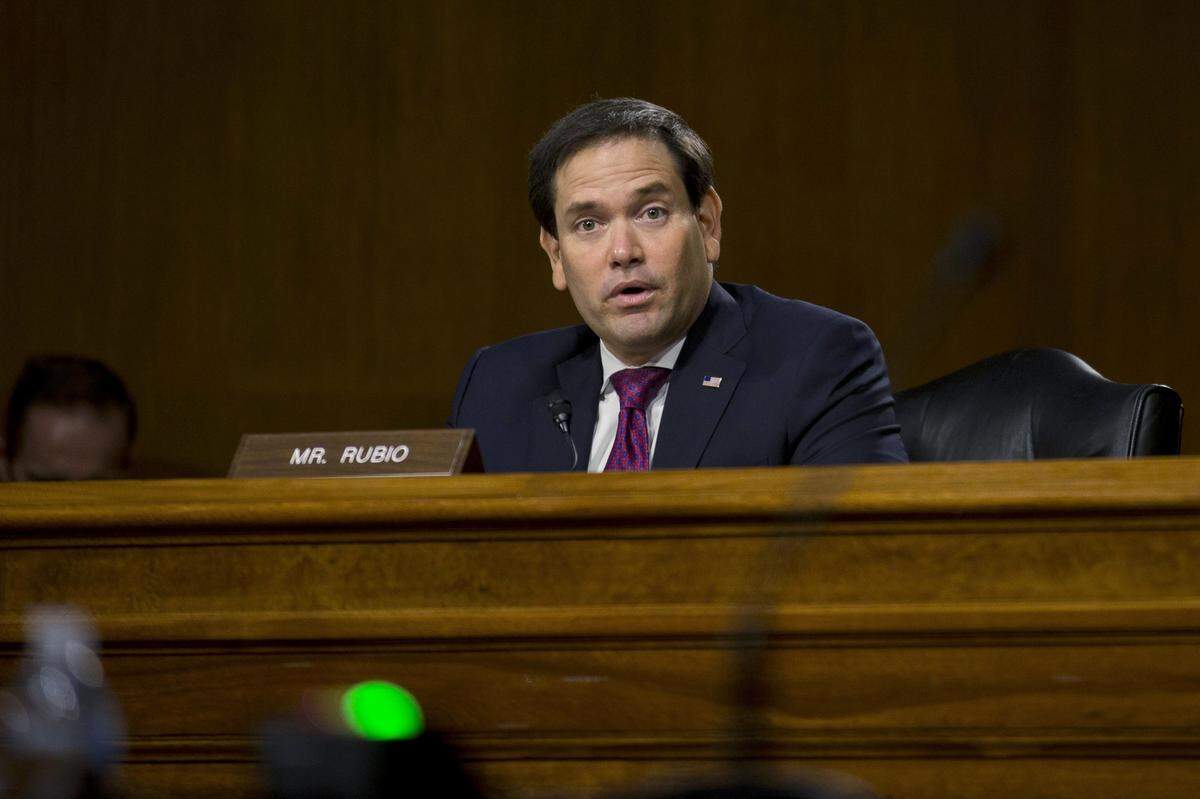
Wyden and Florida Republican Sen. Marco Rubio co-authored legislation that served as a starting point for discussion on how to require better and more effective disclosure of who really owns shell companies. A measure similar to theirs has already passed the House of Representatives and is being married up with a Senate equivalent offered by the top two members of the Banking Committee.
The FinCEN Files has added urgency to the negotiations, Rubio said in an interview, hoping to add the legislation as an amendment to the National Defense Authorization Act.
“Reports like that sort of highlight the need for it. It’s one of those things that doesn’t have anybody against it. It just gets caught up in all this other stuff,” Rubio said, pointing to the reports about Venezuelans in Miami flagged by banks.
“It drives up real estate prices, for example. One of the reasons, not the only one, why the Miami-Dade metropolitan area is an expensive place to live is these guys are pouring a bunch of cash into it and raising prices for everybody else,” he added.
The FinCEN Files are a wake-up call, suggested Clark Gascoigne, interim executive director of the Financial Accountability and Corporate Transparency (FACT) Coalition, an advocacy group pushing since the Panama Papers for greater disclosure.
“One of the scariest aspects of all of this is that we’re actually one of the better countries in the world at investigating and enforcing our AML laws and it’s clearly broken here as The FinCEN Files show,” he said. “It’s only worse around the rest of the word. That’s truly scary.”
Two days after the Sunday release of the first of the ongoing FinCEN Files stories, the Government Accountability Office, the watchdog arm of Congress, published its results of a study that faulted the level to which local and federal law enforcement agencies were using the provisions of the Bank Secrecy Act to ask for information from FinCEN while investigating financial crimes.
“GAO is recommending that FinCEN develop written policies and procedures to promote greater use of BSA reports by law enforcement agencies without direct database access,” the report stated.
John J. Byrne, vice chairman of AML RightSource, a company that advises financial firms on ways to strengthen compliance, fears The FinCEN Files may actually scare off future reporting by banks.
“Won’t weigh in on the leaks and the clear confidential nature of SARS, but would point out, as someone who spearheaded the move to create a ‘safe harbor’ for banks to report suspicious activity, there may be future fear on filing that could adversely impact a system that, for the most part, works rather well,” Byrne said.
Miami Herald’s congressional correspondent Alex Daugherty contributed.
This story was originally published September 23, 2020 at 5:28 PM with the headline "Money laundering fuels ‘rampant criminality,’ senator says. Will lawmakers do something?."