Joe Gaetjens gave the U.S. its greatest World Cup upset. Then he vanished in Haiti
When Chantal Bazelais Lebrun first saw the commercial talking about the United States men’s national soccer team pulling off a “miracle” during this year’s FIFA World Cup, the retired guidance school counselor and Pompano Beach resident was puzzled.
For her family, the United States’ miracle happened 76 years ago, when her uncle and godfather Joe Gaetjens pulled off one of the greatest upsets in World Cup history.
The year was 1950 and Gaetjens, a Haiti-born forward, scored the only goal in the United States’ stunning 1-0 victory over heavily favored England at the World Cup in Brazil.
“ I said, ‘That goal happened a long time ago,’“ Lebrun recalled.
It would be 40 years before the U.S. qualified for another World Cup. But Gaetjens’ place in soccer history was secured.
“When he scored that goal,” Lebrun said, “all of Haiti knew about it.”
Now, as fans of the U.S. men’s team dream of triumph on home soil as the team faced Bosnia and Herzegovina on Wednesday in its Round of 32 match, the man behind arguably the greatest victory in U.S. World Cup history remains largely unknown outside soccer circles. His story stretches beyond sports, touching one of Haiti’s many mysteries of Haiti’s brutal Duvalier dictatorship and reflecting on the outsize role Haitians have long played in shaping American history.
Gaetjens was studying accounting at Columbia University in New York and washing dishes to help pay his expenses when he was recruited to play for the U.S. national team. Back then, the rules allowed players to represent countries even if they were not citizens.
After the World Cup, Gaetjens went to France where he played professionally before returning to Haiti to a hero’s welcome. But years later, under the dictatorship of President-for-Life François “Papa Doc” Duvalier, Gaetjens was arrested and disappeared, despite not being involved in politics.
His disappearance in 1964 forced his wife and three children to flee into exile along with most of his siblings with the exception of a sister who would later serve in the administration of Haitian President Jean-Bertrand Aristide. As the family built new lives abroad, they were left with one nagging question: What happened to Joe?
“I think my grandmother and grandfather both died... over a broken heart,” said Lebrun, 82, who now works as a certified Creole court in interpreter in Florida’s courts.
At the time he vanished, Gaetjens was 40, and living in Port-au-Prince where he spent his time coaching future soccer stars and helping people. Although he avoided politics, two of brothers opposed the Duvalier regime and were fighting to topple the dictator from the neighboring Dominican Republic.
When word reached the family that the regime was targeting all the Gaetjens brothers, older brother Gérard urged him to go into hiding, James Gaetjens recalled about the conversation between his father and uncle.
“He said, ‘I’m not in politics. I don’t know why I should go into hiding,” Gérard would later recount to James, now 80.
“They took him, and we never heard of him anymore,” Lebrun said. “The family tried to find him. My grandparents even went one January 1 to where Duvalier was seeing people… and my grandmother almost got to him at the time. I remember her saying, “I pleaded with Duvalier, ‘Where did you take my son?’ “
“Duvalier told her he would check into it,” Lebrun said. “From what we know in the family, he was shot by Duvalier himself. Do we know whether it’s true or not? We don’t know.”
‘The Game of Their Lives’
Gaetjens’ story would later be featured on the big screen in the movie, “The Game of Their Lives.” The Haitian-American actor Jimmy Jean-Louis, who portrayed Gaetjens, said the striker’s story resonates today amid debates about immigration, Haitians and U.S. citizenship.
“Here we are, an immigrant from Haiti who comes and plays for the national team of America, and he helps America in winning against England, which is probably the biggest upset in the world in terms of soccer,” Jean-Louis said as he also reflected on Gaetjens’ significance as Haiti returned to the tournament after 52 years. “That win is just because of that immigrant who wasn’t even American; he never had an American passport.”
The film only touched part of Gaetjens’ story, however. Though he was a light-skinned Black man whose forebears immigrated to Haiti from Germany, the film did not explore what it must have been like for him to play on an all-white U.S. team during the Jim Crow era or to return to Haiti, where he would eventually vanish under “Papa Doc.”
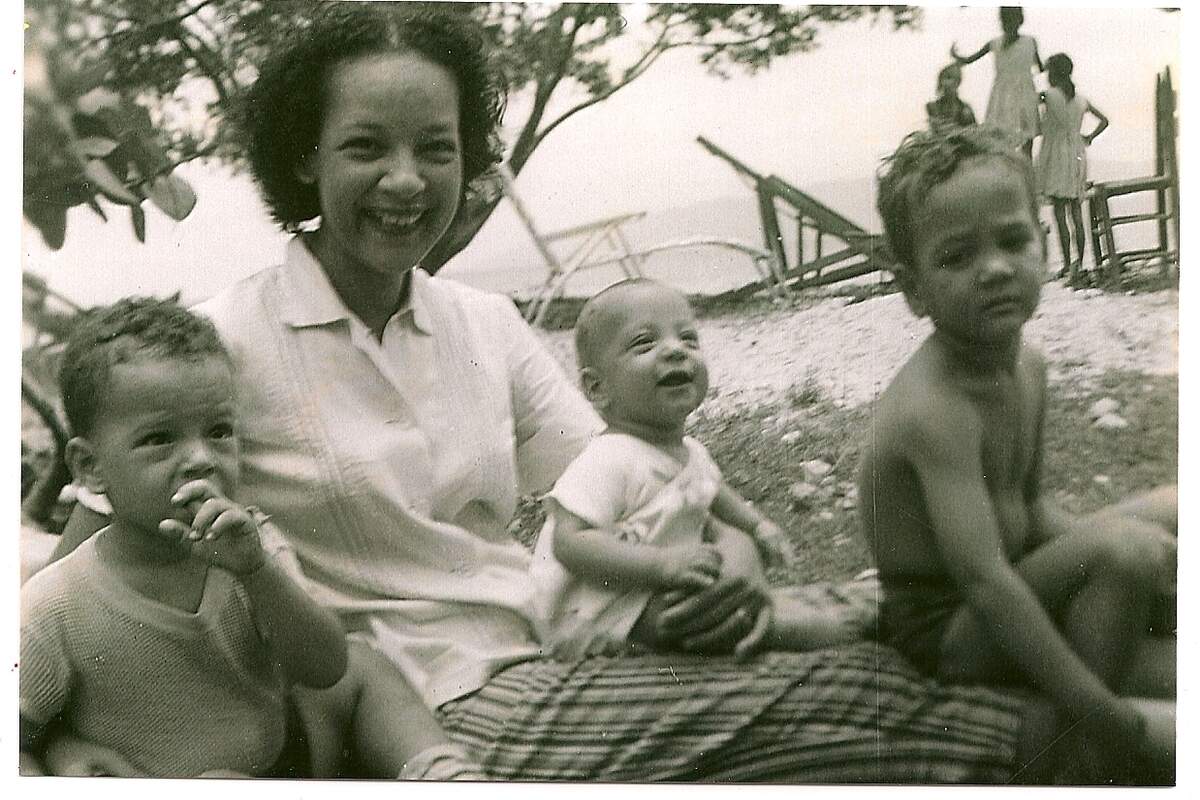
Still, Jean-Louis said it was an honor to play him.
“Just to have a chance to play Joe Gaetjens was monumental for me as an actor,” he said, “and as a Haitian and as a football player.”
Jean-Louis said the U.S. in 1950 was, “the true underdog,” and its victory against England thanks to Gaetjens’ historic goal was “almost like Haiti beating Brazil.”
Now that the World Cup is being played on U.S. soil, along with Canada and Mexico and “America is doing very well,” Jean-Louis said, “we have to remember who started that. It’s very important for America, for soccer lovers and for the Haitians.”
In 1976, Gaetjens was posthumously inducted into the National Soccer Hall of Fame. Some of his family attended the ceremony, and they are grateful that his story continues to resonate in soccer circles. But they are frustrated at how he’s sometimes portrayed: one book fictionalized him as “a womanizer,” which he was not, his son Lesly said, while in “The Game of Their Lives,” he’s depicted as a believer in Vodou, which relatives also refute.
“Some reporters have said it was a lucky goal,” said James, who had the chance to be coached by the legend. “No, it wasn’t by chance.”
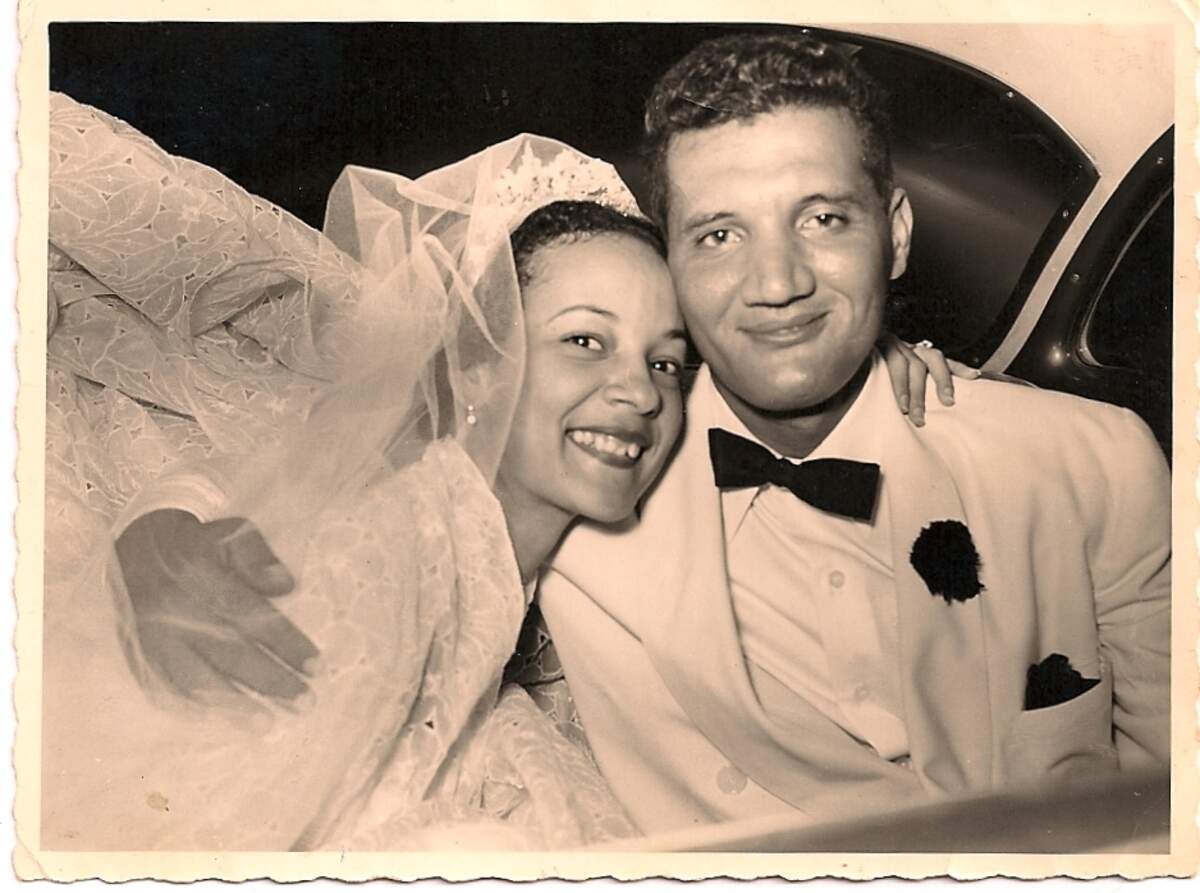
His uncle, James said, had a signature style. He often scored with powerful headers that left him sprawled on the ground.
“That was his signature,” he said. “He’d head the ball and land on his stomach.”
Lately, it has been the question of citizenship that has the family bristling.
“He died as a Haitian and those brothers never wanted to be anything else,” James said. “Even though they went into exile, they still wanted to come back to Haiti, and they still dreamed that when Duvalier died, they would come back.”
National Soccer Hall of Fame
Lesly Gaetjens, 69, was still a child when his father vanished. Initially, they went into hiding but as they tried to resume their lives, it became too dangerous to remain in Haiti, he said. He and his two siblings along with their mother, Lyliane, then left for Puerto Rico. He was 8 years old.
His first trip back to Haiti was after the tragic 2010 earthquake, Lesly said, when he accompanied an ESPN reporter working on a story about his father.
“It was painful,” he said. “It was heartbreaking.”
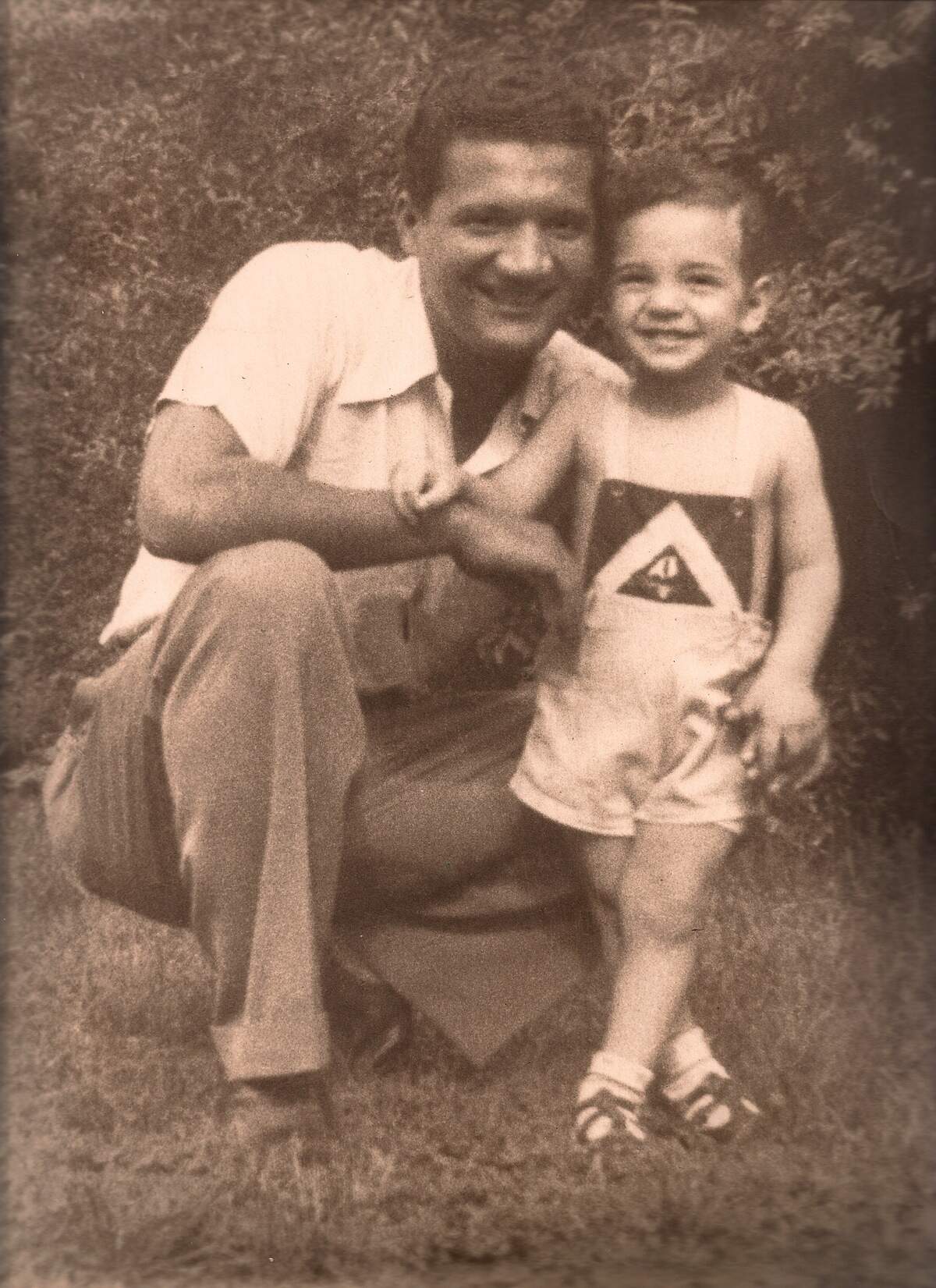
He recalls a moment on the drive to the airport in Port-au-Prince when a police officer stopped them. “At that moment I was scared, I was thinking about my dad,” Lesly said. “I was thinking are they going to stop us here, are they going to arrest us.”
“All of these things are going through my mind about if something is going to happen here,” he said.
After a childhood of suppressing memories over his loss, Lesly finally wrote a book, “The Shot Heard Around the World: The Joe Gaetjens Story,” to shed light on his father’s private life. Through his research, for example, he learned “it was a couple of hours after they took him, they killed him.”
“I think he was going after everybody that was related to the Gaetjens,” said Lesly, who lives in Winchester, Va. “But I don’t know exactly why he was targeted.”
As the United States’ run continues to draw excitement, and following the pride Haiti’s appearance generated, Lesly finds himself thinking a lot about his dad — what it would have meant for hm to be able to witness both events, and what might have been if Haiti was not plagued by its current instability.
He would like to attend one of the U.S. games, if only to imagine what the moment might have been like for his father in 1950, Lesly said. But most of the calls he received nowadays isn’t for an invitation to a match but from journalists, who often focus on one question: Why didn’t Joe Gaetjens become an American citizen?
“I think about what my dad did here for the U.S. in the World Cup,” he said. “They talk about it now, but for countries that are poor and with Black people, it also doesn’t seem that the U.S. cares that much about those countries.”
Lesly says as a child it was “stressful” to discuss what had happened to his dad. “I didn’t really want to confront it, my mom didn’t want to either,” he said. “We didn’t talk much about it because I guess it was too hard for her to face.”
It wasn’t until he returned to Haiti that he began confronting the loss.
After he finished his book, Lesly said he showed the manuscript to his mother, who “didn’t want to relieve that moment,” he said. She eventually approved it.
Why Gaetjens’ story is relevant decades later
Gaetjens story has resurfaced also at a moment when the U.S. is marking 250 years of independence, and Haitians are increasingly feeling unwelcomed amid shifting immigration policies.
Last week, the Supreme Court allowed the Trump administration to move forward with stripping legal protections from more than 300,000 Haitians, a decision welcomed by the White House and from former Fox News host Megyn Kelly, who issued a stinging reaction on her radio program.
“We don’t want you. We don’t care if you’re offended,” Kelly said during a taping of her SiriusXM show. “Get out. Go home. Go back to f—-ing Haiti.”
Against that backdrop, debates over immigration and birthright citizenship have emerged with renewed interest in the background of players on the U.S. men’s soccer team. Among them is Folarin Balogun, who was born in New York while his Nigerian parents, who were living in London, were visiting in the summer of 2001.
It is part of a broader conversation that has emerged in this year’s 48-nation tournament. Gaetjens, Jean-Louis noted, was an immigrant who was in search of a better life in America, and somehow found himself on the American team, “which was extremely unlikely.”
“The game brings people together,” he said of soccer.
Gaetjens’ disappearance and Duvalier dictatorship
Gaetjens disappearance remains one of the stark contradictions of Duvalier’s Haiti: a regime that celebrated and invested in soccer as a national sport while making no exception for one of the country’s greatest sports heroes.
Philippe Vorbe, one of the last surviving members of Haiti’s 1974 World Cup team, first met Joe Gaetjens as a youngster.
Vorbe was playing in a youth match in Pétion-Ville when Gaetjens, watching from the stands, later approached the team’s coach.
“He told our coach that if we continued to play as well as we did he would do a training session with us,” Vorbe, 78, recalled.
At the time, Gaetjens was already a legend in Haiti — “what we called a grand scorer,” Vorbe said, “a top player.”
Keeping his promise, Gaetjens began coaching them on a field in La Saline, a neighborhood that has since been overtaken by present-day armed gangs.
“I can truly say it was the first big training session I ever had in my life,” said Vorbe.
Gaetjens death, Vorbe said, was a loss that extended beyond his family. “He could have done a lot to help Haiti soccer, because he knew a lot; he played professionally, he played for the national team. He made history, and you can say the first page written in the World Cup, was done by a Haitian.”
After reaching the World Cup himself at the World Cup in West Germany under the Duvalier dictatorship, Vorbe came to fully appreciate the significance of Gaetjens history-making goal.
“When we were kids,” Vorbe said, “we didn’t say the United States beat England. We said Joe Gaetjens beat England.”
This story was originally published July 1, 2026 at 11:42 AM.