Supreme Court TPS ruling could deepen Haiti’s worsening crisis, experts say
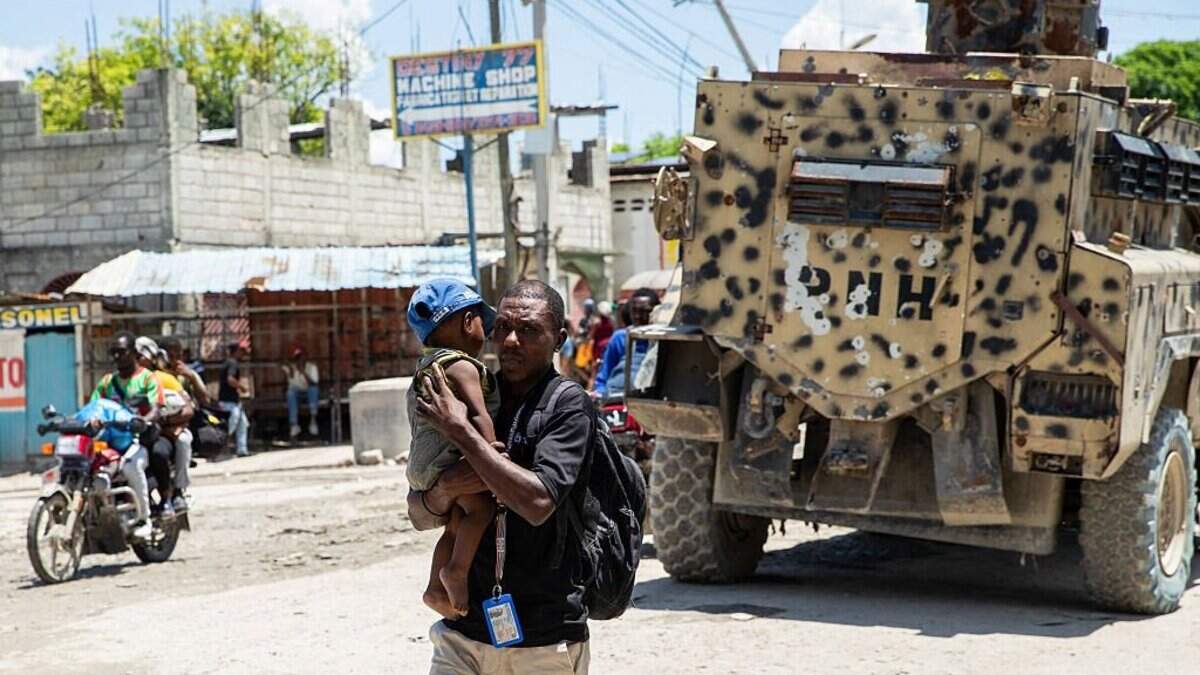
More than half of the population struggles every day to find food. Nearly 1.5 million have been displaced by terrorizing gangs and hundreds have taken to the sea, just in the first six months of this year, only to be intercepted and forcibly returned to Haiti.
Conditions inside Haiti have deteriorated to such an extent that observers say the Supreme Court decision on Thursday allowing President Donald Trump to end deportation protections for more than 300,000 Haitians in the United States, along with 6,100 Syrians, risks worsening one of the world’s most severe humanitarian crises.
“This decision by the Supreme Court will only exacerbate a humanitarian and human rights catastrophe in Haiti,” William O’Neill, the United Nations’ independent expert on human rights in Haiti. “No country in the world should be deporting anyone to Haiti where safe, dignified and durable returns are simply not possible.
“Murders, kidnappings and sexual assaults are rampant and access to food, water, shelter and medical care is severely limited,” he added. “We are talking about human lives here.”
The desperation is increasingly playing out beyond Haiti’s shores.
Earlier this month, authorities in the Turks and Caicos Islands said their marine police intercepted an overloaded vessel carrying 135 Haitians, including four children. Officials said the British overseas territory had already detained 859 Haitian migrants aboard six boats this year.
Ten days later, another vessel carrying 40 Haitians was stopped at sea. The passengers were packed aboard a boat measuring about 38 feet.
Inside Haiti, gang violence has already claimed at least 2,300 lives this year, U.N. High Commissioner for Human Rights Volker Türk told the Human Rights Council. Another 1,100 have been injured and at least 99 individuals have been kidnapped.
Among those abducted were a mother and her 6-year-old son, who were released Thursday after nearly three months in captivity. The chief of staff to Haiti’s defense minister remains in captivity. A Haitian police officer and security expert, James Boyard, his wife and their 6-year-old U.S.-born daughter were kidnapped while taking the sick child to a doctor’s appointment.
“Simply put, the Supreme Court’s ruling will directly result in thousands of innocent people dying violent, needless deaths,” Geoff Pipoly, the attorney who argued on behalf of Haitians with Temporary Protected Status before the Supreme Court, said. “This decision will endanger Haitian TPS holders who fled their homeland in pursuit of what generations of immigrants yearned for when they made the painful decision to leave all they have known: to live in safety.”
Conditions have not improved
The court’s 6-3 ruling in favor of the Trump administration came as Haitians were still celebrating their national soccer’s team’s performance in their final FIFA World Cup match. Though Haiti lost to reigning African champion Morocco, their qualification was seen as a staggering achievement considering that gangs’ control of their stadium meant they could not play any match inside the country, making them the first team in tournament history to qualify without playing a game at home. Even a visit to the country, ahead of their opener, couldn’t take place due to security concerns.
In its argument to the high court on ending TPS, the administration acknowledged that “[c]ertain conditions in Haiti remain concerning,” including “escalating violence and gang violence” in Port-au-Prince, the capital city. But it also cited former Homeland Security Secretary Kristi Noem’s assertion that “the data she examined indicated that “parts of the country are suitable to return to,’ that a new Gang Suppression Force would help to provide security, and that Haiti’s [gross domestic product] is projected to grow—all “positive developments” supporting the Secretary’s ultimate determination.”
The International Monetary Fund, however, projects that Haiti’s economy will contract by 1.7 percent this year, marking an eighth consecutive year of negative growth. The fund attributed the decline to the persistent and intensifying gang violence, ongoing political instability, infrastructure challenges and rising fuel prices linked to the conflict in the Middle East.
The World Bank noted in a report that the country continues to struggle on multiple fronts.
Agriculture output, for example, fell 4.8 percent amid the effects of last year’s Hurricane Melissa, which battered the southern region, and the continuing security-related disruptions to transportation and logistics. While a preferential trade access program for apparel exports to the U.S. had been retroactively extended to the end of this year after lapsing, a longer-term agreement to support investment and job creation still had not been secured, adding to the fiscal pressures. Meanwhile, with the suspension of U.S. commercial flights into Port-au-Prince ongoing, the country has become more isolated, the World Bank’s analysis indicated.
The World Bank noted that forced displacement in Haiti doubled between September 2024 and September 2025, rising from roughly 700,000 people to 1.4 million. The figure has since climbed to nearly 1.5 million, a record fueled by a recent surge in violence in metropolitan Port-au-Prince and the neighboring Artibonite region.
In addition, an estimated 270,000 Haitians were forcibly returned last year, mostly from the Dominican Republic. More than half of the nearly 12 million population is experiencing crisis, emergency or catastrophic levels of hunger, the World Bank said, while social assistance programs reached fewer than one in 10 Haitians.
“The estimated share of Haitians living on less than US$3.00/ a day increased from 42.2 percent in 2021 to 49 percent in 2025,” World Bank’s data said.
The World Bank report’s growth projections were based on the potential success of the U.N.-authorized 5,500-member Gang Suppression Force, which it described as “a potential turning point.” The international security mission still has fewer than 1,000 personnel, even as its one-year-mandate approaches renewal in September, and has been slow to get off the ground.
No way to absorb a large-scale repatriation
During a one-day visit to Port-au-Prince last week, U.N. Secretary-General António Guterres sought to reassure Haitians living in an overcrowded displacement camp of better days to come. But as he tried to promote the new international security mission amid the sordid living conditions, residents told him they could not wait two or three years for security conditions to improve and had reached a breaking point.
The new Supreme Court decision is posed to further threaten conditions, cutting off the pipeline of remittances that were a lifeline to many Haitians on the island.
“Every nation has the sovereign right to enforce its immigration laws, and TPS was never intended to be permanent,” said Michel Eric Gaillard, a Haiti-based political analyst. “But after more than 15 years of successive renewals, it is unfortunate that no policy was developed to provide a legal pathway for long-term TPS holders who obeyed the law, worked, paid taxes, raised families and became part of their communities.”
The World Bank’s report warned that U.S. immigration policy could also have a negative effect, especially given that Haitians, the majority of whom live in the United States, transferred more than $4 billion home in 20214 through formal channels, according to the country’s central bank
The World Bank report warned that the “uncertainty over the migration status of Haitian nationals in the United States poses additional risks to remittance flows, a critical source of household income and foreign exchange.”
Gaillard said Haiti is in no position “to absorb the large-scale return of people who, in many cases, arrived in the United States as young children or have spent decades building their lives there.”
“Some would be returning to a country whose language, culture and institutions are largely unfamiliar to them, while many older adults would face significant challenges finding employment and rebuilding their lives,” he said. “The country also lacks the security, infrastructure, and economic capacity to receive them, and many may no longer have a home or a safe community to return to. Returning hundreds of thousands of people under these conditions risk deepening an already severe humanitarian crisis at a time when Haiti is struggling to restore security, rebuild its economy and re-establish the rule of law.”
‘They’re not takers’
In addition to returning people into a collapsing economy, the deportations would severely affect the economy of the U.S., particularly Florida, which is home to the largest population of Haitians in the United States, advocates maintain.
“From a public policy point of view the administration is shooting itself in the head because first of all it’s going to dramatically affect the labor conditions in the United States where we’re not going to have people who do frontline health care, agriculture and many other things that Americans need,” said Ira Kurzban, a leading immigration attorney and long-time Haitian rights advocate whose firm was also involved in the Supreme Court case. “It’s going to result in the closure of hospitals in rural areas. It’s going to result in the lack of health care for individuals.”
Haitians with TPS, including those who came under the Biden-era humanitarian parole program to escape the gang violence of Haiti, are “a major part of the U.S. economy,” due to the jobs they do, the immigration lawyer said. “They’re not takers. They’re giving the country in taxes and an economic activity. So withdrawing that from the United States is just another example of this administration engaged in self-destruction.”
Haitians in the U.S., Kurzban stressed, “need to wake up.”
“In all the years I’ve been doing this, people have looked at the court as the kind of last resort to save them, and they have been right for a good part of the time. But that is no longer the case,” he said. “That’s what I was trying to do on the radio for the last eight months, telling people you’ve got to wake up. It’s not like it used to be.”
Haitian community leaders, need to start “blowing up” Senate and House races, and asking candidates a simple question: “Where do you stand on Haitians?”
“The Haitian community needs to recognize that looking toward the Supreme Court at this point is futile,” Kurzban said. “They need to look to the people running for Congress and running in the State Houses to what they can offer.”