Haiti’s World Cup team made history in 1974; can it do better next month?
It was the goal that shook the soccer world.
Pierre Bayonne, then a 24-year-old defender on Haiti’s national soccer team, tackled an opposing player, sending the ball toward teammate Wilner Nazaire. Nazaire than headed the ball to midfielder Philippe Vorbe who passed the ball to Emmanuel “Manno” Sanon, leading him to score.
Haiti didn’t win the match against Italy — or any of its two other World Cup games — but the goal at the 1974 World Cup in West Germany placed both Sanon and the first majority-Black country in the Caribbean to qualify for a World Cup into soccer history: Sanon ended Italian goalkeeper Dino Zoff’s 1,142-minute shutout streak.
While most people know the story of Sanon and even Vorbe, Woody Pierre, 56, has always known the role his uncle Pierre played in that famous moment — one that has taken on renewed significance in recent weeks as Haiti’s national team once again prepares for a chance to return to soccer’s biggest stage for the first time in more than half a century.
“He was a remarkable defender,” Pierre said of Bayonne, now retired. “Very ruthless, tough, player for the country.”
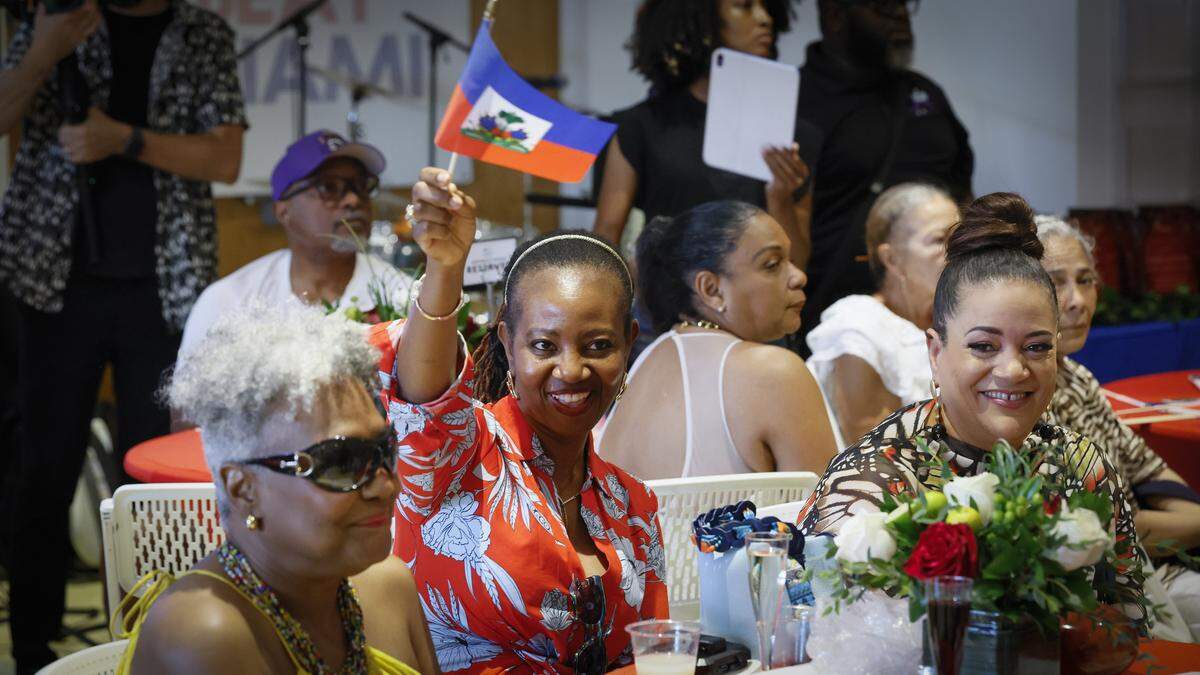
Only 13 players from that historic 1974 team are still alive, and Bayonne is one of them. On Sunday, he was in Little Haiti, where Art Beat Miami and members of the Haitian community gathered to honor him and the others, remembering not only the famous goal against Italy, and later another against Argentina, but the era it represented.
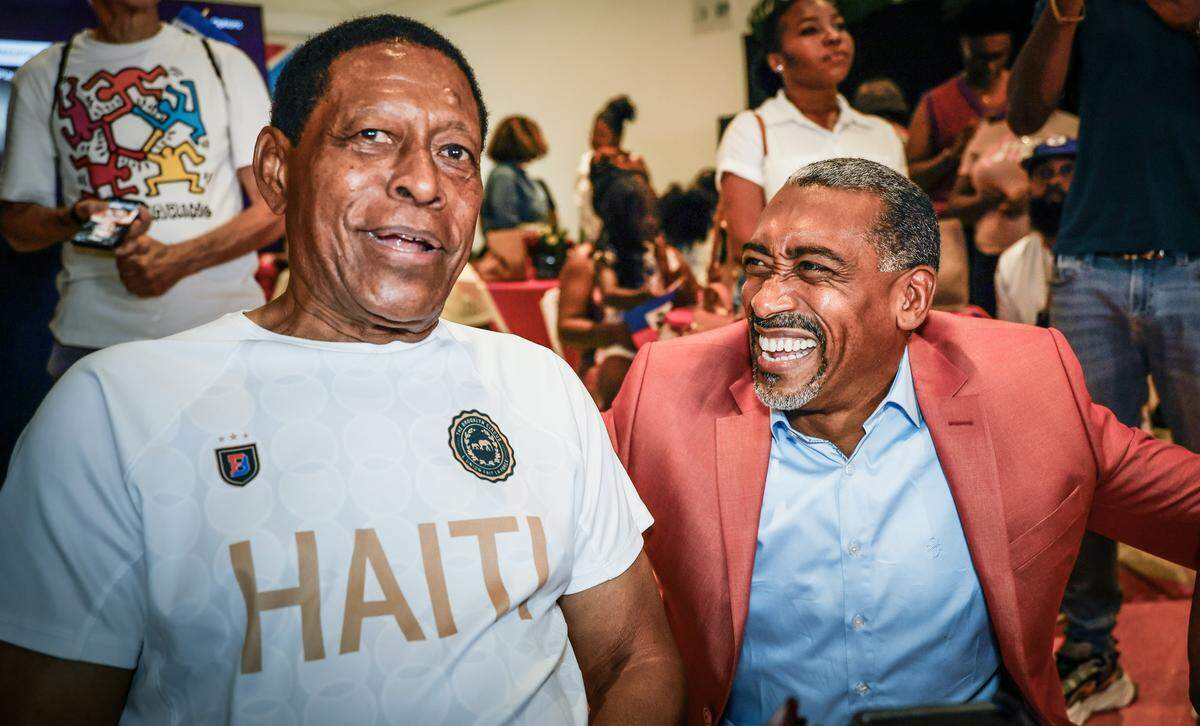
“I would have regretted it if I had not come out today,” Bayonne, who lives in Orlando, said feeling overwhelmed at he wore a specially designed Haiti soccer jersey given to him by a friend of his nephew. “I had a great time.”
As Haiti prepares for Group C matches next month against Scotland, Brazil and Morocco, Bayonne hopes that he and his former teammates set a foundation and serve as an inspiration.
“They are more advanced than we were, and so I am anticipating a lot from them,” he said of the Haiti FIFA World Cup team.
A lot has changed since 1974
Much has changed since team Haiti’s ‘74 World Cup experience — some for the better, some for the worse.
Haiti is no longer under a brutal Duvalier family dictatorship, but the nation’s capital is now overrun by armed gangs. And while the players competed in a country, West Germany, where many people had never met a Haitian, they now do so in one where they serve as elected officials, university presidents and successful business leaders.
“There are memories that were really sad,” said Bayonne, who recalls how the Haitian players didn’t fully get the support from the Haiti Football Federation at the time. “They didn’t give us what we needed; what they promised. They did not keep their promises.”
Among the promises made to the Haitian players, he said, was a cash prize of $10,000 cash bonuses and vehicles. The federation, he said, also received money at the end of their World Cup match that never reached them.
“It went in their pockets,” he said. “But we had fun, we enjoyed ourselves and can say we played on one World Cup.”
Bayonne hopes this year’s Haiti squad fares better. He was surprised to learn that, in addition to receiving some financial support from FIFA, the squad also received assistance from the Haitian government; two $2 million checks were provided to the Federation to help the squad’s preparation.
The Federation itself has been trying to rebuild after scandal forced its longtime president to step down, and brought international scrutiny. Those close to the current program say officials are determined to make players feel supported and to provide the best arrangements possible despite the many challenges.
“The Federation’s clear intent, despite the many challenges facing the country, is to ensure that the players are preparing in the best possible environment and conditions ahead of the World Cup, allowing them to focus fully on performing at the highest level,” said Karl-Philippe Alexis, head of marketing and communication for the Federation.
On Sunday, as Bayonne and the 1974 team were being honored in Miami, players on Haiti’s current national squad were arriving at training camp in Port St. Lucie. Ahead of opening World Cup play against Scotland on June 12 in Boston, Haiti will play friendly matches against Peru and New Zealand on June 2 and June 5 in South Florida.
Pierre grew up hearing his uncle’s stories about his days as a defender and his World Cup experience. He says when he thinks of how far Haiti’s national team has come — and the teams that made it this far, he feels even more of sense of pride.
“As of right now with all of these big teams that are participating and to see Haiti back on the map is a remarkable experience,” he said. “I can see how remarkable it is for him.”
Marie Louissaint, who organized the Kick-off to Goal event alongside her sister Beatrice, said they are proud of Haiti and wanted honor the “past while celebrating the future.” In addition to the festive atmosphere, the event also included a magazine featuring both the story of the 1974 team with current player, Duckens Nazon, on the cover.
“It’s about time that these players,” Pierre said, “are recognized for what they have done because it’s 52 years.”
Haiti’s comeback, he noted, isn’t just amazing because of how long it has been, but the moment in which it arrives: The country remains gripped by gang violence and political instability nearly five years after the assassination of President Jovenel Moïse.
Dreams do come true
For Patrick Tardieu, a former captain of the senior national team of Haiti in the 1990s, the achievements of Bayonne and his teammates remain a powerful source of inspiration for today’s players.
“The fact those players made it back then,” Tardieu said, “can be a source of motivation for the current players because they know others before them were able to make it to the highest stage of soccer.”
The times may be different, said Tardieu who retired in 2002, but “soccer is soccer,” and playing on the world stage still carries the same anticipation and prestige.
Sunday’s celebration was also personal, for him. His father, Gerard, was vice president of Violette Athletic Club, one of the most established soccer clubs in Haiti, where Bayonne once played.
“I idolized the guy back then and dreamed of playing at that stage,” said Tardieu, who would eventually play a game in which the Haiti team beat powerhouse Brazil. “When they made it to the World Cup, it was even more encouraging. It made you believe that you, too, could reach that level.”
And for children in Haiti, where opportunities are often scarce, that belief carries particular weight.
“Kids in Haiti don’t always have the luxury of dreaming,” he said. “So when they see their own players make it to that level, you realize just how encouraging that can be.”
This story was originally published May 26, 2026 at 4:38 PM.