Citing unpunished sex abuse, rights groups urge halt to Sri Lankan troops Haiti deployment
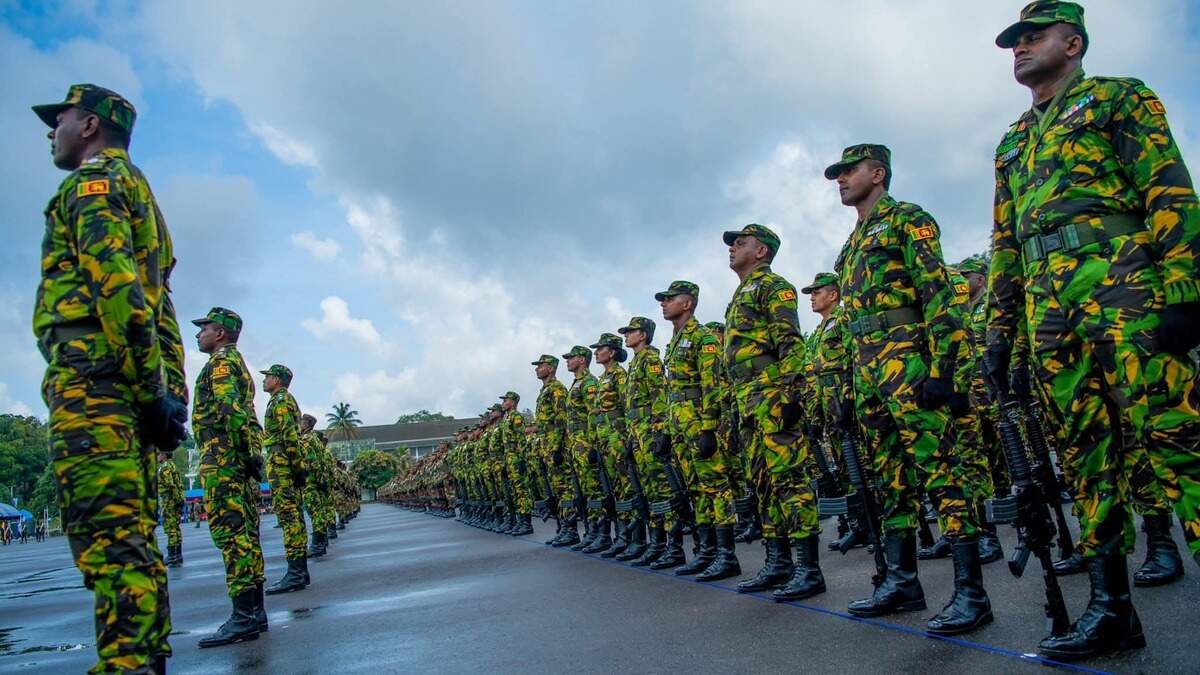
International human rights organizations are calling for an immediate halt to the deployment of 900 Sri Lankan soldiers and 140 police officers to Haiti, citing allegations of widespread child sexual abuse and exploitation during Sri Lanka’s previous mission in the Caribbean country and its failure to hold troops implicated in the abuse accountable.
In a statement addressed to the United Nations, the Haitian government, and the international partners overseeing the new Gang Suppression Force, 14 human rights and victims’ advocacy organizations said the deployment should not proceed until an independent vetting process is established.
The Sri Lankan troops are the latest contingent slated to join the U.S.-backed Gang Suppression Force or GSF, the international mission authorized by the U.N. Security Council to help Haiti’s security forces reclaim territory from armed groups.
Although approved by the Security Council, the force is not a U.N. peacekeeping operation. It is supported by a newly created U.N. Support Office in Haiti, while troop deployments are coordinated by a U.S.-led Standing Group of Partners that includes The Bahamas, Canada, El Salvador and Jamaica. They received pledges of over 11,500 personnel from 15 countries, the State Department has said, for a force of 5,500, an offer that has some human rights advocates questioning why choose a country with an already troubled track record in Haiti.
A State Department spokesperson said countries were chosen based on mission requirements, operational capability, training and other criteria established under the Security Council mandate.
An advanced Sri Lankan team is expected to arrive in Port-au-Prince this week, ahead of the deployment of the full contingent.
The State Department in an email told the Miami Herald that the United States, which is overseeing the effort to assemble the troops for the new force “condemns any and all acts of sexual exploitation and abuse,” and countries contributing troops are under strict guidelines to ensure abuse doesn’t occur and if they do, how they must be promptly addressed.
Concerns over past abuse, current vetting
The organization’s concerns center on Sri Lanka’s role during the United Nations Stabilization Mission in Haiti, the last U.N. peacekeeping operation, and the current process being employed to vet troops that will be part of the GSF’s mostly military personnel.
A confidential U.N. investigation found that at least 134 Sri Lankan peacekeepers across six battalions deployed to Haiti between 2004 and 2007 were implicated in the sexual exploitation and abuse of both Haitian boys and girls. Investigators documented cases in which children, some as young as 8 years old, were raped in exchange for food or small amount of money, some as little as $3 to $5.
The abuse was systematic, and occurred across multiple deployment sites with the victims living in conditions of extreme vulnerability, the U.N. report concluded.
“One young child told investigators he had been sexually abused by more than 100 Sri Lankan soldiers,” advocates, citing parts of the report, said.
The U.N. also found evidence that commanding officers were not only aware of the abuse but, in some instances, directly involved, and that they failed to exercise command responsibility.
“No perpetrator has ever been imprisoned,” the organizations said. They also note that the commanders of all six Sri Lankan battalions deployed to Haiti were later promoted.
The groups say given Sri Lanka’s past, the current GSF vetting process need to have more safeguards. It relies too heavily on self-certification and diplomatic consultations, which fall “short of the independence and impartiality required by international standards.”
The deployment should be suspended they urge until an independent and credible vetting process can be established “with meaningful participation” by the Office of the U.N. High Commissioner for Human Rights to screen personnel and full access to relevant U.N. records are granted.
“Any official whose conduct, command role, or prior involvement may give rise to an actual or perceived conflict of interest should play no role in supervising, certifying or approving that process,” the organizations said. “Whether the final contingent consists of 900 personnel or a smaller number, the fundamental concern remains unchanged: no individual should be deployed without an independent assessment of involvement in past violations.”
GSF countries have strict protocols, U.S. says
The State Department spokesperson said troop-contributing countries are required to promptly investigate sexual abuse and exploitation allegations, cooperate fully with the U.N. and hold perpetrators accountable when abuse are substantiated.
Also, countries fielding personnel to the GSF have been told they “must do everything possible to prevent their personnel from perpetrating sexual exploitation and abuse against communities they are deployed to protect,” the spokesperson said. They are also required to certify that their contingents and units have been vetted and no credible information of prior involvement links them to gross violations of human rights.
The spokesperson also noted that the GSF is subject to “robust oversight” by the Standing Group of Partners and civilian oversight led by the U.N. special representative. “These mechanisms ensure that any allegations of misconduct, including sexual exploitation and abuse, are taken seriously and addressed quickly by the contributing countries. The special representative regularly updates the [partners ] and will update the United Nations, consistent with the mandate, on how the force is handling accountability.”
“The United States has not found evidence of any prior history of human rights violations or abuses by the incoming GSF Sri Lankan personnel,” the spokesperson said, adding that the U.N. Office of Human Rights has undertaken its own vetting for the Sri Lankan contingent.
Human rights groups dispute this. They say at least one proposed candidate has already been rejected by the U.S. embassy, raising concerns about having the Sri Lankan military screen its own personnel. “If the Sri Lankan military is putting forward individuals with known human rights red flags, a process that relies on their good faith has already failed,” they said.
The organizations said while the GSF requires Sri Lankan troops to undergo pre-deployment and in-country training and complaints would be handled by multinational investigators, they question the effectiveness of those measures. They note for example that the Sri Lankan institution responsible for certifying the troops has a documented history of shielding alleged perpetrators and that no criminal accountability followed the abuses committed between 2004 and 2007.
“The message to the current contingent is that consequences do not follow,” the organizations said.
The groups also noted that Sri Lankan troops received similar pre-deployment training before earlier peacekeeping missions, yet investigators later documented what they described as the systematic rape of Haitian children.
“This is not a military with an isolated misconduct problem,” the organizations said. “It is a military with a structural impunity problem.”
The groups also say that while the U.N. and specifically the U.N. Office of Human Rights have indicated that vetting measures are being undertaken, “the precise criteria, methodology, scope and degree of independence of that process remain unclear.”
“None of the publicly described measures amount to a transparent and independently verifiable human rights screening mechanism,” the statement said.
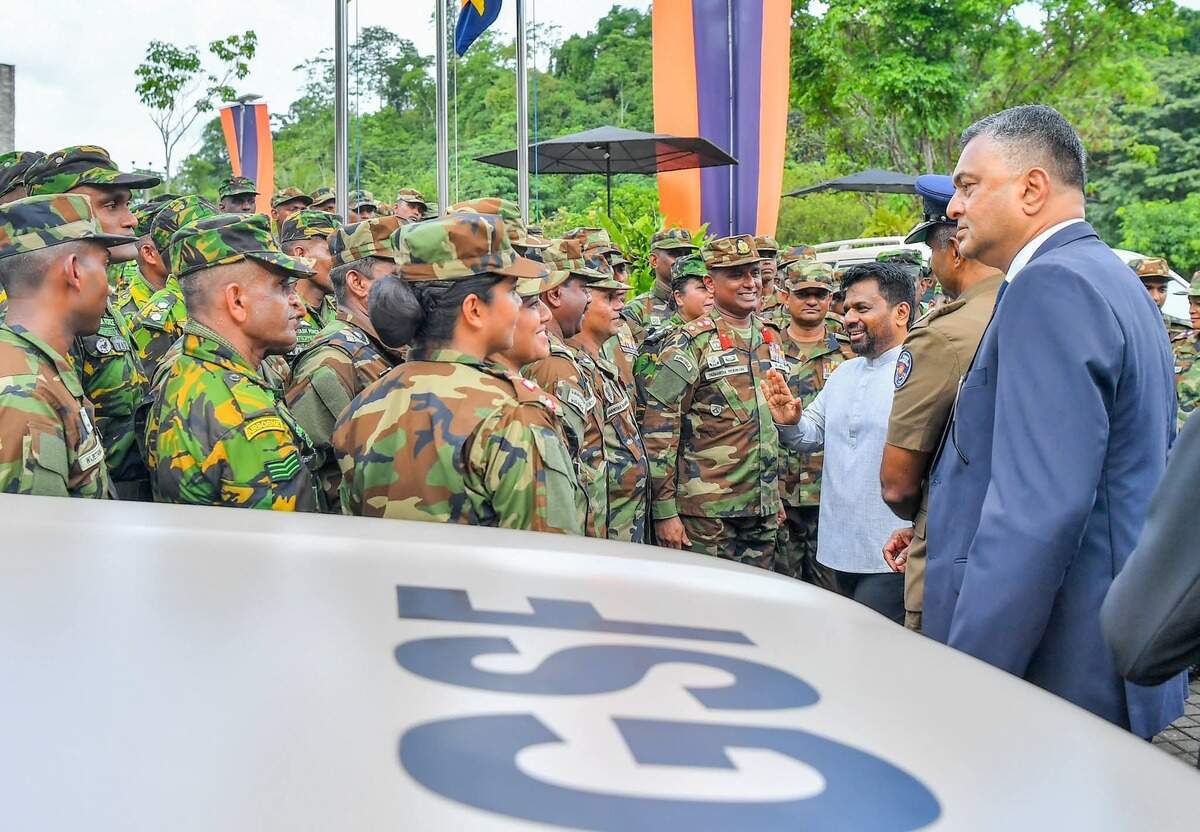
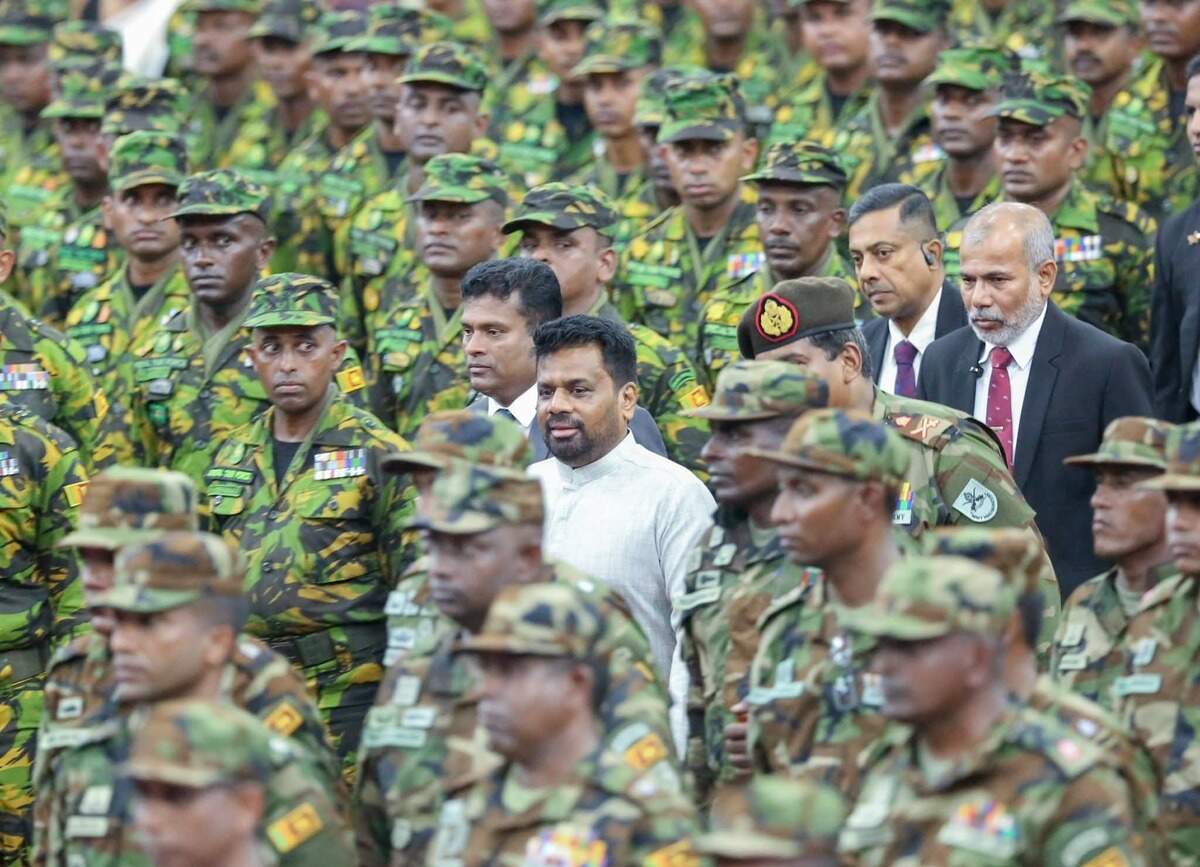
The Sri Lankans have long been the backbone of U.N. peacekeeping missions, experts say, and are noted for their fighting and willingness to go into difficult settings. On Friday Sri Lanka President Anura Kumara Dissanayake attended a ceremony at the Sri Lanka Infantry Regimental Center in Panagoda to extend his best wishes to the members of the Sri Lanka Army and the Sri Lanka Police Special Task Force departing on U.N. peacekeeping missions.
On his Facebook page, he said, he “pointed out that all those departing on international peacekeeping missions carry the pride of the nation upon their shoulders, and that it is the responsibility of every one of them to safeguard the country’s honor and reputation by performing their duties with dedication and professionalism.”
Haiti can’t afford another lesson too late
Frances Harrison, director of the International Truth and Justice Project in London, said advocates have repeatedly sought information about Sri Lankan personnel being screened but have received little information.
“As NGOs we’ve been passed around different U.N. departments and after several meetings given no clarity on accountability for past allegations of sexual exploitation and abuse involving Sri Lankan personnel,” Harrison told the Miami Herald. U.N. agencies directed questions to New York.
The office of U.N. Secretary-General Antonio Guterres told the Herald that they take the concerns being raised very seriously, and will continue to inform all relevant parties of their engagement on the matter.
“We recognize the seriousness of the issues, including concerns relating to accountability, human rights screening, conduct and discipline and the protection of civilians,” said Farhan Aziz Haq, Guterres’ deputy spokesman.
“We also recognize the important role that civil society organizations play in bringing such concerns to the attention of the United Nations and the wider international community,” he added.
Even though the GSF is not a U.N. peacekeeping mission, Aziz Haq said it still must comply with their policies due to the support being received, which includes the assessed contributions of member states to help pay for logistics.
In this context, he said the U.N. has continued to engage with the government of Sri Lanka on the need to re-establish a credible domestic human rights screening mechanism consistent with United Nations standards, following the end of a previous program that had been previously agreed to.
“Such a mechanism is an important safeguard in relation to the deployment of Sri Lankan personnel to United Nations peace operations, as well as in contexts where Sri Lankan personnel may receive United Nations support,” said Aziz Haq.
“The United Nations has conveyed that any such mechanism should be effective, credible, and capable of helping to ensure that personnel credibly implicated in violations of international human rights law, international humanitarian law, or serious misconduct are not deployed,” he added. “The United Nations has also consistently recommended similarly rigorous human rights screening of individuals prior to participation in bilateral and international cooperation frameworks.”
The limited role of the U.N. in vetting, she said, “raises serious concerns about the absence of transparency, independent human rights vetting and clear institutional responsibility.”
“When everyone has a mandate, but no one owns responsibility, accountability disappears,” Harrison added. “Haiti cannot afford another lesson learned too late. Survivors deserve justice, and deployment must not proceed in a way that normalizes impunity. Accountability and credible vetting must come before deployment, not after.”
She noted for example, that as Sri Lankan soldiers head back to Haiti, the one of the people seeing them off at a ceremony in Sri Lanka is a man who was deputy commander of one of those six battalions who has now risen the ranks in the military.
International missions in Haiti have history of sexual abuse
The human rights concerns come as allegations of rape and sexual exploitation continue to cast a shadow over international security missions in Haiti. It was a major concern of the Biden administration as it weighed pushing for another U.N. peacekeeping mission and Haitians who initially opposed the idea of foreign forces, after the 2021 assassination of the country’s president plunged Haiti deeper into gang-fueled despair.
Most recently, a U.N. report found that members of the Kenya-led Multinational Security Support mission were implicated in at least four cases of sexual violence, including the alleged rape of a 12-year-old girl and two 16-year-old girls. The officers were stationed in Haiti’s deadly Artibonite region, where the Sri Lankan contingent is also expected to be deployed.
Though Kenya rejected the report, claiming that its own investigation did not corroborate the U.N.’s findings, the Herald learned that the East African nation’s investigation of the allegations was done by a team with no Creole or French speakers, and their questions focused only on one particular case which had no connection to those interviewed.
Once in Haiti, the Sri Lankans will be under the command of the GSF, but policing such a large contingent in one of the most dangerous areas of the country that is difficult to access will not be easy. The Kenyans, for example, were stationed next to a Haiti police substation when the alleged abuses occurred.
The international human rights groups say they are not saying Sri Lanka should not be part of the GSF, yet their concerns and blistering report of the country’s past failures raise broader questions about why a country already with a history of disturbing sexual abuse in Haiti, would be tapped to once more be part of an international armed mission in the country where the situation is far worse than when the last U.N. peacekeeping mission left in 2017.
This story was originally published June 27, 2026 at 6:26 PM.