What you need to know about the new Gang Suppression Force deploying in Haiti
The United Nations offered a grim update this month on the worsening violence in Haiti: At least 390 people were killed in intense gang fighting in the Cité Soleil and Croix-des-Bouquets areas of the capital between March 6 and May 16.
Some victims were hit by bullets inside their homes or while fleeing violence. Others were deliberately targeted on suspicion of collaborating with police. Sexual violence was also used as punishment, the U.N. said, and at least 87 homes and public buildings were burned, disrupting essential services, healthcare, education and commerce.
The volatile situation, along with scores of other reported deaths in the neighboring Artibonite and Center regions, have raised questions about the status of the U.S.-backed Gang Suppression Force, the latest international mission authorized by the U.N. Security Council to help Haiti combat the armed groups competing to expand or re-establish control across parts of the country.
The GSF was approved by the U.N. Security Council in September to replace the Kenya-led Multinational Security Support, MSS, mission. The Kenyans ended their involvement in Haiti last month, withdrawing their last Kenyan police contingent and shipping out equipment, including armored vehicles used in the fight. The equipment were given to Kenya as part of the deal struck by the Biden administration when the country stepped up to help Haiti combat gangs.
Officials involved in establishing the more lethal and larger GSF, say the deployment timeline remains on schedule and has moved at an unusually rapid pace compared to traditional U.N. peacekeeping missions, which the gang-fighting force is not.
The force will be operating in Haiti’s volatile security environment amid intense political pressure tied to long-delayed elections, which remain uncertain, given that the foreign gang-fighting units are not expected to be fully deployed until October.
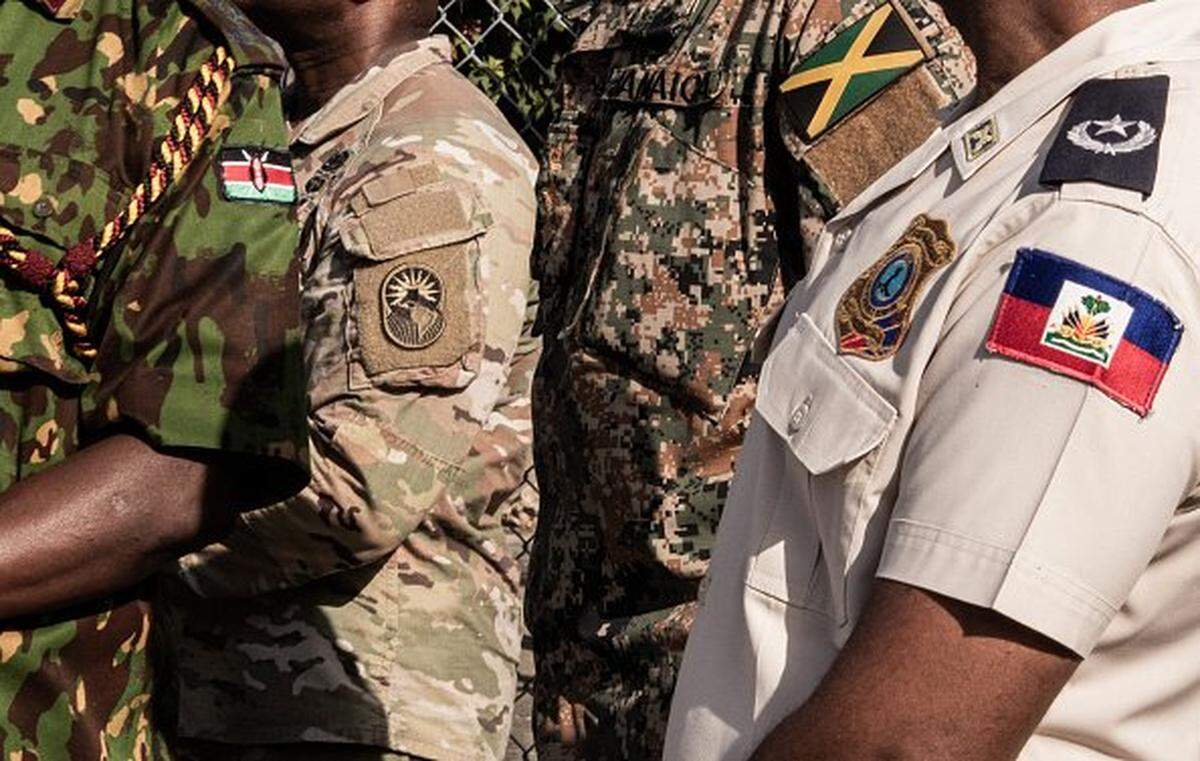
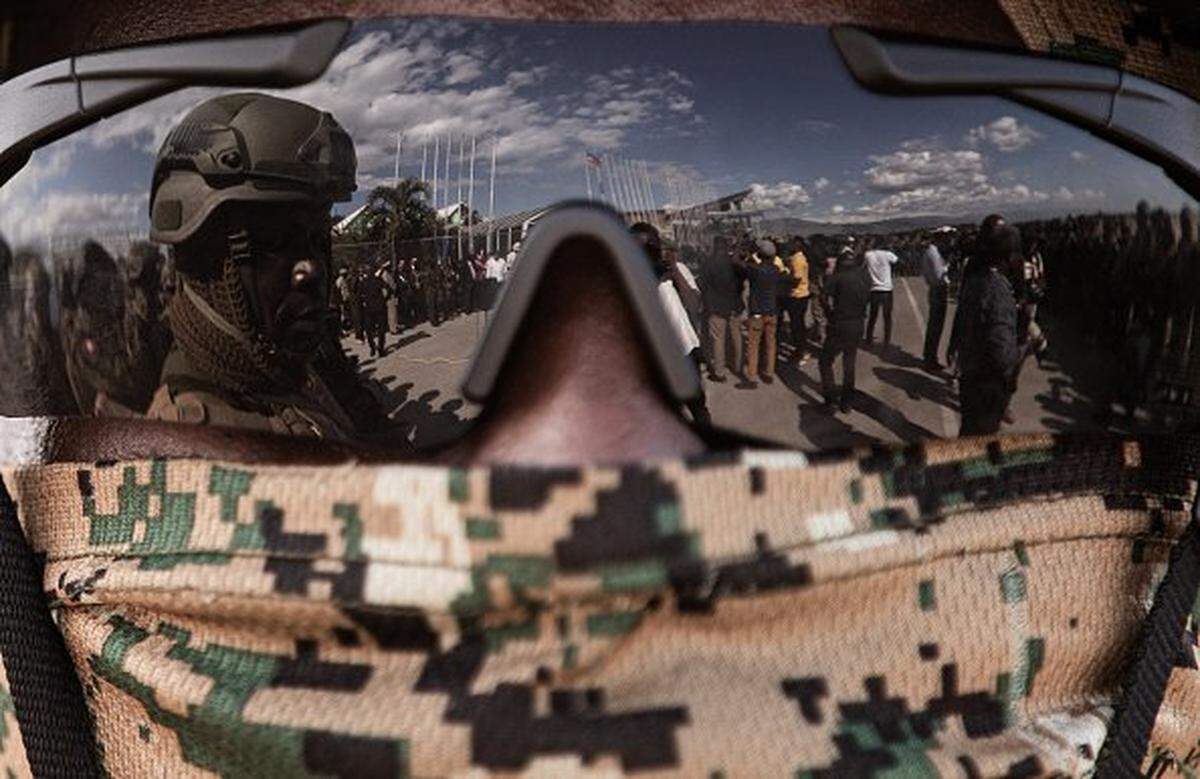
There are currently just under 1,000 soldiers on the ground in Haiti representing five countries: Mongolia, Chad, El Salvador, Guatemala and Jamaica. The force commander, Maj. Gen. Erdenebat Batsuuri, a Mongolian veteran with 30 years of experience, arrived in Haiti last week, and soldiers already in the country began a mandatory two-week training last Monday ahead of operations that could begin as early as June 1.
Vanessa Frazier, the special representative of the U.N. Secretary-General for Children and Armed Conflict, recently returned from Port-au-Prince, where, she said, she wanted to highlight the plight of children ahead of the new force’s operations. The U.N. already has a handover protocol with the Haitian government for children affiliated with armed groups and is currently negotiating a similar arrangement with the new force.
The issue is especially critical, she stressed, because “it is estimated that more than half of gang members are children.” So any security operation must include plans to separate children from gangs and to reintegrate them into society.
“There really is a window of opportunity now, but we have to work on many parallel tracks,” Frazier said. The force is ”an important track because you need security in order to ensure child protection.”
Frazier added that the complexity of Haiti’s security crisis is difficult to fully grasp until one arrives on the ground. “It was easier for me to go to the front line in Ukraine than in and out of Haiti,” she said.
Here are answers to some key questions about the Gang Suppression Force:
Why is it taking so long to begin its mission?
Officials involved in putting together the new 5,500-strong force say the timeline has actually been compressed. It has included intensive diplomatic negotiations, a conference to collect pledges of financial contributions, pre-deployment training and extensive vetting procedures.
What challenges does the force face?
The anti-gang force faces numerous challenges, including cutting off gangs’ access to weapons, illicit revenue streams, safe havens and strategic alliances. How the various forces will inter act, including alongside Haiti’s security forces remains a question for experts. Chad, for example, is expected to field less than 1,000 soldiers to the GSF. The Chadian forces are known to take the fight to the jihadists, which is why the United States liked them in the West Africa counter-terrorism operations. But critics also note that “they also have not been able to achieve very lasting results anywhere.”
How will the force be paid for?
Officials say funding is secure, with the U.N. Trust Fund holding about $200 million. The most recent contributors include Qatar with $30 million.. The country’s contributions will be spread over multiple years.
Is the new force a U.N. mission?
The new force was designed by the United States and is not technically a U.N. peacekeeping mission. But it is being structured similarly, with clearly defined operational requirements. Although 15 countries pledged 11,000 troops, the final participating countries were chosen based on troops’ capabilities and the mission’s needs. The U.N.’s involvement has helped pay for the force through mandatory contributions from member nations, and been an asset with the recruitment of soldiers and other personnel. The force’s 50-member civilian staff includes a number of experienced individuals. The new force’s special representative in Haiti, Jack Christofides, has years of experience in U.N. peacekeeping.
What is the organizational structure?
The U.N. Haiti Support Office reached operational capacity on April 1. In addition, there is an operational office for the Standing Group of Partners, which is responsible for carrying out the mission’s broader mandate.
What is the difference between the new force and the previous Kenya-led force?
The first police contingents of the Kenyan-led Multinational Security Support mission arrived in Port-au-Prince on June 25, 2024, and the final contingent left on April 27, 2026, ending the mission. The MSS and the Gang Suppression Force are two completely different entities, however, from how they are structured to their size to their mission to composition. The Kenya-led force was composed of law-enforcement officers and relied on voluntary troop contributions from participating countries. The GSF, by contrast, is being put together through a needs-based assessment designed to create a hybrid 5,500-member force overwhelmingly made up of soldiers.
What are other differences between the Kenya mission and the new force?
Under the new anti-gang-force model, contingents are bringing their own equipment, which they’ve already trained on and know how to maintain. They are also responsible for maintaining their equipment and bringing the spare parts. This requirement addresses one of the biggest criticisms of the Kenya-led mission, which struggled with inadequate and poorly maintained equipment, as well as limiting funding and deployment.
How will the Kenyans’ experience help the new force?
Officials say the design of the new gang-fighting force reflects lessons from the Kenya-led mission, the U.N. Security Council mandate, and assessments of Haiti’s evolving threat environment. The new force is currently structured as roughly four-fifths military and one-fifth police, with the military intended to move in first to clear and hold territory. Police elements, working alongside the Haiti National Police, would assume longer-term stabilization responsibilities. Ahead of the U.N.’s vote in September authorizing the mission for 12-months, U.S. personnel involved in designing the new force studied the strengths and weaknesses of the Kenya mission, including the importance of contingents arriving with their own operational equipment and maintenance capabilities.
What are the operational priorities?
Securing critical infrastructure such as seaports, airports and major highways currently controlled by armed groups, including routes connected to the neighboring Dominican Republic, will be crucial. That goal will require not only greater numbers of trained Haitian security personnel, but also improvements in professionalism within the Haiti National Police and the Haitian Armed Forces.
What will success look like?
The main goal is for Haiti’s security forces to contain the gang threats and sustain the security requirement necessary for general peace and stability. This is both a numbers problem and a question of professionalism, officials acknowledge, requiring more training of the Haiti National Police and Haitian Armed Forces.
Will the force be able to make arrests?
The force will have the authority to make arrests and detain individuals temporarily before transferring them to Haitian authorities using established chain-of-custody procedures. But everyone involved stresses that Haitian authorities have to be ready to do their part, including addressing the overwhelming number of children who are part of the gangs.
What countries are currently involved?
Guatemala has doubled the number of its soldiers in Haiti, while Jamaica — currently the only Caribbean country participating — is contributing headquarters staff and has begun in-country, mission-specific training for Chadian soldiers. Officials said deployment preparations for Chad began in November and included negotiations over medical evacuation arrangements, status-of-forces protections, privileges and immunities agreements and extensive pre-deployment training. No personnel are allowed to deploy until they meet minimum standards involving human-rights compliance, vetting procedures, training on sexual exploitation and abuse prevention and clearance of any prior infractions.
Once personnel arrive in Haiti, they receive their equipment and move it to their various encampments, some of them temporary, some of them semi-permanent. They will also undergo a mandatory 14-day training period focused on operational readiness, and prevention of human rights abuses and sexual exploitation. Haitian police forces that will work alongside the GSF are also undergoing human rights training.
Where will the forces be stationed?
A top priority for the new gang-fighting force is ensuring armed groups do not feel safe anywhere in Haiti. While Port-au-Prince and surrounding regions remain the immediate focus, officials noted that the force will have authority to operate throughout the country. The mission is also working on developing temporary detainee holding facilities to ensure rapid transfers to Haitian authorities.
This story was originally published May 25, 2026 at 5:30 AM.