‘What would have become of this child?’ Haiti heads to World Cup as violence kills dreams
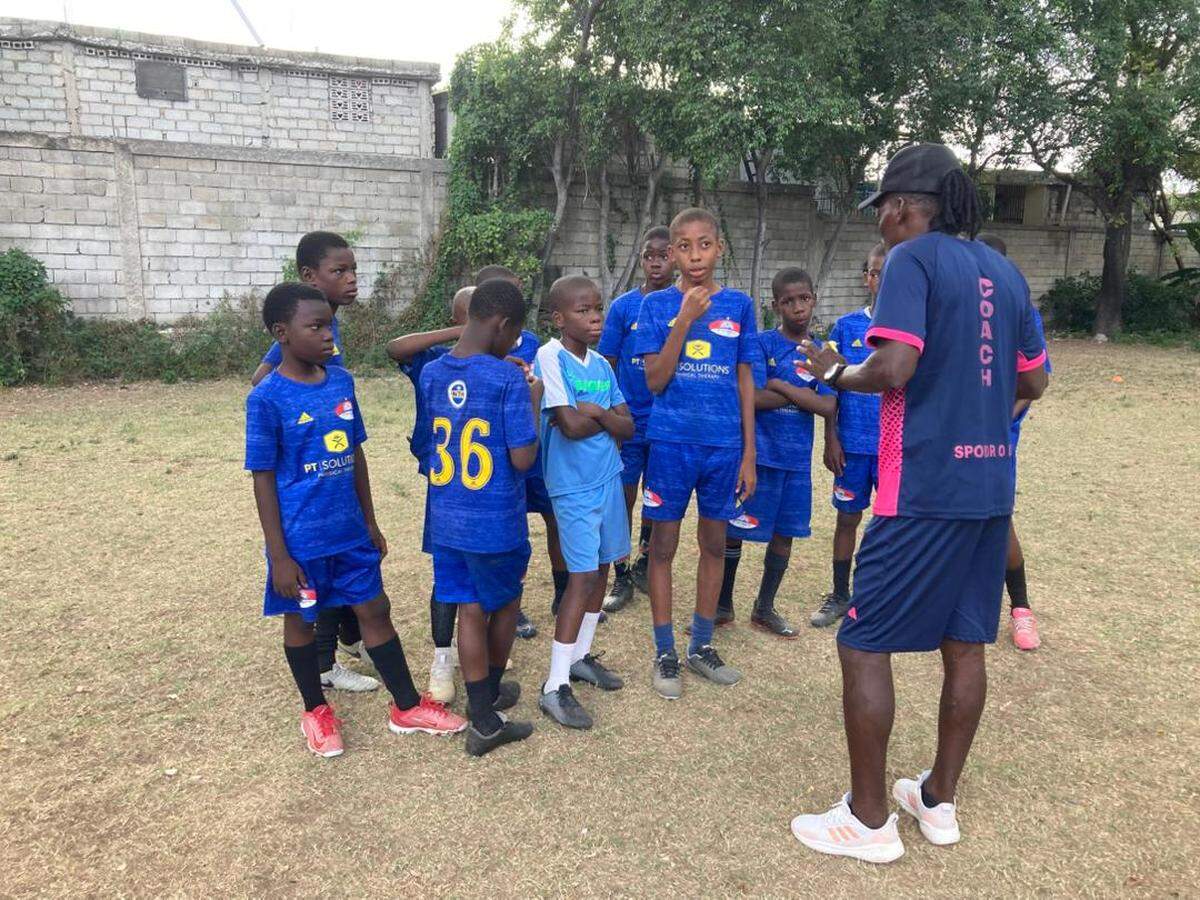
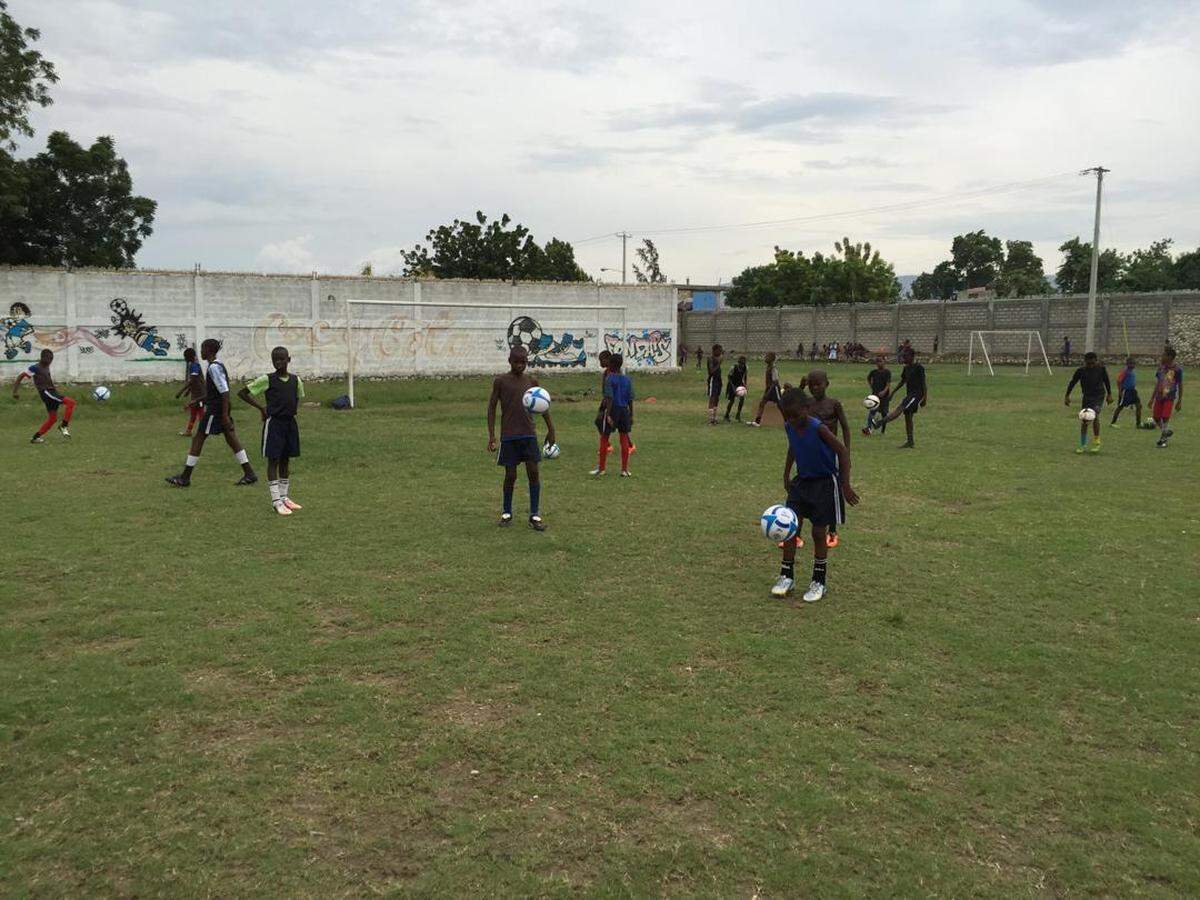
For nearly two decades, soccer coach Patrice Millet has used the game to help children from some of Haiti’s poorest neighborhoods find refuge from their country’s upheavals.
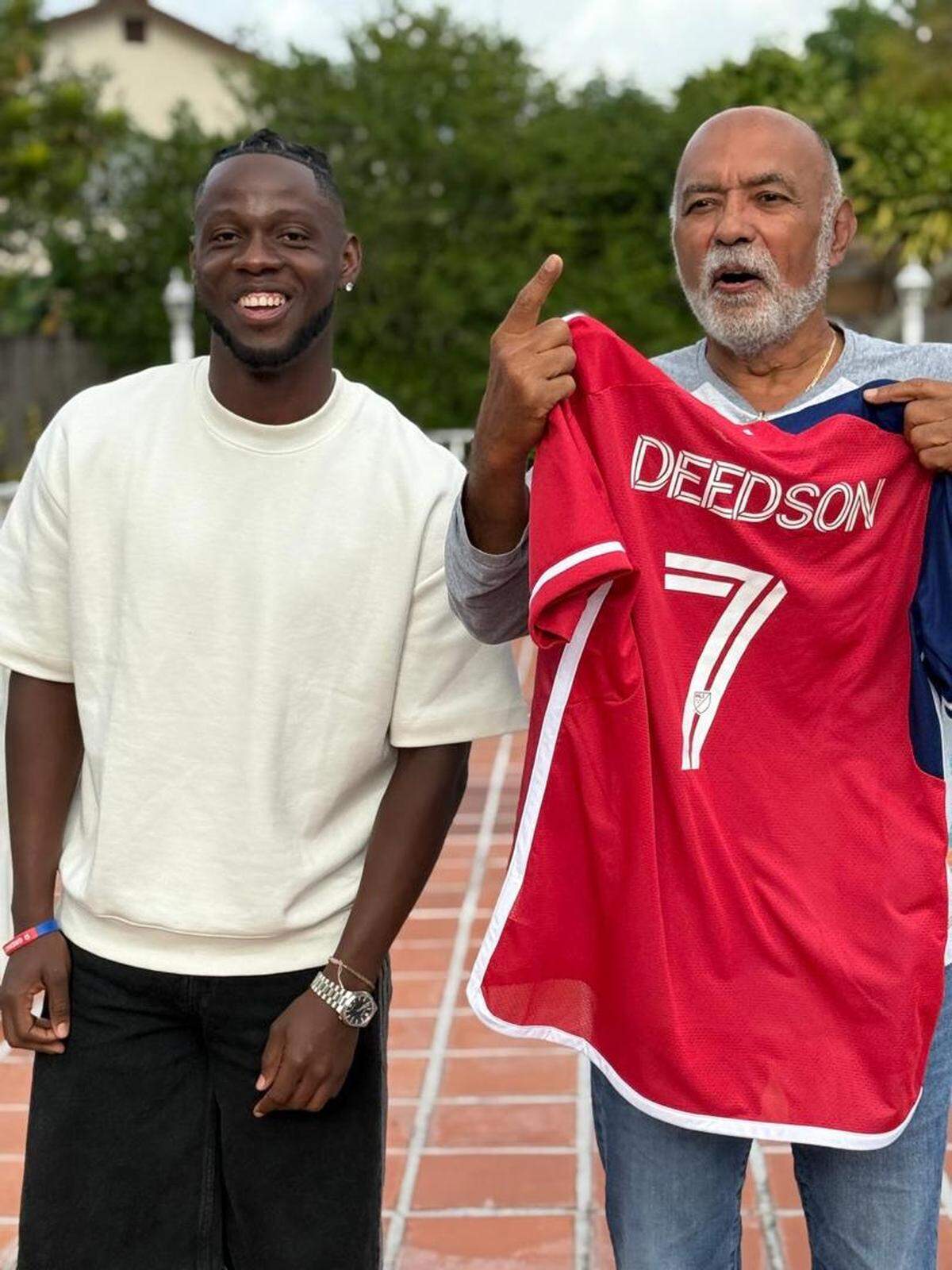
Two of his former players, he says with pride, were recently named to Haiti’s Les Grenadiers men’s national squad headed to the 2026 FIFA World Cup: forward Don Deedson Louicius (Dallas FC) and midfielder Leverton Pierre (Vizela FC). A third alum, Roselord Borgella, plays for the women’s national team, Les Grenadiers, which has begun to make its mark.
“It’s a moment of pride for us,” Millet said.
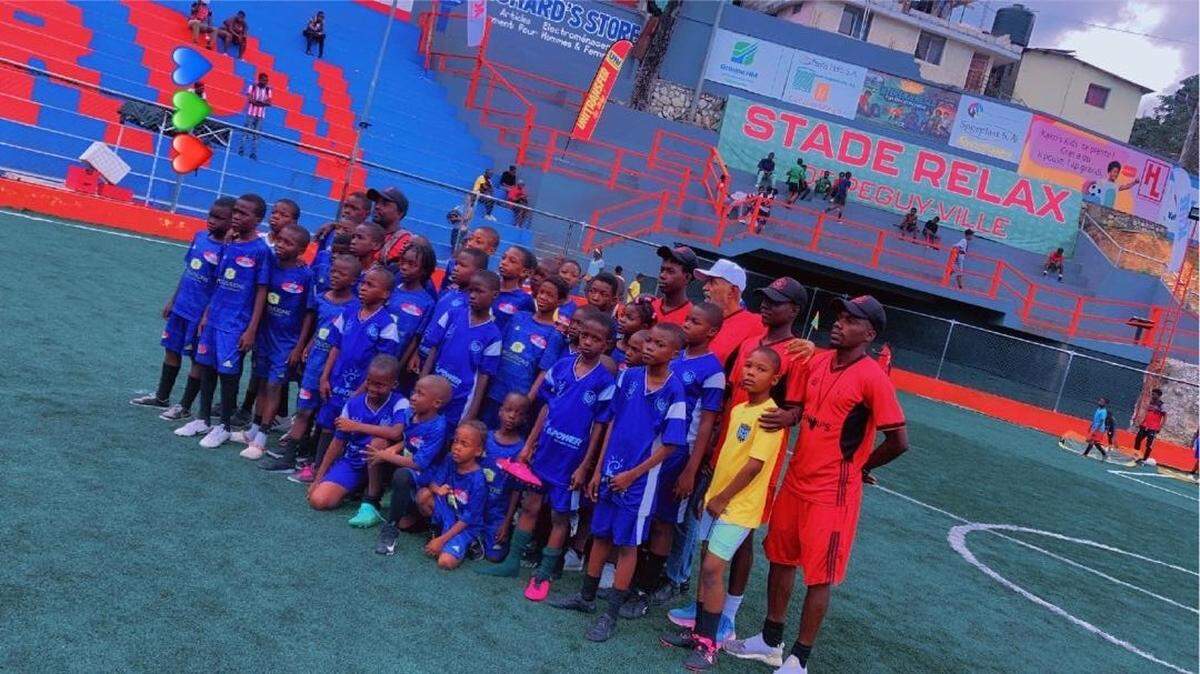
But among the roughly 200 boys and girls currently enrolled in his Olympique École de Football in Sarthe, north of Port-au-Prince’s international airport in the sprawling Cité Soleil slum, one child will never have that chance.
Josué St. Vilus, an 11-year-old goalkeeper who dreamed of one day defending Haiti’s red-and-blue national colors, died over the weekend when a stray bullet tore through his abdomen as his family tried to flee the latest burst of gang warfare inside Cité Soleil.
He died wearing his soccer uniform, a jersey that carried his childhood dreams.
“I feel as if I’ve lost my own child,” Millet, 64, said. “You’re living in a country where there is no justice, no state; you take to the streets at your own risk.”
When a child dies in the manner that Josué did, Millet said, all of his future dies with him and “you don’t know how you are to feel; it’s a rush of emotions. Today, it’s all of his dreams that have died — and the dreams of his parents, who were counting on him.”
As Haitians inside the country and abroad prepare to witness soccer history with Haiti’s scheduled appearances in Boston, Philadelphia and Atlanta at next month’s FIFA World Cup — the country’s first appearance in more than half a century — Josué’s death has become a stark reminder of a darker reality: In Haiti, unrelenting gang violence is stealing childhood soccer dreams.
Refuge in a church
For three days, Josué, his parents and two siblings had taken refuge inside a church, trapped by a barrage of gunfire engulfing their neighborhood as rival gangs and the police fought nearby.
Fearing the violence would eventually reach them, they decided to run, Millet said. Josué’s father suggested his son put on his light blue soccer uniform, believing it might protect them.
“He told himself that if they saw him with the soccer uniform, they would let them get through,” Millet said.
As the family moved through the shantytown’s narrow streets, gunfire erupted.
“He was walking behind the boy,” Millet said about the father. “The boy said ‘Papa, I got hit.”
The stray bullet passed through his belly button, killing him almost instantly.
“Where are we headed? What are we doing? How long will this nightmare last?” Millet later wrote in a note expressing his grief over the tragedy. “Where have the authorities of this country gone? Where is this international community that claims to want to help Haiti, yet turns a blind eye to the arming of gangs?”
‘I’m going to defend Haiti’
Haiti last made it to the World Cup in 52 years ago, in 1974.
That has not stopped fans, however, from chanting ‘Grenadye, alaso!’ — Warriors, let’s go — the rallying cry that beckons to the country’s revolutionary past as the world’s first Black republic in 1804.
Of the team’s 26-man roster, only eight were born in Haiti. The rest are from its diaspora and have never lived in the country they now represent. Yet the violence gripping and reshaping the country has been inescapable.
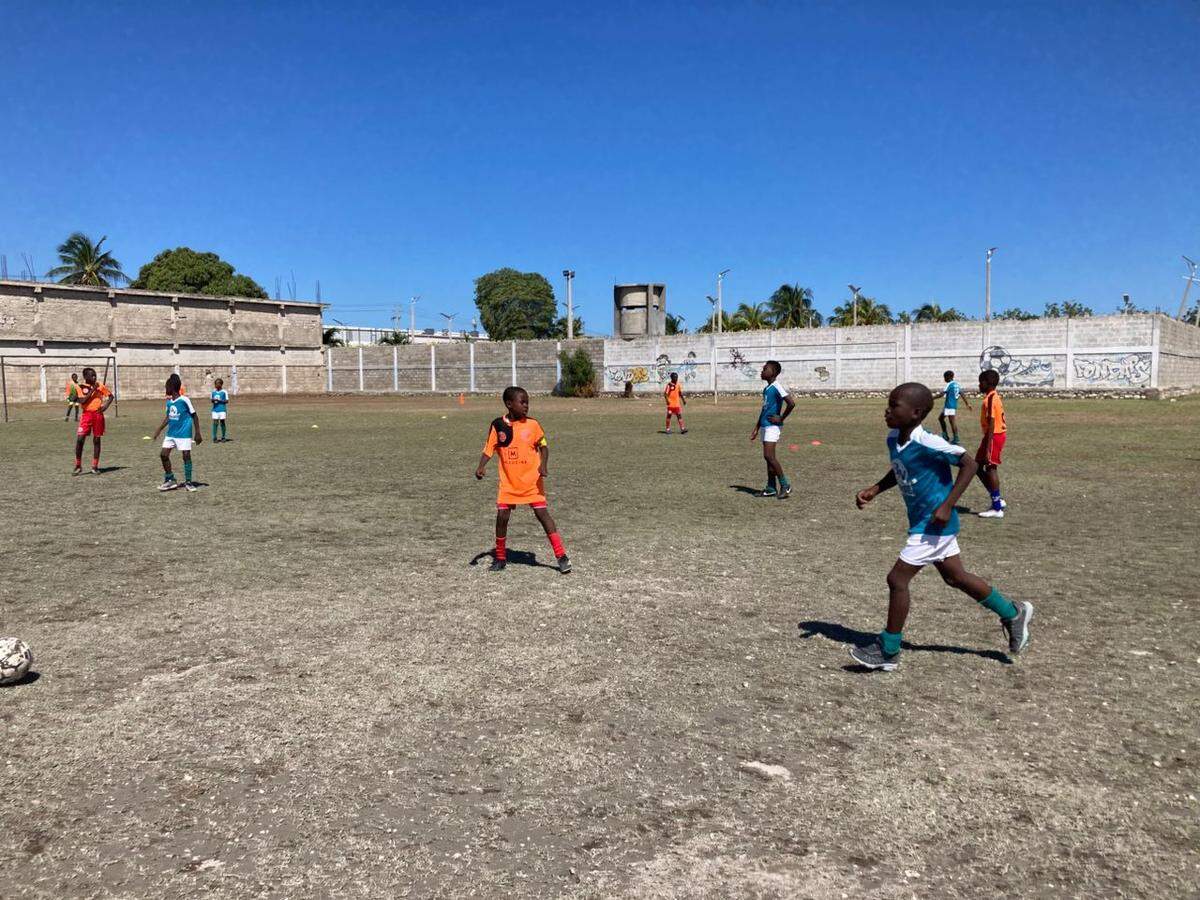
In making it back onto soccer’s biggest stage, Haiti did so without playing a single qualifying match on its home turf. Its main soccer stadium, Stade Sylvio Cator in Port-au-Prince, was overtaken by armed gangs in 2024, and hosted it last international match, a 2022 FIFA World Cup qualification against Canada, in June 2021.
Millet, who is now trying to raise funds to help Josué’s family bury him, recalls the promise the youngster once made to his father while watching Haiti play.
“He told his father, “One day I’m going to defend Haiti,’” he said.
“He believed one day he would be a great goalkeeper,” Stanley Jean-François, Josué’s coach, said.
Children robbed of childhood
Earlier this year, the United Nations warned that children in Haiti are increasingly “being robbed of their childhoods and their futures” as gangs expand their reach and recruit minors.
“Growing up means a daily struggle to just survive, live in constant fear, and be subject to intimidation, displacement, violence and trauma as gangs take advantage of the vulnerability of these children,” Vanessa Frazier, the U.N. special representative for Children and Armed Conflict, said this week as she concluded a visit to Port-au-Prince.
Gangs’ recruitment and use of children, she stressed during the visit, nearly tripled last year compared to 2024, while the U.N. estimates they account that minors account for as much as 50 percent of gangs’ memberships. The agency also noted that more than 500,000 children were estimated to be living in neighborhoods under gang control in 2024.
On Tuesday, the U.N. Office for the Coordination of Humanitarian Affairs reported that following the latest escalation in violence, the situation continues to deteriorate in Cité Soleil, with more than 10,000 people forced to flee their homes between May 10th and 15th.
The U.N. warned of a rapid increase in humanitarian needs, including high levels of children being separated from their families and entire families remaining trapped in affected neighborhoods without any access to the most basic necessities. There are also reports of homes being systematically destroyed.
The growing displacement crisis is already straining very limited access to healthcare. Just 11 percent of inpatient health facilities remain fully operational in the Port-au-Prince area. Just 11 percent of inpatient health facilities remain fully operational in the Port-au-Prince area, said Stéphane Dujarric, spokesman for U.N. Secretary-General Antonio Guterrres. He added that the U.N.’s World Food Program reported distributing 15-day rations containing rice, beans, oil and fortified flour to about 3,300 people who are taking shelter in temporary displacement sites in the capital. The program has also provided supplies to a local organization that provides hot meals to displaced people.
.jpeg "WhatsApp Image 2026-05-20 at 2.00.30 PM (1).jpeg")
This new wave of displacement is worsening an already critical hunger situation in Haiti, he said, in which more than half of the nearly 12 million people do not have enough to eat.
Though UNICEF has reported some children’s deaths in recent days, the U.N. said there is no confirmed overall death toll yet, though “it is believed that fatalities could number in the dozens.”
“All children I spoke with told me one thing: They want to go to school, play, learn and overall, simply be children,” Frazier said.
Josué was five years old when he joined Millet’s program, and had grown to become a quiet,but focused player, said Jean-François, his coach.
“He was wise, and focused on the task at hand,” he added. “He came to practice, and he worked.”
The family, who is religious and was still holed up in the church after being forced to turn back after the boy’s death on Saturday, sought shelter at the church because they had no place else to go, said Jean-François.
Youth sports in Haiti
Haiti’s return to the World Cup has cast a spotlight on the importance of youth sports in a country where athletics are primarily organized through independent academies and clubs like Millet’s Olympique École de Football. He supports the program through his La Fondation Notre-Dame du Perpétuel Secours, founded 19 years ago after he became stricken with cancer and wanted to do something to instill hope in the country’s youth.
“The work we do is education though sports,” said Millet, who also heads an association of roughly a dozen soccer academies in the Cité Soleil area that, like his program, draws youth from the capital’s poorest neighborhoods
“We teach them how to win and how to lose. We teach them how to nourish their bodies, how to dress, to conduct themselves,” he said. “We teach values, and respect so that once day they can accomplish something in their lives.”
But Haiti’s ravaging cycle of violence is increasingly making even this hard as the game Haitians love increasingly become a casualty of the gang wars.
Nearly 1.5 million Haitians — half of them children — have had to flee their homes. Amid the latest attacks more have been forced into sleeping on sidewalks and along roadways as entire neighborhoods empty out.
Dwindling opportunities
Before violence intensified after the July 2021 assassination of President Jovenel Moïse, Millet and his players traveled across Haiti to compete and to learn about the country. Field trips through the denuded mountaintops, for example, were designed to teach players the fragility of the land and their responsibility in protecting it.
Some players had even secured visas and traveled as far as France to compete internationally and get a glimpse of a world beyond their hardships.
Those avenues have narrowed. The suspension of international commercial flights into Port-au-Prince and visa restrictions, which under President Donald Trump make it impossible for even the wealthiest of Haitians to attend any of the U.S. matches if they don’t already have a U.S. visa, make travel outside of Haiti difficult.
Inside Haiti remains equally difficult.
Even the team’s three weekly practices a week are no longer guaranteed.
The day the most recent surge of violence erupted three weeks ago, the area was supposed to host a soccer tournament final.
It never happened.
“We haven’t had access to the soccer field,” Millet said. “I also do not have access to the children because everyone is in the streets, and you don’t know where anyone is currently.”
Millet’s soccer program once served as many as 1,000 children. Today its enrollment is a fifth of that due to funding constraints, he said.
‘Very real human pain here’
Daniel Rouzier, whose E-Power electrical power plant company supports Millet’s foundation, said the organization was already struggling before Josué’s death. He now fears the killing could further push the program to the brink.
“For years, Patrice organized tournaments and activities around Cité Soleil to give these children something rare and precious in rather violent environment: structure, dignity, hope, and a sense of belonging,” Rouzier said.
“Now, with the death of young Josué, one cannot begin to measure the trauma his friends, teammates, brother, and sister are carrying,” he added. “Beyond the headlines and beyond the politics, there is a very real human pain here — the pain of children who were simply trying to play football and remain children in the middle of chaos.”
Rouzier said Josué guarded the net “with the earnestness of children who still believe that a single match can save an entire season. He wore his uniform with pride—not merely as a garment, but as a way of inhabiting a dream.”
Bullet had no name
The bullet that killed the 11-year-old, has no clear source, said Rouzier, whose business is located in the area. “Was it a gang’s bullet? The police? Who can still clearly distinguish the boundaries in a country where fear has blurred the very faces of both protectors and executioners?” he asked. “Perhaps that is what chills the soul most of all: this normalization of evil. This confusion that has become a daily reality, where the innocent die without anyone even knowing precisely from whose hand their death arrived.”
For Rouzier, the hardest part is a child’s stolen future:
“What makes this death almost unbearable is the question it leaves behind—like an ember impossible to extinguish: What would have become of this child?”
This story was originally published May 20, 2026 at 12:49 PM.