What happens to a child born of rape? Grandma raises the baby her daughter rejects
READ MORE
Haiti’s Lost Generation
A Miami Herald investigation into the alarming rise of Haiti’s gang-related sexual violence
Expand All
‘Unimaginable’: The toll on Haiti’s women and girls raped by violent gangs
Rape, pregnancy and a stroke: The scars that sexual violence leaves on Haiti’s victims
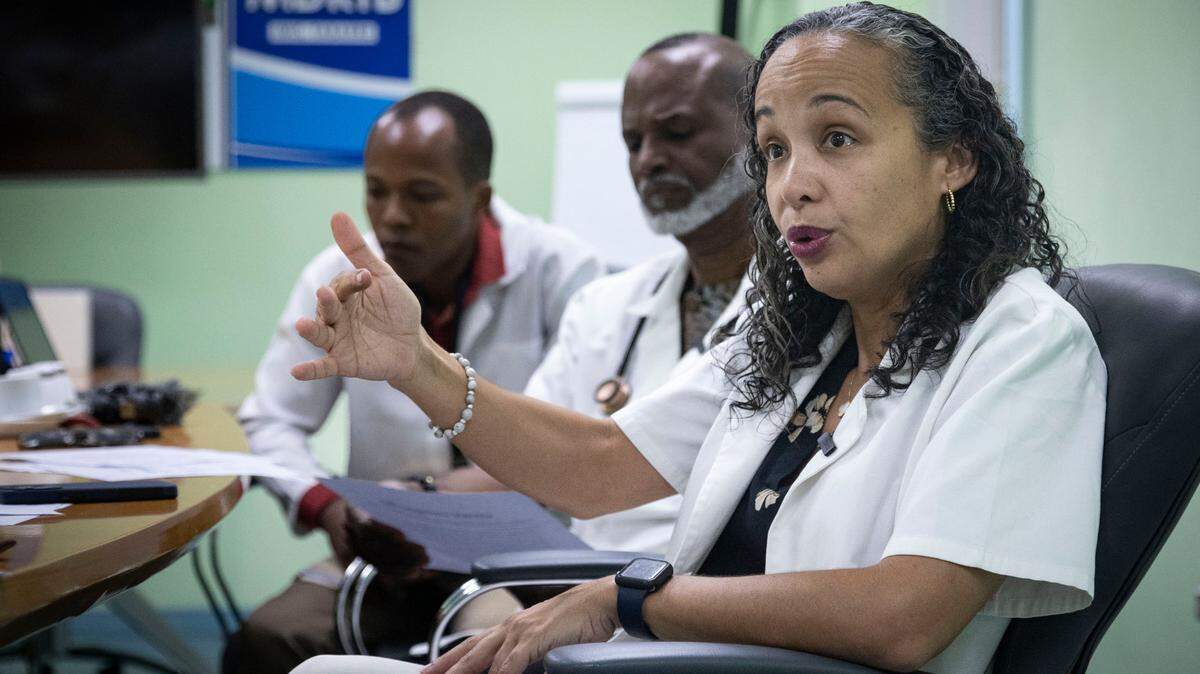
As gang rapes surge in Haiti, aid groups strain under demand for services
What happens to a child born of rape? Grandma raises the baby her daughter rejects
Viols: Les femmes et les filles, victimes invisibles de la violence des gangs
Editor’s note. This story includes disturbing descriptions of rape and violence. The names of rape survivors and their relatives have been changed to protect their identities and prevent retaliation from gangs.
The baby boy was born by caesarean section because his teenage mother’s body was too frail for a natural delivery. When doctors tried handing him to her, she averted her gaze and refused to hold him.
“Give him to my mother,” she said.
Then she made a demand of her mother: “Don’t put my name on the birth certificate of your child.”
The baby’s mother, Bébé, had become pregnant at age 16 after she was raped in a gang-controlled neighborhood on the outskirts of Port-au-Prince, the capital of Haiti.
By the time the baby was born in June 2023, Bébé’s mother, Olga, had already decided she herself would raise him, the only boy in a family of girls. She had come to the decision to keep the baby, whom she named Gael, despite the strain on her own marriage — “If I die, this is what kills me,” her husband told her — and the rejection of the child by her daughter, who refuses to this day to accept him.
Olga, however, just sees an innocent life.
The family’s ongoing ordeal underscores the trauma and hardship of so many women and girls, and their families, caught in the crossfire of Haiti’s relentless violence by armed groups.
Read more: ‘Unimaginable’: The toll on Haiti’s women and girls raped by violent gangs
‘No doctors’
In September 2022, while trying to get water from a spring, Bébé was cornered by a group of men and thrown to the ground and raped. When her mother found out, she tried getting Bébé to a doctor for treatment to prevent a sexually transmitted disease or to end a pregnancy.
“All I had on my mind was to have everything flushed out because I didn’t know if she was infected,” said Olga, using the Haitian Creole word lavaj, which can refer to either an abortion, which was illegal at the time, or the treatment that doctors provide in the first 72 hours to prevent sexually transmitted diseases.
It was not to be.
Rifle blasts from rival gangs battling for territory in her eastern Port-au-Prince neighborhood had blocked any passage west to the capital. After taking a motorcycle toward the border with the Dominican Republic, mother and daughter ended up at a hospital in the border town of Fond-Parisien.
But “there were no doctors, because there was nowhere they could pass to get to work,” said Olga, 54. “I was in distress. .... I didn’t know if she was infected with HIV.”
Read more: Rape, pregnancy and a stroke: The scars that sexual violence leaves on Haiti’s victims
Trapped by gang violence
For three months after the rape, Bébé, her parents and siblings were trapped by the gang violence around them. Fearing the attacker’s return and marauding gangs, the family abandoned their home in a rural stretch of farmland and fruit trees and hid in the bushes. There, Bébé’s belly grew.
As the situation around them grew more dangerous, mother and daughter decided to flee. They made their way to Croix-des-Bouquets, a sprawling city that was once a cultural hub, now marked by the constant sounds of rifle fire. From there, they made their way 11 miles south first to Thomazeau by motorbike and then on a bus to Martissant, to the home of Olga’s oldest daughter, Marie, 33.
Martissant wasn’t much safer. But the gang-controlled community of unpainted cinder-block homes offered moments of respite amid the daily crackle of automatic gunfire.
Exhausted by then, Olga said, she “no longer had the courage” to take her traumatized daughter to a hospital.
“A 16-year-old-child who was already three months along. That really shocked me,” she said of her daughter, who is now 19.
At her sister’s house Bébé was suicidal and had to be placed under constant watch for fear she would harm her unborn child. She was angry and, at times, violent, said Marie, a university student in her third year. “We were watching her closely.”
With medical care increasingly hard to find, Marie decided to try a rape-treatment center run in Port-au-Prince by Dr. Harry Theodore, an obstetrician-gynecologist. Bébé was seen by a doctor and a psychologist who, after the teen’s third visit, asked for her mother to join them to discuss Bébé’s trauma.
Initially, Olga, numb and crying nonstop, refused. “I didn’t have any more strength to support” Bébé, she said. After some nudging by Marie, Olga reluctantly went in.
“I felt like I wasn’t living,” she said, recalling the moment she decided to accompany her daughter to the treatment center. She said she found more than medical care. She found resolve: “I finally accepted the pregnancy.”
But Bébé did not.
The teen, who dreamed of being a nurse, began to see her sexual assault as the end of her life. Along with her trauma came suicidal thoughts and violent outbursts.
“Mama, mama,” she cried. “I cannot accept this.”
A common response
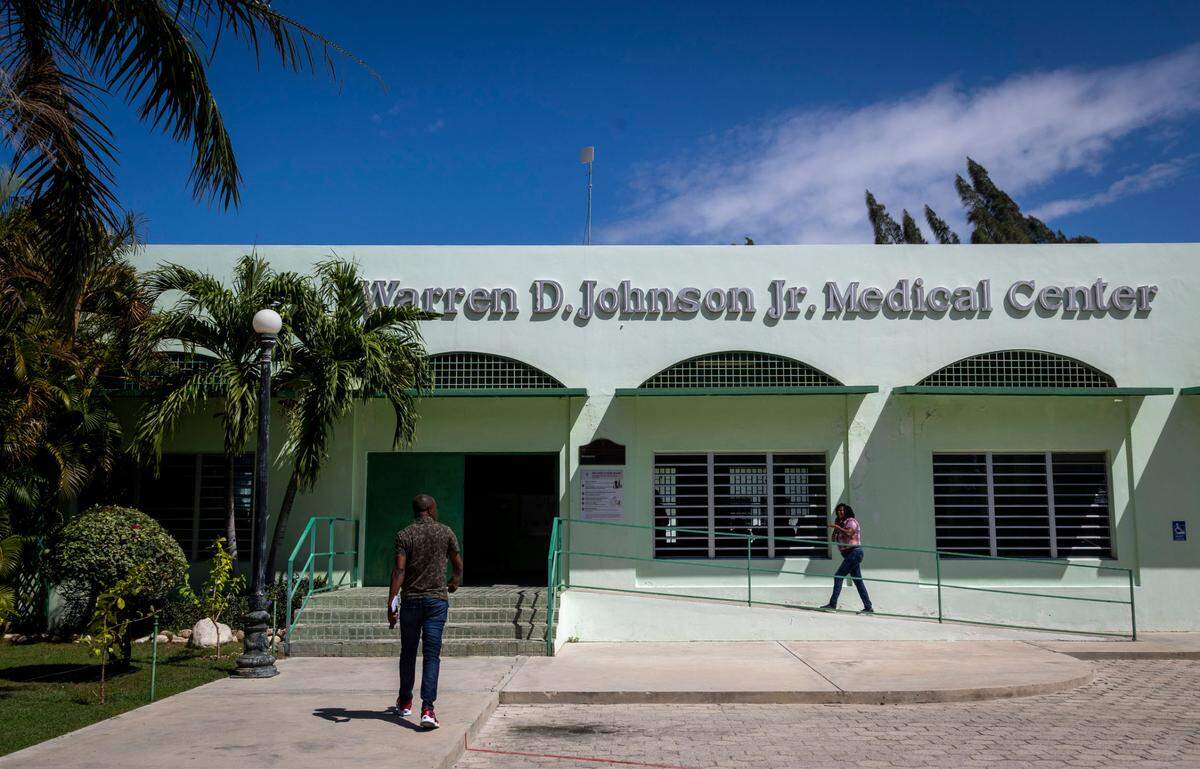
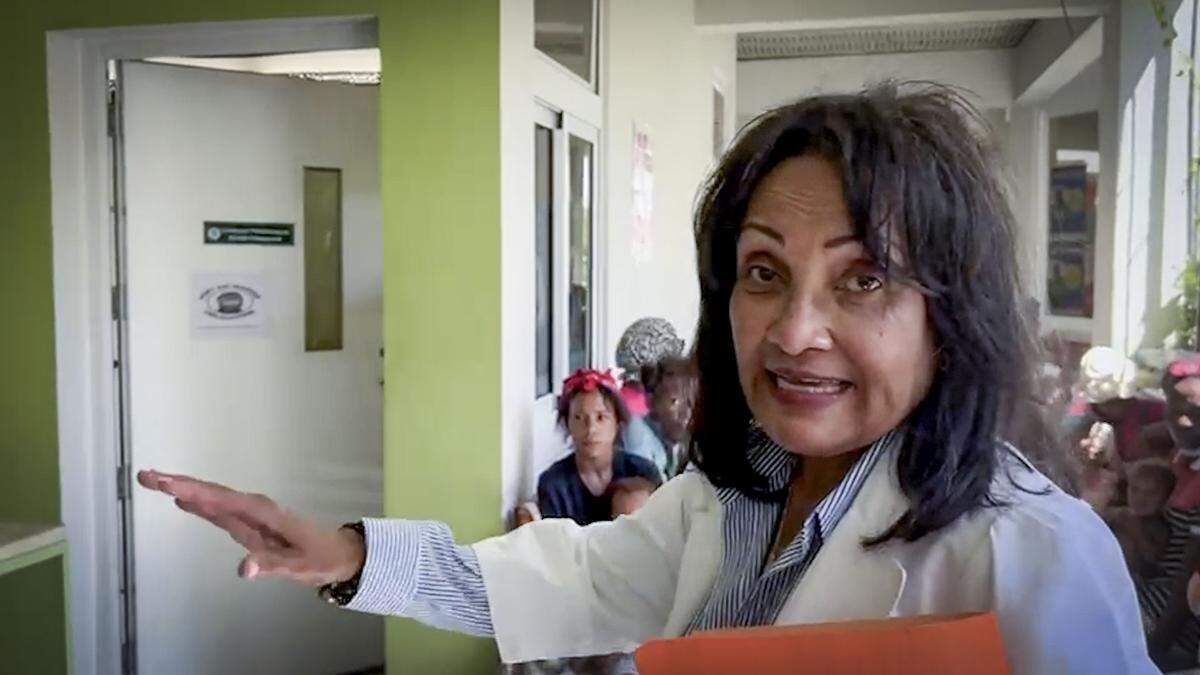
When Bébé, her mother and sister went for help at the treatment center, they were able to get assistance with their rent and Olga was given a volunteer position at the clinic, said Dr. Marie Marcelle Deschamps, the deputy director of the Haitian Group for the Study of Kaposi Sarcoma and Opportunistic Infections, known by the French acronym GHESKIO, which oversees the rape-treatment center.
“We were going to do everything to help them get out of this crisis,” Deschamps said. “The person you see here today,” she said of Olga “is not the person who first walked through those doors.”
Olga doesn’t disagree. “If you see today I am here, it’s thanks to the institution that gave us all the support we needed.”
Bébé’s rejection of her child and her emotional detachment are a common response, according to doctors, who describe not just a disconnect by rape survivors to their children but even efforts by some women to harm babies born of the attacks.
“It’s as if it’s a totally foreign child that they’ve never met before, that didn’t come from their womb,” said Dr. Jean William Pape, whose two GHESKIO clinics are struggling to provide care amid funding cuts and the loss of staffers to gang abductions. “It’s very, very sad. And there is really not very much we can do except to try to provide them as much counseling as we can and hope that they will be able to cope.”
Read more: As gang rapes surge in Haiti, aid groups strain under demand for services
More than two years after her rape, Bébé is still angry and struggles with suicidal thoughts. She has been unable to attend school because of the high fees and blames herself for her mother’s financial problems. Meanwhile, she still wants nothing to do with Gael, who turned 2 in June and is enrolled in preschool.
Bébé has made some progress mentally but still cries when she thinks of the drastic turn that her life has taken.
Meanwhile, after their landlord last year refused to renew their $1,100 yearly lease, the family was forced to move to a more expensive house that Olga struggles to pay for with the $114 monthly salary that she makes at GHESKIO.
“I can’t even pay the bus with it, but it’s a job,” said Olga, who is also caring for her three other school-age children.
A narrow escape
Like many victims of gangs, Bébé and her family had already faced the harrowing realities of the violence that millions of Haitians deal with each day. Olga’s business selling second-hand clothes, curtains and bed linens had been destroyed by gangs. She narrowly escaped being raped herself.
A few months before her daughter’s rape, Olga said, gang members had commandeered her public bus in Croix-des-Bouquets and kidnapped everyone on board. As the passengers made their way into a wooded area, a young gang member recognized her. Remembering she had served him water from her well, he told the others, “This is mommy,” and demanded they let her go.
That terrifying ordeal, and realization that she was surrounded by gang members in her small community, later made her fearful of reporting her daughter’s rape.
“This is why I didn’t push, make more of an effort,” Olga said. “I was already a near victim of a rape, but was saved at the last minute.”
Lasting trauma, innocent victim
A teen pregnancy was not what she had planned for her life, Bébé says, adding through tears that she still thinks of ending her life.
“You can’t accept him,” Olga recalled telling her daughter as she pleaded for help ending her pregnancy even after it was too late. “But I do.”
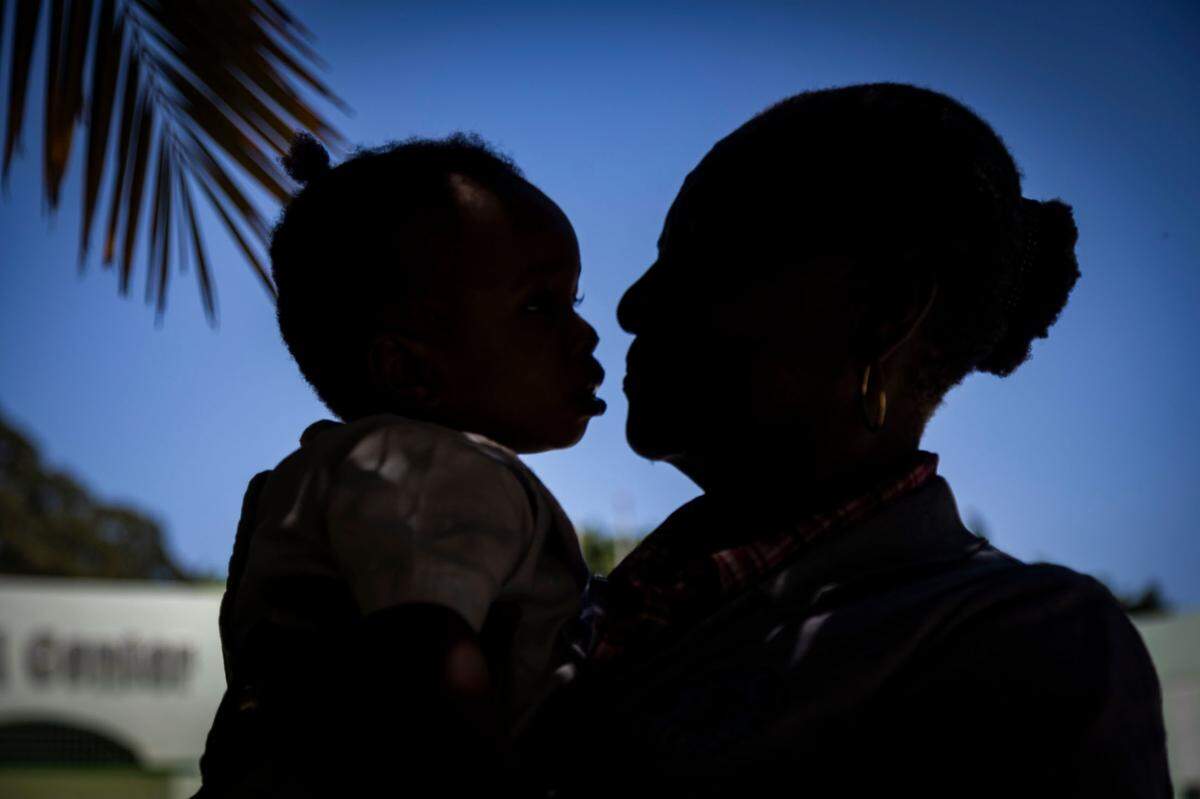
Olga said that through prayer and introspection she has come to not only accept the boy but view him as if she had given birth to him herself. Inside the conference room at GHESKIO, the boy runs between her and his aunt, ignoring his birth mother, who says through tears: “Every time I look at him, I remember what they did to me.”
As the boy runs back and forth, he stops and then goes to Olga, the only mother he has known.
Olga cradles him. She loves him, she says, not just because he is her blood, she says, but because he is innocent.
“I see a child who has entered a family, and we have to give him guidance and all of our support,” Olga said of Gael. “We have to give education and support so tomorrow he can become a citizen of the country.”
Then she adds, “And so he doesn’t become a bandit.”
This story was originally published December 12, 2025 at 5:30 AM.