Rape, pregnancy and a stroke: The scars that sexual violence leaves on Haiti’s victims
READ MORE
Haiti’s Lost Generation
A Miami Herald investigation into the alarming rise of Haiti’s gang-related sexual violence
Expand All
‘Unimaginable’: The toll on Haiti’s women and girls raped by violent gangs
Rape, pregnancy and a stroke: The scars that sexual violence leaves on Haiti’s victims
As gang rapes surge in Haiti, aid groups strain under demand for services
What happens to a child born of rape? Grandma raises the baby her daughter rejects
Viols: Les femmes et les filles, victimes invisibles de la violence des gangs
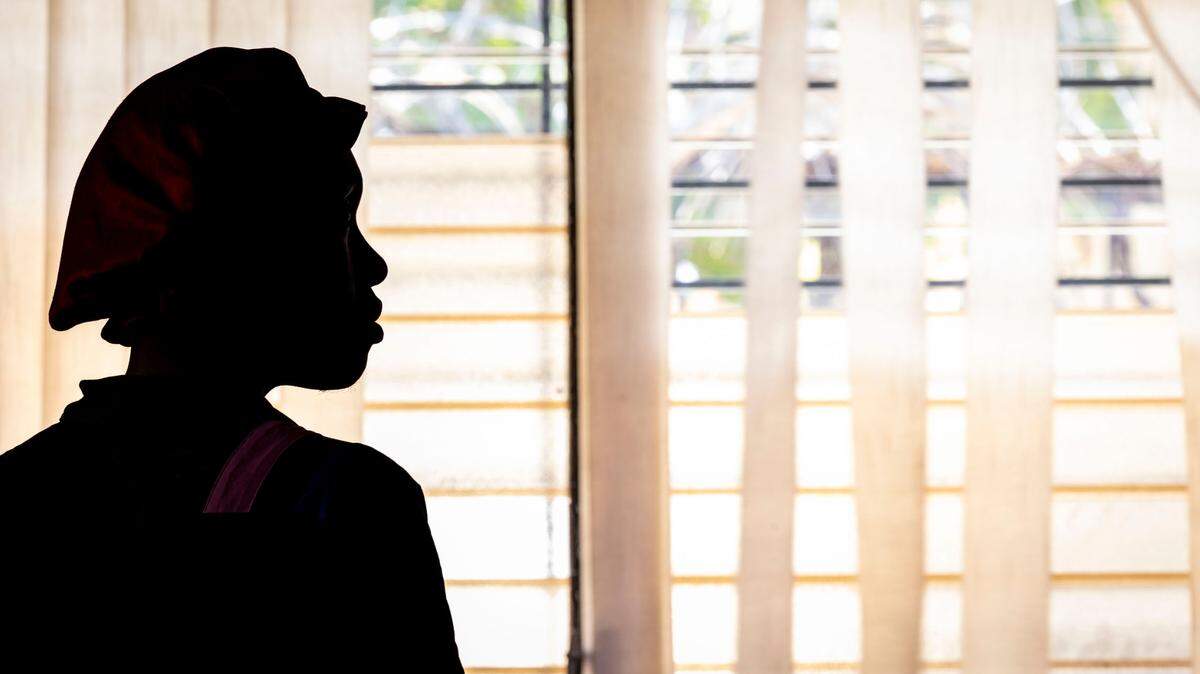
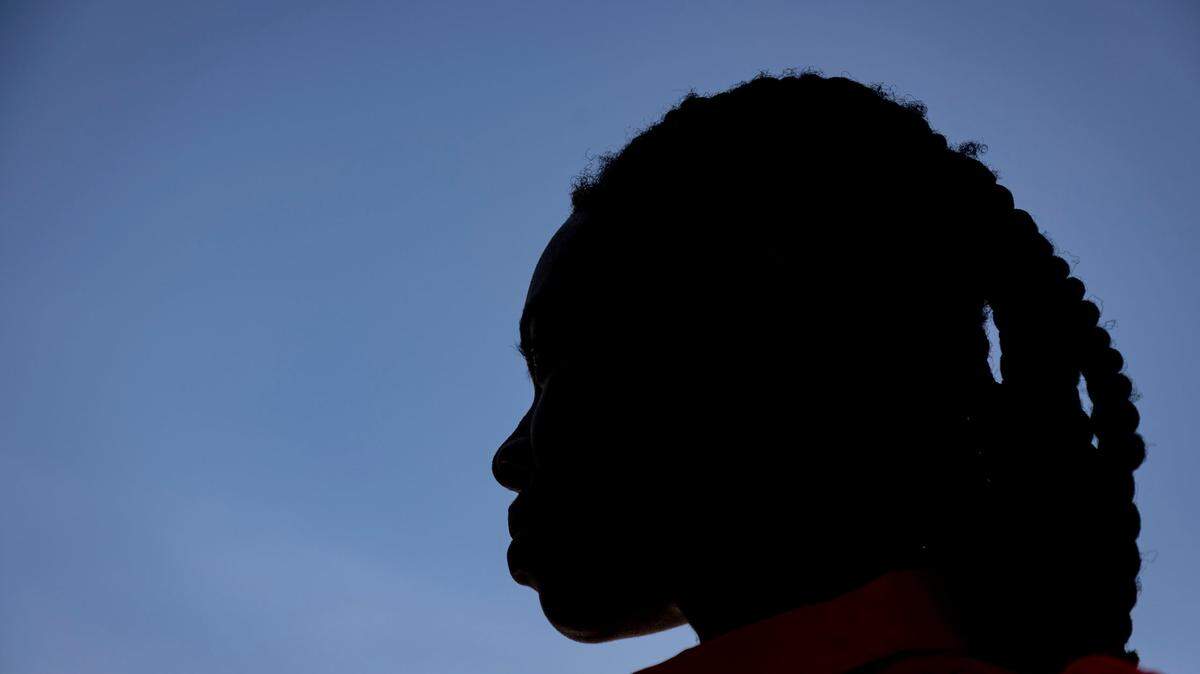
Editor’s note. This story includes disturbing descriptions of rape and violence. The names of all rape survivors have been changed to protect their identities and prevent retaliation from gangs.
Judith and her family had just returned home after weeks of sleeping outdoors in a public square near the airport when gunmen stormed their Brooklyn neighborhood in Port-au-Prince’s sprawling Cité Soleil slum.
Going house to house, the men fired automatic weapons indiscriminately, forcing their way inside. The terror didn’t stop there: They shot the residents to death and set fire to their humble homes.
At the time of the assault in July 2022, Judith — along with relatives and friends, including a 7-year-old niece — had holed up inside the family’s makeshift shack. The five gunmen, all wearing hoods, stormed inside, tearing down the weathered zinc walls.
“They beat us, they fought us, they raped us,” said Judith, who was 23 at the time. The gunmen raped the men, she added, and “even the girl.”
Physical and psychological scars
Haiti’s armed criminal groups are leaving in their wake not just a trail of bullet casings and the grief of survivors of the thousands of people murdered each year, but thousands of victims of sexual assaults. Subjected to brutal rapes, sometimes by multiple gunmen at once, survivors bear deep emotional and physical scars.
This year alone, humanitarian organizations have reported more than 7,400 cases of rape and other gender-based violence in Haiti between January and September, an average of one per hour.
While children account for 15% of the reported sexual-assault cases, there are no exact statistics on how many children have died as a result of sexual attacks. Judith’s 7-year-old niece was one of them.
After the attack someone was able to take the girl to the hospital, Judith said. “I don’t know what happened, why she died.”
Read more: ‘Unimaginable’: The toll on Haiti’s women and girls raped by violent gangs
Upended lives
Survivors of Haiti’s surging sexual violence are finding themselves repeatedly victimized as they are forced from their homes, infected with sexually transmitted diseases and, in many cases, ending up pregnant from the attacks.
Haitians like Judith, who once dreamed of a different future until her rape upended her life, often are victims of multiple traumas as spaces in gang-controlled neighborhoods become notorious zones of conflict.
For months after she was raped, Judith and her 28-year-old sister were trapped inside Cité Soleil, a patchwork slum of densely packed homes made of crumbling cinder blocks and rusted tin. The only way out was by a walkway with a name that has become synonymous with the rapes of women inside the slum: Dèyè Mi, Haitian Creole for “Behind the Wall.”
By the time Judith and her sister made it out of the slum, it was too late. “I was already six or seven months pregnant,” Judith, now 26, said, recalling the day she finally went to see a doctor, and he confirmed what her swollen belly had already revealed.
The father, she said, was one of the assault rifle-toting gangsters who raped her. Her sister, she said, also became pregnant that day with her rapist’s baby.
“The situation was difficult for us because I didn’t have anyone,” Judith said, breaking into tears as she sat inside the conference room of the National Human Rights Defense Network in Port-au-Prince.
Rape survivors unseen, unheard
Like most victims of sexual violence, Judith did not report her attack to authorities. She ended up at the human-rights office by chance. Desperate for help, she followed a group of female survivors of sexual violence one day. Once inside, she shared her story, as others in the group spoke of other rapes and mass killings that had taken place during the deadly turf wars between rival gang coalitions.
But other than documenting the women’s harrowing stories, there is not much the human-rights group can do other than listen and give the women taxi fare to return home, if they have one to go to.
Judith now lives under the constant threat of being thrown onto the street with her 2-year-old son. Despite the apparent calm that has returned to Brooklyn, she lacks money to rebuild her tin shack, which the gangs destroyed.
Haiti’s rape epidemic is particularly severe in the poor, working-class and rural communities that have increasingly become the targets of armed gangs. Forced onto the streets or into ghastly displacement camps with no clean water, no sanitation and open spaces that leave them at risk of new assaults, the women say they often feel unseen and unheard.
“So many of the survivors that we now see are displaced and are in a situation of further vulnerability,” said Diana Manilla Arroyo, mission head for the French medical charity Doctors Without Borders/Médecins Sans Frontières.
The internally displaced make up almost 70% of all reported rape survivors, according to the U.N.’s latest figures. At the same time, with one in eight children displaced from their homes, they are increasingly exposed to exploitation and abuse, UNICEF says.
A death, a birth, a stroke
Judith’s eventual escape should have given her a shot at a fresh start. Instead, it was the beginning of more hardship and more suffering. She discovered she was pregnant from the rapes and found herself alone after her sister fled to the countryside.
A phone call to her mother, who lived in Jérémie in the far western reaches of the country, led to more tragedy. As her mom headed to Port-au-Prince on a bus, the vehicle and its passengers were caught in a deadly gang crossfire.
“She took a bullet in the neck and died,” Judith said. Her mother’s body was never recovered.
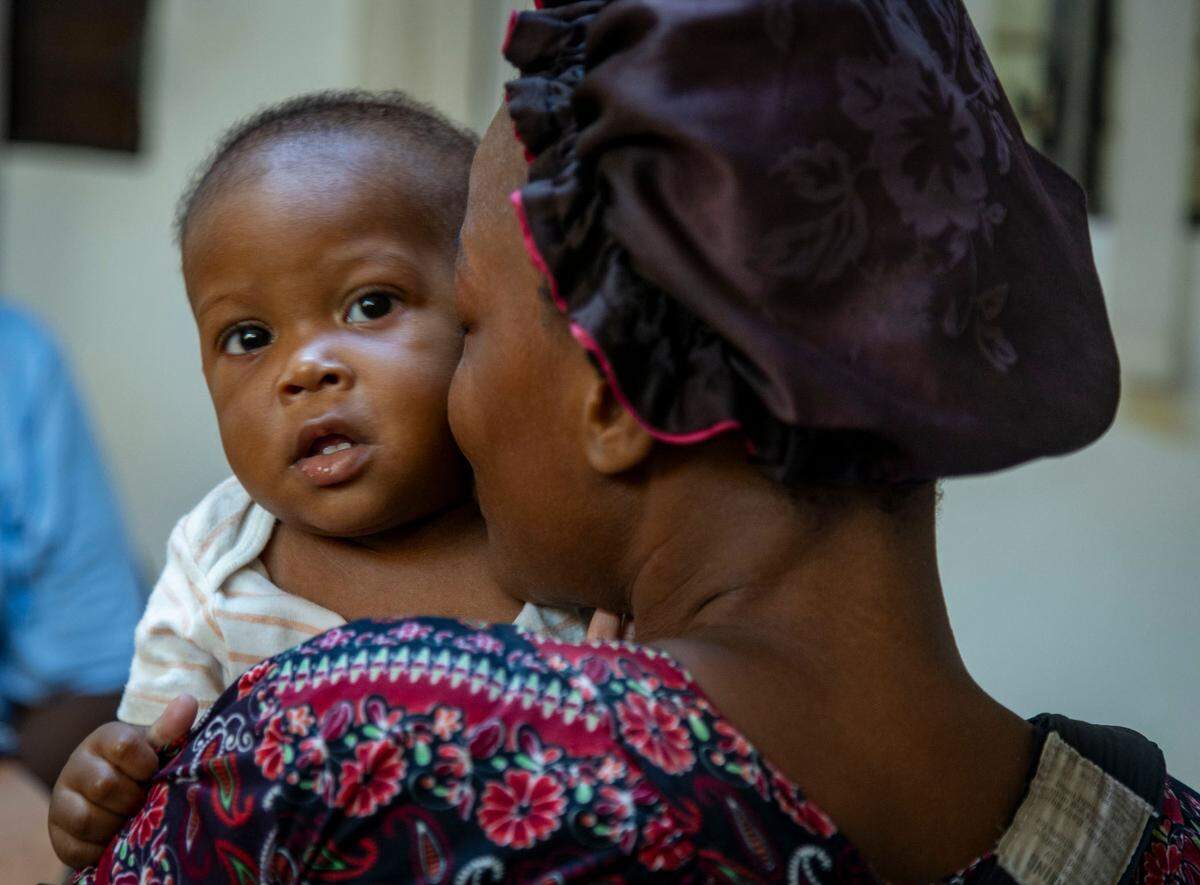
In September 2023 Judith gave birth to a boy, Judson. Twenty-two days later, she suffered a stroke that left her partially paralyzed. Although her walking has improved, the effects of the stroke linger in her hands, which remain numb.
She is homeless and goes hungry most days. Sometimes she sleeps on the streets, other times on the kitchen floor of a woman who occasionally lets her stay in exchange for helping her with household work. The woman, Judith said, “is always telling me that I need to find a place to go because I cannot stay. Her husband gives her problems because of my presence.”
Read more: As gang rapes surge in Haiti, aid groups strain under demand for services
‘It makes me cry’
Judith says she loves her son, but also sees him as the reason for her pain.
“He’s placed me in all of this suffering,” she said, trying to rock away her toddler’s hunger pangs.
Like many of the urban poor, she has been victimized by Haiti’s deeply rooted colorism, sexism and classism, which have fueled a culture of silence and a lack of outrage about sexual assaults.
Those who know about her rape mock and humiliate her, Judith says. When they see her begging on the street with her son, they demand that she give him away.
“There are people who tell us that they don’t want to live next to us,” Judith said. “They don’t want their children to play with my child because he is a child of a rape. It makes me cry.”
A metaphor for Haiti
Before the attack, the young mother, who has the equivalent of a ninth-grade education, was attending school and worked as a street vendor. She aspired to have a career as a journalist. Today, she longs for a miraculous guardian angel — or at least $200 to resume her business of selling food and used clothing on the streets. She wants for her son the future that she has been denied.
“I always think that if I could find someone to help me, to do something for me. I would like my child to finish school so that the hardship that I am going through, he doesn’t go through,” Judith said of Judson, who at 11 months began showing signs of developmental delays. “I always think if someone would give me some money, I will use it to … do something for the baby, because I wouldn’t like him to end up like that.”
Judith’s ordeal is in many ways a metaphor for Haiti: A nation beset by tragedy and trauma, desperately in need of help yet largely unseen by the world.
Still, despite having every reason to be hopeless, Judith says she is not.
“There is a proverb,” she said, reciting well-known words of hope and preservation in Creole: “Toutotan tèt ou poko koupe, espere met chapo.”
“As long as your head hasn’t been cut off, you can always hope to wear a hat.”
This story was originally published December 11, 2025 at 5:30 AM.