
Rubio takes harder line, says economic reforms in Cuba ‘impossible’ under current leaders
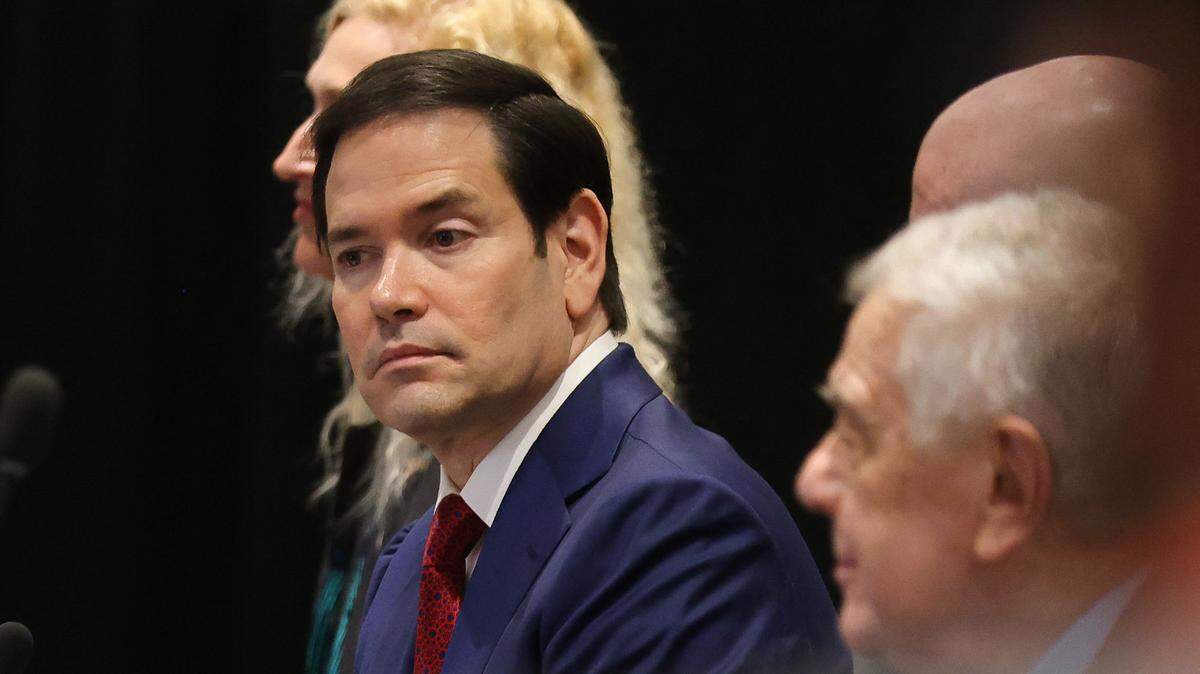
In a blunt assessment, Secretary of State Marco Rubio said Tuesday that the profound economic reforms Cuba needs to get out of a severe humanitarian crisis can’t happen under the country’s current leadership, raising questions about the future of U.S. talks with Havana.
In an interview with Fox and Friends, Rubio said Cuba is a failed state, “but in order for it to get better, they do need very substantial and serious economic reforms. Those serious economic reforms are impossible with these people in charge; it can’t happen.”
Rubio also made an argument about Cuba posing a national security risk to the United States.
“These people in charge aren’t just economically incompetent,” he said. “They have rolled out the welcome mat to adversaries of the United States to operate within Cuban territory against our national interests with impunity. We are not going to have a foreign military or intelligence or security apparatus operating with impunity 90 miles off the shores of the United States. That’s not going to happen under President Trump.”
Rubio, a Cuban American former U.S. senator from Miami, has been leading negotiations with Raúl Castro’s grandson and other Cuban government officials. He told Bloomberg days before news of the backchannel negotiations were made public in February that he thought Cuba’s leadership didn’t know how to fix their country. But the hardened tone Tuesday marks a shift from earlier statements, when he urged Cuban leaders to implement economic reforms and said the United States did not expect changes overnight.
On April 10, a delegation of senior State Department officials met in Havana with Cuban officials to discuss a number of negotiating points, including compensation for expropriated U.S. properties, the release of political prisoners, economic reforms, greater political freedoms, and national security concerns about U.S. foreign adversaries using Cuban territory. Chinese and Russian intelligence are believed to have a foothold on the island.
Following the talks, a senior U.S. department official urged Cuba to reach a deal soon, saying the Cuban government has a “small window” of time. But Rubio’s remarks suggest the administration is getting impatient with Cuban leaders’ lack of response and strong pushback on some key U.S. demands, including political ones.
Cuba’s appointed president, Miguel Díaz-Canel, has repeatedly said the island’s system of government is not on the table and that his country is going to make any political concessions. He had also denied the existence of political prisoners.
Miami Herald sources say Cuban officials have offered economic deals to the Trump administration, but that’s not their public messaging. Instead, Díaz-Canel and other senior diplomats have insisted that, while Cuba wants peace and dialogue with the United States, it is also preparing to resist a U.S. military attack.
Cuban diplomats have been active in trying to secure humanitarian aid and financial support from foreign nations to help the communist-run country resist U.S. pressure, the sources said. Cuban state media has also advertised new economic deals with Russia and successful tests to refine local Cuban crude, which could help the country weather fuel shortages stemming from the Trump administration’s pressure on oil suppliers to the island.
In an interview with Brazilian news outlet Opera Mundi, Díaz-Canel threatened to call off the negotiations after insisting Cuba’s internal affairs were not under discussion.
“We have always started from that premise: a condition of equality, of respect for our political system, our sovereignty, and our independence, under the principle of reciprocity and respecting international law,” he said, speaking about Cuba’s conditions.
Asked what would happen if the U.S. does not accept Cuba’s terms, he replied:
“There is no negotiation. If one of the parties does not favor that dialogue—does not favor that conversation—but instead seeks to impose, it breaks off the conversation; it breaks off the negotiation.”
This story was originally published April 28, 2026 at 1:07 PM.