
The colonel with a Rolex and a yacht: Raúl Castro’s grandson holds key to Cuba deal
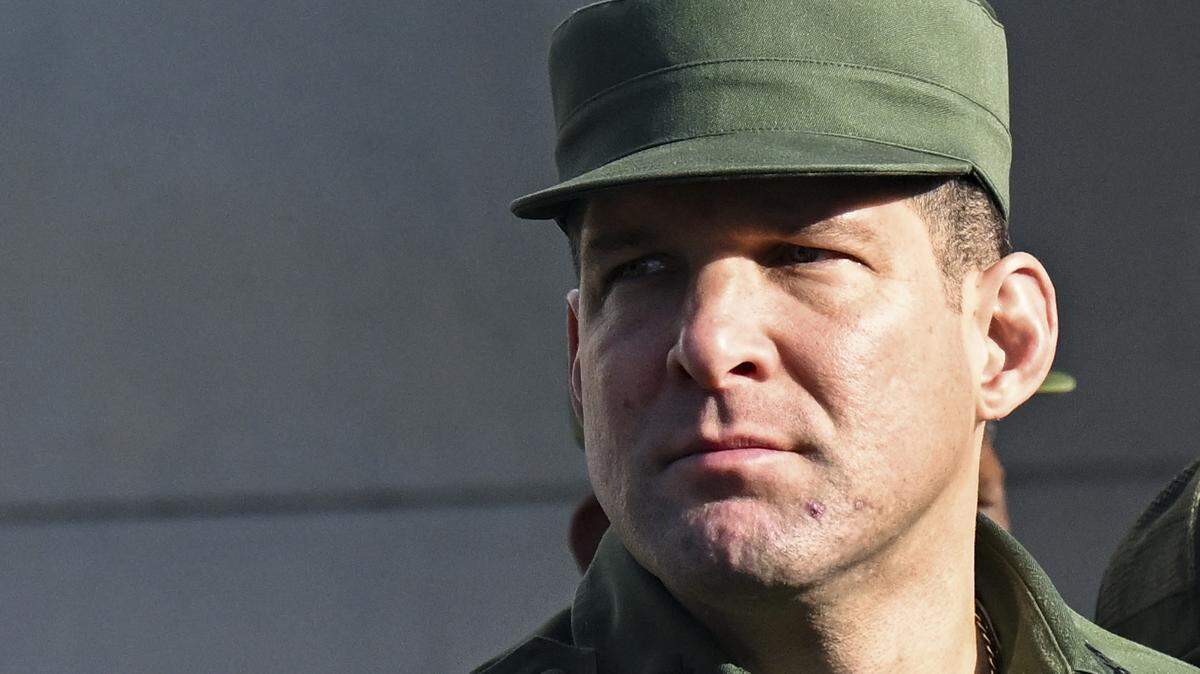
A decade after Fidel Castro’s death, the fate of his communist revolution might be tied to an unlikely figure: his great-nephew, a colonel who goes by the nickname “El Cangrejo,” the Crab, and has a penchant for the sort of capitalist luxuries —yachts, VIP parties, private jets — that Castro made sure most Cubans could not even dream of.
Raúl Guillermo Rodríguez Castro, 41, is Raúl Castro’s oldest grandson. He is the son of Castro’s daughter, Deborah, and the late Gen. Luis Alberto Rodríguez López-Calleja, the man who built GAESA, the military empire that controls much of the island’s economy.
Raúl Castro, 94, is formally retired but remains the “leader of the revolution,” as state media call him, and continues to make the decisions that matter in the country — with the help of his favorite grandson.
That’s why El Cangrejo has come to play such an unexpectedly large role in one of Cuba’s most delicate moments in recent history. He is the key person in his grandfather’s orbit that the Trump administration has reached out to see if he would be willing, in President Donald Trump’s terms, to facilitate “a deal” that could begin dismantling more than six decades of communism.
On Feb. 26, Rodriguez Castro, who also goes by “Raulito,” boarded a Dassault Falcon 900 jet at a military airport in Baracoa, east of Havana, and flew to Saint Kitts to meet one of U.S. Secretary of State Marco Rubio’s top advisers on the sidelines of a meeting of Caribbean leaders.
In another sign that he is the power behind Cuba’s formal leadership, Rodriguez Castro got his own meeting with a senior State Department official when a U.S. government delegation visited Havana for talks earlier this month, even though he holds no government or Communist Party title.
That the Trump administration is negotiating with Raúl Castro through his grandson has come as a shock for many Cuban Americans in Miami. In another era, that would be cause for massive demonstrations. Nowadays, the community is split on the subject, according to a recent Miami Herald poll.
For Rubio, the Cuban-American secretary of state who is guiding the negotiations, reaching out to the grandson was a no-brainer, since the Castro family remains at the center of power in Cuba, and the country’s formal president, Miguel Díaz-Canel, is perceived as a figurehead. In a recent NBC interview, Díaz-Canel admitted that he himself has not spoken to Rubio.
Rodríguez Castro is seen as a younger, less ideological figure who has traveled the world and has an incentive to secure the family interests in a future Cuba. And being Raul Castro's closest aide and enforcer, he provides a direct channel to his grandfather, to whom he had dutifully served as the head of his personal security detail. In 2016, Rodriguez Castro was reportedly named head of the Interior Ministry’s Personal Security Directorate. It is not known whether he held onto the title after his grandfather handed the top Communist Party position to Díaz-Canel in 2021.
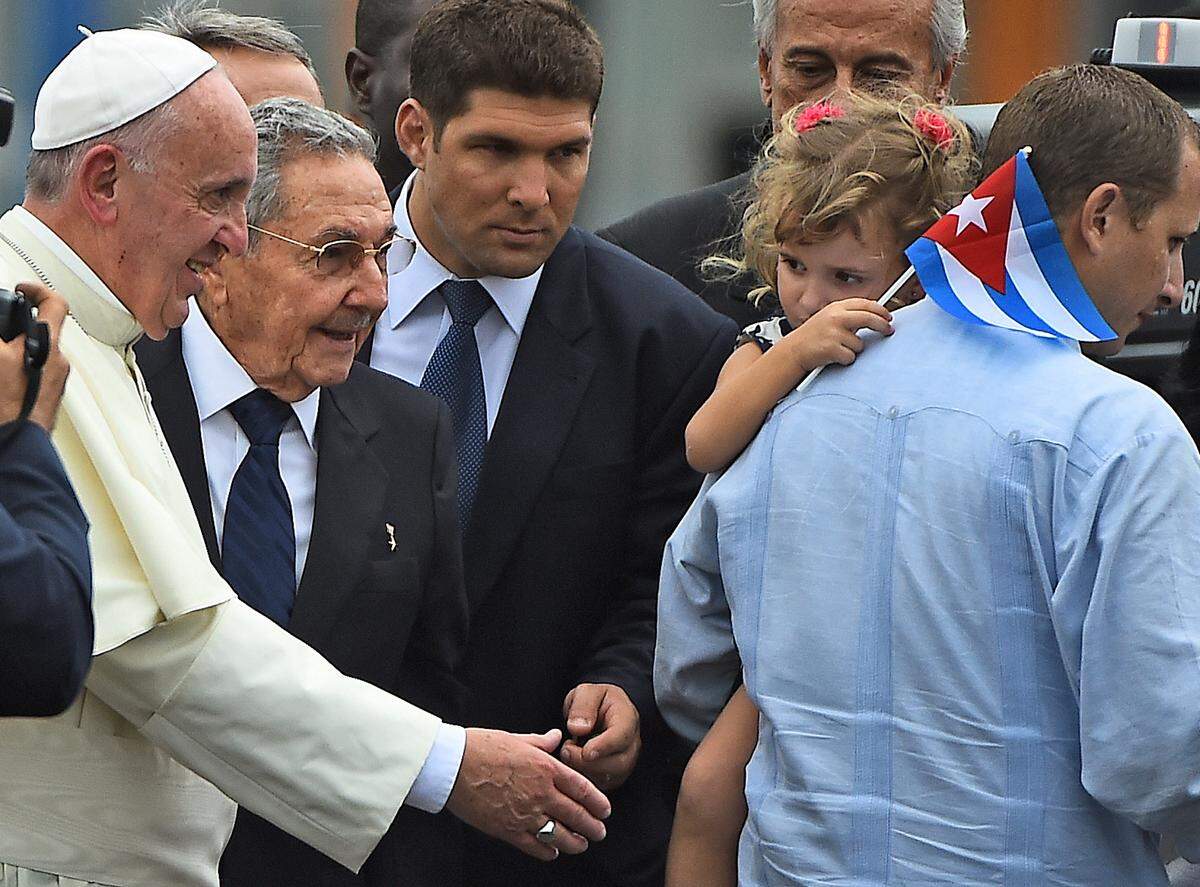
Wherever Raúl Castro goes, his grandson is always a few steps behind. Rodriguez Castro frequently appears in photos whispering in his ear and, lately, choreographing every movement of his frail-looking grandfather during his scarce public appearances.
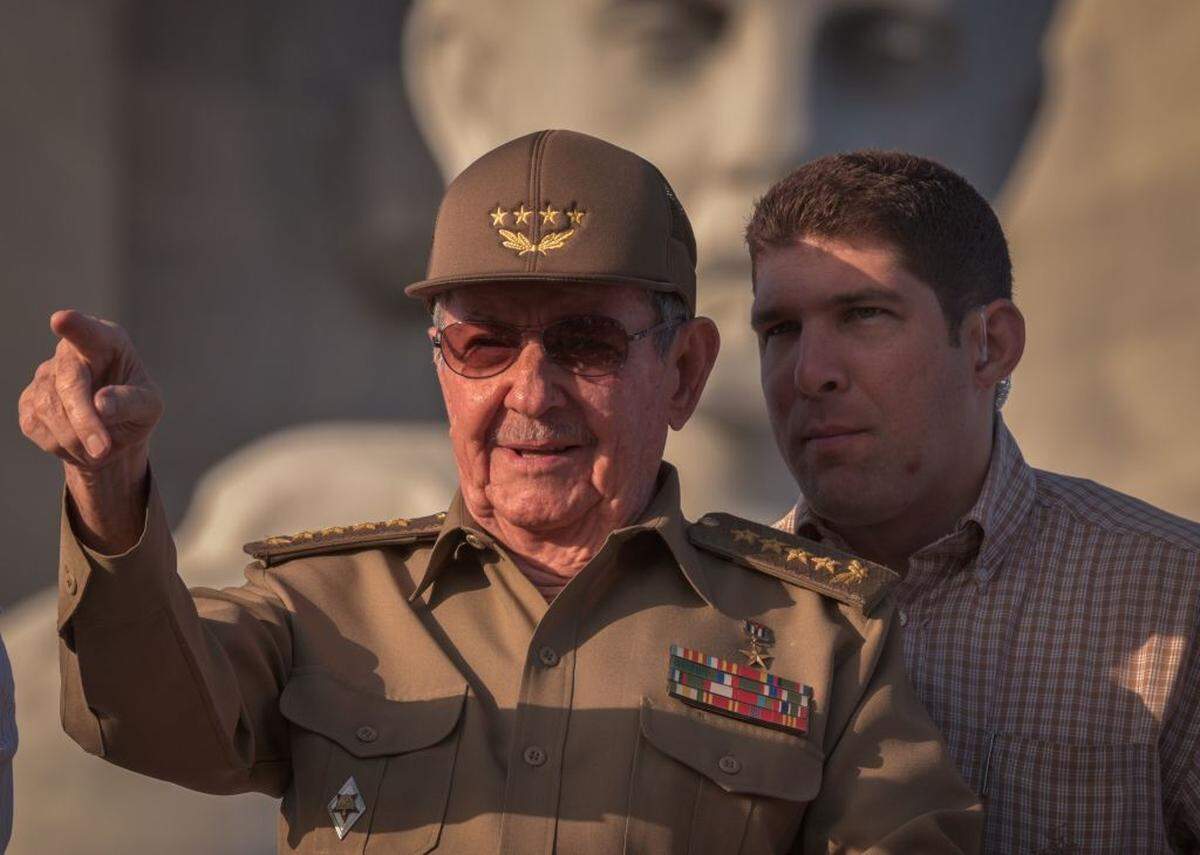
Raúl Castro, described by relatives, friends and enemies alike as a devout family man, has a particular fondness for the grandson bearing his name.
“There is no doubt that the grandfather sees through the grandson’s eyes,” a source with knowledge of the conversations between Rubio’s team and Rodríguez Castro told the Herald.
Trump administration officials have asked Cuba observers and exiles to identify the person who might be Cuba’s version of Delcy Rodriguez — the Venezuelan vice president who took over the top job when U.S. forces captured strongman Nicolás Maduro earlier this year. While Trump sees Rodriguez as a reliable partner who can safeguard American interests while ensuring internal stability, few believe Rodriguez Castro could be the public face of a similar agreement in Cuba.
“He is not someone who possesses a coherent system of thought, nor is he trained to hold a truly significant position,” said a source close to the Castro family. “The reality is that he serves as his grandfather’s go-between — being the person closest to him —and that alone makes him an extremely important figure.”
A special bond
Rodriguez Castro was born with an extra finger due to a genetic condition called polydactyly. Relatives jokingly started calling him El Cangrejo, the crab, a nickname he has embraced wholeheartedly, even stamping it on a New York Yankees T-shirt he was seen wearing on stage at a concert of the popular reggaeton group Gente de Zona in Varadero.
The special bond between grandfather and grandson was forged in Rodríguez Castro’s childhood. He wanted so much to become his grandfather’s bodyguard that he left his parents’ home and moved to live with Castro and his grandmother, the late Vilma Espín, when he was around 11 or 12, the person with knowledge of his family history said.
Rodriguez Castro grew up surrounded by the young military officers who make up the multiple security rings around Castro’s secluded home in Havana, a life of “weapons, gyms, and physical exercises[ that] shaped his world view,” said the source, who asked for anonymity for fear of retaliation.
He studied in the military school known as Los Camilitos and later graduated from the University of Havana, where he studied accounting and finance.
Although not a good student, that didn’t seem to matter much: “He grew up in a bubble, totally godlike,” said the source. “Since he was his grandfather’s favorite grandson, many people approached him to reach his grandfather through him. That puts him in contact with all the important people in Cuba.”
If he wanted to play baseball, he would play with Cuba’s national team, the source said — an account confirmed by Cuban pitcher Odrisamer Despaigne. If the government were going to award a loyal official a house, Rodriguez Castro would be the one handling it.
“He has had excessive power for quite some time,” the person with knowledge of the family said.
A reggaeton fan
The fact that Castro’s grandson is in the middle of top-level conversations that might prove vital to Cuba’s future has baffled many exiles and Cubans on the island, who knew of him only from a steady drip of controversial videos leaked in recent years.
Unlike in the past, when Fidel Castro for decades kept his marriage to Dalia Soto del Valle a secret and his children out of public view, details of Rodríguez Castro’s private life have surfaced on social media and in images published by Miami media outlets.
There are wedding photos from an early marriage to a woman named Sheyla Puentes, around 2007 or ‘08, with whom he has two daughters. One of the images shows Raúl Castro tightly embracing his grandson. Another one shows him next to his father, from whom he apparently inherited his blue eyes and tall height, though not his wits, sources say.
There’s also the scandalous images of Rodríguez Castro enjoying the jet-set life on a yacht, using an expletive to joke to friends in mangled Spanish that the whole experience “feels like we are in Miami, in Cancún.” In the images leaked to America TV in 2022, he is seen with Daliene Gomez, whom he reportedly married and later divorced. The Miami outlet also reported that they had a daughter. Later, he was romantically linked to Cuban model Sheila Mariño.
Over the years, videos and photos have shown him hanging out with famous baseball players on his yacht and dancing on stage with Cuban reggaeton stars. A much-talked-about video from 2017 shows him trying to emulate the suggestive dance of the members of the Cuban salsa orchestra Charanga Habanera, some of whom were guests at his first wedding.
That he has so fully embraced reggaeton — a genre popular all over the world but particularly resonant with Cubans fed up with socialism for its celebration of consumption and capitalism — is another eloquent example of how the younger Castros, who have grown up in a life of privilege, have ditched communist values. El Cangrejo has been photographed wearing what appears to be a Rolex, a long-standing tradition in the Castro family.
People who know him describe him as a “basic” man, someone who lacks his father’s education or his great-uncle’s interest in politics. A person who has interacted with him in a professional setting, who asked not to be identified out of fear of repercussions, said Rodríguez Castro makes long pauses when he speaks, “as if trying to remember what to say, to remember the script his aides write for him.”
He was mocked on French television for his overzealous style and for ignoring protocol when he accompanied his grandfather to an official visit in 2016.
But the sources agree it would be a mistake to dismiss him because of his past gaffes and controversial videos, because he now seems to be the man running the show.
Cuba’s new money man
Following in his late father’s footsteps, Rodriguez Castro is involved in GAESA dealings and serves as an informal liaison between its current head, Brig. Gen. Ania Guillermina Lastres Morera, and his grandfather, a source with knowledge of GAESA’s businesses said.
GAESA, a conglomerate run by Cuba’s armed forces, is under U.S. sanctions. It controls a large share of tourism, most of the island’s gas stations and supermarkets, money transfers from abroad, currency exchange agencies, operations at the Mariel Special Development Zone, and many other profitable businesses. Financial statements from GAESA’s internal accounting system obtained by the Herald show that in as recently as March 2024 the conglomerate reported up to $18 billion in assets.
Flight records obtained by the newspaper La Prensa in Panamá show that Rodríguez Castro flew to that country 13 times in 2024 and at least 10 times the following year, on the same luxury jet he took to meet Rubio’s advisors in the Caribbean or on private jets linked to Panamanian businessman Ramon Carretero.
Carretero secured several lucrative contracts from the Maduro regime in Venezuela and had done business with CIMEX, GAESA’s largest holding company, registered in Panama.
At least once, in May 2024, Rodriguez Castro traveled with Lastres Morera, the GAESA president.
According to intelligence sources cited by La Prensa, Rodríguez Castro and an unidentified companion were seen buying expensive goods in Panamá. This is not the first time they have gone shopping in Panama, the report claims.
Rodríguez Castro “is an octopus. He has tentacles in everything that has to do with money,” the source with knowledge of GAESA’s internal dealings told the Herald.
He is not known to formally own one of the thousands of small private enterprises, known as mipymes, that have emerged in recent years on the island, though his former wives own private businesses, two sources said.
“When a business is prospering in Havana, people whisper, ‘That’s el Cangrejo’s,’ even if that’s not the case,” a Cuban entrepreneur who asked not to be identified for fear of retaliation said.
Castro’s grandson is known for being “deeply tied to Cuba’s ‘business world,’” facilitating contacts and deals among private entrepreneurs, informal middlemen and GAESA “to keep commerce moving,” Ricardo Herrero, the executive director of the Cuba Study Group, an organization of Cuban-American business and professional leaders based in Washington, said in a posting on X.
“By and large, the descendants of the old nomenklatura who remain on the island now operate inside this trade ecosystem, not as rank-and-file party bureaucrats,” he added, using the old Soviet term for the privileged elite class that held key administrative posts.
Out of the shadows
It remains to be seen whether Rodríguez Castro has the ability to strike a deal with Trump. Such an agreement would require battling — and even dismantling — an entrenched and incompetent bureaucracy to speed up economic reforms, and getting rid of old-school historic commanders and everyone else in the government, the Communist Party and the top military echelons standing in the way.
In the talks in Havana earlier this month, senior State Department officials warned their Cuban counterparts that they have “a small window” to make a deal. So far Cuba seems to be trying to delay any major concessions, including releasing most political prisoners.
They have announced they would let Cuban Americans invest and own businesses on the island, an unattractive proposal under the country’s current laws that Rubio has already criticized as not “dramatic” enough.
The Herald previously reported that the Trump administration has conveyed to Rodríguez-Castro that Díaz-Canel, in particular, is seen as an obstacle to an agreement. Later Rubio said the United States wanted to see a change in leadership on the island.
But even if Díaz-Canel is just a ceremonial — and widely unpopular — figurehead, getting rid of the president and first secretary of the Communist Party, someone groomed by Raúl Castro himself for those roles, would be internally interpreted as a major concession to the U.S., one that for now, the Castros do not appear to favor.
Díaz-Canel also seems to be mounting a survival campaign of his own, vowing in interviews with American media outlets to die for the revolution. That show of intransigence seems designed to win the support of other hardliners in the government and prove his loyalty to the Castros.
For all the rumors swirling about El Cangrejo as a powerful negotiator, John Kavulich, a longtime Cuba observer and president of the U.S.-Cuba Trade and Economic Council, remains skeptical that he can deliver on a deal with the U.S., and believes Cuba’s leadership might be playing a waiting game.
“I am not convinced he is potentially transformative, that he’s the guy that is going to be making all of this happen,” Kavulich said. Instead, he believes Castro’s grandson had learned from the negotiations his uncle, Gen. Alejandro Castro, conducted with the Obama administration during a thaw in relations. In that instance, the Cubans “ended up giving nothing and got everything,” Kavulich said.
Kavulich also questioned why, if Rodríguez Castro is “so astute, as some like to say, and he’s the guy with all the power,” Cuban officials have been talking about economic openings and new investment opportunities, but have yet to put in place any regulations to implement those reforms.
“I’m not in the camp that this guy is delivering,” Kavulich said, adding that he believes that “the Cubans are just figuring that they can get enough external support to wait Trump out.”
But that familiar script might not play out in favor of Havana at a time of great uncertainty in which a Cuban American is leading U.S. foreign policy.
For Rodríguez Castro, the clock is ticking, given the country’s ongoing humanitarian crisis, his grandfather’s advanced age, and Trump’s mercurial, unpredictable decision-making style. Looming over the negotiations are Trump’s threats to “take” Cuba, and his proved willingness to use military force to achieve foreign-policy goals.
And yet, even if Rodriguez Castro might be tempted to bring Cuba in to the 21st century and embrace capitalism with U.S. help, it is unlikely that his family would agree to leave power, if history serves as precedent. Even under military threat, many dictators and authoritarian leaders — Saddam Hussein in Iraq, Slobodan Milosevic in Serbia, Bashar al-Assad in Syria and earlier this year, Maduro in Venezuela — have chosen resistance until the last minute.
So far, Díaz-Canel and Cuban diplomats have drawn a red line, insisting that the government will not make political concessions.
But in the meantime, Rodríguez Castro has been coming out of his grandfather’s shadow, making sure Cubans see him standing on his own.
He conspicuously appeared in the first row in a government meeting in which Díaz-Canel admitted to the public that Cuban officials were in talks with the Trump administration, after initially denying it. Castro’s grandson was also in the audience of a televised press conference Díaz-Canel gave to expand on the talks.
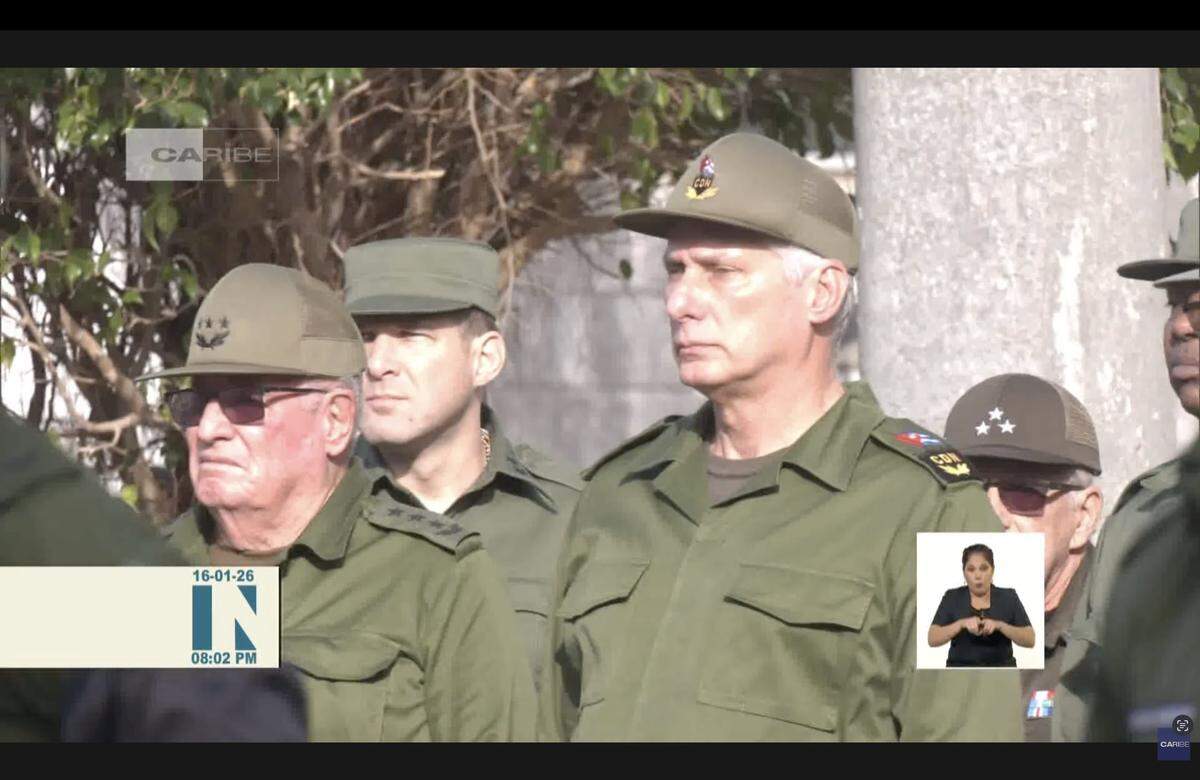
He also showed up at the burial of 4 of the 32 Cubans bodyguards killed during the U.S. military attack to capture Maduro. He was not guarding his grandfather, who did not attend, but as usual, he was at the center of things, this time looking over Díaz-Canel’s shoulder.
This story was originally published April 23, 2026 at 5:30 AM.