
Cuban Americans support U.S. military attack on Cuba, reject economic deal, poll shows
Cubans and Cuban Americans in South Florida overwhelmingly support U.S. military intervention in Cuba and reject negotiations between the Trump administration and the communist government that could result in anything other than regime change, according to a new poll conducted for the Miami Herald.
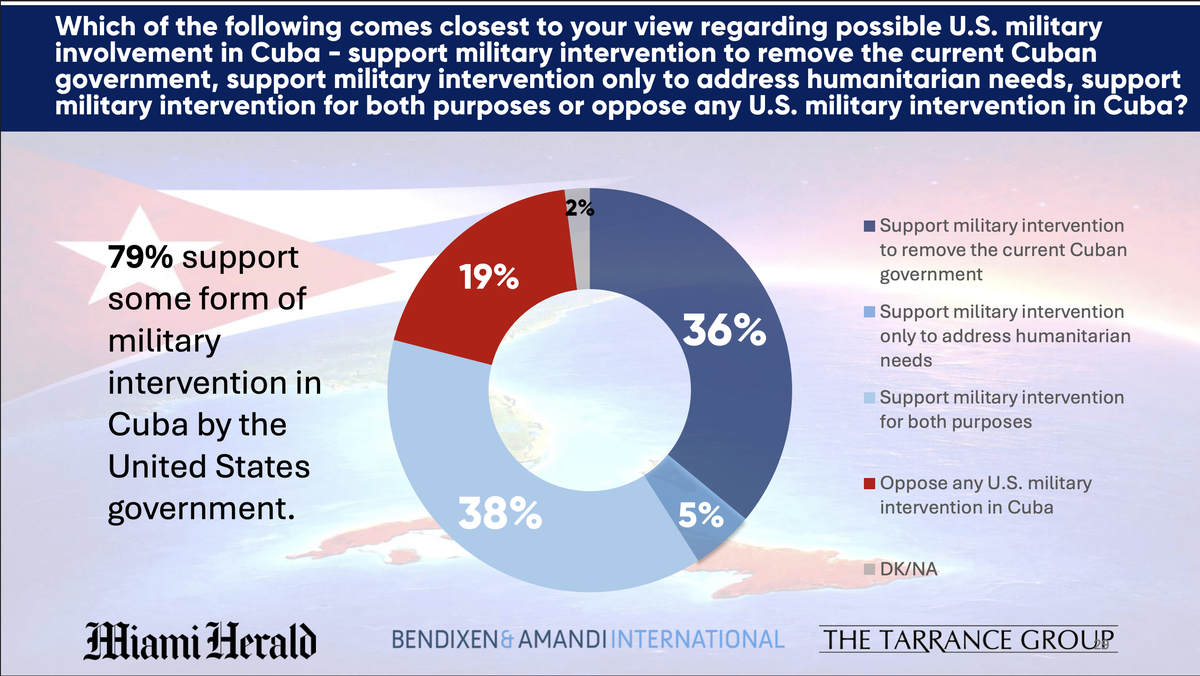
The survey asked 800 Cubans and Cuban Americans living in Miami-Dade, Broward, Palm Beach and Monroe counties whether they would support a U.S. military intervention in Cuba geared at regime change, addressing the humanitarian situation on the island, or both — or if they reject any sort of military action.
A strong majority, 79%, said they support a military intervention, including 36% who said they would support military action to topple the government and 38% who said they would support an intervention to change the regime and deal with the humanitarian crisis in Cuba.
At a time Americans are questioning the Trump administration’s war on Iran, such a high level of support for an intervention surprised the pollsters.
“It might as well be 1961 once again,” when Cuban exiles attempted to invade Cuba with U.S. support, said Fernand Amandi, an expert on the Cuban community and president of Bendixen & Amandi International, one of the two firms that conducted the poll for the Herald. “What the community is saying here is they’re giving a green light to the Trump administration to go in militarily in Cuba and do whatever it is that they have to do to remove the regime.”
The poll, conducted from April 6-10, surveyed 800 randomly selected Cubans and Cuban Americans living in South Florida. The phone survey, conducted by Bendixen & Amandi International and The Tarrance Group, interviewed 800 South Florida Cubans and Cuban Americans and has a margin of error of plus or minus 3.5 percentage points.
Haydée Freire, one of the survey’s respondents, arrived in the United States 20 years ago. She supports negotiations between the U.S. and Cuba — though not with the current Cuban government — because she said she desires genuine change on the island.
“I support military intervention, but I would not want to see bloodshed,” said Freire, 76. “They are already dying now; there are no medicines or food.”
Another survey participant, Andrés Catalas, 57, said he believes military intervention is the only way to force the current government out of power because the regime currently holds the weapons and continues to carry out repression against any opposition.
“I feel terrible about it, because the ones who will die are the young people currently serving in the military,” said Catalas, who completed his own military service in Cuba in the 1990s.
Military conscription is mandatory in Cuba for men over the age of 18, who undergo two years of military training.
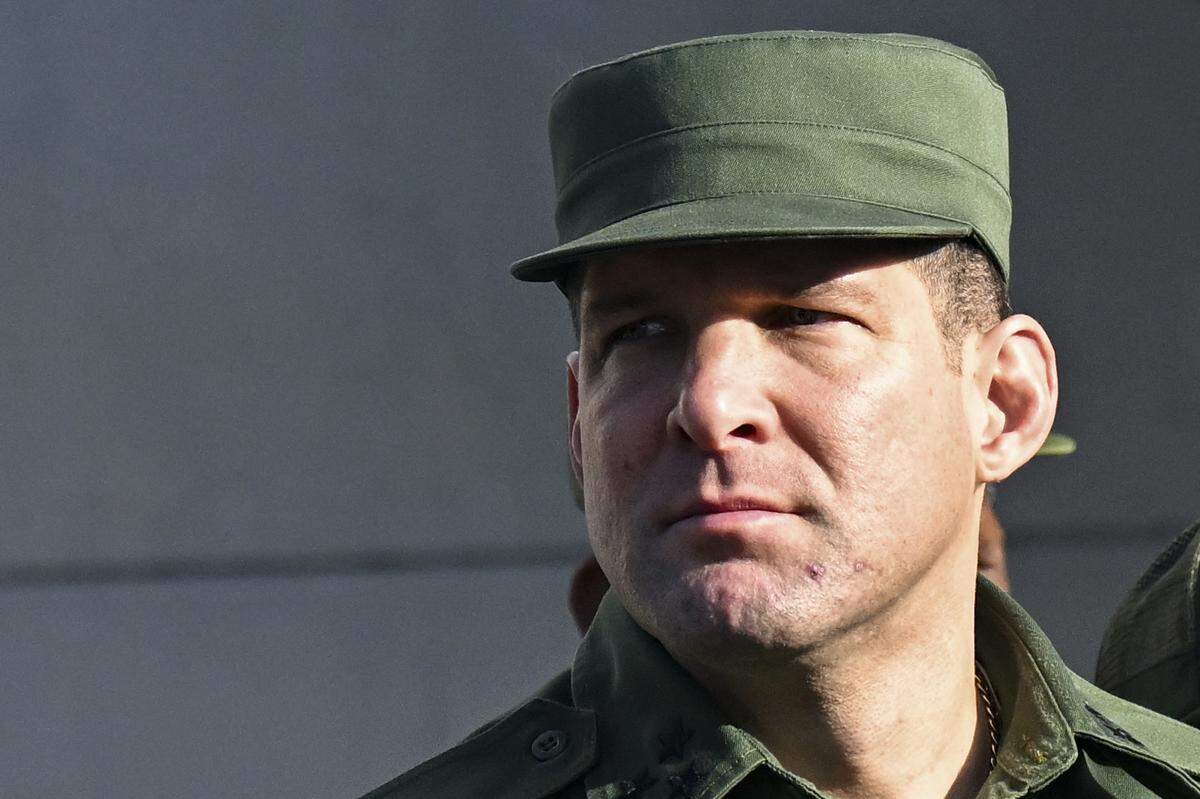
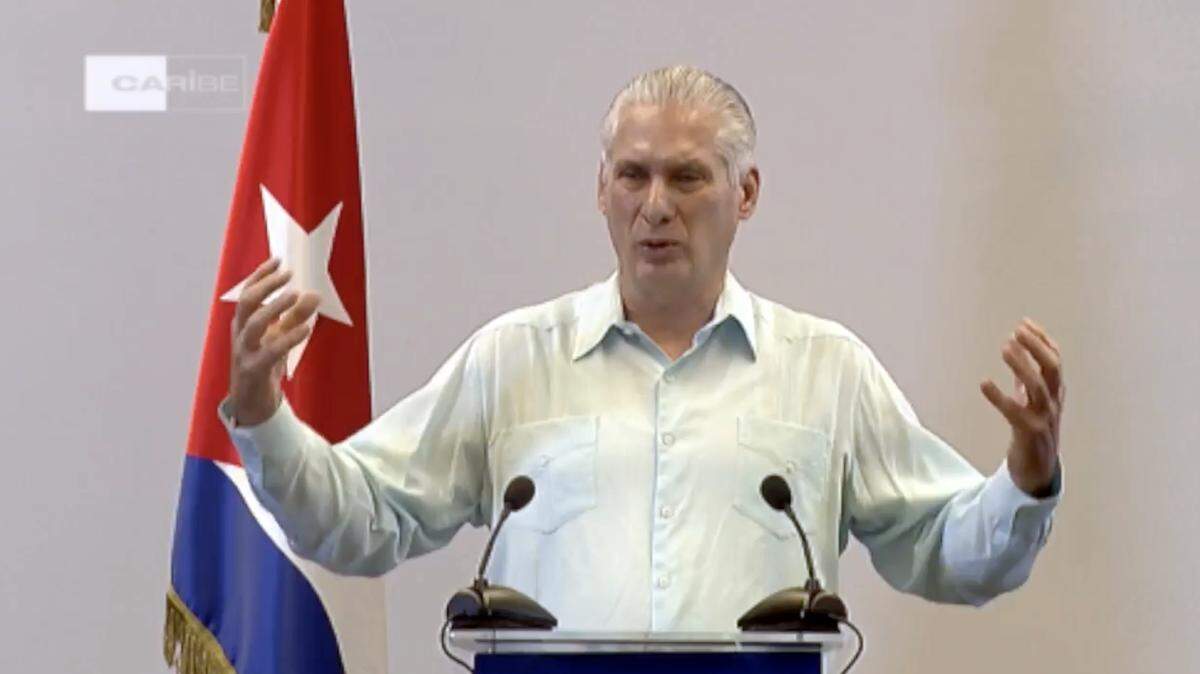
The survey comes at an extraordinary moment in U.S. foreign policy, when President Donald Trump has embarked on military actions in Venezuela and Iran and has threatened to “take Cuba” and said that the island is “next.” It also comes amid a flurry of reporting about back-channel negotiations between the U.S. and members of the Castro family – in particular Raúl Guillermo Rodríguez Castro, a grandson of Raul Castro – and statements by Cuban leader Miguel Diaz-Canel rejecting political concessions.
READ MORE: Deportations, Castro negotiations: where Trump-loving Cubans disagree with him, poll says
The poll shows the Cuban American and Cuban exile community backs President Donald Trump and Secretary of State Marco Rubio on their handling of Cuba policy, blames the Cuban government for its profound economic crisis, and has hardened its views, supporting extreme measures to end the regime in Havana and rejecting any negotiations that could open up the economy but leave the communist government in place.
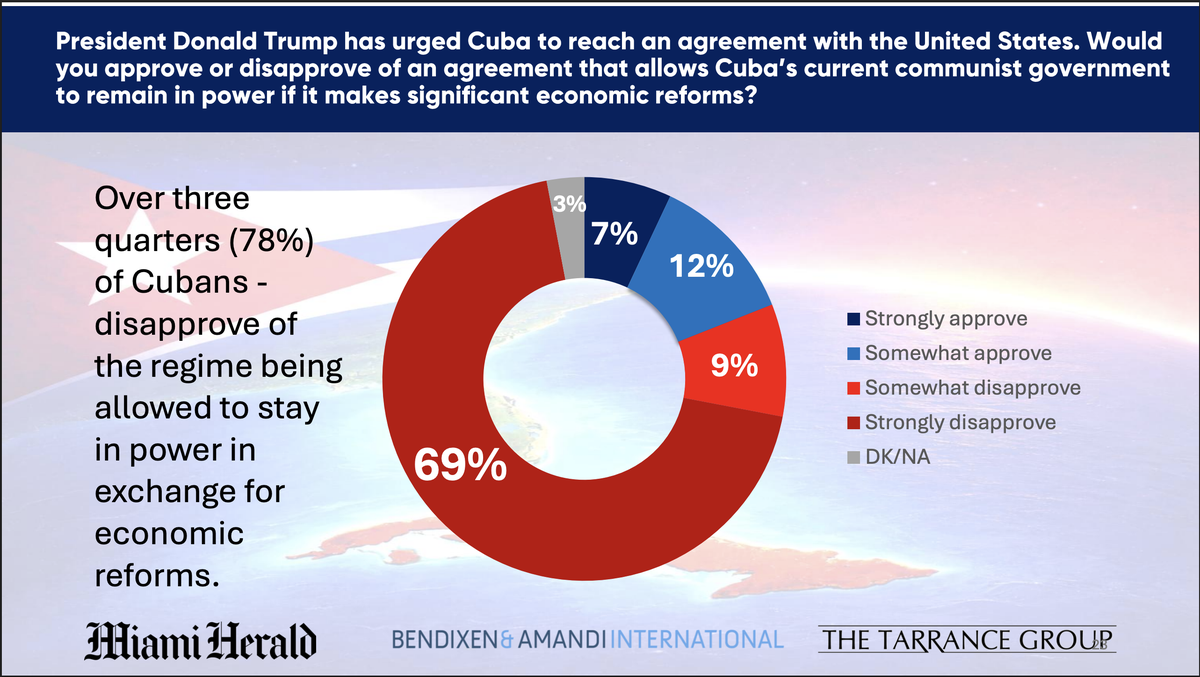
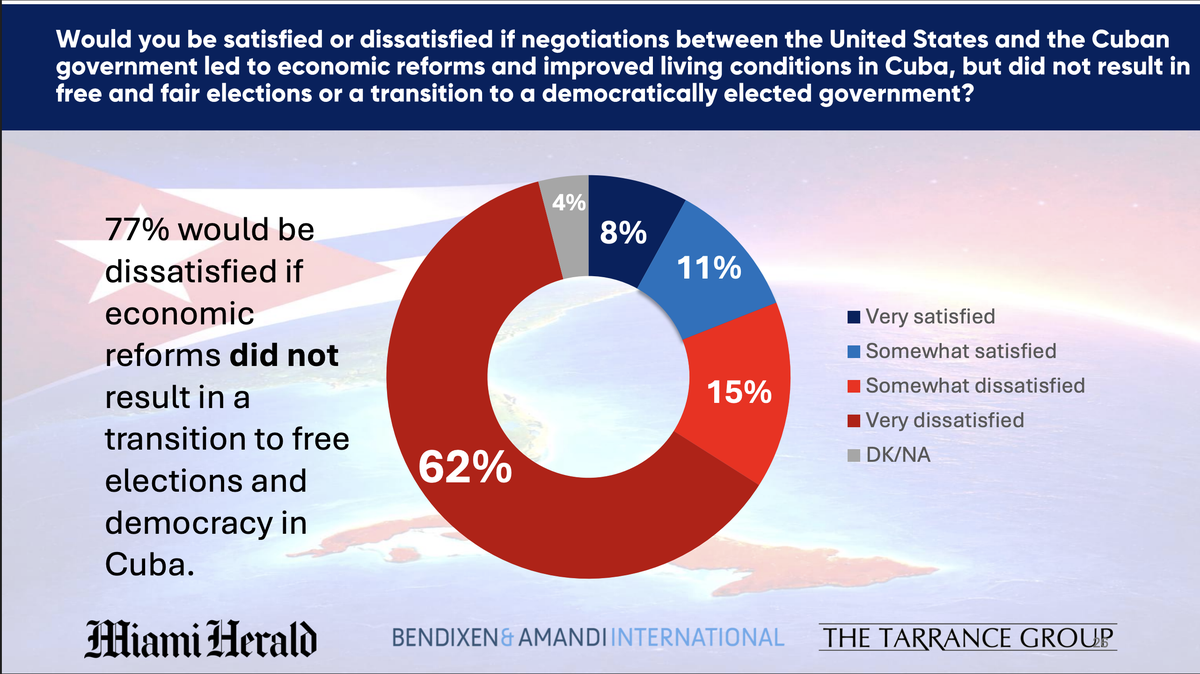
Sixty-nine percent of respondents said they “strongly oppose” an agreement with Cuba that would allow the current government to remain in power in exchange for significant economic reforms. Overall disapproval of such a deal was 78%. A similarly strong majority, 77%, said they would be dissatisfied if negotiations with Cuba led to economic reforms and improved living conditions — but not to a transition to free elections and democracy.
More than two thirds of poll respondents, 68%, flatly rejected negotiations that could strengthen the Cuban communist government, “even if it delays improvement of conditions for the Cuban people.” The same percentage supports limiting the shipments of oil to Cuba, as the Trump administration has done. And 73% said the communist government and its policies are more responsible for the current humanitarian and economic crisis in Cuba than econiomic sanctions imposed by the United States.
Rejection of a possible deal that would be similar to what the administration has done in Venezuela – where strongman Nicolas Maduro was removed by U.S. forces, but the chavista regime was allowed to remain in place — holds across different demographics, political affiliations and decade of arrival in the U.S.
“For many in the community, democracy and freeing is not a bargaining chip. It’s the entire point,” Amandi said. “Blaming the U.S. for Cuba’s crisis, that is not going to resonate. The community is drawing a bright red line. They want pressure on the regime, they want the removal of the regime. If a negotiation props up the communist government, most Cuban Americans would rather see no negotiation at all, even if it means blowing the process of relief for their own family members on the island.”
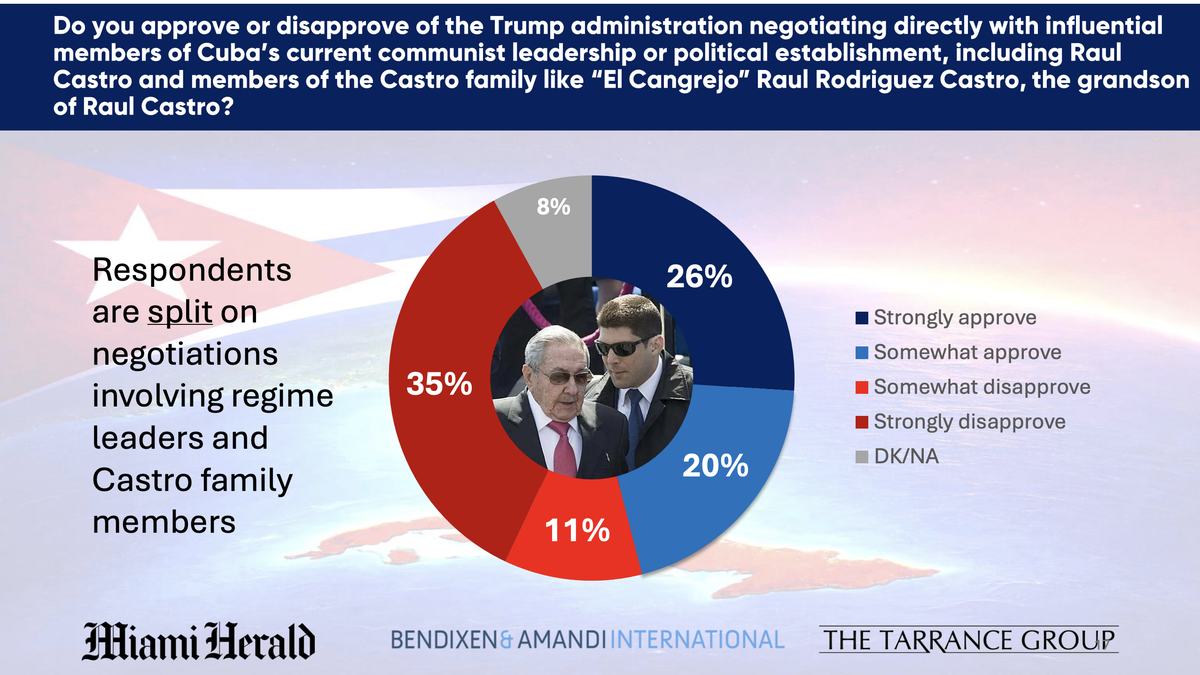
Negotiations with Raúl Castro, still Cuba’s maximum authority, and members of his family remain a dicey subject that has split the community. Forty-six percent of poll respondents said they disapprove, while the same percentage of respondents said they approve.
‘Enough with enriching the communists’
Idalmis Alba, 41, a poll respondent, believes that negotiations will not lead to political change on the island. Cuban leader Miguel Díaz-Canel has made it clear that he will not relinquish power, she said.
“It is not that I wish for war, but I support intervention because it is the only path the government is leaving us, if Cubans are to have a multiparty system and freedom,” said Alba, who arrived in Miami three years ago on a humanitarian parole.
She said a military intervention is needed to address Cuba’s humanitarian crisis. She also opposes any agreement that merely brings economic — but not regime — change. “Enough with enriching the communists,” she added.
Her husband, Nelson Emilio Martín, 41, who also answered the Herald poll, said he opposes a phased transition process modeled after what is occurring in Venezuela.
“Nothing has actually happened in Venezuela; they are just shuffling ministers around,” said Martín, who also supports a U.S. military intervention in Cuba. “Let not a single communist remain.”
But military action is not an acceptable option for Carlos Sanjurjo, 72, who cited the early 20th Century Platt Amendment —a U.S. law attached to the original Cuban constitution that allowed the United States to unilaterally intervene in Cuban affairs — to underscore his opposition to U.S. interventions on the island. He said he supports dialogue instead.
“The only alternative is to wipe out half of Cuba, and that leads nowhere,” he said, adding it would only result in a high death toll and massive economic damage.
Some of the poll respondents who spoke to the Herald said they do not support sending humanitarian aid to the island because the government decides who receives the assistance. They also expressed skepticism about U.S. negotiations with the current Cuban leadership.
“There would have to be a transfer of power,” said Sanjurjo, who arrived in the United States in 1968. “The new generation of Castros might have new ideas; the old one, I doubt it. They wouldn’t admit that they were wrong.”
New demographic trends
The poll comes at a time of significant demographic changes, as the number of Cubans who arrived after the year 2000 are overtaking the so-called “historic” Cuban exiles, the first wave that fled after Fidel Castro took power in 1959.
But a softening of views on Cuba has not materialized despite that demographic transition.
On the contrary, the more recent arrivals express even higher support for a U.S. military intervention in Cuba than those who came in the 1960s — 88% vs. 80%.
A majority of survey participants said they have relatives on the island, but despite that, direct engagement with those on the island appears to have dwindled under the current conditions. Over three-quarters of respondents, 76%, said they have not traveled to Cuba over the past few years, and 59% said they do not send money or buy food and medicines for their relatives there.
The severe economic crisis on the island, fear of U.S. immigration authorities, and the massive exodus of Cubans in recent years —which allowed many families to reunite with loved ones in South Florida — could all be factors behind those trends. There are also no official channels to send money to relatives on the island, and some U.S. airlines have reduced flights to Cuba.
Among those who do send aid to Cubans on the island, there are people like Catalas who said they support a military intervention even though they have family there. He said he helps relatives in Pinar del Río, a province in eastern Cuba, who he said would face an even more difficult situation were it not for the medicines and money he sends them.
Not moving back
Cubans and Cuban Americans in South Florida also appear less interested than in the past in the idea of investing in the island or going back to live there. A large majority, 76%, say they would not consider moving back to Cuba even if there are major democratic reforms. A slight majority, 51% said they would invest in the island but only if a democratic government and a new legal system are in place.
The Cuban government recently announced it will allow Cubans In Miami and elsewhere to invest on the island and own businesses there, but only 2% of the survey participants said they would invest while the current government is in place.
“If the regime thinks that this is going to open up flood gates of U.S. dollars from the Cuban community, it ain’t going to happen under the current conditions, even if the regime allows it to happen,” Amandi said.
The survey was designed to be representative of the Cuban American and Cuban communities in South Florida with respect to voter registration and demographics. Participants were asked whether they were registered voters and, if so, to state their party affiliation. Fifty seven percent said they are Republicans, 17% said they are Democrats and 22% identified as independents.
Republicans expressed the strongest opposition to negotiations that could improve conditions in Cuba if they don’t result in a democratic transition, with 74% saying they would be “very dissatisfied” if that were the case. But a majority of Democrats, 57%, also said they would “very” or “somewhat” dissatisfied with economic reforms in the absence of a democracy. That opinion was shared also by a majority of both the youngest and the oldest groups of respondents.
Cuban-American Democrats were the only group rejecting a U.S. military intervention in Cuba, with 52% opposing, and firmly came out against the U.S. blockade of oil to Cuba – 65% said they “strongly” oppose it. They were also more inclined than Republicans to accept negotiations that improve the lives of the Cuban people even if they benefit the current regime, and less inclined to name the Cuban government as the main reason for the island’s current humanitarian crisis.
READ MORE: Cuban Americans split from Trump on deportations, treatment of Cuban migrants, poll shows
Read more at: https://www.miamiherald.com/news/nation-world/world/americas/cuba/article315418740.html#storylink=cpy
The survey also serves as a warning sign ahead of the midterms about the Trump administration’s handling of immigration.
The administration has suspended legal migration from the island, including family reunification, and it has ramped up deportations of Cubans to the island, to Mexico and other countries. It also suspended decisions on asylum and green cards for Cubans and stopped naturalization ceremonies.
An overwhelming majority in the poll, 81%, are in favor of allowing Cubans to legally immigrate to the United States, 76% said the administration should resume the processing of immigration benefits for Cubans already here, and 68% disapprove of deportations of law-abiding Cuban nationals from the U.S.
This story was originally published April 16, 2026 at 5:30 AM.