
In visit to Havana, State Department warned Cuba it ‘has a small window to make a deal’

A U.S. State Department official urged Cuba to strike a deal soon and release political prisoners, following a recent visit of senior agency officials to Havana to lay out key U.S. demands, the first visit of its kind since the Obama administration.
In a meeting on April 10, the U.S. officials told their Cuban counterparts that they have “a small window” to make U.S.-backed reforms and demanded the release of political prisoners, a State Department official told the Miami Herald.
“The Trump Administration remains committed to the release of all political prisoners, including Luis Manuel Otero Alcántara and Maykel Osorbo,” the official said. “As President Trump has stated, a new dawn for Cuba is coming very soon. The Cuban regime should stop playing games as direct talks are occurring. They have a small window to make a deal.”
Performance artist Otero Alcántara and Grammy winner Maykel Castillo, a rapper known as Maykel Osorbo, created the dissident group San Isidro Movement and have been in prison for joining the antigovernment protests on July 11, 2021. The Cuban government recently began releasing over 2,000 prisoners, but human-rights organizations said political prisoners have been excluded so far.
The names of Alcántara and Osorbo do not appear on a separate list of 51 prisoners the government said it will release, some of whom were also arrested for demonstrating against the government, the Herald has learned.
On Monday, a Cuban diplomat disputed the claim that the U.S. delegation gave the Cuban government a set deadline to meet its demands.
“In the context of the meeting, neither party established deadlines nor issued ultimatums, as has been reported by U.S. media outlets. The entire exchange took place in a respectful and professional manner,” Alejandro García del Toro, the deputy director of the Cuban Foreign Ministry department that handles relations with the U.S., told Granma, the Cuban Communist Party newspaper.
The State Department has not said who led the U.S. delegation. Without providing names, Del Toro said that “assistant secretaries of the Department of State participated, and on the Cuban side, officials at the level of Vice Minister of Foreign Affairs.”
READ MORE: Secret talks: Rubio team meets with Castro grandson on sidelines of Caribbean conference
According to the State Department official, the U.S. delegation in Havana offered to provide free Starlink satellite internet to Cuba to ensure fast connectivity all across the island, and discussed proposals to compensate U.S. individuals and companies whose properties were confiscated in the early years after Fidel Castro took power. The issue has been a thorn in the bilateral relationship, with certified U.S. claims estimated at over $9 billion.
In the April 10, the U.S. officials also told their Cuban counterparts that the government needs put in place “significant economic and governance reforms to enhance competitiveness, attract foreign investment, and enable private-sector-led growth,” and to allow Cubans to exercise greater political freedoms, the State Department official said.
U.S. officials also discussed “concerns about foreign intelligence, military, and terror groups operating with Cuban governmental permission” on the island.
Garcia del Toro said Cuban officials focused on the energy crisis on the island, which has been made worse by the Trump administration’s blockade of oil supplies from Venezuela and Mexico after the U.S. captured Nicolás Maduro and threatened the island’s oil suppliers with tariffs.
“The lifting of the energy blockade against the country was a matter of top priority for our delegation,” Garcia del Toro said in Granma. “This act of economic coercion constitutes an unjustified punishment against the entire Cuban population. It is also a form of blackmail on a global scale against sovereign states, which possess every right to export fuel to Cuba by virtue of the norms governing free trade.”
The talks in Havana, first reported by Axios, happened after months of backchannel conversations between the U.S. and Raúl Guillermo Rodríguez Castro, Raúl Castro’s grandson and closest aide. In another sign of his key role in the negotiations with the U.S., Rodríguez Castro met separately with a senior State Department official.
As Cubans and U.S. officials were meeting in Havana, a U.S. Navy MQ-4C Triton surveillance drone was flying near Havana before returning to Jacksonville, according to flight tracking websites. The drone had been previously flying off the southern coast of Cuba.
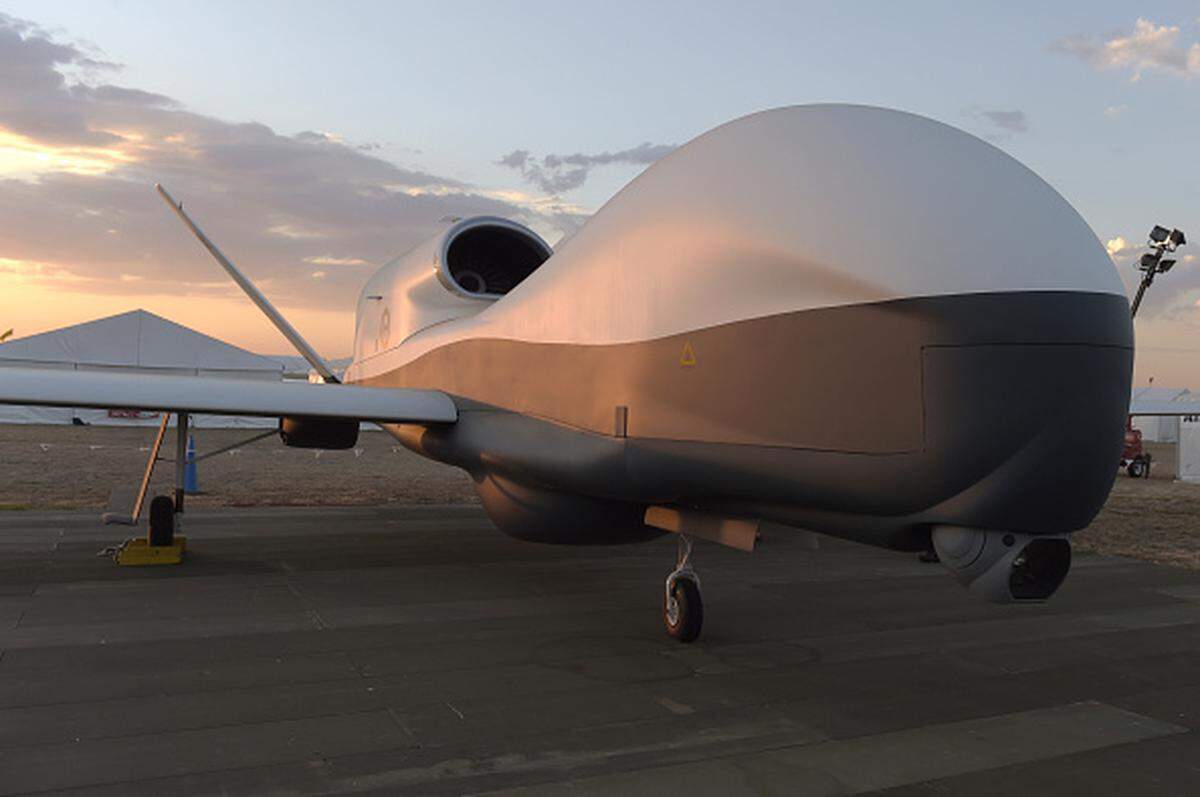
Amid the diplomatic talks, tensions have flared up between the two neighboring countries.
Cuban leaders have insisted the country is ready to resist a U.S. military attack. President Donald Trump has said he could “take Cuba” at any moment, though the head of the Doral-based U.S. Southern Command, Gen. Francis Donovan, testified to Congress last month that the military was “not” rehearsing to invade or seize control of Cuba. Donovan said the Pentagon has plans in case of a mass migration event from Cuba, an attack on the U.S. Embassy, and to protect Americans at the U.S. Navy base in Guantanamo Bay.
“We’re constantly watching if asked to support a humanitarian event,” he added.
The senior U.S. officials who visited Havana on Aprl 10 told the Cuban government representatives that Cuba’s economy is in “free fall” and that Trump, though committed to pursuing a diplomatic solution, “will not let the island collapse into a major national security threat if Cuba’s leaders are unwilling or unable to act,” the State Department official said.
On Friday, the Cuban government published a statement condeming U.S. threats.
“We affirm today that Cuba will never be a trophy, nor another star in the American constellation,” the government said.