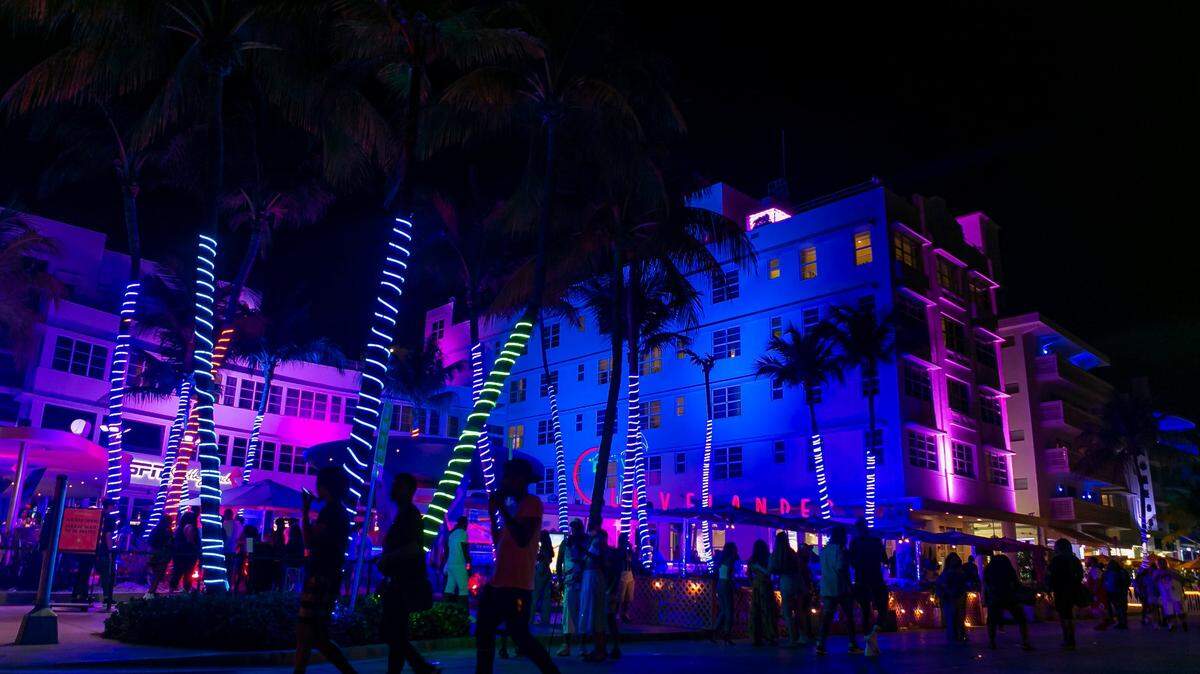
Spring breakers return to South Beach as City Hall tries to avoid repeat of 2021 chaos
READ MORE
Spring Breakup?
As Miami Beach welcomes spring break crowds, some city leaders are hoping raucous young partiers find somewhere else to go next year.
Expand All
It’s been almost a year since spring break crowds got so out of control that Miami Beach declared a state of emergency, imposed an 8 p.m. curfew and shut down the major causeways leading into the island city.
The raucous street party last March led to international TV coverage of clashes between police and tourists, a parody on “Saturday Night Live” and protests from residents outside City Hall. Months later, voters endorsed the restriction of alcohol sales — paving the way for a package of legislation that could change the city’s world-famous nightlife for good.
Now, as young tourists return to South Beach, City Hall is fighting to introduce new liquor laws and multimillion-dollar counter-programming targeting older crowds as Mayor Dan Gelber hopes the Beach can pivot away from being a spring break destination.
“I’m hoping we’ve turned a corner and spring break as it has been known will be in our rearview mirror,” Gelber told the Miami Herald. “I don’t think it will happen overnight but I think it will happen.”
The new moves — which highlight Miami Beach’s struggle to balance a tourist-driven economy with the needs of families — are meant to address concerns from residents who say they are overwhelmed by the noise and disorder that bleeds from the nightlife district into their neighborhoods.
But the city is facing opposition from club owners and their attorneys, who say Gelber and his allies have used last year’s spring break as a political springboard to justify the destruction of the South Beach nightlife scene.
On Tuesday, a circuit court judge presiding over a lawsuit brought against the city by the Clevelander South Beach agreed to block a new law that sought to end alcohol sales at 2 a.m. during the peak of spring break — meaning the party will go on until 5 a.m. for the first time since the pandemic cut spring break short in March of 2020.
Entrepreneurs like Zori Hayon, owner of Cameo nightclub, argue that ending alcohol sales at 2 a.m. won’t make the city safer and will instead worsen overcrowding as patrons are kicked out of bars and clubs at the same time. While city leaders say they want to test whether alcohol restrictions will improve public safety, critics note that there was a county curfew in place last year over COVID that stopped all drinking at midnight.
“They just want to blame it on something, so they blame it on club owners,” Hayon said.
The city’s hard-line stance against spring break will send a message to the world that Miami Beach does not want to be a spring break destination, said Mandy Calara, owner of Voodoo Lounge, an Ocean Drive nightclub that features hookahs, sweet cocktails and hip-hop music. And over time, especially if permanent alcohol restrictions are passed, spring break crowds may not return, he said.
“There’s going to be some pushback,” said Calara, who worries about the clubs and employees that count on extra cash in March to make it through the summer and fall.
‘Maybe they should just give it a chance’
Nightlife operators say the city shouldn’t move so quickly to impose new alcohol restrictions without studying potential effects on resort taxes that businesses pay to the city.
Miami Beach hotels are expected to welcome more guests this March than the same month last year. The projected hotel occupancy rate is 76.8%, according to the Greater Miami Visitors and Convention Bureau. That’s an increase of 4% from last year, but still below the 88% mark in 2019.
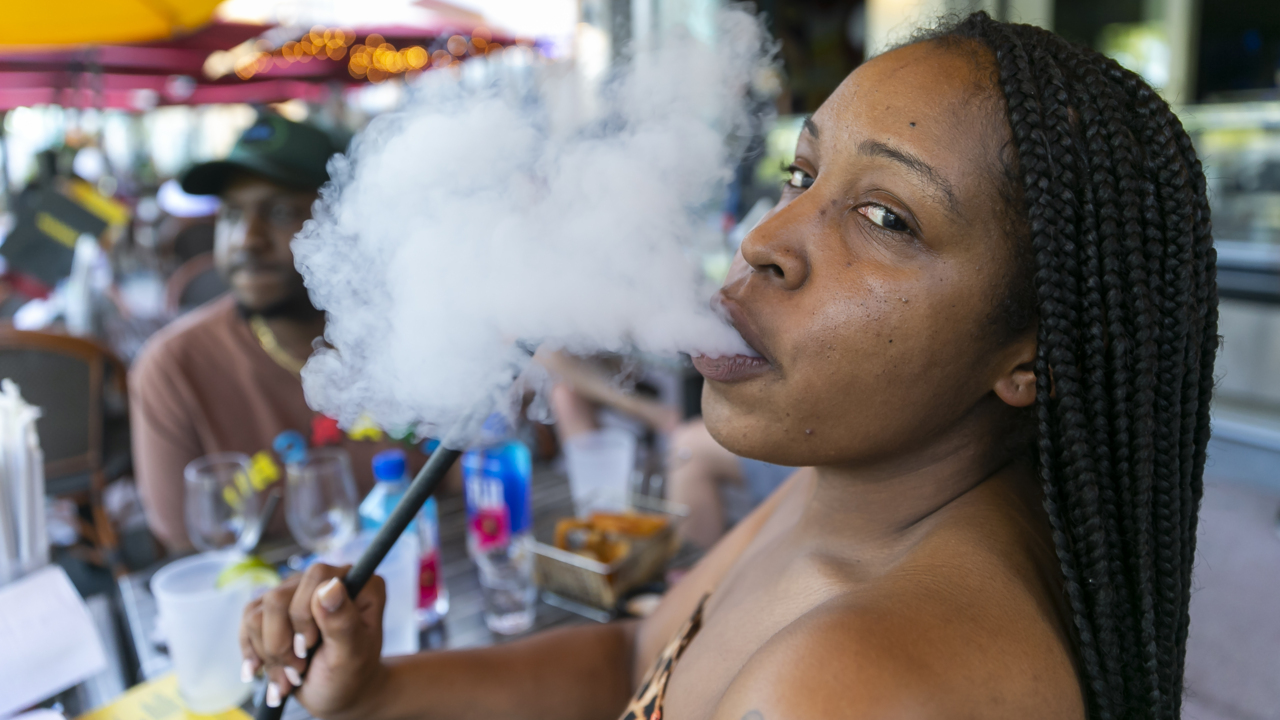
Between puffs from her hookah Friday at a sidewalk cafe on Ocean Drive, Atlanta tourist Jamonica Kelly said she was in town for spring break last year and agrees it was hectic. But she blames that on pent-up enthusiasm during COVID quarantines and doesn’t think it will get as wild this year now that many other states have loosened health-related restrictions.
“I feel like maybe they should just give it a chance and see how it works out,” she said. “Now, if it doesn’t work out and it’s got to change, then it’s just got to change. But I don’t see anything wrong with just seeing how it plays out right now.”
Courtney Wright, visiting from New York City, walked along Ocean Drive wearing a Yankees cap and carrying a Barbie doll she named Jessica. She said she would hate to see anything water down the free-spirited, fun atmosphere on South Beach.
“Everyone is free to be themselves,” said Wright, 22.
Gelber has argued that the business model in South Beach is not “sustainable” and has become a nuisance to people living in and around the entertainment district.
He said voters signaled their opposition to the party scene in the November election when 57% approved a non-binding referendum asking whether the City Commission should roll back alcohol service to 2 a.m. citywide, with some exceptions. In the last month, commissioners have taken preliminary steps to restrict alcohol sales, although the details of the measures will be hammered out in future meetings before final votes are taken.
Gelber said the message is clear: Miami Beach doesn’t want to be a place for tourists to go wild. “We’re not trying to be subtle,” he said.
But he also said there is a difference between trying to shed the city’s spring break allure and rejecting its role as a sun-and-fun destination. “I don’t think that anything we’ve said is creating a city nobody wants to visit,” he said.
Miami Beach tries to ‘manage the disorder’
In the meantime, a large contingent of police from Miami Beach, Miami-Dade County and other agencies will once again be mobilized in the streets of South Beach. Community liaisons from the county, called Goodwill Ambassadors, will serve as a point of contact for tourists for crowd control and other public safety purposes when police are not needed.
Last year, confrontations between officers and largely Black and Hispanic crowds made headlines, as did the city’s concerns about spring breakers spreading COVID-19. People recorded officers who’d been surrounded by a large crowd body-slamming a teenager on the city’s pink sidewalks. Police at one point arrested a man playing a boombox after curfew and charged him with inciting a riot. They also dealt with more serious crimes, such as the rape and overdose death of a Pennsylvania tourist.
In the weeks that followed, Miami Beach commissioners gave officers increased power to arrest people who come too close to them as they do their jobs. That controversial decision factored into the rough arrest last summer of several men following a foot chase in South Beach, and the subsequent indictment of several officers involved in the fracas.
Miami Beach Police Chief Richard Clements said officers will try not to instigate confrontations with large crowds and will let Goodwill Ambassadors instruct people not to congregate on Ocean Drive, which will have one southbound lane open to cars.
“If they do go into the street, we’re not there to poke the bear,” Clements said. “We’ll stop traffic southbound and move it over.”
He said he believes last year — when the city announced an 8 p.m. curfew on a Saturday only hours before implementing and enforcing it — was an “aberration” and hopes this year is more successful. A police spokesman said there won’t be any lane closures for license plate readers along the city’s major causeways but a mobile license plate reader will be set up on Fifth Street.
“We’re there just to make sure that people obey the rules and that they don’t become disruptive to the residents,” Clements said.
Ocean Drive resident Jo Manning, who lives in a condo on 15th Street, said over the years, spring break has gone from “harmless fun” to something more disruptive and even criminal. After dark, she said, she doesn’t like to leave her home when crowds of people are downstairs. The images from last spring break — of people climbing on cars and flooding the streets — were unacceptable, she said.
“We are keeping our fingers crossed with spring break because it’s just been so out of hand,” she said.
Spring break has long been a period of high alert for police, who spent $2 million last March on overtime pay and operational needs. Police made 1,290 arrests throughout the city last spring break, up slightly from 1,160 in 2019 during the same period before COVID cut the party short in 2020.
Alex Tachmes, an attorney who represents several alcohol establishments in the city, including the Clevelander, blames City Hall — not just the tourists — for last year’s drama.
“The city has been unable to control the public streets and that’s made it really rough on businesses,” he said.
Tachmes said it doesn’t make sense to impose a permanent, year-round 2 a.m. ban if the city is targeting spring break crowds. Even then, he said, limiting early-morning drinking won’t keep spring breakers from visiting the beach, drinking package liquor in public or acting out.
The excessive partying last year during spring break created a “perfect storm” to attack the nightlife industry, he said.
“But that shouldn’t be used as the basis to kill a 75-year-old tourist industry,” Tachmes said.
There will be a few changes in the city’s approach to spring break this year. The city is spending $3.2 million on a monthlong concert and activity series on Lummus Park and is rolling out a new marketing plan to be more personable in communicating its safety messaging after criticism over the years that the city was too aggressive.
Gelber said the “counter-programming” is worth trying, though he believes a complete overhaul of South Beach is needed to transform the area into a more sophisticated district with boutique offices, residential buildings and cultural offerings.
“I don’t want to create unreasonable expectations. Until we shut down the 24-hour party zone in South Beach, we can’t expect real change. And we are trying to do just that,” he said in a video message Friday. “But until that happens, we can only try to manage the disorder.”
This story was originally published March 2, 2022 at 6:00 AM.
.JPG)