‘Why not Hialeah?’: The city aims for entertainment, urban living to lure the young
READ MORE
Hialeah gets hip
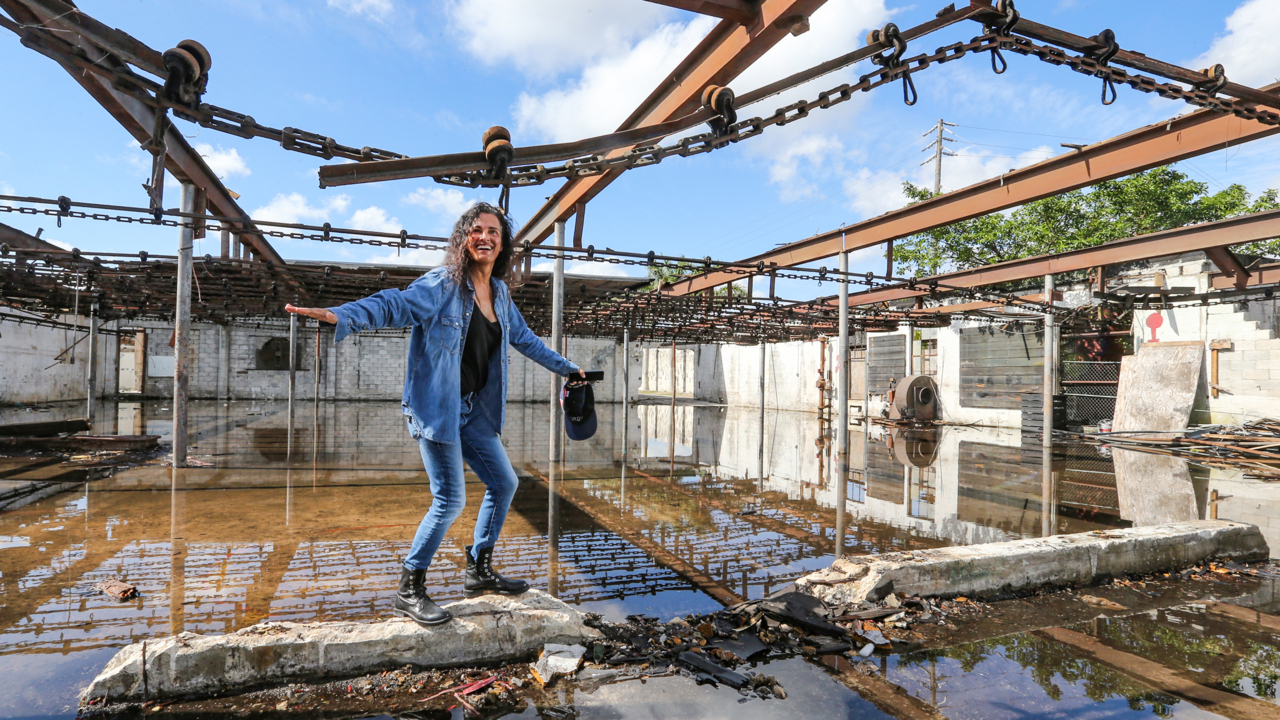
Buoyed by developers such as Arva Jain, who is converting warehouses into an entertainment venue, Hialeah is becoming a place to see and be seen.
Expand All
When most people look at a long stretch of east Hialeah that’s cross-hatched by bumpy tracks for freight trains and the Tri-Rail commuter service, they may see a confusion of rutted, potholed streets and old and sometimes dingy warehouses occupied by body shops, construction suppliers, plumbing firms and storage and food distribution centers. Trucks are parked willy-nilly, while wrecked cars sit on the street awaiting repairs.
Hialeah Mayor Esteban “Steve” Bovo sees something else: His city’s future.
Bovo, city planners and Hialeah boosters say the ramshackle if still bustling industrial corridor, minutes from Miami International Airport and geographically at the center of Miami-Dade County, is poised for a transformation.
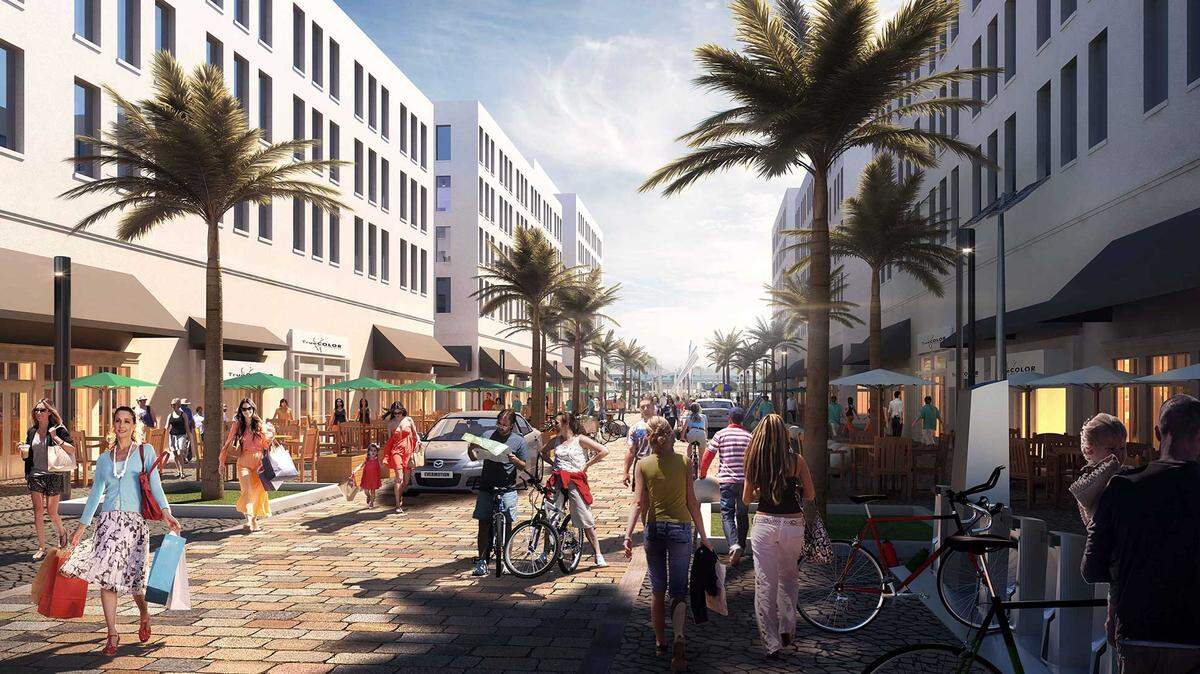
If they get their wish, the old warehouses will be replaced by dense, appealing and affordable urban districts offering restaurants and nightlife. They will be anchored by transit stations, walkable streets and everything else a young Hialeah resident longing for urban experiences might want, right at home.
For a city known for sprawl, choking traffic and a light touch on planning and zoning, a proud and loudly proclaimed working-class ethic, and where little has seemingly changed in decades, the vision may seem not just implausible, but even antithetical to everything it’s come to symbolize.
But Bovo just shrugged.
”Why not Hialeah?” he said.
It won’t happen overnight, of course. But the changes, driven by developers’ growing interest, already have begun to unfold, Bovo said.
He and city planning chief Debora Storch pointed to construction underway, or in the planning stages, of new developments mixing shops, offices and apartments next to the industrial corridor’s two Tri-Rail stations, one of which connects to Metrorail; a rising arts district in between; and Miami developer Avra Jain’s ambitious plan for Factory Town — the new music, hospitality and arts complex on the six-acre site of a former Hialeah mattress factory.
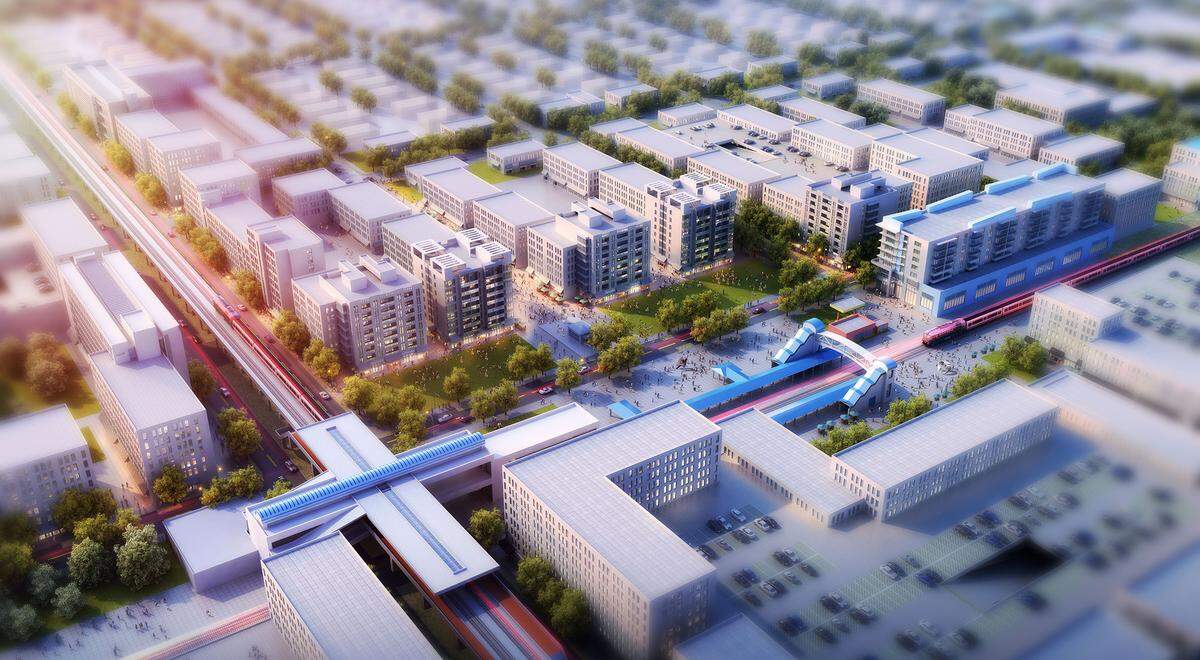
Bovo, a former Hialeah council member and Miami-Dade commissioner who was elected to Hialeah’ s strong-mayor seat in 2021, has embraced a long-in-the-works vision by the city’s planners. The plan, drawn up by Miami planning firm Plusurbia and approved in 2016, aims to foster development of transit-oriented hubs of apartments and businesses around the Tri-Rail Market Station and the Transfer Station connector. To support the grand effort, the city also created a community redevelopment agency that can funnel property tax revenue from new projects into local improvements.
As mayor, Bovo has emphatically backed Jain’s unconventional Factory Town idea. He supported creation of a zoning overlay that allows outdoor music and entertainment and 24-hour liquor service for the property.
Bovo, who campaigned in part on encouraging development and giving young people reasons to stay in Hialeah to live, work and play, said Factory Town and the transit-oriented projects will help the city achieve that elusive goal even as it recasts the city’s image for investors, outsiders and even residents. One goal of the transit districts is to feed use of public transportation while giving residents much of what they need for daily living within a short walking distance.
Miami-Dade’s transit agency has in recent years been aggressively courting such dense, mixed-use development on parking lots at Metrorail stations along U.S. 1 and in historically Black Brownsville, on Hialeah’s east border.
“If done right, it can bring new life and investment to what looks to me like an old warehouse,” Bovo said. “Public transportation works when people get out into a safe area. When you are able to walk out of a transit station into a place full of activity, that’s where it works. We haven’t had that conversation in Hialeah before. But you have to give people reasons to go there.”
He stressed that Factory Town, which has drawn thousands of people to the neighborhood while hosting only limited events on Halloween and during Art Basel week in December, already has provided financial benefits to local business and property owners. Neighbors have made money on sales, parking and in some cases have sold property to the project’s ownership group, which is looking to expand the project’s footprint beyond the six self-contained acres.
“That for me is scratching the surface of the potential in the area,” Bovo said. “All those areas are seen as ripe for a rebirth. Investors may see gold where you or I would look at those warehouses and ask why anyone would invest there.”
It’s a tested approach that encourages redevelopment and reuse in aging industrial districts and urban-core neighborhoods to generate new residential and commercial development. Look no further than Wynwood, a few minutes east along the State Road 112 Expressway.
Just don’t call what Hialeah’s doing the new Wynwood.
Backers say it’s eminently a Hialeah thing, geared to and meant primarily for locals who now have to venture out to Miami Lakes, South Beach or, yes, Wynwood, for dining and entertainment.
The reappraisal of east Hialeah also taps into the city’s history and its characteristically funky mix of utilitarian, everyday architecture. The four-block Leah Arts District includes many of the once-legendary factorias where squads of Cuban exile seamstresses manufactured clothing in the 1960s and 1970s for Jewish owners, who had established textile businesses in the city after World War II because land was cheap and plentiful. The industry disappeared after clothing manufacturing moved abroad starting in the 1980s.
East Hialeah’s rising profile comes as the city of 223,000, like the rest of the county, has seen growing demand for housing and soaring home prices and rents. That has forced first-time homebuyers to look beyond the city’s borders to Brownsville and also historically Black Liberty City, where developers have been rehabbing aging ranch houses as starter homes.
That demand has spurred developments mixing apartments and commercial uses west of the old industrial corridor, in the city’s historic heart.
They include a 29-unit garden-style apartment building on West 69th Street from Boschetti Realty Group. Near the city’s downtown, off Okeechobee Road, developer Shoma is building a complex with 304 apartments and its own food hall on the site of a former strip mall. By the famed but dormant Hialeah Race Track and the Hialeah Metrorail Station, Station 21 Lofts will offer 90 workforce housing units in three low-rise buildings.
Until recently, east Hialeah was considered a sketchy prospect at best. Little happened after the city, then under Mayor Carlos Hernandez, approved the two transit districts in 2016.
Perceptions began to change with the establishment of the compact Leah Arts District around that time. Warehouses were painted with colorful street murals, a la early days of Wynwood. Though the district remains largely an industrial section, several artists work in studios in old warehouse spaces, and the district’s first art gallery is opening soon.
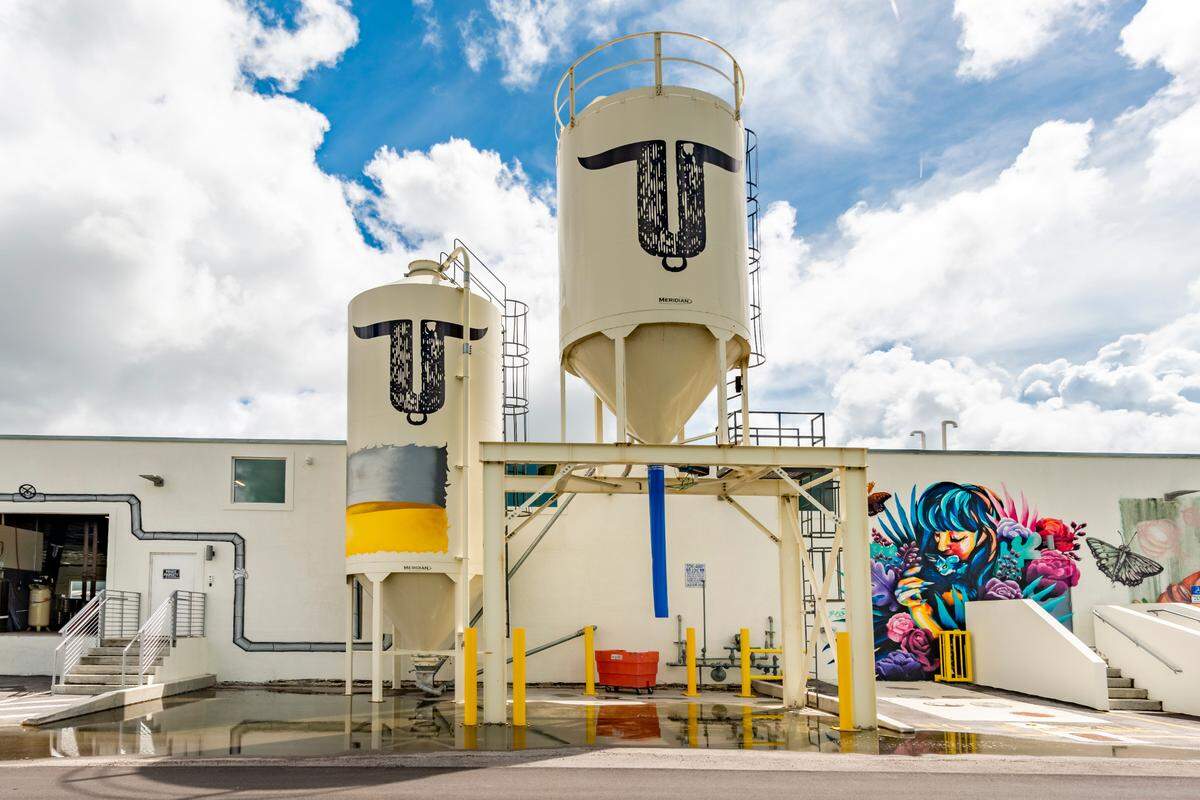
Today, the district is anchored by the hip Unbranded Brewing, a vast microbrewery that opened a tasting room and restaurant in February 2020. The Kush Hospitality Group, known for Lokal in Coconut Grove and its Kush by Lokal in Wynwood, took over Stephen’s, an old-fashioned 1954 Jewish deli, one of the last remaining in Miami-Dade, and added a few Hialeah-centric touches and a craft cocktail bar in the back. Thrift stores in the district are an added attraction.
With a state transportation grant, the city established a Freebee shuttle service linking the arts district to Hialeah City Hall and the Metrorail/Tri Rail station, where several redevelopment projects are under construction or in the planning stage.
They include:
* Metroparc, a 10-story complex with 433 apartments and ground-floor retail by Coral Gables-based MG Developer, better known for its luxurious townhouses in the City Beautiful. Amenities are more akin to a new building in Wynwood, including a co-working space and a shared, open-air kitchen. Completion is expected in spring of 2024.
* Two new four-story buildings, each with 12 apartments, at 859 and 853 East 24th Street that are nearly ready for occupancy.
* At the Tri-Rail Market Station, just blocks south of Factory Town, the city is working with a developer on a proposal for a project mixing residential and retail. So far, it’s the only one to come up in the district, but the city has high ambitions for it. The station property, controlled by the state and the Tri-Rail authority, includes the original Seaboard Air Line Railway depot from 1926, shuttered for years along with an adjacent, failed market that could become a commercial draw if renovated.
The city also hopes to create a public space like Barcelona’s Las Ramblas on a narrow state-owned spit of land behind an abutting Home Depot. The space could host festivals and food trucks, said Storch, the Hialeah planning chief.
As the transit districts grow, planners hope to knit them together into a cohesive new urban neighborhood, in part with Hialeah’s own version of The Underline, the 10-mile linear park now under construction beneath the Metrorail tracks through Miami, Coral Gables and South Miami along U.S. 1. Hialeah planners described their version as “a safe linear path for bicycles and scooters.”
“We will find a way to connect all of these together,” Storch said. “I have been with the city 19 years, and we have been planting seeds that are now starting to grow.”
This story was originally published March 13, 2022 at 6:00 AM.
.jpg)