What did Miami’s downtown waterfront look like before Bayside Marketplace? A look back
READ MORE
Looking back at old Miami
Photos and memories of the way South Florida used to look: its streets, stores, events and people.
Expand All
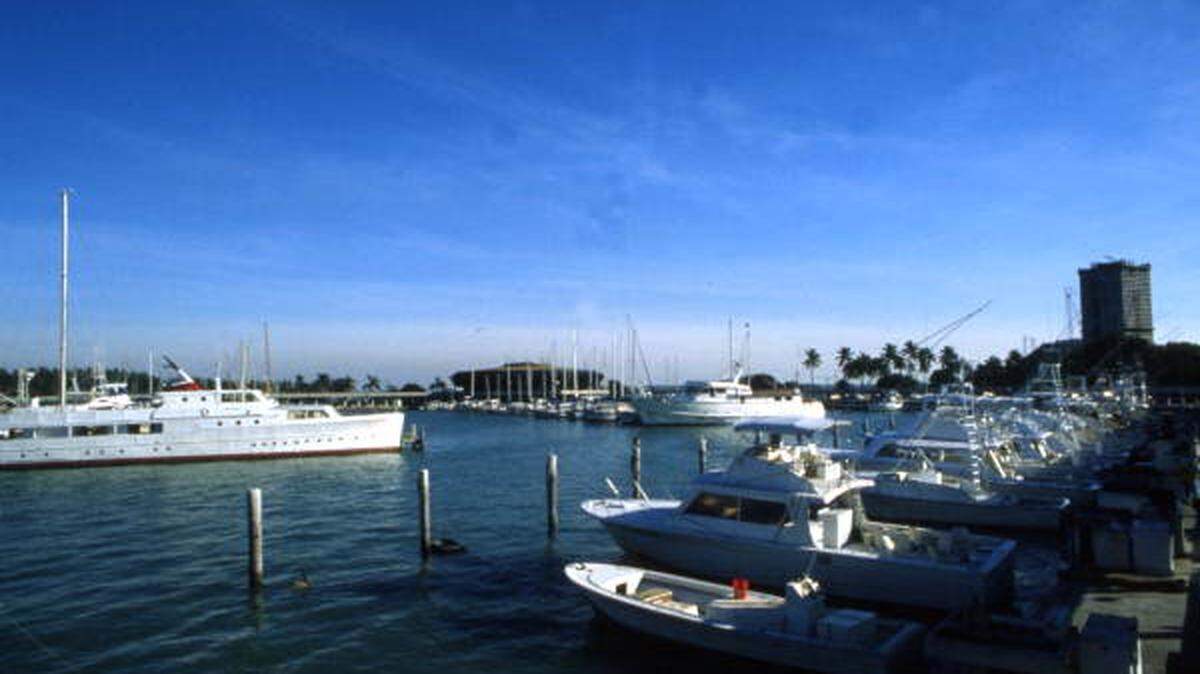
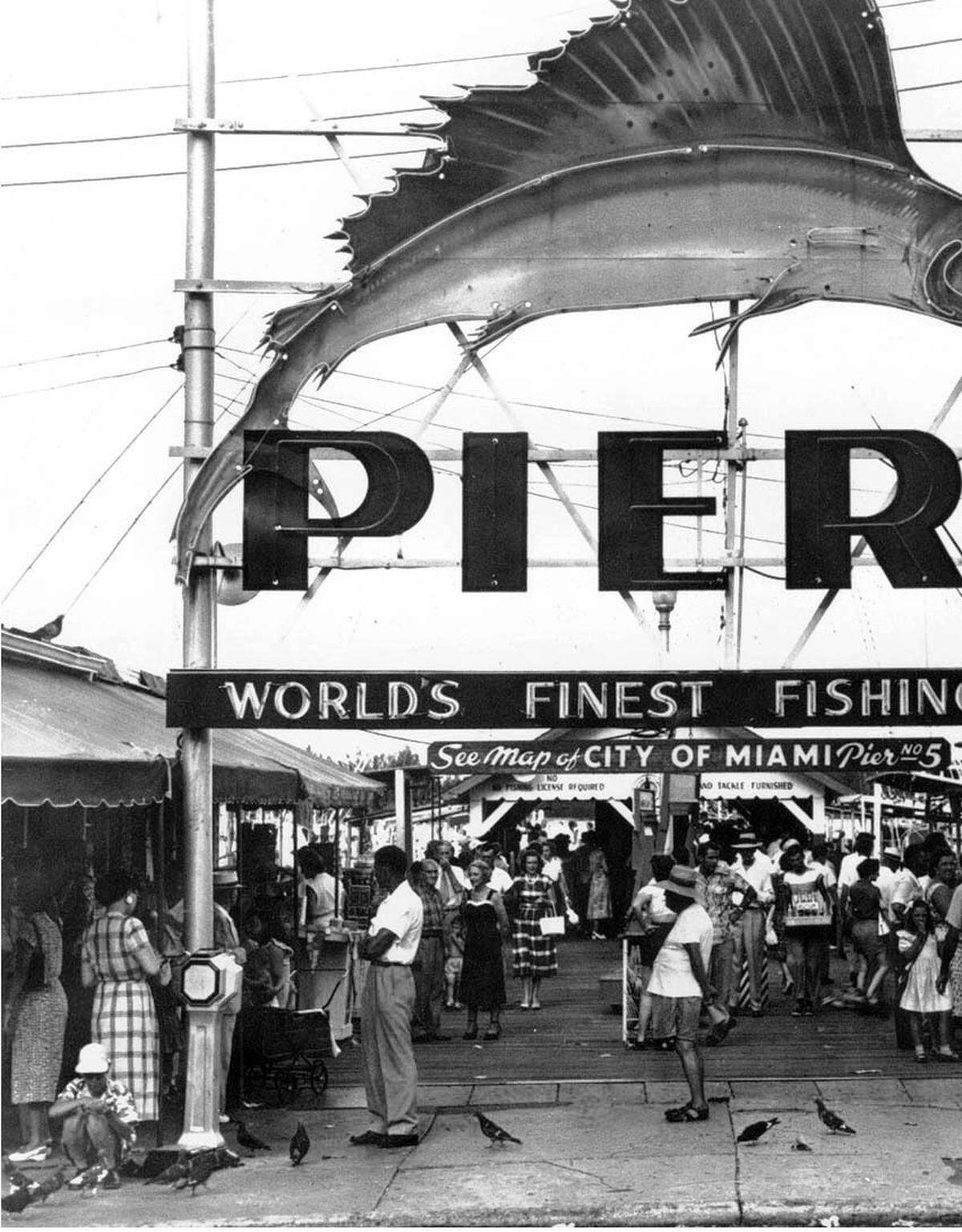
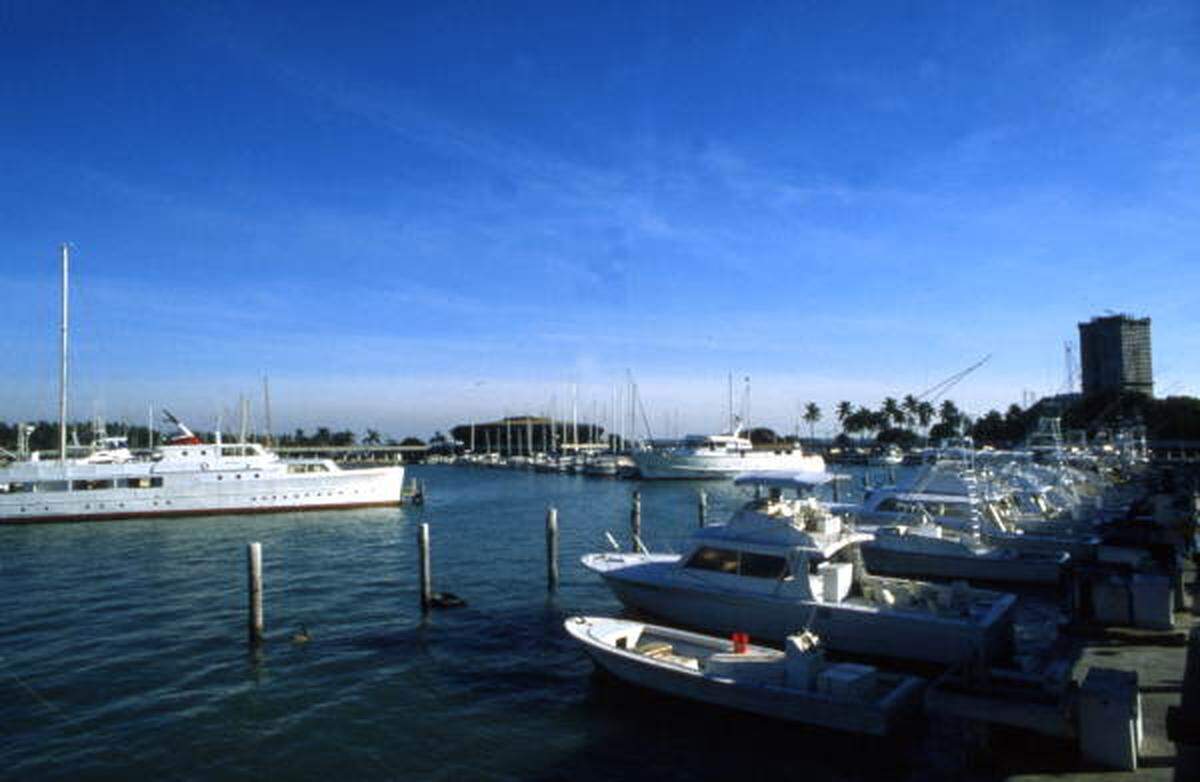
Before Bayside Marketplace, the area in Bayfront Park had a different look. From the 1940s, the Pier 5 fishing docks drew tourists and locals with a busy fish market, sightseeing boats and a thriving sports-fishing base.
Built in 1925 from fill, Bayfront Park had flowering gardens and a lush tree canopy It was a gathering spot for political rallies and speeches. In later years to the north, the park was home to a popular band shell and a public library.
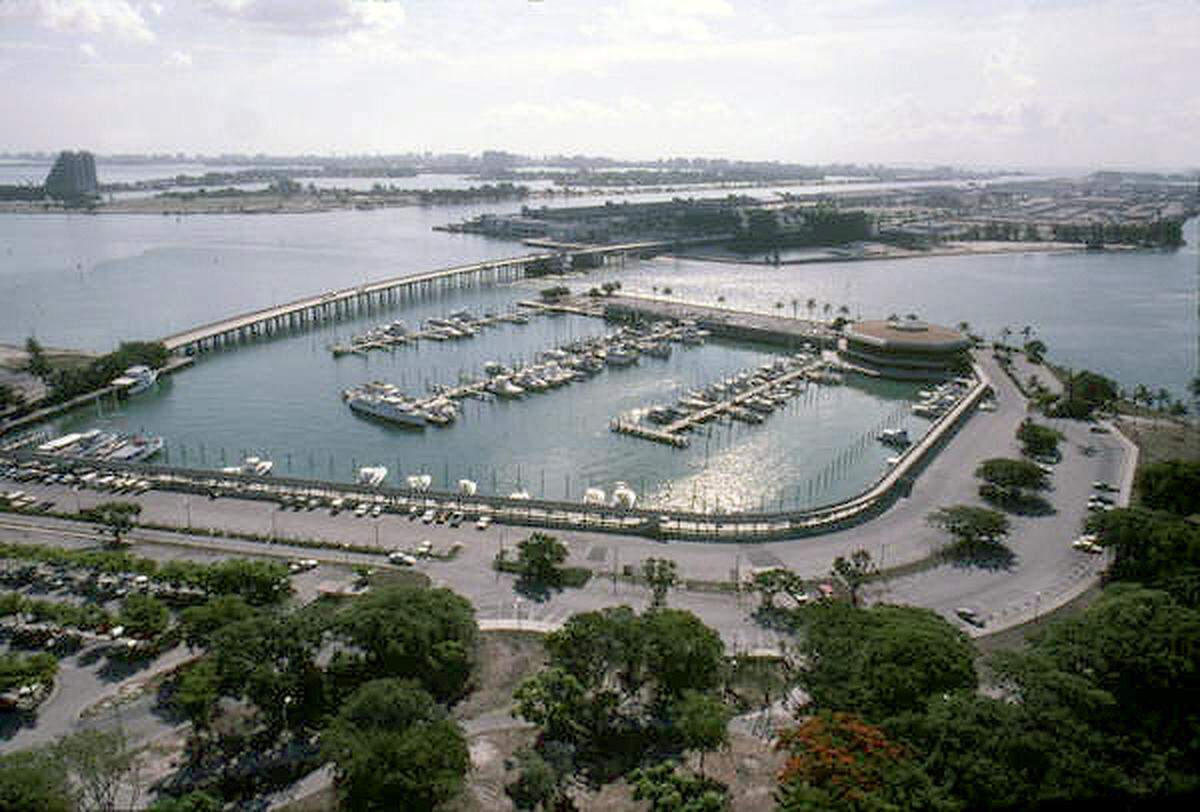
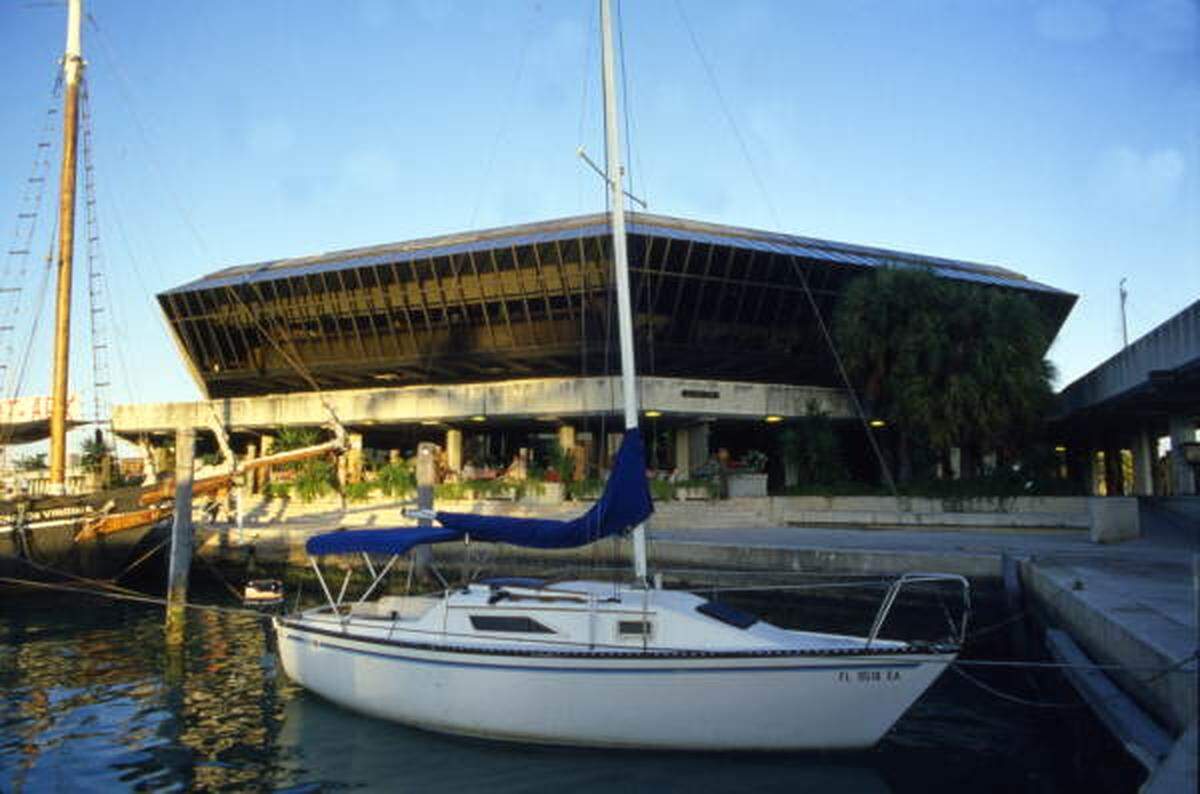
By the early 1970s, the area had a new dock, new restaurants and a new name: Miamarina. A second-floor restaurant, Reflections, offered sparkling water views and fish dinners. A casual restaurant and bar, Dockside terrace, took up the first floor of the signature building at the end of the pier.
By the 1980s, as downtown declined, Bayfront Park became run down. By the late 1980s, Bayside Marketplace injected new life into the park.
While the original Pier 5 and Miamarina docks have changed, the spherical building from the 1970s remains and now houses a Hard Rock Cafe.
Through the Miami Herald archives, let’s look back to a time before Bayside Marketplace, when the fish and fishermen took center stage.
CHANGE AT THE PIER
Published July 28, 1993
By Joanne Cavnaugh
Rows of wooden piers, pilings and deck planks are being yanked from Miamarina at Bayside Marketplace, leaving a watery and expensive hole beside the city’s showcase emporium.
The pilings never worked anyway, tilting along the bay’s bottom. The deck planks fell off. And the finger piers wobbled. A slam from Hurricane Andrew nearly finished off one of the city’s most embarrassing waterfront messes.
This week, Miami is clearing away all vestiges of the city- owned pier, recipient of a $1.5 million renovation six years ago that failed so miserably it was rarely used by boat owners.
Now, Miami officials hope to start from scratch with a sparkling new marina. Plans for new boat slips, floating docks and other boating amenities are already under way.
“It will certainly be better,” said Dianne Johnson, assistant to the city park’s director. “We are bound and determined to have a facility that meets the boating public’s needs, and that fits into the downtown picture.”
It is unclear how much that new marina would cost. The city is expecting more than $1.5 million from the Federal Emergency Management Agency to repair hurricane damage.
The FEMA check will likely not be enough, as the city found the first time around. Last year, after the problems mounted, the City Commission was forced to look for $5 million to fix up the troubled marina.
The Miamarina, built in 1970, got a $1.5 million face lift in 1987 to coincide with Bayside’s opening fanfare. The city blamed design and construction flaws for dozens of problems, and sued the companies that did the job.
“It was pathetic,” said Raul de la Torre, Miami’s marina manager. “There were problems from day one.”
By early 1992, 28 of the marina’s 139 slips were cordoned off with yellow tape and a warning sign was posted. Nearly 50 wooden pier pilings were so weak they could not handle the pressure of boats pressing against them.
Miami and marina contractors settled the lawsuit several months ago in the city’s favor, for an undisclosed amount, city officials said. Now, the city wants to put the memory of the marina’s woes behind them.
It won’t be soon enough for Bayside, and area boat owners.
“Eureka! It is about time,” said Raul Tercilla, vice president of Rouse Miami, Bayside’s developers. “We are very happy with that.”
Tercilla, who was consulted by the city, said he hopes the marina will target pleasure boats visiting Bayside restaurants and shops.
Local commercial boat owners, meanwhile, hope there will be some space for fishing charters or sightseeing yachts.
“There is such an extreme shortage of marina space after the hurricane,” said Captain Clarence Dowling, owner of “Shredder,” a fishing charter boat docking along Bayside’s concrete walls on Tuesday.
City officials have hired consultants to help design a new marina. As part of that study, a consultant is evaluating other downtown city marinas, analyzing the local boating market and offering designs, Johnson said.
Engineers are also looking at other problems that plagued the old marina: wave agitation from passing boats, debris getting clogged in the Bayside lagoon, and ways to avoid hurricane damage in the future.
The city’s mistakes, meanwhile, will not go entirely to waste.
Miami plans to use excavated concrete slats to create an offshore artificial reef, de la Torre said. The wooden pilings will be used to mark parking spaces in city parks.
Demolition should continue into next week. And construction on a new marina could begin next summer, he said.
RETURN OF THE BOATMEN?
Published Sept. 28, 1986
By Reinaldo Ramos
The boatmen of Miami’s historic Pier 5, moved out of Miamarina last year to make room for the construction of the Bayside Specialty Center, are being asked to come back.
City commissioners Thursday told development officials to meet with the Pier 5 Boatmen’s Association and negotiate an agreement that could bring the commercial and charter boat owners back.
Such a move would probably save the city, which is obligated to build a pier at Bicentennial Park, several hundred thousand dollars. Pier 5 Boatmen President Jim Courbier has sent the city 13 demands it wanted met before the group considered moving back.
“I think it’s possible that we’ll move back if those certain conditions are met,” Courbier said. “I think the group could be happy at Bayside.”
They would be welcome at Bayside, said James Dausch, vice president of the Rouse Co., the project developer.
“I think the idea of selling fish from behind their boats is a great one,” he said. “I think it’s a great atmosphere for them and we will have commercial fishermen at Bayside. I would prefer to have the old-timers, but if they don’t want to come, then I think someone else will.”
When the city moved the fishermen out of Miamarina in November, the group sued. In an out-of-court settlement, the city agreed that Watson Island would be a temporary home until a pier was built at Bicentennial Park.
But the bids for the project all came in above the city’s $500,000 cap. The city scaled down the project, which angered the fishermen. The fishermen hired a lawyer, and the city’s development office stepped in to negotiate.
The fishermen then came up with their list of demands, which were shown to Dausch last week. “We went through the list and most of the items were acceptable,” Dausch said.
The fishermen are demanding, among other things, electrical and water hookups, free utilities, a fish-cleaning stand and finger piers.
Three of the demands could pose a problem: free parking nearby for customers, a covered canopy over the fish-cutting area and a wider wooden dock. Dausch said he was worried the canopy would block the view of pedestrians on the upper walkway. Dausch’s other concern is the free parking nearby. “If they decide to act now, they could get it done by the time we open in April,” Dausch said.
.JPG "PARKER_ALFRED_BROWNING20090(6).JPG")
DAWN OF A MARKETPLACE
Published: Oct. 2, 1985
By Paul Anderson
The Bayside specialty center in Bayfront Park cleared the last hurdles blocking construction, Miami officials said on Tuesday.
“You’ll see the contractor out there moving trees tomorrow,” said Assistant City Manager John Gilchrist, the project manager.
Bayside is to open in March 1987.
A delegation of city officials, led by Commissioner J.L. Plummer, persuaded Gov. Bob Graham and the state Cabinet Tuesday to grant the city concessions on a lease of state land for the project.
Plummer announced that, a day earlier, the association of charter boat captains from Miamarina, which is to be redeveloped as part of Bayside, dropped its suit against the project.
The state owns the land directly around and under Miamarina and has leased it to the city for “public purposes.”
In August, the Cabinet agreed to let the Bayside project proceed, but insisted that 17.8 percent of the project’s profits be set aside for the purchase of other waterfront property, either on Biscayne Bay or the Miami River.
City commissioners objected to that high a percentage and came back Tuesday with a new formula that called for a set-aside of 7.4 percent, which they said will represent at least $3,175,000 over the next 40 years.
Based on sales projections by The Rouse Co., which is developing the project, that share could go as high as $44.4 million.
Graham and the Cabinet members agreed to the city’s proposal, but insisted that the first priority be the property between Peacock Park and the historic Barnacle in Coconut Grove.
The city and state, working together, have won a year’s reprieve on development of the property and are negotiating the purchase of that land.
Plummer said the expected price is about $6 million. The Cabinet and Plummer struck a deal that the state and city will each pay half of whatever price is finally negotiated and that the city can borrow from the state to pay its half, with Bayside proceeds repaying that loan -- at interest.
Plummer and Gilchrist said the 7.4 percent share of Bayside revenue represents the income generated from the retail space on state land.
That part of the project will include the rebuilt Reflections and Dockside restaurants; a strip of small stores and eateries extending along the eastern edge of the Miamarina; and shops to be operated by MGM as part of its display of the sailing ship Bounty.
The dispute with the charter boat captains arose because 31 boats would be displaced during construction. As part of a settlement accepted by 29 of the 31 captains, the city will build a temporary dock for the charter boats in a deep-water slip at the adjacent FEC property.
The cost of the docks, plus just over $4,000 per captain to cover losses caused by the move and other expenses, will cost the city $670,000, Plummer said.
One of the dissenting captains, Charles Kouck, appeared before the Cabinet on Tuesday to object to say the boat captains needed more relief. But he failed to get any help from the state officials.
END OF THE OLD BAYFRONT PARK
Published Sept. 14, 1986
By Andres Viglucci
Old Bayfront Park is gone, scraped away by bulldozers.
he folks in the office towers downtown now have a sweeping view of a big, dusty rectangle flush by blue Biscayne Bay.
A few precious trees cling to the bald earth, while around them men and machines shape heaps of dirt into barrows and knolls.
But by April, when work is finished on a major portion of what amounts to a huge land sculpture by Isamu Noguchi, Bayfront Park will be reborn, green and tree-filled, as if nature had formed its contours.
City fathers are praying it’s a hit. The $20 million-plus park project, along with the Rouse Co.’s Bayside Marketplace under construction just to the north, is the centerpiece of the city’s plan to revive downtown Miami.
The outlines of the transformation are already evident. On the site of the old county bandshell, now just a memory, rises Bayside’s parking garage. Two main buildings -- to house 180 shops and restaurants -- curve along the water’s edge. A service road separates Bayside from Bayfront.
Two bridges will take pedestrians from the second floor of Bayside to its highest point -- the top of the amphitheater, a grassy slope with room for 9,500, 18 feet above Biscayne Boulevard.
At the south end of the walkway on the amphitheater’s rim is the triangular base of a cylindrical 90-foot tower. The tower will bounce computerized laser beams off downtown skyscrapers. The base has room for a cafe.
To the east of the light tower, untouched in a clump of trees, is the old Rock Garden. Developers have an option to build a restaurant there within a year, although Noguchi has said he would rather restore the eroded garden.
The park’s eastern border will be a wide granite baywalk, built on new landfill by the U.S. Army Corps of Engineers. At the baywalk’s north end is Twin Pier Plaza, where two fishing piers will jut into the water. The statue of Columbus that is now west of the Rock Garden will be moved into the plaza.
MGM plans to build a studio store a few yards north of the piers. The Bounty, a three-masted sailing ship used in the movie Mutiny on the Bounty, will be tied next to the store.
At the other end of the baywalk, at Chopin Plaza, another pier is under construction. At the center, surrounded by what will be a circular walk, is the reservoir for a monumental fountain dedicated to Congressman Claude Pepper and his late wife, Mildred.
Eventually, the Flagler Street Promenade will cut through the spot where the library stands, leading straight to the fountain.
The Promenade route marks the southern boundary of the current construction. The city still needs to come up with almost $3.5 million to install benches and a stage in the amphitheater, to finish the Pepper fountain, and to rebuild the south end of the park, to be called Chopin Plaza Court.
Workmen are taking apart the old public library. It will disappear within a few weeks, but work on the promenade is not expected to begin until next spring.
If money is available, work will also begin on Chopin Plaza Court. Plans for that section are still in the “conceptual stage,” but will include a smaller, more intimate amphitheater and a more modest fountain, said Juanita Shearer, assistant director of the city’s Department of Development.
RETURN OF THE ‘SALTY DOGS’
Published Nov. 10, 1990
By Peggy Rogers
Miami’s Pier 5 boat captains started moving home this week to rebuilt moorings at Miamarina, five years after being ousted from their historic city pier so Bayside Marketplace could go up.
The 35 roomy, new slips and canopied fish-cutting areas along Bayside’s north pavilion drew fishing captains’ praise. At least five slips were filled by the end of the week.
But the odd coupling of upscale Bayside and salty fishermen has produced trepidation on both sides -- and a boat captain’s code of good conduct.
No bare chests at the new Pier 5. No cursing from crews. Mooring areas will be swabbed of fish scales, innards and blood.
And a rigorous disposal system will let crews ready their catch for market at the docks while tossing the smelly remains into special buckets, not the bay.
“We’re supposed to keep things clean and fairly fish-smell free. I guess Bayside doesn’t want to have fish heads floating in the bay,” said Jimbo Thomas, captain of the 42-foot Thomas Flyer. “They want us to have a nice appearance and don’t want crap lying all over the docks. And no dirtbags or winos working on the boats.”
Administrators of the Rouse-owned Bayside say they have embraced the fishermen’s homecoming. And several boat captains agree, despite hesitation about moving into sanitized quarters.
“There were a few who said, ‘We don’t want to go there. We don’t want to be in Disney World,’ “ said Capt. Jim Courbier, a leader in the boat captains’ struggle to get a rebuilt pier. “You’re not going to be able to escape the color of the fishermen - they’re that kind of group. It’s kind of like Barnum & Bailey coming to town.”
To exploit the new fleet, Bayside is creating a fisherman’s wharf of pedestrian walkways, open-air stages and outdoor cafes that buy the fresh catches, said Patti Allen, Bayside sales and marketing manager. A Fisherman’s Wharf at Pier 5 logo will go on T-shirts.
“A lot of people have very good memories of Pier 5. I grew up as a kid here, with the glass bottom boat and everything. There’s a lot of nostalgia,” Allen said. “It’s creating a whole new attraction.”
Work is under way on the first open-air cafe, Snapper’s. It will let customers overlook the wharf while dining, Allen said. Pier 5 boats will be christened Nov. 30, and a Dec. 1 Bo Diddley concert will be staged at the wharf.
“The project, as it started to evolve, captured the imagination of Bayside and the fishermen,” said Allan Poms, chief architect for Miami public works. “The fishermen were pretty skeptical about the project up until that point.”
With good reason, the fishermen say.
Miami asked about 30 charter, fishing and tour boat operators to leave the decades-old downtown marina until Bayside’s 1987 completion. The city provided free slips at Watson Island in the meantime.
But boat captains complained of losing business at Watson and losing faith in the city. They sued. New quarters were promised as early as October 1988, Courbier said.
Miami, after missing a May 1 deadline, will pay for tardiness. Pier 5 boat captains will get 15 months’ free rent, administrators and boatmen said. Boat owners have estimated the break will save them more than $100,000.
But there’s optimism now on the new $1.2 million docks.
“It’s potentially very, very good,” Courbier said. “We’ll have to see how it works out. Certainly, if these guys start throwing fresh fish up at the crowd, there may be a few problems.”
This story was originally published June 24, 2021 at 6:00 AM.
.JPG)
.JPG)