A historic black church condemned as unsafe by Coral Gables will become a theater
He fought Miami-Dade County’s plan to revamp the long-shuttered Coconut Grove Playhouse to a virtual standstill. Now lawyer and arts patron Mike Eidson has announced plans to open his own performing arts theater nearby, in a 1958 church building he acquired in the village’s historically black section.
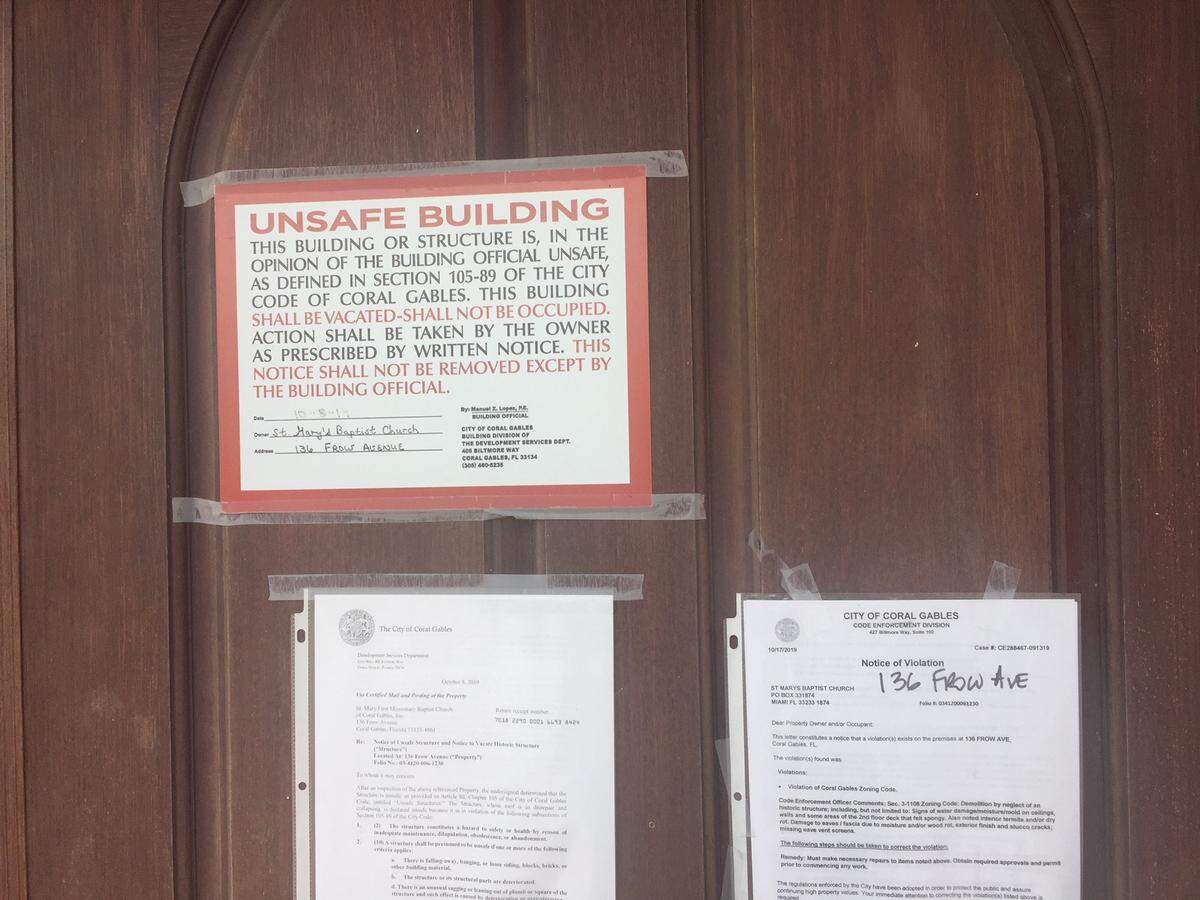
Sanctuary of the Arts, a Coral Gables-based nonprofit co-founded by Eidson, bought the St. Mary First Missionary Baptist Church building on Frow Avenue for $550,000, he said. Eidson said he provided the funding to buy the historic church, which is so deteriorated it was ordered shut as an unsafe building in October by the city of Coral Gables.
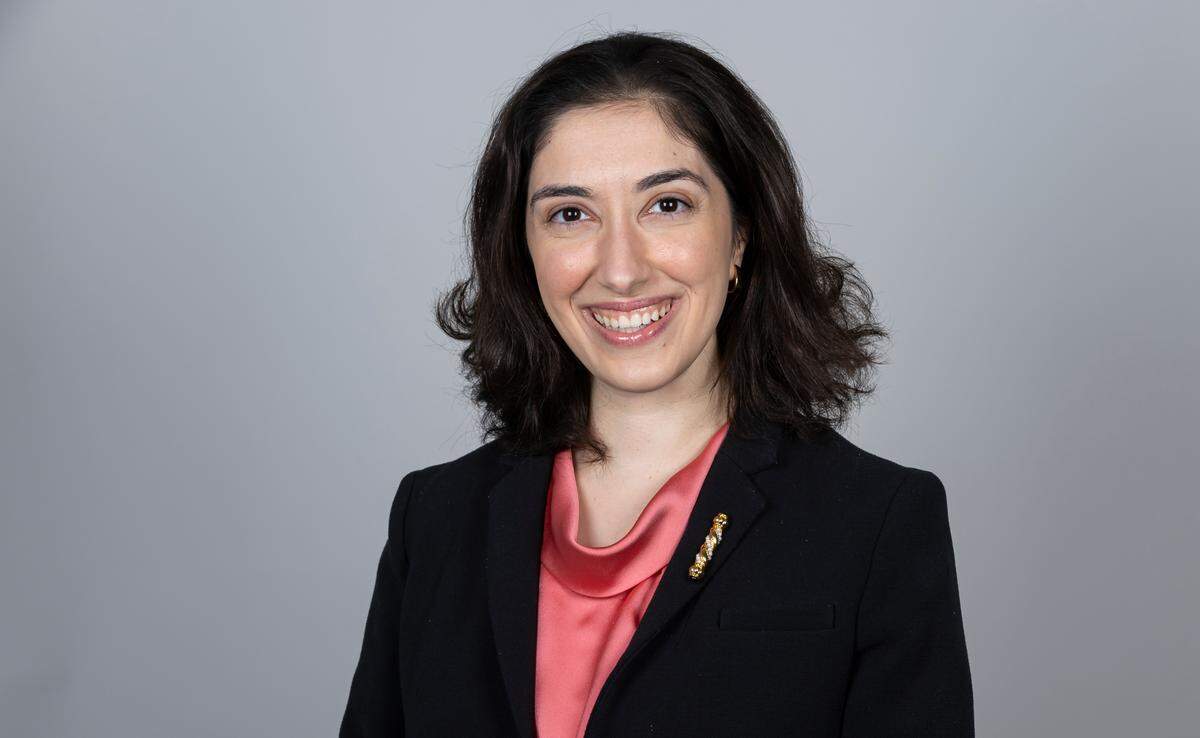
Eidson and Sanctuary CEO Olga Granda said they plan to renovate the 4,000-square-foot church building and convert it into a multipurpose theater with around 100 to 125 seats. The church sits in the MacFarlane Homestead historic district, bordered by U.S. 1, on the westernmost end of the Grove that’s part of the city of Coral Gables.
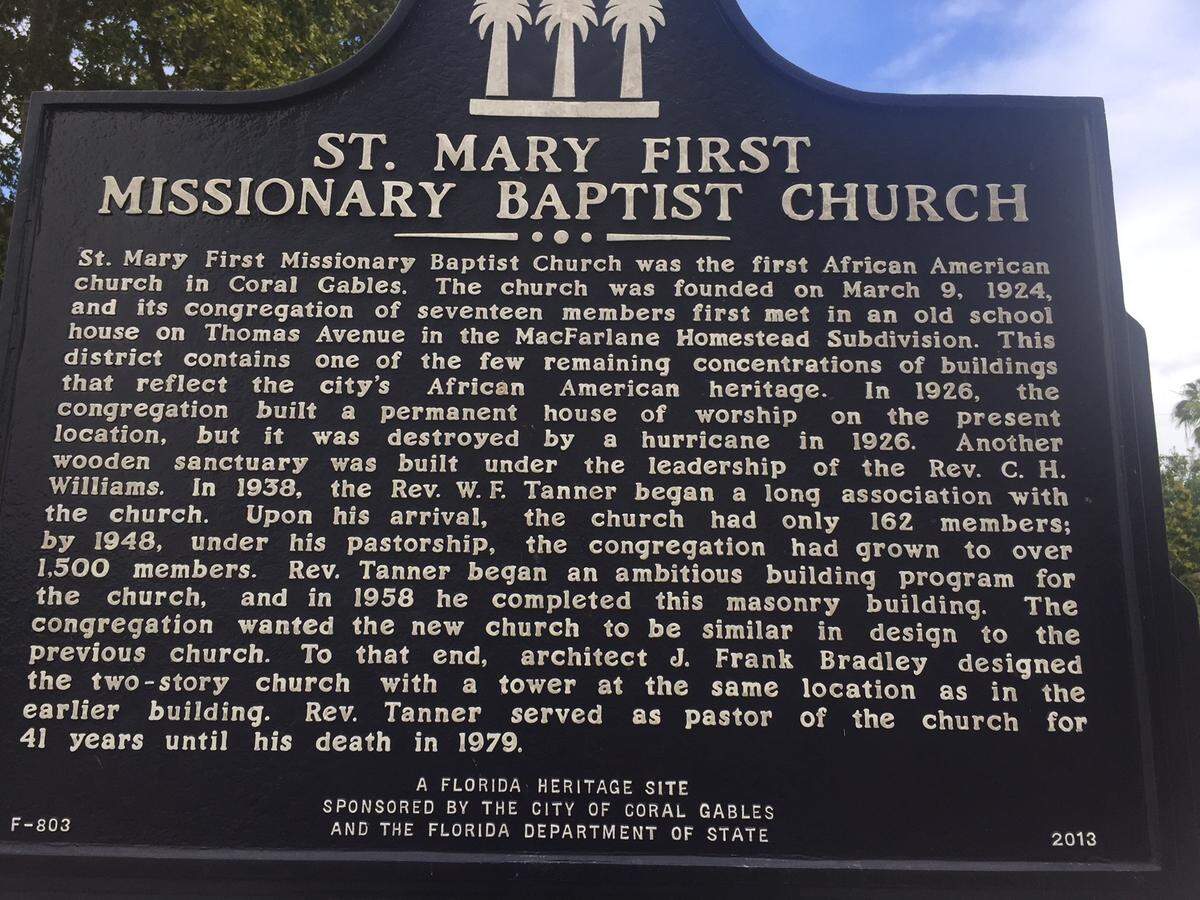
The Sanctuary acquisition will save the historic building. But the church’s dwindling and aging congregation, which could not afford the upkeep, has been left homeless. St. Mary’s, founded in 1924 in what was then a legally segregated corner of eastern Coral Gables, was the first and only black church in the CIty Beautiful. In 1958, the congregation replaced an older wooden church with a concrete building that was listed on the National Register of Historic Places in 2014.
The church had been listed for sale, but that was not widely advertised, and some congregation members were unaware of the pending purchase. The sale closed in January, Granda said.
“We learned that the congregation was having financial challenges and the building has been deemed an unsafe structure due to mostly lack of an update and a leaking roof,” Granda said. “We felt that there was an opportunity for us to save a building that was in disrepair and continue to maintain it open as a community asset, particularly due to its history.”
Rev. Zachary Royal, St. Mary’s pastor since 1990, did not respond to phone messages from the Miami Herald. Neither did the church’s longtime deacon, John Hatcher. Royal and Hatcher are listed as president and vice president, respectively, in the corporation that owned the church building before the sale to Sanctuary.
The Sanctuary purchase does not include four adjacent vacant lots, two of which are owned by that same corporation, St. Mary First Missionary Baptist Church of Coral Gables, and two others that are listed as owned by a different entity, the Trustees of St. Mary’s Baptist Church, according to the Miami-Dade County Property Appraiser website. The Trustees entity could not be found on the state’s corporate records site.
Congregation members could not be reached on Wednesday.
Anthony Alfieri, a University of Miami law and ethics professor who works closely with the Coconut Grove Ministerial Alliance, said St. Mary’s members are “distraught” over the loss of the church building. He said a presentation by Granda about Sanctuary’s plans to the alliance, which groups together leaders of the West Grove’s numerous churches, was received “hopefully.”
But he questioned why the city of Coral Gables allowed the church building to deteriorate to the point where it had to be condemned without intervening to provide assistance. Alfieri noted that Royal was not a “full member” of the alliance.
The city charged the congregation with “demolition by neglect” of a historic building, but it could not be determined immediately whether fines were levied or any other actions taken to remedy the neglect. The city recently spent about $600,000 to save a pair of historic wooden homes nearby so its residents would not be forced out. VInce Lago, the Coral Gables vice mayor who is on the Sanctuary board as an ex-officio member, also helped raise $100,000 privately several years ago that was spent on repairs and a new paint job at St. Mary’s.
Granda said the congregation books showed minuscule contributions by its small membership, not nearly enough to maintain the church building.
“It’s not surprising they could not afford the upkeep,” she said. “The numbers just don’t add up.”
Granda said the purchase was handled through a broker and she doesn’t know who would get the proceeds of the sale.
The planned theater at St. Mary’s would function as an extension of Sanctuary’s base at the First Church of Christ, Scientist campus in downtown Coral Gables, she and Eidson said. Sanctuary has a previously announced lease agreement with that congregation to convert the larger of two church buildings on the campus into a performing arts center with about 340 seats.
The Sanctuary spaces would supplement public efforts to bring cultural and arts facilities to long underserved neighborhoods. Miami-Dade commissioners in February approved construction of a $7.3 million Westchester Cultural Arts Center at the entrance to Tropical Park on Bird Road. Project construction, which includes a 150-seat theater; building will begin in late April. The county hopes to replicate that neighborhood model in other communities.
Sanctuary of the Arts plans to incorporate neighborhood history into its programming at the St. Mary’s theater, Granda said. The group is recording memories of former members through audio and video recordings. Organizers plan to meet with area residents for input on programming, Granda said. One idea: gospel music, she said, to commemorate “the legacy of the St. Mary’s community.”
The group hopes to start repairs and renovations in two months, with a goal of opening by spring of 2021, Granda said, with work expected to cost around $750,000. While Eidson will cover most of those costs, Granda said, Sanctuary of the Arts is looking to expand its board, raise funds privately and seek financial support from local government.
Architect Richard Heisenbottle, who specializes in historic restoration, has been hired for the project.
“Miami has seen a huge surge in activity in the visual arts. Art Basel came here. We’ve seen the Miami City Ballet and New World Symphony grow,” Granda said. “But there’s still more opportunity to help artists develop new work and a place where the community can also have access to more art, events and conversations about art and culture.”
.jpg)
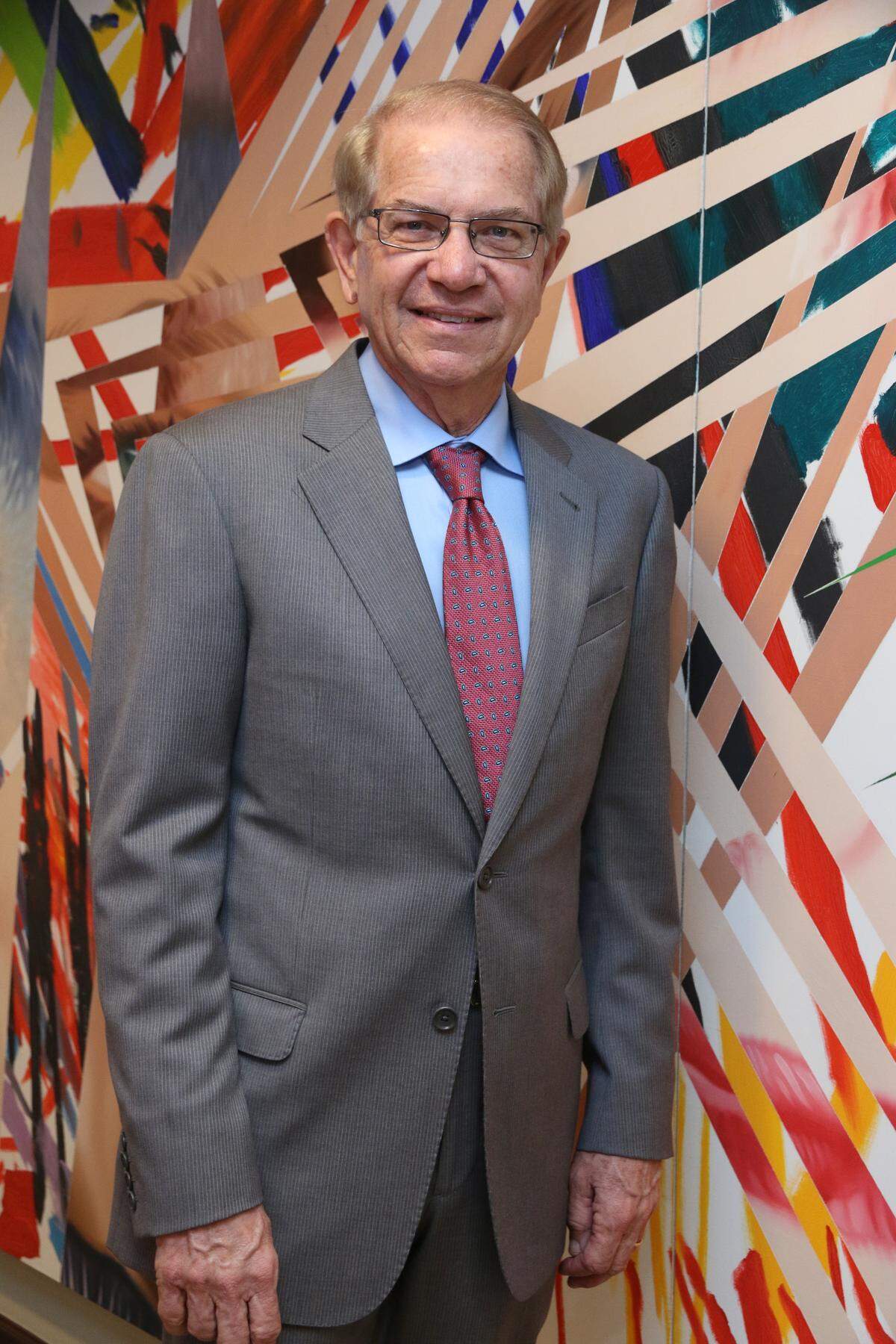
Eidson, a former Miami City Ballet and Adrienne Arsht Center chairman, has been recently in the public eye as a leading opponent of Miami-Dade Mayor Carlos Gimenez’s plan to reopen the historic Grove Playhouse by renovating its Mediterranean front building, tearing down the oversized auditorium behind it, and replacing that with a new, significantly smaller stand-alone theater with 300 seats.
Eidson led an effort to save the full auditorium and increase the revamped theater’s capacity to 700 seats. But he was unable to raise the promised money to realize his proposed alternative, under which a foundation controlled by Eidson would have run the theater. But the county’s theatrical consultants say that a theater larger than 300 seats would have difficulty filling its auditorium and risk failing financially, like the playhouse did when it shut abruptly in 2006.
The county plan for the state-owned theater was stalled last year when Miami Mayor Francis Suarez vetoed a commission approval. The county sued the city, and a Miami-Dade circuit court appeals court is scheduled to hear oral arguments in the suit next week.
In the case of his own Sanctuary spaces, though, Eidson said smaller is better.
“Small spaces are great. They are not so expensive to run,” Eidson said.
Eidson said he has little doubt both Sanctuary spaces will be in high demand, though he said he doesn’t plan to have resident companies operating in either one.
“There is enough of an audience. We studied the saturation for it,” he said. “There is tremendous amount of demand for this.”
He also said his interest in creating the West Grove performance space has “nothing to do” with his position on the Grove playhouse.
“We are just waiting and watching, like everyone else,” to see what the court rules in the playhouse case, he said.
Michael Spring, the county cultural affairs director who has led the playhouse project and has been the focus of vocal criticism by Eidson and his backers, let out a long laugh when told the lawyer is now praising the financial advantages of smaller theaters.
“You can quote me laughing,” Spring said. ”It would be funny if it weren’t so tragic. That’s what the arts are all about, I guess, tragicomedy.”
But Spring said the right size of an arts space will vary according to a group’s needs and capacity, while noting he has not spoken to Eidson and knows nothing of his plans. He added he doesn’t see Eidson’s West Grove plan as competition or an impediment for a reopened playhouse.
“Generally speaking, we don’t look at other cultural endeavors as being competitive,” Spring said “They all find their niche and they end up being complementary to one another. They build a critical mass of interest for audiences.”
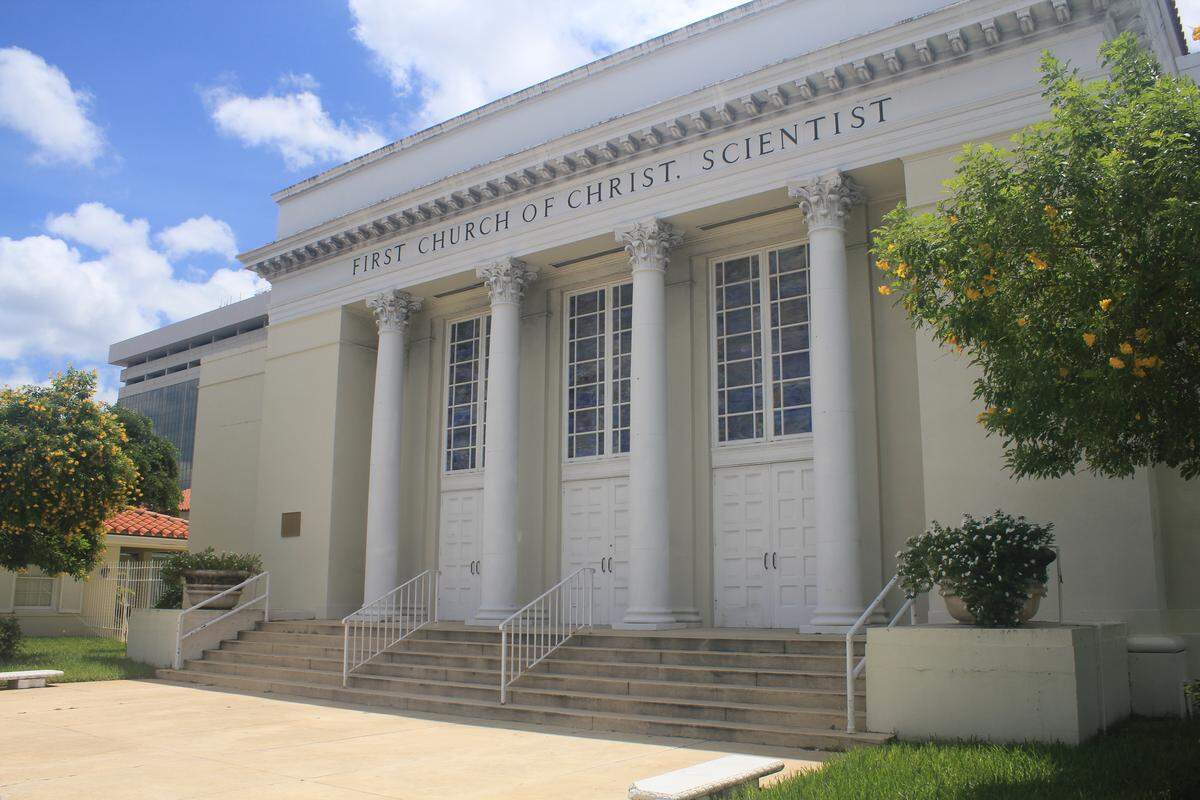
Sanctuary of the Arts and its partners will organize programming for both St. Mary’s First Missionary Baptist Church and First Church of Christ Scientist, Eidson said.
Sanctuary of the Arts held a ceremonial opening at First Church of Christ, Scientist in December with an outdoor concert. It expects to complete a $1 million renovation by the summer, including the addition of stage lighting, a sound system and 454 seats. The organization will then organize programming for the fall, which would include concerts, plays, poetry readings, lectures and film screenings, Granda said.