Tale of two courthouses: Miami-Dade judges move to modern digs, leaving history behind
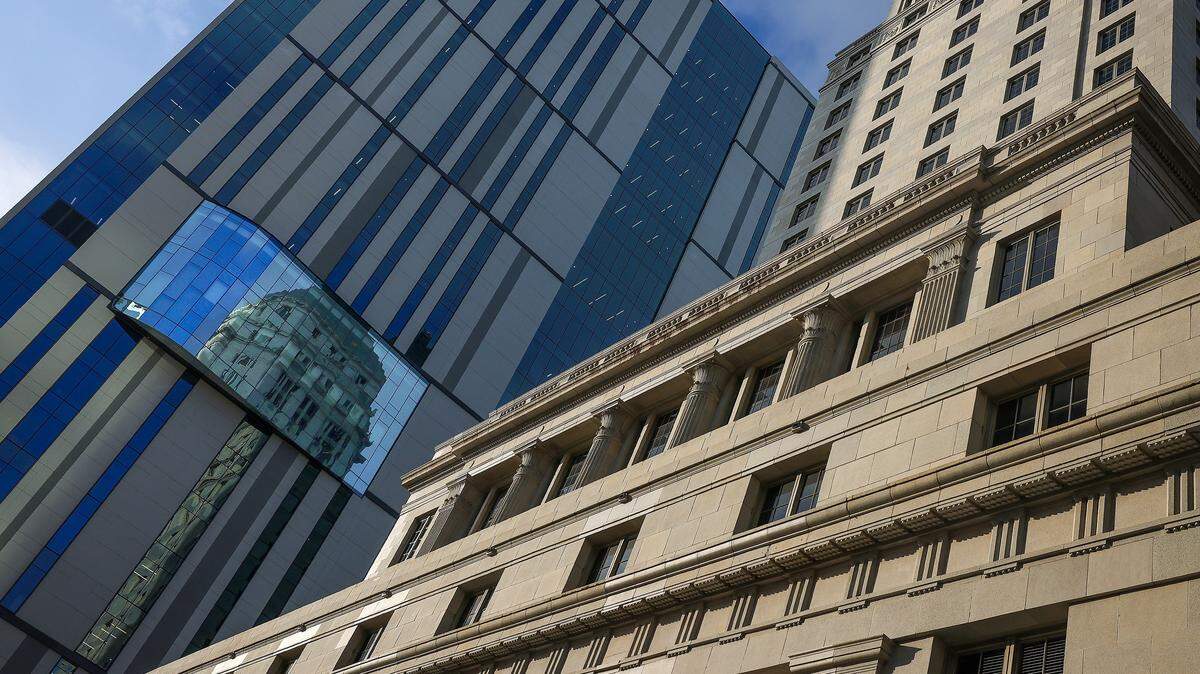
In the 98 years since the iconic, historic Dade County Courthouse first assumed its leading role in Miami’s civic and legal life, some of its occupants have whispered that the grand old tower was haunted.
If it wasn’t haunted before, it is now. It’s haunted by the past.
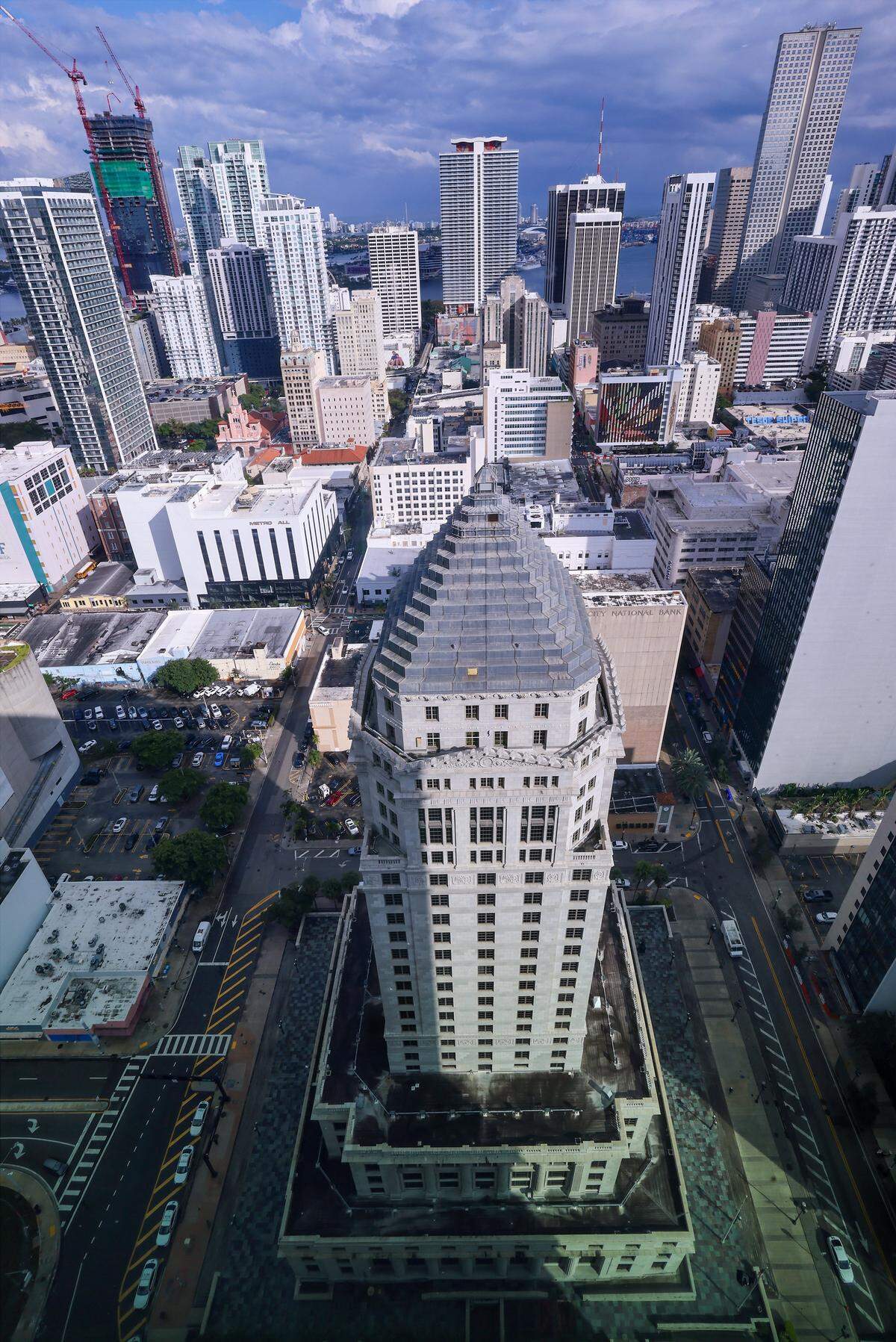
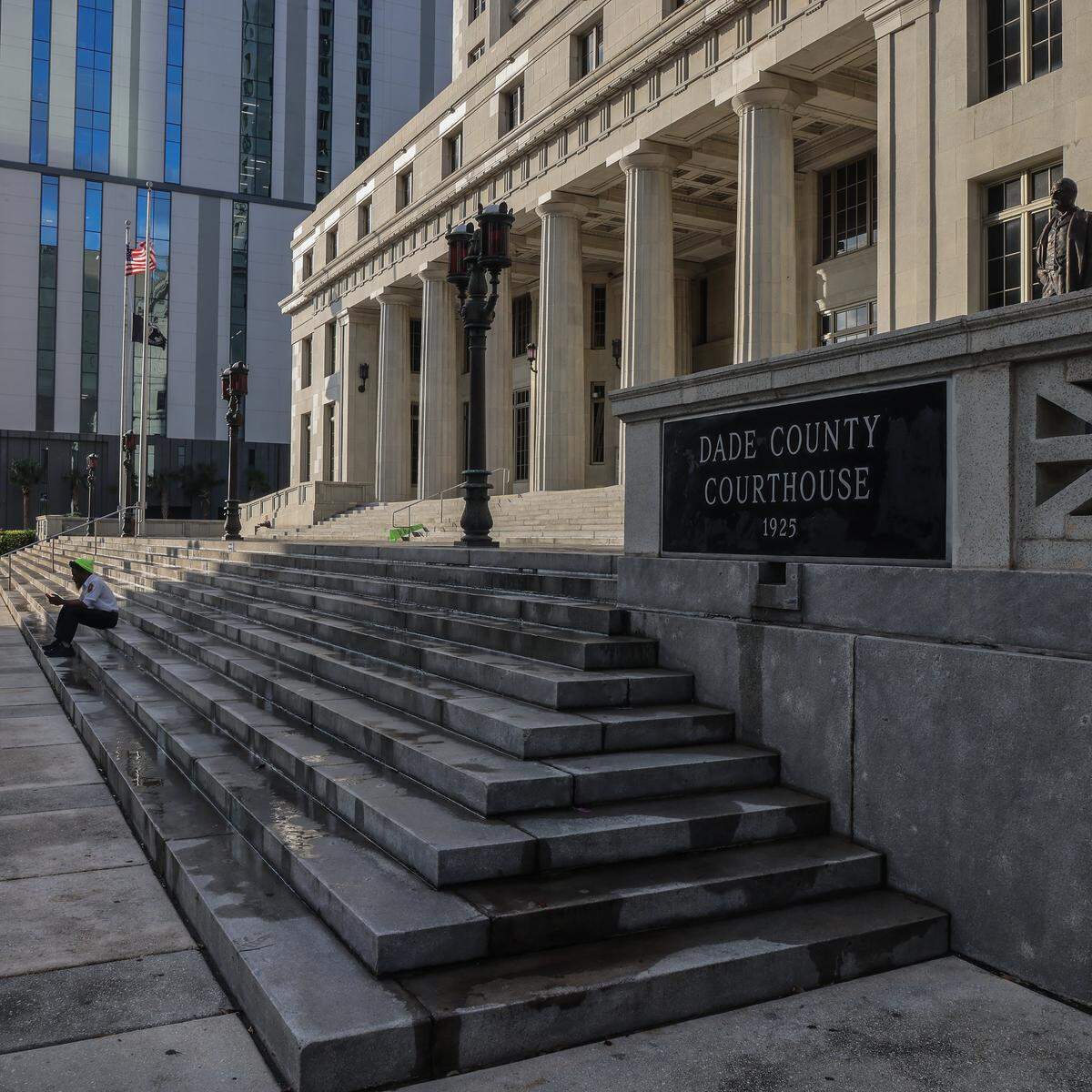
Today, the 27-story courthouse at 73 W. Flagler St. stands eerily still, virtually bereft of life for the first time since its heralded opening in 1928. The construction of what stood for decades as the tallest building south of the Mason-Dixon Line was hailed by proud Miamians — a new breed that had suddenly sprung from a sodden backwater in just a few years — as a symbol of the Magic City’s explosive growth.
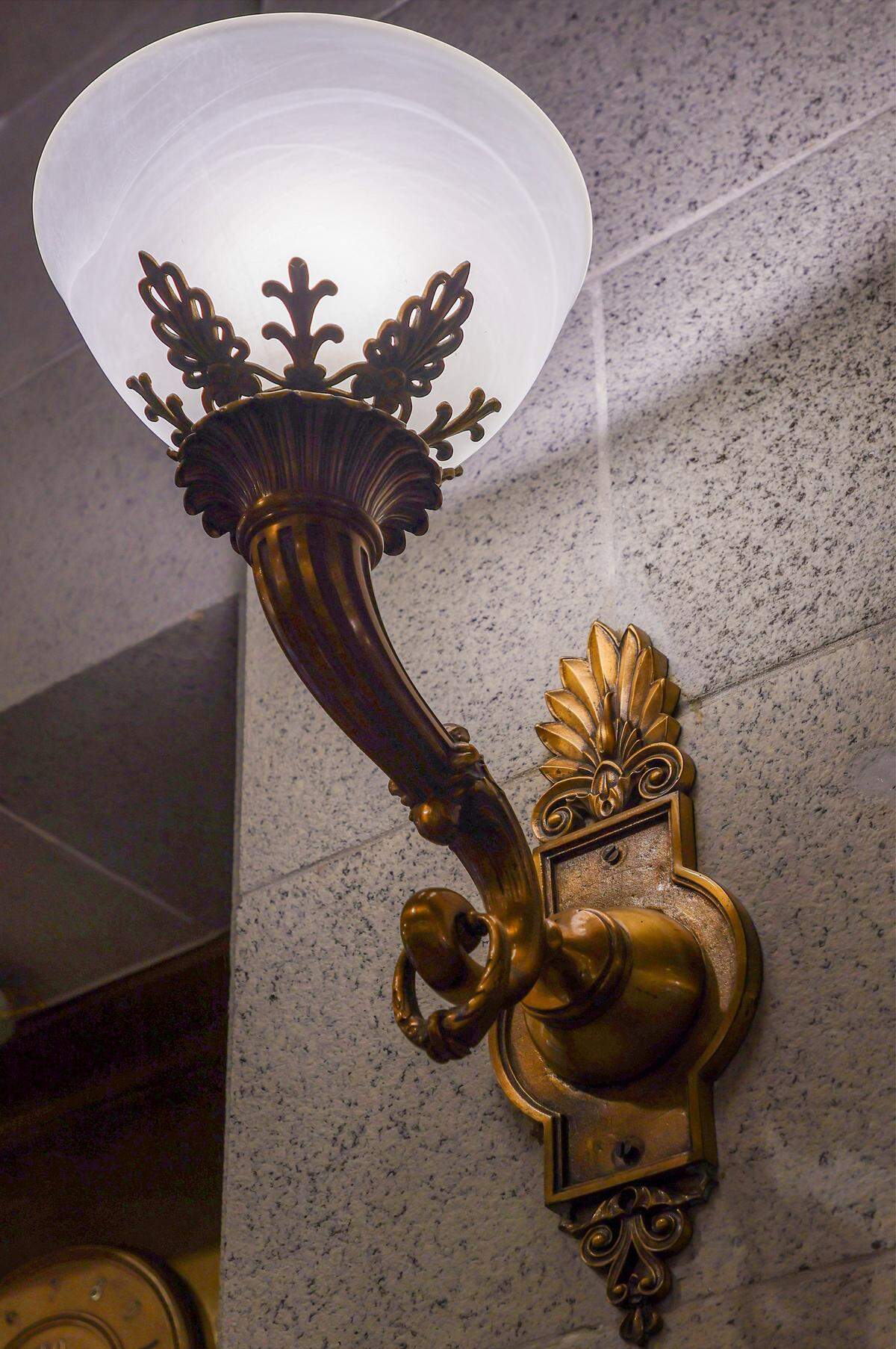
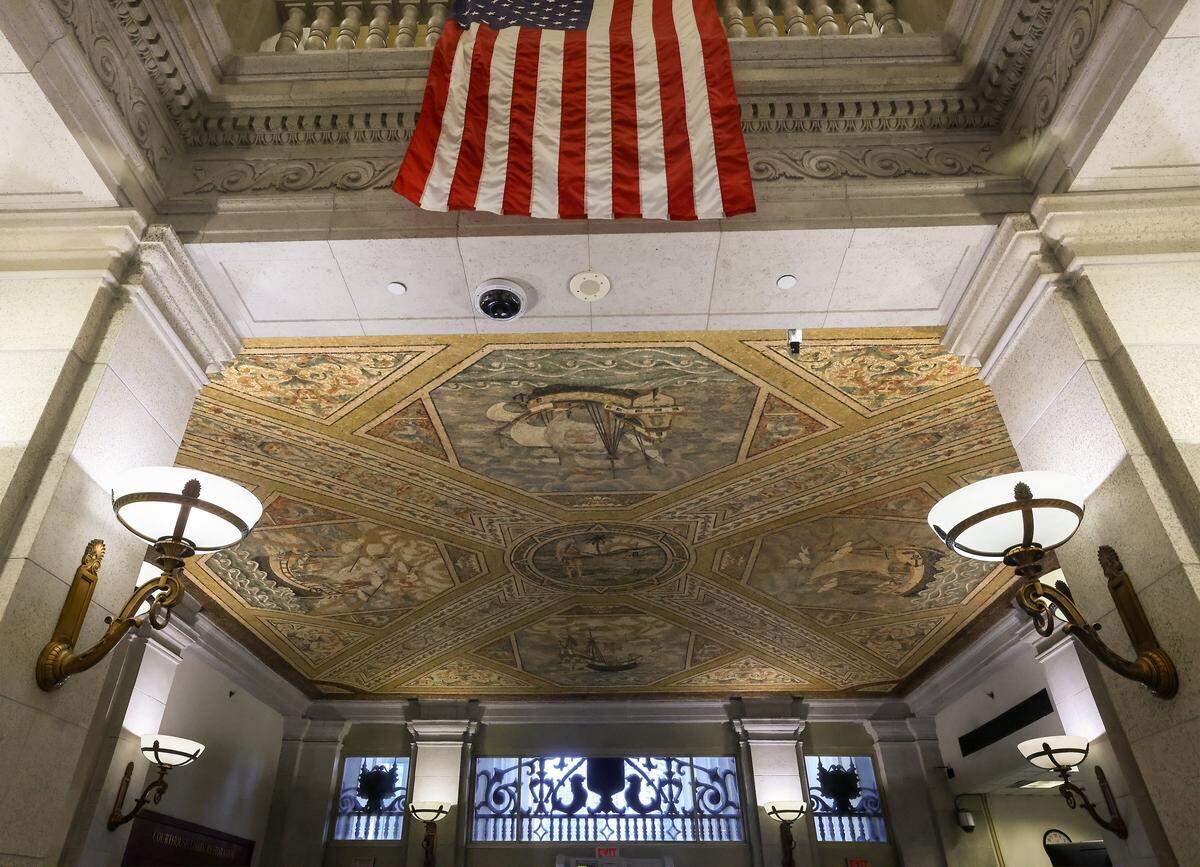
Now it’s been superseded, replaced by a sleek new slab of modernity across the street. The old courthouse’s soaring Neo-Classical entry columns and dual porticos, its two-story lobby atrium and mosaic ceilings, the famously imposing and opulent main courtrooms, the classic marble checkerboard floors, the ornate brass light fixtures, the long history of notorious trials and public tribulations — all have been left behind to a disquietingly uncertain fate.
Today, there is no hustle, no bustle at the fabled old courthouse. The lights are out in its most famous judicial space, Courtroom 6-1, a majestic chamber with a painted wood-beam ceiling where gangster Al Capone and a would-be assassin of President Franklin D. Roosevelt stood trial — the first acquitted and the second sentenced to a swift execution.
PHOTOS: Take a close look inside the iconic Dade County Courthouse. It may be your last
Outside, near the wooden benches in the central waiting area, a plaque over an old-fashioned drinking fountain whose use was once restricted by race bears lonely witness to a shameful past of legal segregation.
Two floors down, the high triple-vaulted ceiling in Courtroom 4-2 is dimly illuminated by late afternoon sunlight that soaks in through the opening in the red velvet drapes that hang over windows nearly two stories tall.
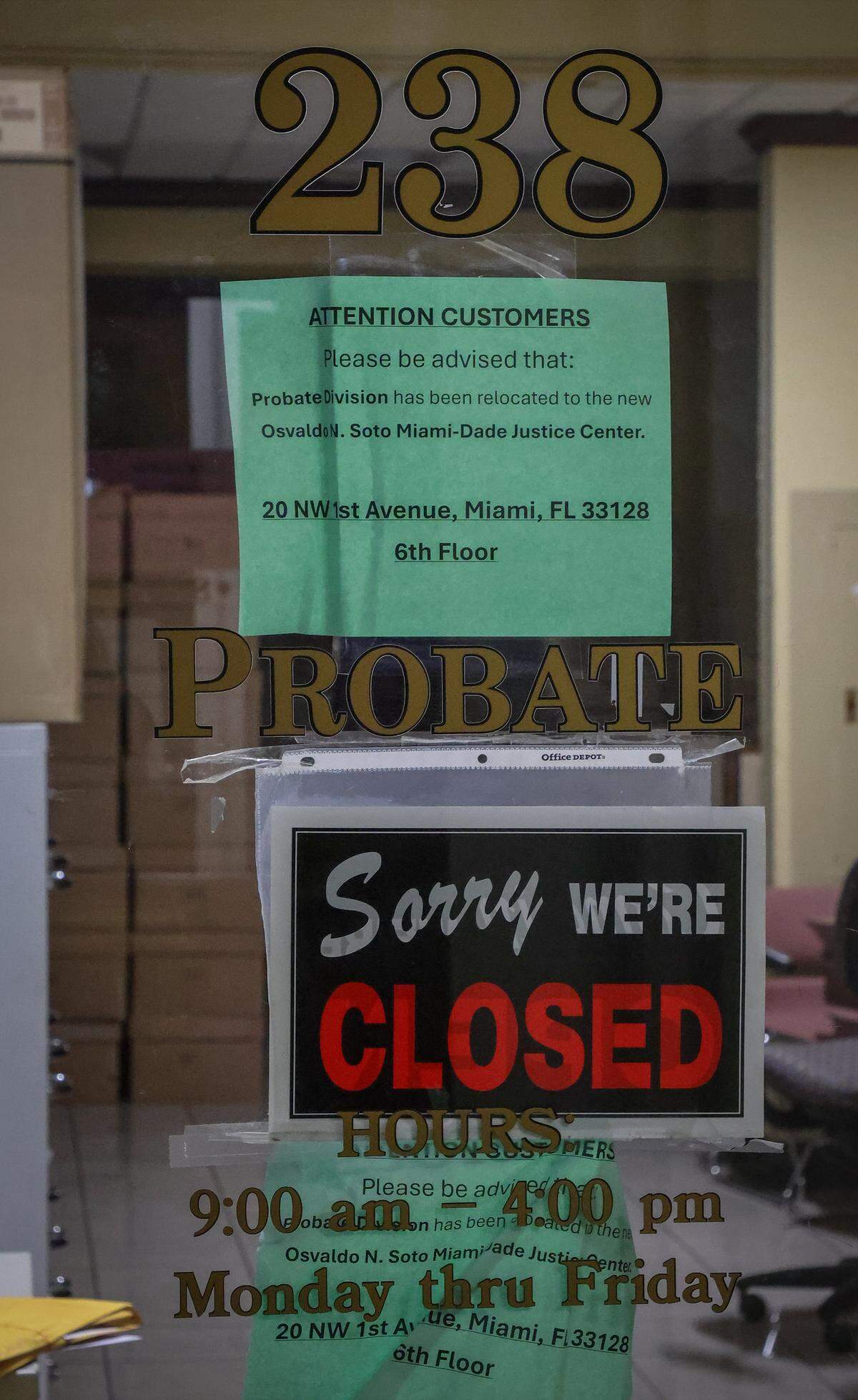
Downstairs, in the polished museum-like splendor of the courthouse lobby, a store-bought sign is taped to a glass panel in the door to the former probate office. “Sorry, we’re closed,” it reads. For good.
It’s an entirely different tale across Northwest First Avenue, where a new courthouse now towers over the old.
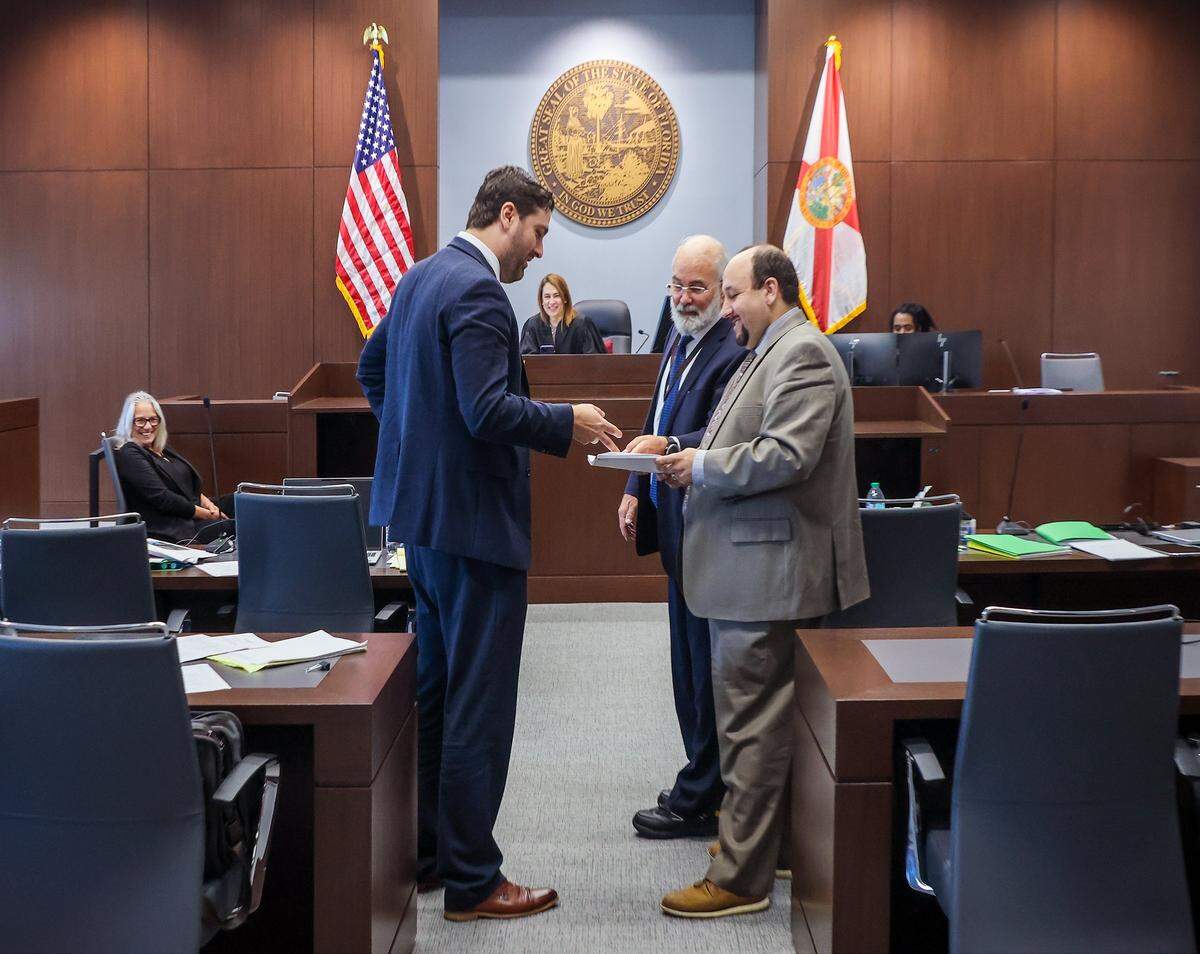
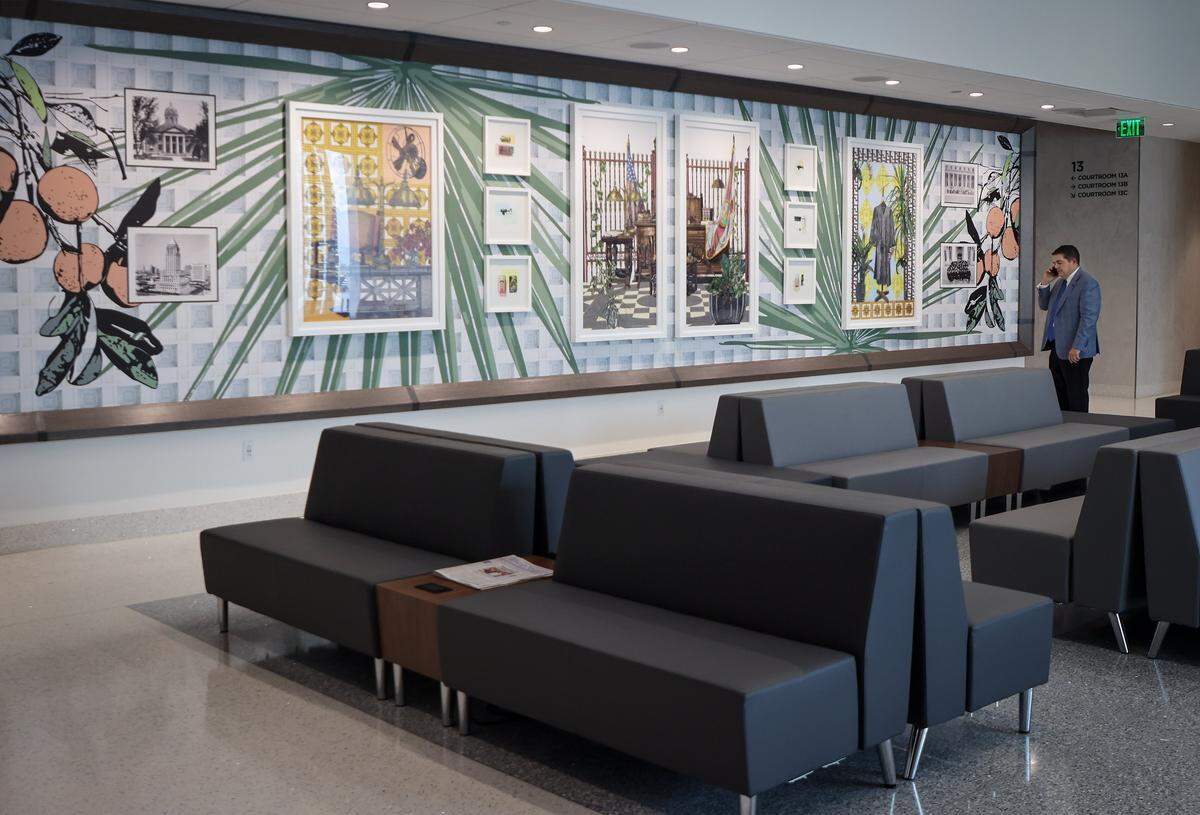
Filled with natural light and first-class public art, the Osvaldo N. Soto Miami-Dade Justice Center, new home to the Eleventh Judicial Circuit of Florida’s civil division and the Miami-Dade Clerk’s Office, murmurs with quiet, efficient activity. In December, in a smooth logistical masterpiece that saw not a single trial interrupted, its 40-some judges moved into bright, roomy and high-ceilinged new courtrooms and chambers loaded with tech and modern comforts. Trials and hearings are now in full swing there. There are no ghosts anywhere in evidence.
The court’s chief judges say it’s been a bittersweet move, swapping history and architectural grandeur for space and appealing, if stripped-down, functionality. But in terms of judicial operations, comfort, security, accessibility for the disabled, and accommodations for judges, staff, attorneys and as many as 350 jurors daily fulfilling their civic obligation, the new courthouse marks a dramatic improvement, they say.
There are no more musty whiffs of mold from ancient AC ducts. No more having to peer around obstructing columns in cramped courtrooms that were jerry-rigged decades ago from offices, from the days when the courthouse also housed county and city officials. No more sharing courtrooms for judges. No more having to get on slow elevators to visit a leaky restroom because not every floor had one.
“The walls are kind of very white, but it’s extremely functional,” said Gina Beovides, deputy chief judge for the circuit civil courts, as she sat with Chief Judge Ariana Fajardo Orshan and a reporter in a commodious conference room with skyline views at the top of the new tower. “We just outgrew the Dade County Courthouse, which feels sad to say.”
What happens to the old Dade County Courthouse?
What’s to become of the historic courthouse is very much an open question.
The consequential decision to replace rather than restore came after prolonged consideration by Miami-Dade County and judicial administrators, who concluded that upgrading the old courthouse, which requires extensive rehabilitation work, would be not just costly and impractical but also leave the civil courts still well short of needed space and facilities.
But the second part of their plan hasn’t panned out. The county hoped to make a deal with a developer to buy, restore and adapt the building, which is protected as a historic landmark from demolition or significant alteration, maybe for use as a boutique hotel. The bid drew no takers, so now the tower may be put up for auction, though no timing or details have been announced.
Meanwhile, the county expects to spend potentially millions of dollars a year to keep it in sellable shape. As January drew to a close, all that remained in the building was the extensive law library and a handful of administrative staff, all set to move to the new Soto center soon. A skeleton managerial and security team remains on duty to make sure the AC is running, intruders stay out, and to watch for plumbing leaks.
That uncertainty troubles historians, preservationists and longtime Miamians who have long cherished the historic tower and what it represents for a city short on historical memory.
“I’m worried to death about it,” said Paul George, resident historian at the HistoryMiami museum. “It’s a special place for so many reasons. It was probably the premier building in Miami for so many years. It’s an incredible building with a fantastic history.”
Some fans of the old building still question the replacement decision, calling it a squandered opportunity to revitalize an unparalleled monument for new generations of Miamians. The county has known for years that the courthouse needed modernization but failed to plan for it at a time when the property tax base and revenue were growing exponentially, argued Miami historian and blogger Casey Piket.
“I can’t get over how the county and city with all the property taxes from all that growth and development keep crying poverty,” Piket, who blogs at Miami-History.com, said in an interview.
He called the new tower “completely uninspiring.”
“If it ain’t new, nobody’s excited,“ Piket complained.
‘A source of pride’
Piket, a Miami native whose family arrived in the city in 1899, when it was barely three years old, said his father would recall growing up near the old Orange Bowl — a long-vanished landmark — and looking over at the Dade County Courthouse, the tallest feature in the downtown skyline and plainly visible for miles around.
“Everyone who grew up in South Florida remembers that building as the tallest in Miami through the 1960s,” Piket said.
Its construction, from 1925 to 1928, was an astounding feat that gave shape to the young city’s boom-time rise and vast ambitions. It replaced a two-story courthouse, jail and city hall that was built in 1904 on the same site and was meant to serve Miami for 50 years.
But the fast-expanding town rapidly outgrew it. So busy was the place that the old courthouse kept functioning even as the foundations of the new tower went up around it. Once the base of the new courthouse was done, the old one was torn down. Those first floors of the new building were occupied even as work proceeded on the steel skeleton of the tower above, George wrote in a history of Miami’s courts.
When the completed courthouse opened, thousands of Miamians attended a dedication celebration on its steps. The tower, designed in a Neo-Classical style by noted architects A. Ten Eyck Brown and August Geiger, boasted 27 stories under its ziggurat rooftop, which quickly became an emblem for the city.
“It was a source of pride,” George said.
The top floors housed the county and city jails and Miami and Dade County cops. Before the jails were moved out in 1961, Cuban immigrants detained there gave the tower an enduring nickname: “Cielito Lindo,” after the popular Mexican song named for a common endearment. It translates into English literally as “pretty sky,” which is all that was visible to inmates from the jail windows high up.
Among its prominent detainees was former Cuban President Carlos Prío Socarrás, the country’s last democratically elected leader, who was forced into exile in a coup by Fulgencio Batista in 1952. Prío Socarrás was jailed in Cielito Lindo in 1958 after he was indicted for plotting to overthrow Batista. He was tried in federal court nearby, convicted and sentenced to probation.
Wedged beneath that stepped rooftop is an original wooden water tank, still in use after it was restored and supplemented with a modern reservoir some years ago.
Once the Miami City Commission moved to Dinner Key in 1954, and also when the county moved out in 1985, some offices and meeting spaces were converted in makeshift fashion into cramped courtrooms, many with columns in the middle obstructing views. At some point, a false ceiling was installed over the lobby atrium and many of its details were covered up, including the checkerboard floor — work that was reversed during a full-scale restoration of the space in 1995.
The courthouse exterior was first designated as a protected historic and architectural landmark by the city in 1985 and added to the National Register of Historic Places in 1989. But nothing inside was protected until the county took preservation jurisdiction over the building.
In 2020, as the county pondered its sale, the Miami-Dade preservation board approved protections for significant interior spaces, including the lobby and atrium, a set of six lavishly appointed courtrooms on two floors, and architectural and design features, like wood furnishings and decorative millwork, throughout the building.
In 2021, the consequences of years of delayed maintenance came to a head after the collapse of the Champlain Towers condo in Surfside. Inspections prompted by the tragedy in Surfside found badly corroded structural supports, and the courthouse was vacated for months while emergency repairs made it safe to occupy once more. But other issues, including mold and leaks, have reportedly persisted.
Because of fears of vermin contamination, all papers and wooden objects removed from the old courthouse had to be taken offsite for fumigation before they could be brought into the new building, Fajardo Orshan said.
Famous trials, from Al Capone to Big Tobacco
The designated architectural features, which can’t be altered or removed without authorization by the county preservation program, include the drinking fountain from the Jim Crow era, when Black judges sat not at the Dade County Courthouse but in a separate courthouse in Overtown.
A decision to preserve the fountain was made during planning for renovations of the lobby and a later restoration of the building’s grandest courtroom, recalled Miami attorney Joseph Serota, a former Miami-Dade Bar Association president who helped lead those efforts. He and then-judge Scott Silverman were looking through original building plans and noticed different water fountains designated for whites and blacks.
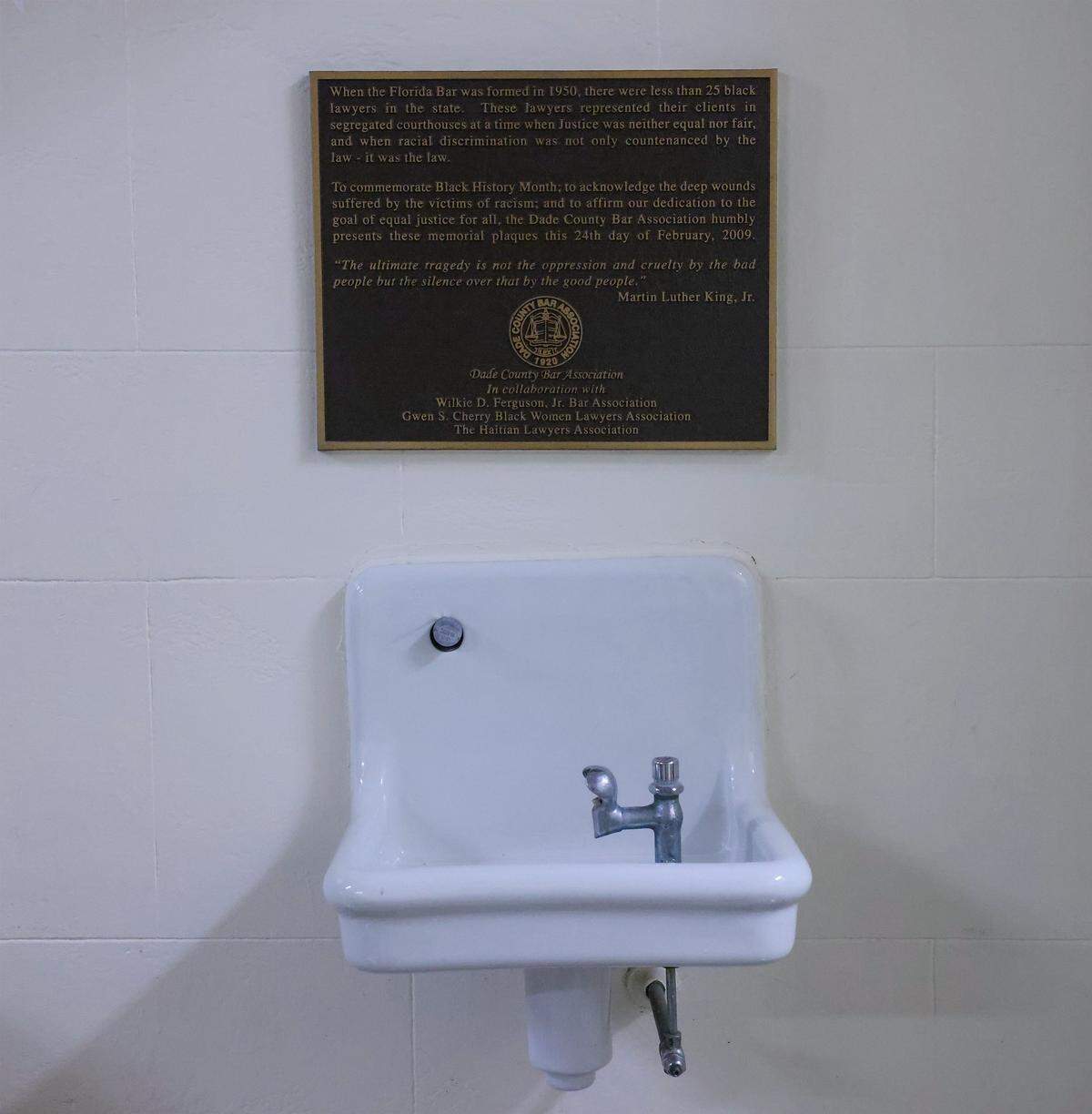
The plaque over the fountain, on a sixth-floor hallway wall, was dedicated for Black History Month along with another one across the hall marking the election of Barack Obama in 2008, with pioneering Black Miami civil rights attorney H.T. Smith leading the ceremony, Serota said.
“I mean, that’s really history,” Serota said. “That was our justice system, and if that wasn’t hypocrisy, I don’t know what is.”
Downstairs, the elegant double-height lobby, with its open second-story balustrade, elaborate ceiling mosaics, checkerboard floor and etched-brass elevator doors, “has provided a defining first impression to everyone entering the Courthouse since its construction nearly 100 years ago,” Miami-Dade preservation chief Sarah Cody wrote in a 2020 report.
Upstairs, on the sixth floor, by the waiting room with the Jim Crow water fountain, is another signature space: Courtroom 6-1, which underwent meticulous restoration in 2006, funded in part by a state grant and substantial contributions from local legal firms. Fine millwork, flowery painted and carved ceiling filigrees, candelabra wall sconces and rustic plaster wall finishes once covered by glued-on acoustic tiles were restored, including the judge’s massive bench.
The courtroom has been the scene of judicial investitures and ceremonies and hosted famed and precedent-setting trials for decades, including the trial and acquittal of Capone on fraud charges and the 1933 trial of Giuseppe Zangara, whose missed pistol shot at FDR in Bayfront Park instead claimed the life of Chicago Mayor Anton Cermak. The year before, a famed British aviator, William Lancaster, was tried and acquitted on a murder charge.
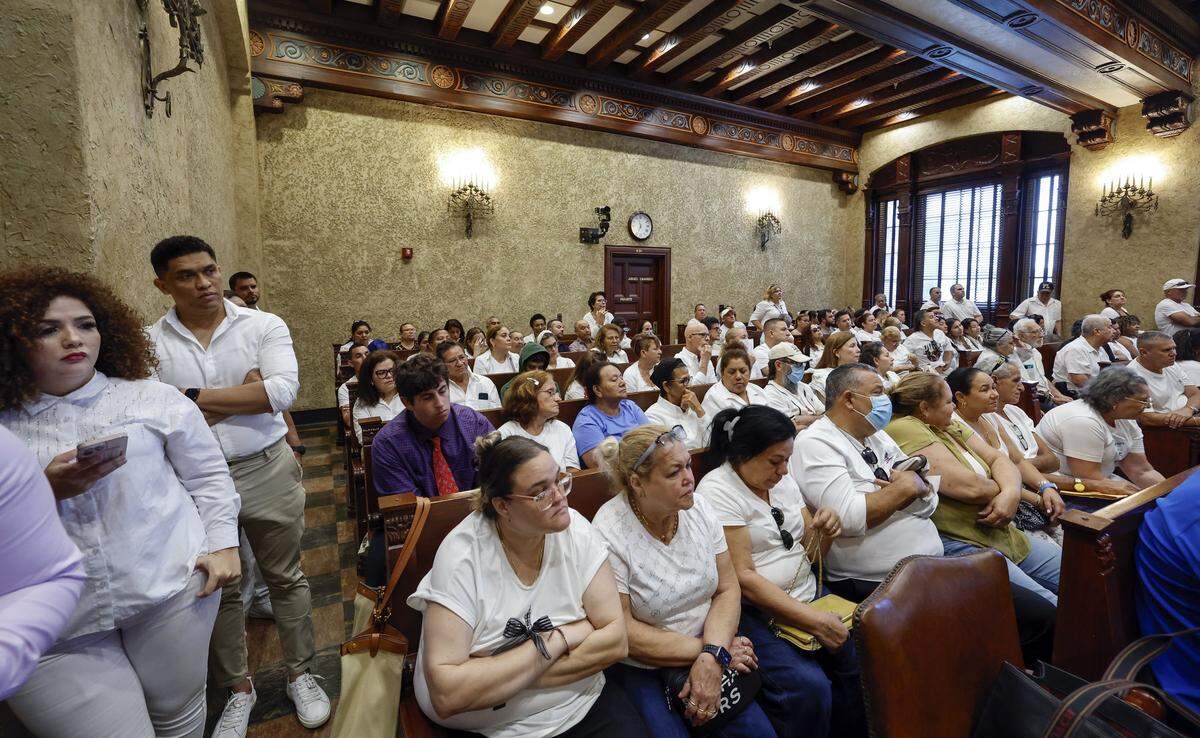
In 1965, in a trial that captured national attention, Houston socialite Candace Mossler and her young lover were acquitted of charges of murdering her husband, Jacques Mossler, in Key Biscayne. Much later, in the late 1990s, a complex class-action lawsuit against tobacco companies in Courtroom 6-1 set legal precedents that have since allowed people whose health has been harmed by smoking to sue Big Tobacco for damages.
In 2015, several hours before Florida’s ban on same-sex marriage ended, Miami-Dade Circuit Judge Sarah Zabel presided over the state’s first legally recognized same-sex marriages in the historic courthouse.
New courthouse offers more space, tech upgrades
That storied record, however, didn’t make the courthouse any more attractive to developers when Miami-Dade formally put the building up for sale last year. In fact, its historic restrictions may have hindered its redevelopment appeal.
Only one potential buyer expressed serious interest, an entity controlled by Miami Beach developer Russell Galbut, who contemplated an expansion that called for affixing a second tower to the back of the historic courthouse. But his GFO Acquisitions wanted to be paid at least $10 million annually to maintain the historic building, a request the county apparently rebuffed. GFO did not submit a formal bid.
In a brief interview Friday, Galbut said he remains interested in acquiring the courthouse building, without elaborating on his plans.
“Time will tell,” Galbut said. “We love the Dade County Courthouse. It’s the most architecturally important building in Miami, and we believe in preservation.”
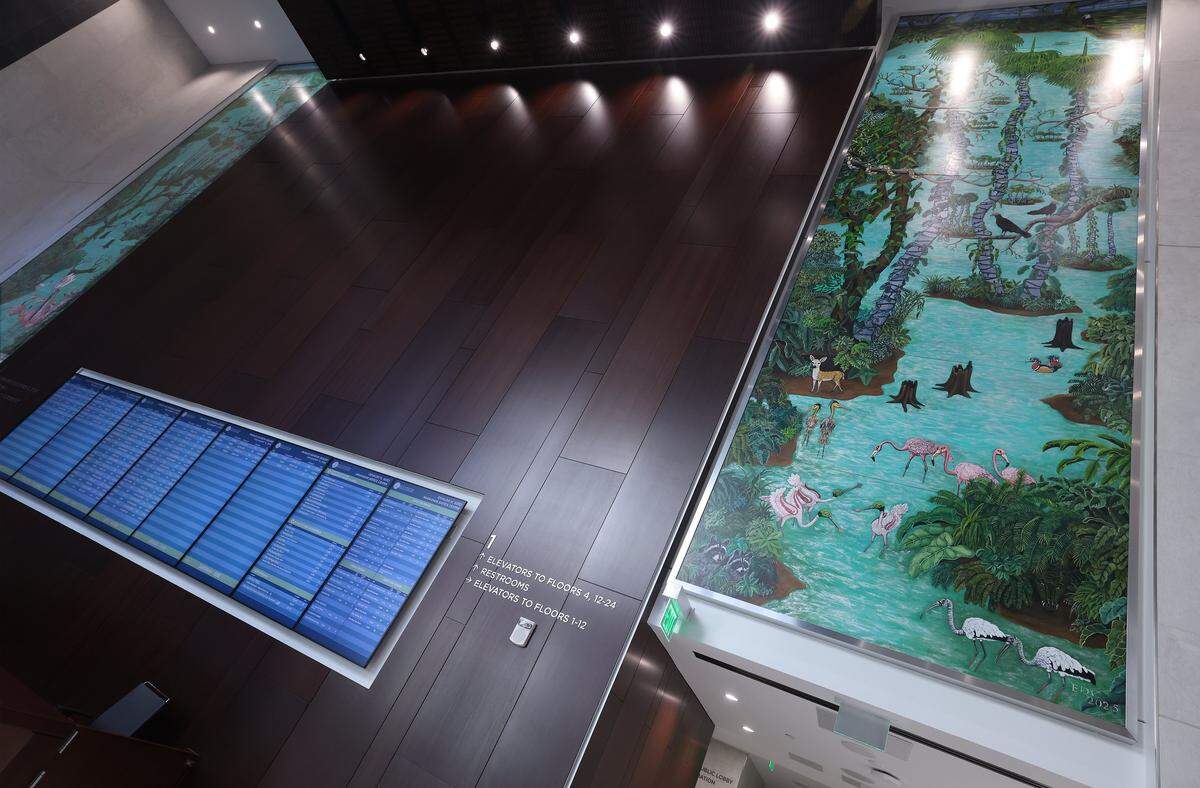
Building the new 25-story Soto courthouse also entailed a novel arrangement for the county. The $263 million project was financed and built by a private entity, Plenary Group, which is also managing the building. The county is making annual payments to Plenary that start at around $25 million.
The county and judicial administrators say they got a good deal: a gleaming, high-performance, water- and energy-efficient tower, designed by one of the country’s top architectural firms, that provides 46 expansive courtrooms — enough so that every judge has his or her own. Each courtroom has, for the first time in the circuit civil division history, its own jury deliberation room, as well as adjacent meeting rooms for mediation or for attorneys to huddle with clients during trials and hearings. All floors also have plenty of restrooms.
There’s also ample room for growth, in the shape of an unfinished “shell” floor that can accommodate four new courtrooms in the future.
The new courtrooms are streamlined but attractive, with lots of wood accents and built-in tech that allows, for first time, projection on screens of exhibits in trials and enhanced sound for jurors, attorneys and court reporters. Interpreters can plug into court sessions remotely.
“Now the attorneys come in with a thumb drive and plug their exhibits in,” Beovides said.
For jurors, in place of the dark, low-ceilinged jury-pool room in the historic courthouse is a bright, comfortable waiting space whose walls bear a series of artistic panels, by the late illustrator Charley Harper, that once stood in Everglades National Park.
The panels, which depict Everglades wildlife, had been in storage for decades after damage by Hurricane Andrew in 1992. Now-retired Miami-Dade Circuit Judge Jennifer Bailey, who served as deputy chief judge as the new building was planned, pushed for their restoration and installation in the new courthouse.
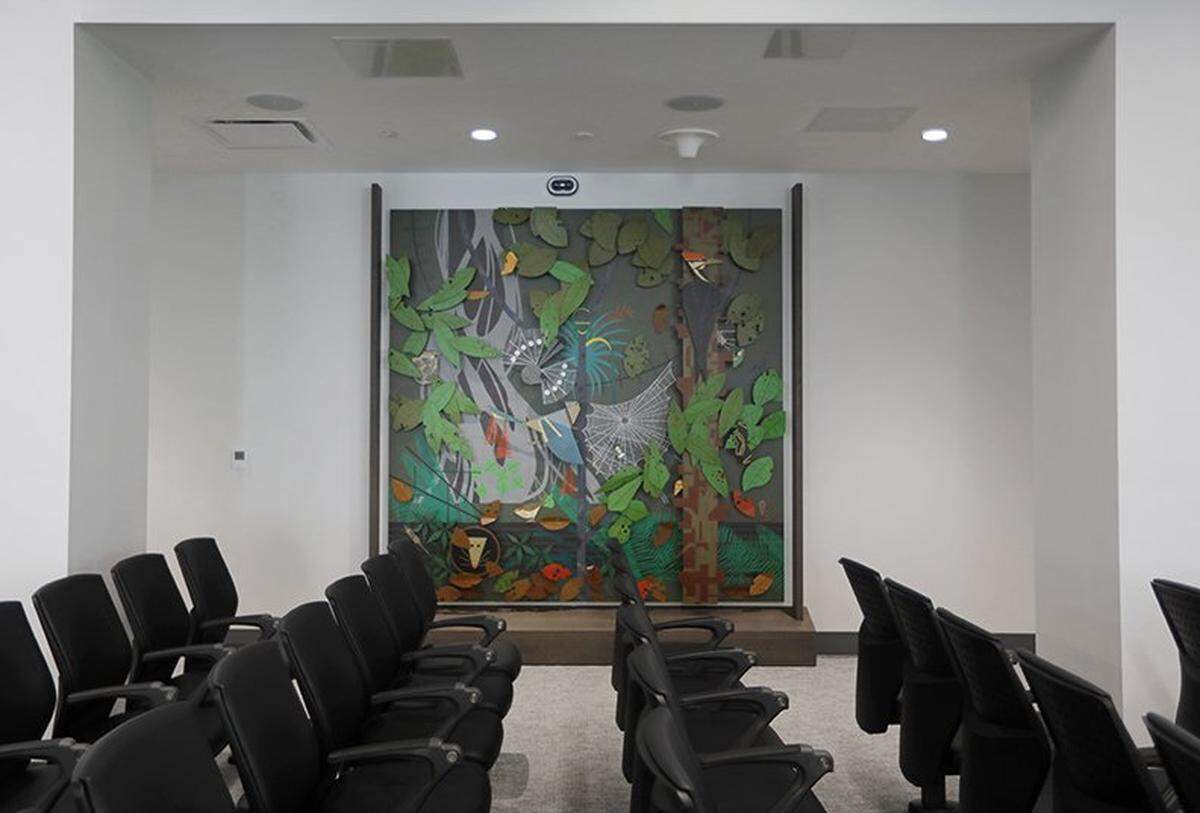
The panels are only one of the panoply of artworks, worth about $5 million, that the county’s Art in Public Places program installed in the Soto courthouse, much of it specially commissioned for the building. The county program also plans rotating special exhibits in the courthouse and, eventually, guided art tours of the building, judges Beovides and Fajardo Orshan said.
Improved security is another plus, the judges said. They now have private elevators and secure parking inside in the building. In the old courthouse, Fajardo Orshan noted, shared elevators meant some awkward — and potentially dangerous — encounters.
“You sometimes had to ride the elevator with someone you just evicted, for example,” Fajardo Orshan said.
Beovides, who presided over the very first trial in the new courthouse, gives it a thumbs up, for jurors in particular.
“It was a good trial run,” she said. “This courthouse is definitely a more comfortable experience. Dade County Courthouse, while I love the history, it was not a good experience for jurors.”

Serota, the veteran Miami attorney and Dade County Courthouse devotee, recently made his first legal argument in the new building. His one-word verdict: “Utilitarian.”
That’s not to say the new courthouse can’t boast of some adroit design elements.
Though both have roughly the same number of floors, the new 24-story courthouse looms far taller than the old — so much taller that from its highest floors, visitors can peer directly down on the old building’s iconic stepped-pyramid ziggurat roof, over which turkey vultures once circled, a seasonal phenomenon that elicited many a lawyer joke. That height difference is explained by expansive floor heights in the new tower that provide a sense of spaciousness throughout.
The new courthouse exterior may appear bland from afar. The facade of the towering, plain-white monolith is interrupted only by dark vertical bands in an irregular pattern. But a distinctive design move becomes clear on a closer look: a central bank of reflective windows and a glass bubble halfway up are positioned to catch the image of the tower across the street, a tribute to the historic courthouse.
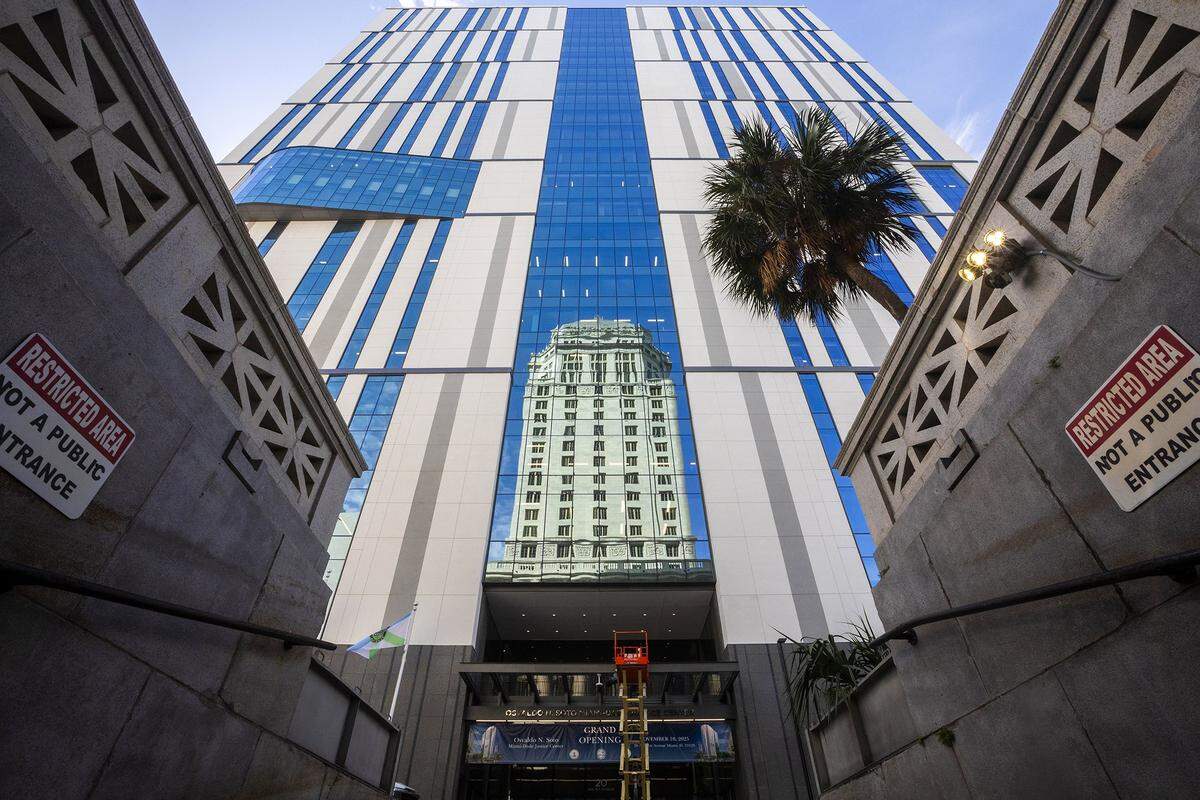
Inside, generous floor-to-ceiling windows flood hallways, courtrooms and waiting foyers with natural light and provide dazzling panoramic views of downtown Miami, including, again, carefully framed views of the historic courthouse tower.
Serota thinks that’s a good sign that the old courthouse won’t be neglected or forgotten. He can envision the old courthouse lobby as a magnificent entryway for a luxury hotel. Courtroom 6-1? An amazing bar.
The fact that so much is legally protected makes him optimistic that someone else will in due time see it the same way, he said.
“That’s reassuring to me,” he said. “We put so much effort into it. I love it. It is sad. But I am hopeful that Miami is growing so fast that someone will find a place for it.”