
Requiem for a landmark? Dade courthouse’s future is uncertain but its past is glorious
READ MORE
Is it safe to reopen the Miami-Dade civil courthouse?
Miami-Dade let planned repairs lapse at its civil courthouse, which is now closed after an inspection sparked by the Surfside condo collapse.
Expand All
Miami-Dade let repairs slip at courthouse, and decades go by without recertification
Requiem for a landmark? Dade courthouse’s future is uncertain but its past is glorious
Timeline: Important milestones for the Miami Dade County Courthouse
Courthouse’s most famous visitors never go in. They perch on the roof, eating garbage
Need to visit a Miami courthouse? COVID has led to changes, so here’s what to expect
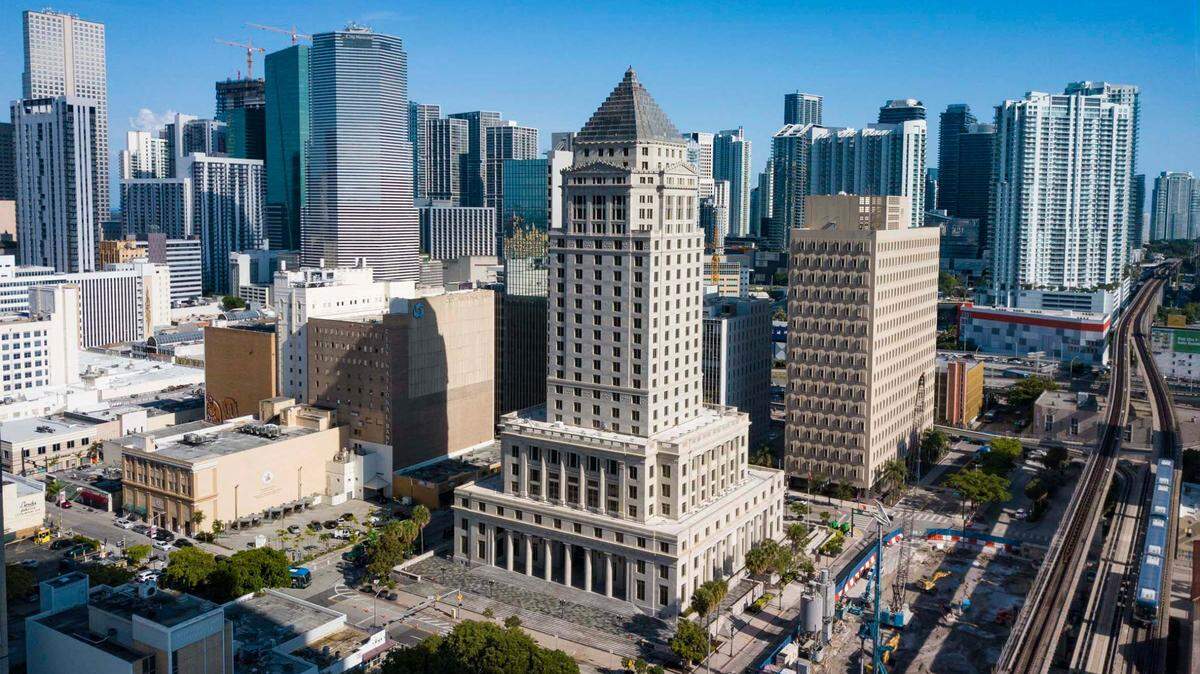
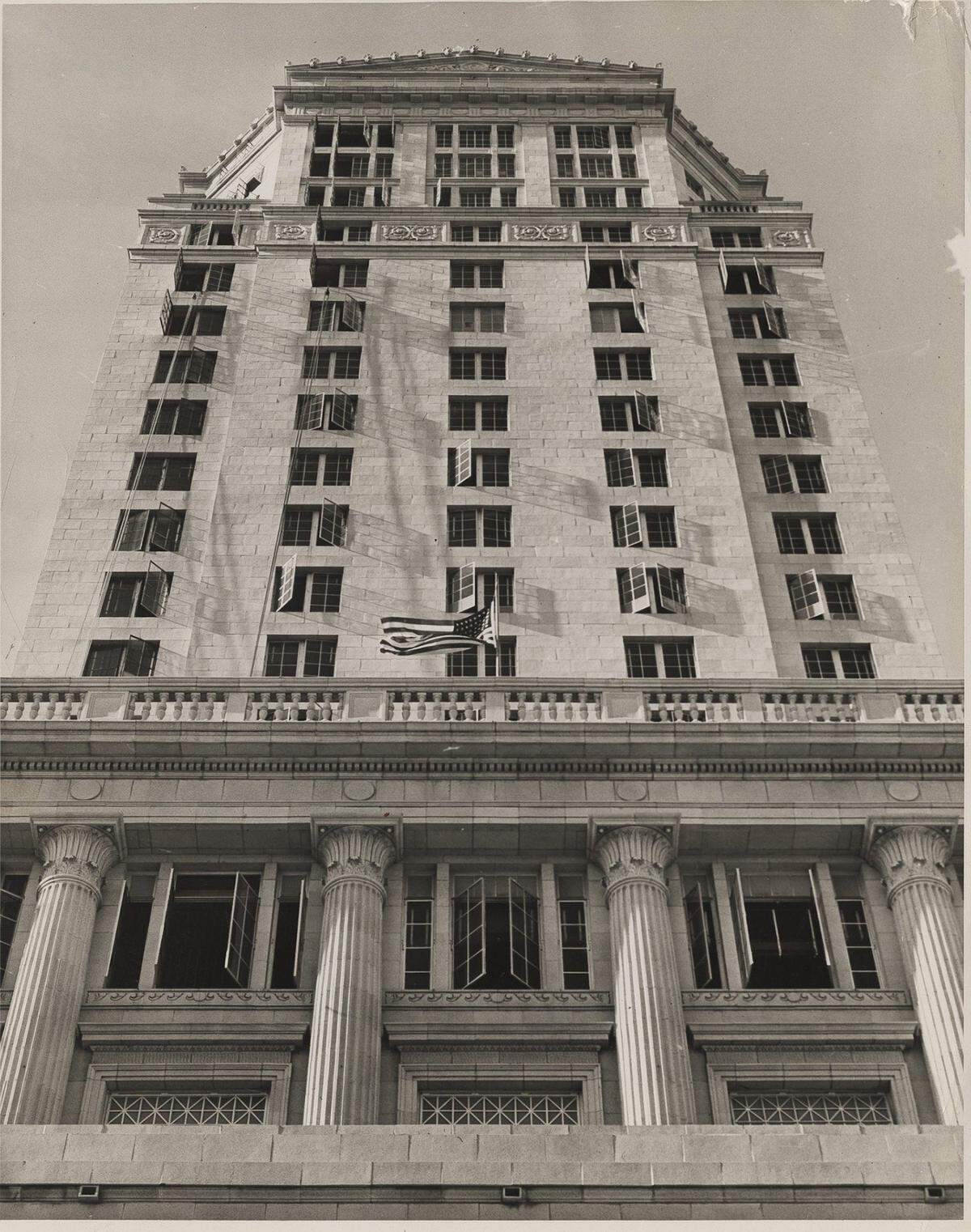
From the beginning, it was built to be a landmark. When it opened in 1928, the Dade County Courthouse was the tallest building in the entire Southeastern United States, towering over downtown Miami as a symbol of stability for a young boom town still reeling from a devastating Cat 4 hurricane and cratering real-estate market.
Early on, the 28-story tower hosted what would become a string of headline-grabbing trials, starting with the nation’s most notorious gangster, Al “Scarface” Capone, beating a perjury charge in 1930.
But it’s really all the other business conducted inside the ornate building that made it so vital. Until it was ordered closed last month— after falling so deeply into disrepair that the county finally deemed it too risky to occupy — the venerable courthouse has been a hub of civic life.
It served as a hall of justice and the seat of both county and city governments for more than a half-century. The fast-growing population flocked there to debate new laws, register to vote, marry, file for divorce or sue each other, to buy and sell homes, lands and businesses. Over the last few decades, it’s been the site of high-stakes legal battles that shaped lives and fortunes: mega-land deals, international contract disputes, everyday insurance claims, and endless evictions and foreclosures — the latter two worsened by the COVID-19 pandemic. The first hearings in the string of lawsuits over the collapse of the Champlain Towers South condominium were held there last month, a catastrophe that ironically hastened the courthouse’s own closure.
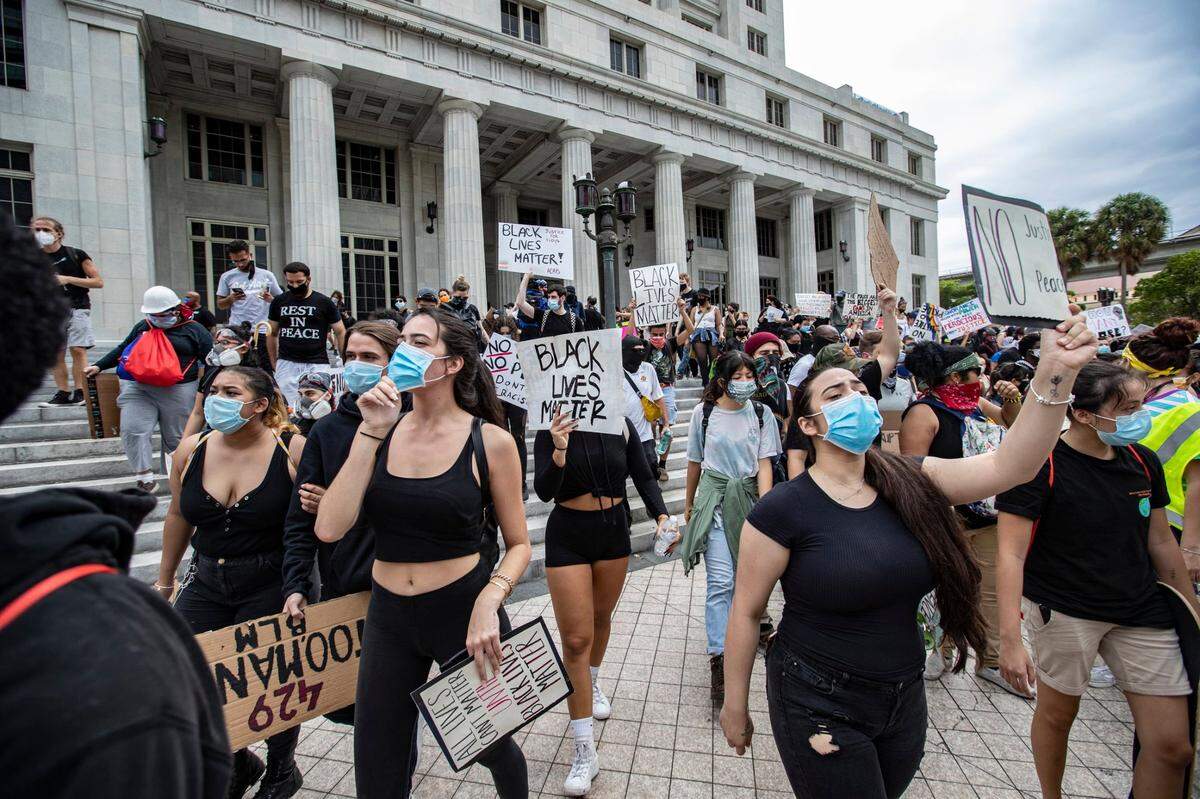
And for decades, its front steps and grand columns have served as stage and backdrop for celebration or protest, over everything from civil rights to gay marriage to Fidel Castro’s repressive regime.
“Miami’s history is forever intertwined with the courthouse. Our story is indelibly etched within its walls,” said retired Miami-Dade Circuit Judge Scott Silverman, the courts historian. “It will always remain a seminal landmark on South Florida’s landscape.”
The future of the courthouse — and when, or even if, it reopens — remains unclear. Though it now resides on the National Register of Historic Places, it’s arguably less of a landmark than it’s ever been, now dwarfed by luxury condo skyscrapers and gleaming high-rise office buildings. Even without the closure, the tower’s lifespan appeared limited as a government building — Miami-Dade County is actively trying to sell the property. The county is also building a new $267 million tower next door, scheduled to open in 2023.
Long in disrepair
While there is nostalgia for the grand old building and its history, many people who have worked there over the past decade are more than ready to move out.
For years, judges and lawyers at the Dade County Courthouse have complained about leaks, moldy courtrooms, water intrusion and crumbling facades. Despite the complaints and concerns, the county had always declared the building at 73 W. Flagler St. safe for use. That quickly changed after the Champlain Towers South condo suddenly collapsed on June 24 in Surfside, killing 98 people as they slept.
In the aftermath, Miami-Dade Mayor Daniella Levine Cava ordered a review of older buildings. A structural engineer noted an “excessively corroded” column on the 25th floor and a dangerously heavy pallet of books on the 16th floor. None of the concerns were new. “Please note that structural deficiencies exist on the property that were present prior to our visit, and that have been reported on for several years now,” the engineer, José Toledo, wrote in his report.
Nevertheless, the entire building was closed, with civil proceedings moved back to Zoom or to other courthouses.
Problems with the building’s construction actually date back to the mid-1920s before it was even completed.
At the beginning of the 20th century, Miami boasted a smaller two-story courthouse on the same spot. That two-story building with a limestone facade opened in 1904, and was expected to serve for at least half a century. But Dade County’s explosive growth — fueled by feverish land speculation that would tank after damaging, deadly hurricanes in South Florida in 1926 and 1928 — quickly made the building obsolete. There were so many real estate transactions, there wasn’t enough room to store the paper records.
“The county constructed several additions to the extant courthouse, but the growing lack of space in the busy courthouse only worsened,” Miami historian Paul George wrote. “Many county employees worked from desks in the crowded hallways and by the mid-1920s, two circuit judges found it necessary to schedule their cases so that there would be no congestion in their cramped quarters.”
Construction began on the new Dade County Courthouse in 1925. By 1927, engineers had discovered that columns supporting the building had sunk between two and four inches because of the weight of the structure. Additional strengthening had to be added, and county commissioners declared the building safe. “New courthouse called best steel structure in the South,” the Miami Herald’s headline boasted.
Led by famed architect A. Ten Eyck and L.W. Hancock Construction, the neo-classical building was “modeled after ancient Greek temples” and featured a pyramid-shaped tower. When it opened in 1928, officials boasted people on the 24th-floor observation deck could see as far as Broward County.
Back then, there were only two circuit judges. Miami-Dade County and the City of Miami occupied several floors, and held commission meetings there. City of Miami police and the Dade Sheriff were based there too.
Jail and prison cells composed 11 upper floors of the tower, with an iron company calling it the “highest and most sanitary” inmate facility boasting “showers and all the latest equipment.” The Miami News called it “escape proof,” which turned out not to be entirely true — many people did, including a murderer named Richard “Fatback” Floyd who in the 1950s used a rope of bed sheets to briefly escape the tower.
It also hosted a wide range of gatherings on the pressing issues of the day: Farmers, back when agriculture was one of Miami-Dade’s biggest industries, listened to lectures on promising new crops. And as land buying rebounded, residents, engineers and elected leaders met to brainstorm ways to keep South Florida’s neighborhoods, fast expanding into the Everglades, from flooding.
Landmark cases
Though it has largely hosted only civil matters since the mid-1960s, the courthouse rang up a long list of high-profile criminal cases, including a string of sensational murder trials, beginning in the 1930s.
Around the same time as Capone’s legal victory, British aviator William Lancaster was acquitted of murdering a romantic rival in Miami, a trial that captured global headlines.
In 1933, then-President-elect Franklin Delano Roosevelt narrowly escaped an assassination attempt in Miami by a bricklayer named Giuseppe Zangara. In a courthouse trial not long after, Zangara pleaded guilty to firing his pistol with the intent of killing Roosevelt in Miami’s Bayfront Park but instead mortally wounding the mayor of Chicago. Zangara, who said he hated rich capitalists for oppressing the working class, was executed just two weeks later.
Another defendant: Franklin Pierce McCall, who kidnapped and killed 5-year-old James “Skeegie” Cash Jr., from his home in Princeton in 1938. The case was a priority for the FBI — Director J. Edgar Hoover, looking to expand the agency’s clout and agenda, even flew down himself to supervise the probe. Agents arrested McCall, who confessed, pleaded guilty and was quickly executed.
In the 1950s, political unrest in Cuba was already spilling over into Miami and the courthouse as well.
Former Cuban President Carlos Prio Socarras — the country’s last democratically elected president before being forced into exile in a military coup orchestrated by Fulgencio Batista in 1952 — was jailed in the building in 1958.
He did not stand trial there but spent time on the jail ward after he was indicted federally in the United States for plotting to overthrow the dictator. He and three others were walked five blocks from Miami’s federal building, where he initially surrendered, to the jail for booking. They were swarmed by supporters. “As it was, the Cubans formed a singing, shouting escort for the handcuffed Dr. Prio and his fellows,” the Miami News reported. “They sang the Cuban national anthem and cried ‘Viva Prio, viva Cuba,” as they moved through the streets.”
The following year, Prio pleaded guilty and was granted probation. He briefly returned to Cuba, then later returned in exile to Miami, where he became an outspoken Castro critic.
Decades later, in a sensational trial that captured national attention, Houston socialite Candace Mossler and her young lover were acquitted in 1965 of accusations they murdered her husband, Jacques Mossler, in Key Biscayne. The evidence was considered so salacious that the judge wouldn’t allowed anyone under 21 inside the courtroom to watch.
On the civil side, Dade County was also where legal battles in the 1960s were waged over a six-story cross that was erected on the courthouse every year at Christmas time. Critics said it violated the constitutionally mandated separation of church and state. The U.S. Supreme Court in 1970 allowed the cross to stand, and it was a staple at the building until the mid-1970s.
The Dade County Courthouse was also the scene for a class-action lawsuit filed against the tobacco industry, the first of its kind. In 2000, after a trial that lasted nearly two years, a jury handed down a $145 billion verdict. The trial was considered a landmark, paving the way for people to successfully sue Big Tobacco for health problems caused by smoking.
In 2015, several hours before Florida’s ban on same-sex marriage ended statewide, Miami-Dade Circuit Judge Sarah Zabel presided over the state’s first legally recognized same-sex marriages. Couples later posed for photos on the courthouse steps.
More recently, dozens of high-powered Miami civil lawyers, along with grieving relatives of lost families, gathered in the historic sixth-floor courtroom for an early hearing for lawsuits filed in the collapse of Surfside’s Champlain Towers South.
Segregation in Dade
Some of the history is also ugly. Like Dade County itself, the building’s history is also steeped in the racism of the Deep South.
On one side of the building, there was a window where clerks would accept tax payments from Black residents. “Rather than allow them to come into the building,” said George, the Miami historian.
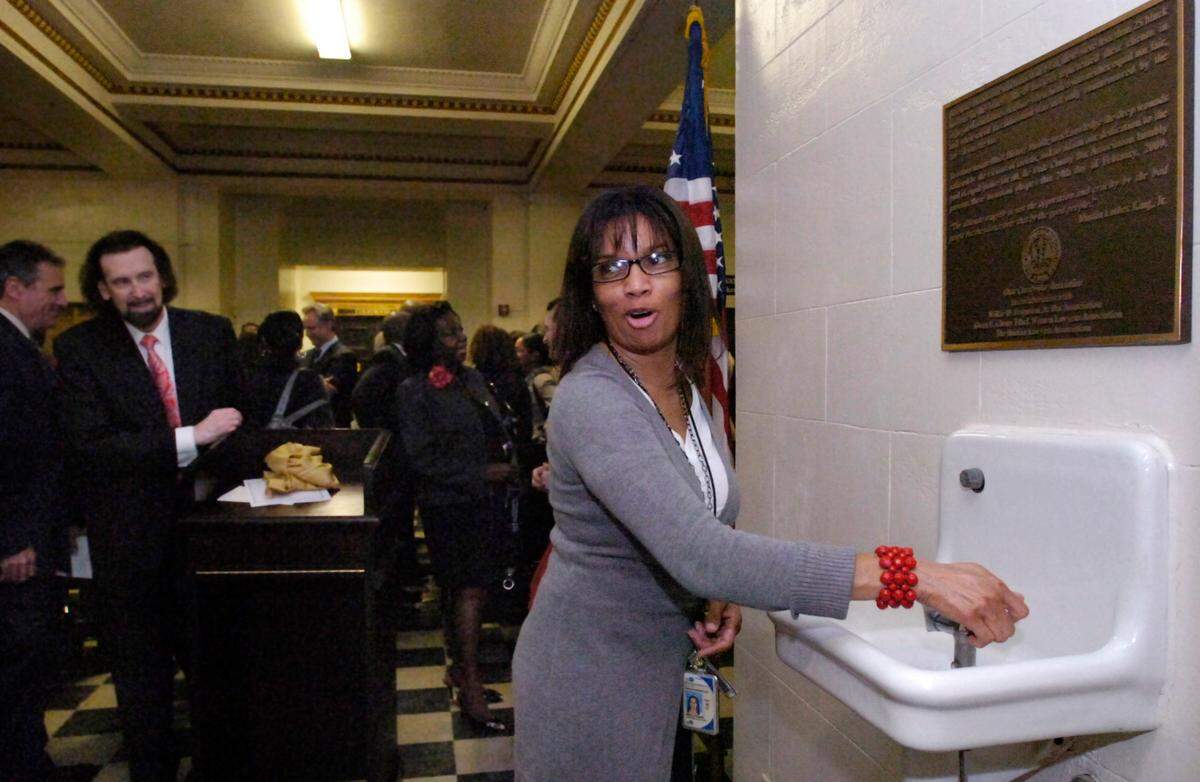
Inside the courthouse, as in buildings across the South, bathrooms and water fountains were separate for Blacks and whites. Silverman, the courts historian, found the separate water fountains were laid out in the original building plans. “There’s a lot of history and some of it is not good,” Silverman said.
Today, one of those old water fountains remains on the sixth floor, along with a plaque explaining the history of segregation. The plaque was installed in 2009, as the Dade County Bar Association apologized for racial discrimination of the time.
Segregation rules also prevented Black judges from presiding over cases there. Instead, they held court in the 1950s at the Negro Municipal Court housed at the all-black precinct in Overtown. Likewise, Black police officers couldn’t wear their uniforms in the downtown courthouse.
In early April 1968, over 1,000 Black Miamians — singing “We Shall Overcome” and “America, America” — gathered at the Dade County Courthouse for a march to mourn Martin Luther King Jr. after he was assassinated. “When they reached the Bethel African Methodist Episcopal Church 52 minutes later, the number had swelled to nearly 3,000,” the Herald reported.
The courthouse soon desegregated, along with other public buildings in Miami-Dade. The legal profession in Miami also progressed.
Wilkie D. Ferguson Jr. became the first Black judge appointed to Miami-Dade circuit court — sworn in at a ceremony at the Dade County Courthouse in 1977. He later went on to serve on a state appellate court and as a federal judge. Miami’s gleaming federal courthouse, opened in 2008, is named after him.
“His ascension to the bench stood as a testament to the changing of the times and the gradual decline of Jim Crow laws in Dade County,” said Miami lawyer Trelvis Randolph, the president of the Wilkie D. Ferguson Jr. Bar Association. “He was sworn in and given authority to confront the issues of segregation, systematic racism and inequality in the very building where such blights on our society were given power and effect.”
The Courthouse Steps
That the courthouse was the starting point of that 1960s civil-rights vigil for MLK Jr. reflects its symbolic role as the heart of Miami — its front steps were a place to appeal for justice or make social statements.
“Until everyone moved to the suburbs, center city drew everybody. It was the gathering place. It was ground zero for everything that happened,” said George, the historian. “The courthouse had that gravitas.”
The steps have been stops on parades and rallies of every stripe: the annual Cuba Day celebration, Irish pride on St. Patrick’s Day, Easter processions, a University of Miami baseball championship, the Miami Dolphins losing Super Bowl season of 1983, and, who could forget, the flag-waving men of the U.S. German-American Tricentennial Jubilee.
That same year, environmentalists climbed them to wrap the courthouse in a large plastic pink ribbon, to protest the artist Christo’s now-famous display, wrapping a string of tiny Biscayne Bay islands in pink polypropylene.
The courthouse has seen all matter of demonstrations, big and small: hot vendors protesting police crackdowns on street sales, disgruntled jai-alai players striking for better pay, Lithuanians decrying Soviet Union meddling, protesters demanding the right to seek abortion advice, jitney drivers bemoaning a ban on the little buses, and bikers challenging a helmet law. Just last year, throngs of Black Lives Matter activists gathered there to denounce police brutality.
And in between all those moments, the steps were the scene of property auctions, press conferences and midday music shows. “People on their lunch breaks would enjoy the concerts on the steps,” said Harvey Ruvin, the current and longtime clerk of the courts.
Characters and Oddities
The public has largely forgotten many characters who appear in Dade County Courthouse lore.
Some were fixtures, like the longtime shoe polisher, John Williamson, who chatted up lawyers and wrote pulpy crime novels on the side in the early 2000s. And Jesse Jones Jr., the bailiff who retired in 2009 to concentrate on his other career: globe-trotting jazz saxophonist. Or David Vanderbeck, honored by the mayor in 1983 after spending three decades washing courthouse windows.
Ruvin remembers a lot of these folks and he’s a fixture himself, first elected to the position in 1992. But he’s got nothing on Emory Barger “Buck” Leatherman, who served as Dade County Clerk of Courts for a staggering 44 years until he retired in 1971.
And long before “Florida man” entered the public lexicon, strange things happened in, around and even above the courthouse.
In 1929, deputies raided three downtown gambling dens after spying on them with binoculars from the 27th story of the courthouse. In 1937, roofers got into a “free-for-all brawl” with members of the Greater Miami Apartment House Association during a hearing over a roofing ordinance in 1937.
In 1954, long before giant constrictors had invaded the Everglades, a young woman was booted from the building after trying to bring in a 5-foot boa. “For some obscure reason,” the building’s elevator boss told the Herald. “And, well, we don’t allow pets in the elevator.”
Then there was the little-known mystery surrounding a large, heavy safe that decades ago was hoisted by crane into the second-floor office of the clerk of court. It sat locked for years and Ruvin rummaged around for months to find the combination.
When he finally found it, the big reveal echoed Geraldo Rivera’s dud of a live broadcast in 1986, The Mystery of Al Capone’s Vaults. “It was empty,” Ruvin said.
Perhaps the most famous folklore about the courthouse revolves around vultures that flock to it every fall to roost on the tower’s pyramid and ride the wind currents swirling above downtown Miami’s skyscrapers.
One explanation was apocryphal, spread by a local community college professor who claimed they came from Hinckley, Ohio — which every year hosts a Buzzard Day. A tagging study shot that down, showing the birds were simply seasonal migrants from northern locations. For many years, the Herald delighted in writing about their annual return to the courthouse as a sign of seasonal change — so often that Miami New Times once mocked the ritual coverage when it finally ceased.
The Future
Whatever its future, the old building won’t be demolished — it is, after all, a designated state historic landmark.
Though many occupants complained about the working conditions, limited restoration efforts have revealed some forgotten and timeless elegance, said Joseph Serota, a Miami lawyer who has been heavily involved in preservation efforts. A late 1990s project, for instance, restored a hidden atrium and hand-laid mosaics in the interior entrance.
“That really changed the whole way people looked at the courthouse,” Serota said. “They started to see the courthouse as something beautiful and historic.”
The legendary 6-1 courtroom — which hosted the Capone trial — was also restored in 2008. Crews removed the acoustic tiles that had been glued over the plaster walls, and the carpet and linoleum that had strangely been laid over the rich pine floor. The high-beam wood ceilings were also refinished, adorned with colorful, carved daisies.
Serota, and others, are working with the county and the Dade Heritage Trust to find a buyer. He hopes, perhaps, it will become a boutique hotel, a la the Biltmore in Coral Gables, that showcases the legacy of its history.
For Serota, a lawyer since 1978, the fate of the grand old building is personal.
“There’s where I’ve lived my career,” Serota said. “I’ve tried cases there for 43 years.”
This story was originally published August 11, 2021 at 6:00 AM.