Miami-Dade reaches 20,000 confirmed coronavirus cases as Florida’s total hits 67,371
Florida’s Department of Health on Wednesday confirmed 1,371 additional cases of COVID-19, bringing the state’s known total to 67,371 confirmed cases. There were also 36 new deaths announced, raising the statewide toll to 2,801.
Miami-Dade County, which reopened its beaches Wednesday morning for the first time since the pandemic began, also announced its 20,000th known case of COVID-19.
Confirmed COVID-19 cases in South Florida
More than half of the new deaths but less than half of the new cases were in South Florida:
▪ Miami-Dade County reported 297 additional confirmed cases of COVID-19 and 10 new deaths. The county now has a total of 20,277 confirmed cases and 784 deaths, the highest in the state.
▪ Broward County reported 158 additional confirmed cases and three new deaths. The county’s confirmed total is now at 8,193 with 349 deaths.
▪ Palm Beach County saw 160 additional confirmed cases and nine new deaths. The county’s known total is now at 7,678 with 397 deaths.
▪ Monroe County reported two additional cases and one new death. The Florida Keys now has 116 known cases and five deaths.
Here’s a breakdown on what you need to know:
Confirmed COVID-19 cases in Florida
More than half of the state’s known COVID-19 cases are in South Florida’s four counties: Miami-Dade, Broward, Palm Beach and Monroe. Miami-Dade continues to lead the state with the most confirmed cases and deaths. It has 20,277 known cases and 784 deaths.
Miami-Dade beaches reopened Wednesday for the first time since the pandemic began with new social distancing rules in place to limit the disease spread.
The reopening was delayed by more than a week after Miami-Dade County Mayor Carlos Gimenez tied the reopening of beaches to the lifting of a countywide curfew. The curfew was set in place following a string of protests against police brutality after the death of George Floyd in Minneapolis.
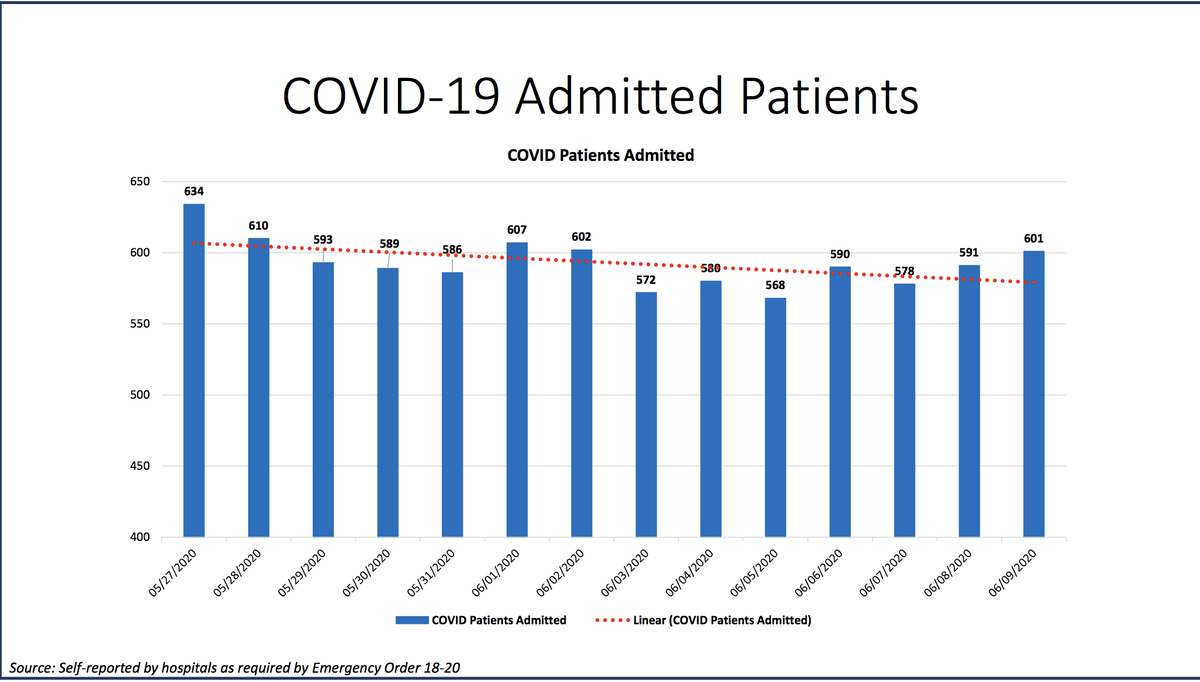
One of the tools that officials are relying on to determine if the novel coronavirus situation is improving in the state is hospitalization data. Unlike testing, which might be limited or take days to report results, hospitalizations can help give officials a real-time visual of how many people are severely ill with COVID-19.
The health department says it does not “have a figure” to reflect the number of people currently hospitalized and only provides the total number of hospitalizations in its statewide and county-level data. On Wednesday, 160 hospitalizations were added, raising the statewide total count to 11,345.
While Florida’s Department of Health is not releasing current statewide hospitalization data to the public, hospitals in Miami-Dade are self-reporting a number of key metrics, including hospitalizations, to the county, which has made this data public. Some provide updates every day; others don’t.
As of Tuesday, 57 people were discharged and 53 people were admitted to Miami-Dade hospitals, bringing the number of hospitalizations for COVID-19 complications to 601, according to Miami-Dade County’s “New Normal” dashboard data.
Scientists are also still working to learn more about the virus, including how many people in the community are infected and have mild or no symptoms, which can make it difficult to determine what percentage of the cases hospitalizations represent.
COVID-19 testing in Florida
Testing in Florida has seen steady growth since the COVID-19 crisis began and the state has seen a steady decline in the percentage of people testing positive, a key indicator that experts rely on to determine whether the pandemic is waning or worsening.
Testing, like hospitalizations, helps officials determine the virus’ progress and plays a role in deciding whether it is safe to lift stay-at-home orders and loosen restrictions.
The recommended number of daily tests needed varies among experts, but the dean of the University of South Florida’s College of Medicine told the governor that Florida needs to test about 33,000 people every day. The state has hit or surpassed the recommended mark a few times but is typically several thousand under.
Florida’s Department of Health reported 23,770 new tests in Tuesday’s daily COVID-19 update. In total, the state has performed 1,259,283 tests. Of the total tested, 66,000 (about 5.24%) have tested positive. The state says there are 1,100 tests with pending results. Wednesday’s testing data was not immediately available.
However, unlike hospitalization data that can give researchers a real-time visual on how the novel coronavirus is affecting the community, testing might be limited or it might take days to report results.
Health experts have previously told the Miami Herald that they were concerned the number of pending results listed by the state is an undercount. This is because Florida’s Health Department only announces the number of pending test results from state labs, not private ones — and private labs are completing more than 90% of state tests.
Previously, it has taken as long as two weeks for pending test results from private labs to be added into the state’s official count, making it difficult for officials to project the size and scale of the pandemic in the state. It’s unclear how quickly results are currently being sent to the state from private labs, as the turnaround time varies by lab.
This story was originally published June 10, 2020 at 12:13 PM with the headline "Miami-Dade reaches 20,000 confirmed coronavirus cases as Florida’s total hits 67,371."