1,698 coronavirus cases, highest reported in a single day, bring Florida total to 69,069
Florida’s Department of Health on Thursday morning confirmed 1,698 additional cases of COVID-19, the highest reported in a single day since the pandemic began. The state now has a total of 69,069 confirmed cases.
There were also 47 new deaths announced, raising the statewide toll to 2,848.
Previously, the highest daily count of newly confirmed cases was on June 4, when 1,419 cases were announced.
Florida slowly began to reopen in May. Now in June, most businesses across the state are open at limited capacity with social-distancing regulations in place to reduce the risk of COVID-19 transmission.
And Florida is one of 19 states that have seen a rise in new cases over the past week compared to the previous week, CNN reported early Thursday after analyzing Johns Hopkins University’s COVID-19 dashboard.
Since June 2, Florida has reported totals surpassing 1,000 every day.
And on Monday, Johns Hopkins University’s Center for Health Security noted in a report that Florida “continues to report elevated and increasing daily incidence. In fact, its 7-day average is approximately equal to its peak in early April and is still increasing.”
But Florida health officials told the Miami Herald last week that the rise of daily total increases this month was tied to an increase of testing and pointed toward the statewide positive test rate, which has ranged from 4% to 8% over the past two weeks and was just over 7% on Wednesday.
”As you’re testing more, you are going to find more cases and most of the cases are sub-clinical cases, and we expected that from the beginning,” Florida Gov. Ron DeSantis said in a press conference Thursday. “We are doing 30,000+ tests a day, in terms of results on average...We also do have outbreaks in agriculture communities.”
While a lower positive test rate is a good sign, University of Florida epidemiology professor Cindy Prins says people still need to remember that it’s still unclear who is being tested.
“Are we talking about people who are being tested because they have symptoms?” Prins told Miami Herald news partner WLRN earlier this week. “Are we talking about people who are being tested because now all of a sudden they have access, and they can go through the drive-thru testing, and find out whether or not they’re positive, even though they don’t have symptoms.”
Confirmed COVID-19 cases in South Florida
More than half of the new deaths but less than half of the new cases were in South Florida:
▪ Miami-Dade County reported 271 additional confirmed cases of COVID-19 and 14 new deaths. The county now has a total of 20,548 confirmed cases and 798 deaths, the highest in the state.
▪ Broward County reported 144 additional confirmed cases and two new deaths. The county’s confirmed total is now at 8,337 with 351 deaths.
▪ Palm Beach County saw 209 additional confirmed cases and 10 new deaths. The county’s known total is now at 7,887 with 407 deaths.
▪ Monroe County reported four additional cases, bringing the Florida Keys confirmed total to 120. Monroe County officials also decreased the death toll from five to four after they say a contract tracing investigation determined that the person did not live in Monroe County.
Here’s a breakdown on what you need to know:
Confirmed COVID-19 cases in Florida
More than half of the state’s known COVID-19 cases are in South Florida’s four counties: Miami-Dade, Broward, Palm Beach and Monroe. Miami-Dade continues to lead the state with the most confirmed cases and deaths. It has 20,548 known cases and 798 deaths.
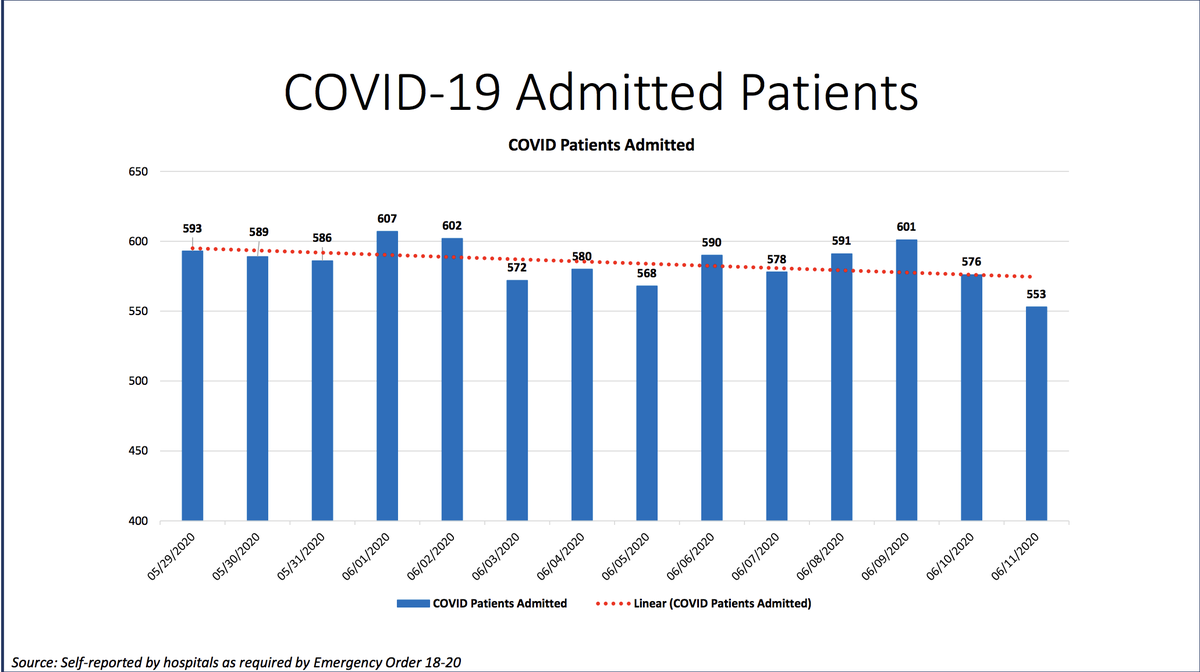
One of the tools that officials are relying on to determine if the novel coronavirus situation is improving in the state is hospitalization data. Unlike testing, which might be limited or take days to report results, hospitalizations can help give officials a real-time visual of how many people are severely ill with COVID-19.
The health department says it does not “have a figure” to reflect the number of people currently hospitalized and only provides the total number of hospitalizations in its statewide and county-level data. On Thursday, 226 hospitalizations were added, raising the statewide total count to 11,571.
While Florida’s Department of Health is not releasing current statewide hospitalization data to the public, hospitals in Miami-Dade are self-reporting a number of key metrics, including hospitalizations, to the county, which has made this data public. Some provide updates every day; others don’t.
Eighty-three people were discharged and 54 people were admitted to Miami-Dade hospitals on Thursday, bringing the number of hospitalizations for COVID-19 complications to 553, according to Miami-Dade County’s “New Normal” dashboard data.
Scientists are also still working to learn more about the virus, including how many people in the community are infected and have mild or no symptoms, which can make it difficult to determine what percentage of the cases hospitalizations represent.
COVID-19 testing in Florida
Testing in Florida has seen steady growth since the COVID-19 crisis began.
Testing, like hospitalizations, helps officials determine the virus’ progress and plays a role in deciding whether it is safe to lift stay-at-home orders and loosen restrictions.
The recommended number of daily tests needed varies among experts, but the dean of the University of South Florida’s College of Medicine told the governor that Florida needs to test about 33,000 people every day. The state has hit or surpassed the recommended mark a few times but is typically several thousand under.
Florida’s Department of Health reported 31,426 new tests in Thursday’s daily COVID-19 update. The positive rate was 7.35% of the total, according to the report. To date, 1,307,728 persons have been tested in Florida. Of the total tested, 69,069 (about 5.28%) have tested positive. The state says there are 1,243 tests with pending results.
However, unlike hospitalization data that can give researchers a real-time visual on how the novel coronavirus is affecting the community, testing might be limited or take days to report results.
Health experts have previously told the Miami Herald that they were concerned the number of pending results listed by the state is an undercount. This is because Florida’s Health Department only announces the number of pending test results from state labs, not private ones — and private labs are completing more than 90% of state tests.
Previously, it has taken as long as two weeks for pending test results from private labs to be added into the state’s official count, making it difficult for officials to project the size and scale of the pandemic in the state. It’s unclear how quickly results are currently being sent to the state from private labs, as the turnaround time varies by lab.
This story was originally published June 11, 2020 at 1:03 PM with the headline "1,698 coronavirus cases, highest reported in a single day, bring Florida total to 69,069."