‘Playing games with numbers’: Florida COVID-19 test backlog worse than state says
Florida is significantly under-reporting the state’s COVID-19 testing backlog, a blind spot in the data that could obscure the pandemic’s size and hamper efforts to decide when it’s safe to end restrictions such as social distancing — even as Gov. Ron DeSantis touts the state’s transparency when it comes to coronavirus.
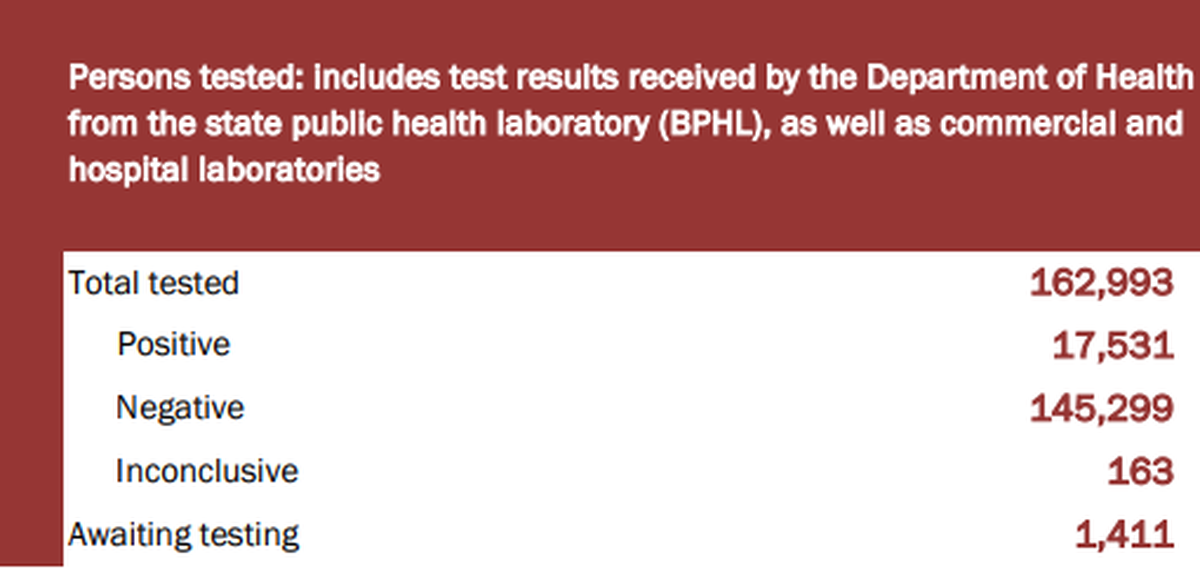
On its public website, the Florida Department of Health says about 1,400 people statewide are waiting for their test results. But that’s an undercount, the department acknowledged in response to questions from the Miami Herald. And it’s likely a massive one.
That’s because the state only reports the number of Floridians waiting to hear back from state labs, not private ones — and those private labs are completing more than 90% of Florida’s tests. The state website doesn’t say that its figures exclude the vast majority of pending tests for the novel coronavirus.
Two small, private South Florida healthcare providers told the Herald this week that they are awaiting COVID-19 test results for almost 800 patients. That number alone would increase the state’s official count of backlogged tests by more than 50%.
Not having the results from the backlog of testing means state officials can’t get a real-time picture of how deeply the disease has penetrated the population and when people might have hope of resuming their lives and getting back to work, said Arthur Caplan, professor of bioethics at New York University Langone Medical Center.
“The key to ending the quarantining and social isolation is accurate information about where testing is, how fast we can expect tests to clear, and ultimately how fast we can expect to have a lot of testing,” Caplan said. “If the backlog gets enormous, then the public needs to know.”
In addition, by not acknowledging delays, the state may escape public pressure to resolve the backlog quickly. And there are other costs. People who are sick may still spread the disease without knowing it. Researchers and officials have less information to track infection patterns. Medical workers have to waste scarce personal protective equipment because they don’t know for sure who can expose them.
For epidemiologists, a backlog of tests means they cannot get a timely understanding of infection rates that help them predict when the peak is coming and when the disease is waning, said Derek Cummings, a biology professor with the University of Florida’s Emerging Pathogens Institute. Knowing how many people are waiting for tests is important information.
“If you have disruptions to testing and you have backlogs ... that obscures your view of how fast cases are growing and declining,” Cummings said.
In a statement to the Herald, Florida’s DOH said it was “not accurate” to call the number of people awaiting test results from Florida’s state labs a backlog.
“Awaiting testing represents the number of individuals for whom a test has been ordered but have not yet received results, including those who have not yet had their specimens collected for laboratory testing,” the department said. “There is no backlog currently associated with Department-coordinated COVID-19 testing efforts.”
The state health department did not answer questions about why it isn’t including the backlog of tests from private labs in its official count.
Florida contracts with commercial laboratories to process COVID-19 tests, and the state can request information on pending tests from those vendors. That means the state could be providing a fuller picture of the backlog. (The health department has refused to provide copies of the contracts to the Herald despite repeated requests since March 21.)
Private healthcare providers in South Florida say they have hundreds of cases awaiting results — a delay not being captured in state data.
On Friday, when the state health department said people in Miami-Dade and Monroe counties were waiting for results in 326 cases, a single provider in those counties, Community Health of South Florida, told the Herald it had more than 400 patients who haven’t been told if they’re infected or not.
Another provider, Larkin Community Hospital, said 392 of its patients haven’t gotten their results yet.
That’s almost 800 cases without results just from Community Health and Larkin — small players compared to South Florida’s biggest hospitals, many of whom are also doing testing but refusing to provide data to the Herald. (The private lab Quest Diagnostics processes tests for Community Health. Larkin processes tests at its own lab and also sends samples to a private lab in New Jersey.)
In many ways, Caplan said, testing data is as important to get right as the number of hospitalizations and deaths resulting from COVID-19, the disease caused by the coronavirus.
“It tells us what the risks are to hospital workers and what the general incidence is of who survived,” he said.
Open data
Earlier this week, DeSantis praised the way the state is keeping the public informed.
“If you look at the report that the state Department of Health puts out, I challenge you to find another state that’s even close with transparency,” he said. “We have a dashboard that’s up. You can see in real time as the cases come in. When our numbers come in, those are fresh. Some of these other states, those are 48 hours old. We’re doing it fresh.”
He’s right that Florida is releasing far more data than many other states.
But not all data represents the full picture.
The state’s daily report says about 166,000 people in Florida have been tested by both state and private labs. It says nearly 18,000 have tested positive for COVID-19, with a handful of tests considered inconclusive and the vast majority negative. And it pegs the backlog at just those 1,400 people.
The site doesn’t say that the 1,400 “pending results” are only from state labs. It doesn’t specify — until you read another 20 pages into the report — that state labs have done just 14,080 tests so far, or 8 percent of the total. And it doesn’t give any number at all for the pending results from the far greater number of tests being conducted by private labs.
Caplan, the NYU bioethicist, called the lack of full and clear information on the state-run website “unethical and a betrayal of trust to the public that they’re supposed to serve.”
“The public needs up-to-date information on what’s going on,” he said. “By playing games with the numbers, the state isn’t giving an accurate picture and it knows it.”
The Herald tried independently to build a picture of Florida’s backlog.
But taxpayer-funded systems like Jackson Health, Memorial Healthcare and Broward Health would not say how many of their patients are waiting on results. And Quest, the nation’s biggest private lab, is not releasing state-level data, although it has disclosed 80,000 tests pending at the national level. Its major competitor, LabCorp, says it has no backlog.
Unlike Florida, California does disclose its testing backlog for both public and private labs. Earlier this month, the state reported 59,500 people were awaiting test results, leading Gov. Gavin Newsom to apologize.
“All of that frustrating you [is] certainly frustrating me,” Newsom said. “The testing space has been a challenging one for us, and I own that, and I have a responsibility as your governor to do better, and to do more testing in the state of California.”
The state has since cut its testing backlog by two-thirds.
Living in the dark
Susan Somers waited eight days for her test results after visiting a drive-through site at Marlins Park. Somers was told it would take no more than five days. She repeatedly called the private lab handling her case but only got voicemail — and that was full. She’s had serious flu-like symptoms and shortness of breath for weeks.
“I’m feeling frustration, anger and fright. I don’t know if I’m positive or negative or if I’m going to end up in the hospital,” said Somers, an attorney. “What if I have something else?”
Because her test didn’t go to a state lab, she wasn’t counted in state figures as someone waiting for results.
Measuring Florida’s testing backlog will be difficult without more transparency.
Spokespeople for Jackson and Memorial said reporters could put in public records requests if they wanted to know how many of their patients are awaiting testing results. That could take days or weeks. They would not comment on why they would not immediately release information considered a public record under state law. Broward Health did not respond with data by deadline.
Private hospitals including Baptist Health South Florida, Mount Sinai Medical Center in Miami Beach, HCA and Tenet hospitals — Aventura Medical Center, Kendall Regional Medical Center, Palmetto, Hialeah and Mercy — all declined to provide backlog data. The University of Miami did not respond.
In addition, the Herald tried without success to get numbers from Tampa General Hospital, AdventHealth Orlando, and the University of Florida Health Shands Hospital in Gainesville.
Healthcare institutions in at least one part of Florida are talking.
Lakeland Regional Health and BayCare told the Lakeland Ledger in Polk County that they had tested a total of 1,137 people for COVID-19 by March 31. At that time, 757 were still waiting for test results, the hospitals said. That was more than 20 times the figure provided by DOH for the county.
Somers finally got her test back on the eighth day of waiting.
The results? Inconclusive.
“They won’t retest me,” Somers said. “I’ll have to call my doctor and find out what she can do.”
.
.
This story was originally published April 11, 2020 at 7:00 AM.