Low bulk offer made for nine townhouses built by ‘King of Coconut Grove.’ Buyers upset

READ MORE
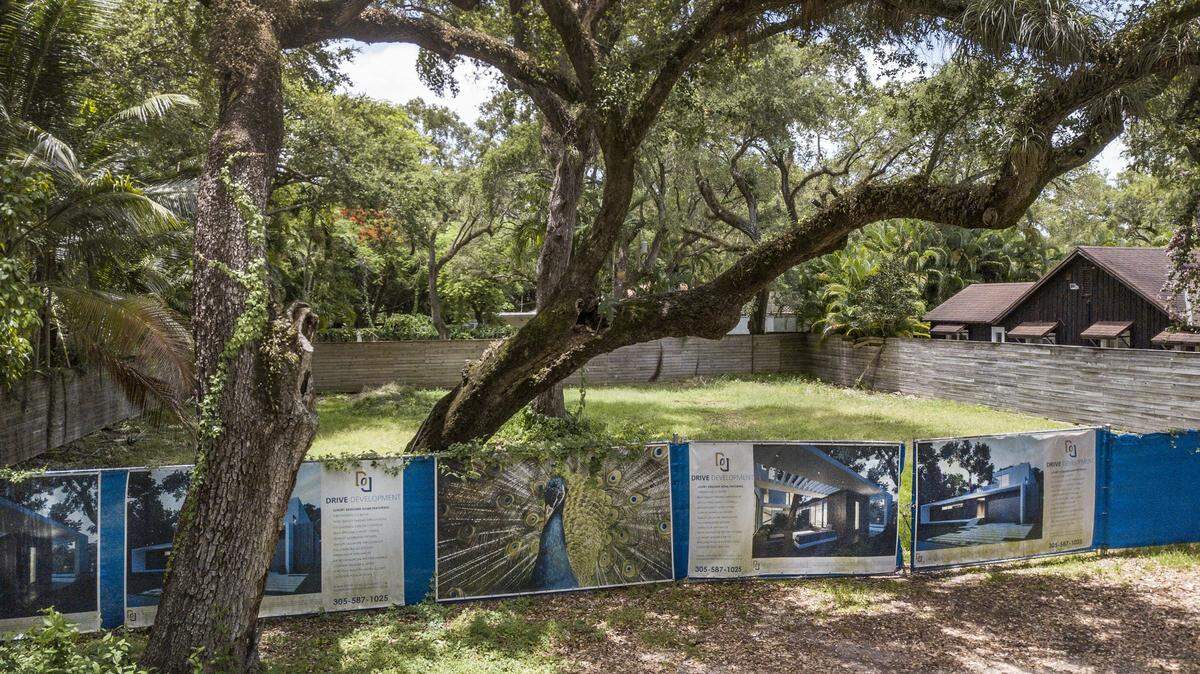
Coconut Grove townhouses and ‘The King of Coconut Grove’
Buyers who paid deposits on townhouses never got them from developer Doug Cox. Cox’s wife, Nicole Pearl, asked for disciplinary revocation, essential disbarment, rather than go through the Florida Bar discipline process over her role in this.
Expand All
Nine of the 12 Coconut Grove townhouses built by developer Doug Cox could be sold to a buyer from West Palm Beach who is offering $18.2 million in a cut-rate bulk deal if no one else outbids him.
The never-inhabited Coconut Avenue houses, some of which were sold multiple times to unsuspecting buyers in a real estate scam Cox is accused of running, are under contract but subject to competing bids, the receiver overseeing the fraud case said Tuesday.
The buyer, Mela Coconut Grove LLC, is offering $1.8 million each for four four-bedroom units and $2.2 million each for five five-bedroom units, significantly below the initial asking prices of $2.6 to $3.5 million.
“It’s like a wholesale bid rather than retail,” said retired Miami-Dade Circuit Court Judge Alan Fine, who is the court-appointed receiver controlling the Cox properties and managing the complex case in which 32 parties are owed $34 million by Cox. “This is a problematic project to market to buyers in part because of adverse publicity and concerns about building code violations that took a long time to repair.”
READ MORE: They bought their dream homes from the ‘King of Coconut Grove.’ They still can’t move in
Fine and his counsel Paul Singerman said the bulk offer may stimulate higher bids for the houses.
“The beauty of a bulk bid is that it will flesh out what the market value is,” Fine said. “We hope to achieve the best outcome for victim buyers and creditors.”
Bid has significantly lower prices
Original buyers were disappointed to hear that the bulk offer is well below market value and would be a total of $9.7 million lower than the initial listed prices. Cox collected deposits of up to $500,000 from them when the houses that appeared to require only finishing touches were selling for $1.2 to $1.8 million from 2018 through 2021 and mortgage rates were 2 percent. They never moved in.
“The receiver should have offered us those prices when he got the case a year and a half ago and many of us would have taken them,” said Alan Lombardi, who put down $260,000 on his $1.3 million townhouse in February 2020, expecting to settle in with his partner and newborn twins within three months. That was almost five years ago.
“Instead of milking the cow, he could have saved on marketing, staging, closing costs, commissions, receivership expenses and his fees of $750 per hour. He is rewarding deep-pocketed investors who have the most purchasing power and intend to flip these houses instead of working people with families who lost their life’s savings.”
Lombardi, a Grove real estate agent, said the offer equates to $571 per square foot for the 3,150-square-foot units and $536 per square foot for the 4,100-square-foot units that Fine had hoped to sell for $850 per square foot.
“Less than $600 per square foot is the price of a tear-down in the Grove. If it goes through, that’s a steal,” Lombardi said. “Wasn’t Judge Fine’s mandate to maximize sale prices and minimize waste? Wasn’t that the purpose of the receivership? If it wasn’t he could have sold us our houses.”
The four-bedroom townhouse at 2972 Coconut Ave. is the only one on Coconut Avenue that has sold, for $2.7 million ($884 per square foot) in August. Fine said he had received four higher individual offers from victim buyers before he filed a motion Tuesday asking Judge Thomas Rebull to approve the bulk sale. He is working on contracts for two other houses not among the nine, including an offer of $2.4 million for 2990 Coconut Ave.
Phillip Sylvester, Cox’s former business partner, submitted a bid Monday on four townhouses that was higher than the bulk bid but it was not accepted because of “the timing — we received the bulk offer before we got the other one,” Fine said.
Sylvester sought receivership protection of the 27 properties in his and Cox’s joint venture after he read a March 2023 Herald investigation of Cox. Five months after Fine was appointed, Sylvester bought the 12 undeveloped Grove lots that were in his and Cox’s portfolio from the receivership for $16.5 million. He claims Cox cheated him out of $6 million.
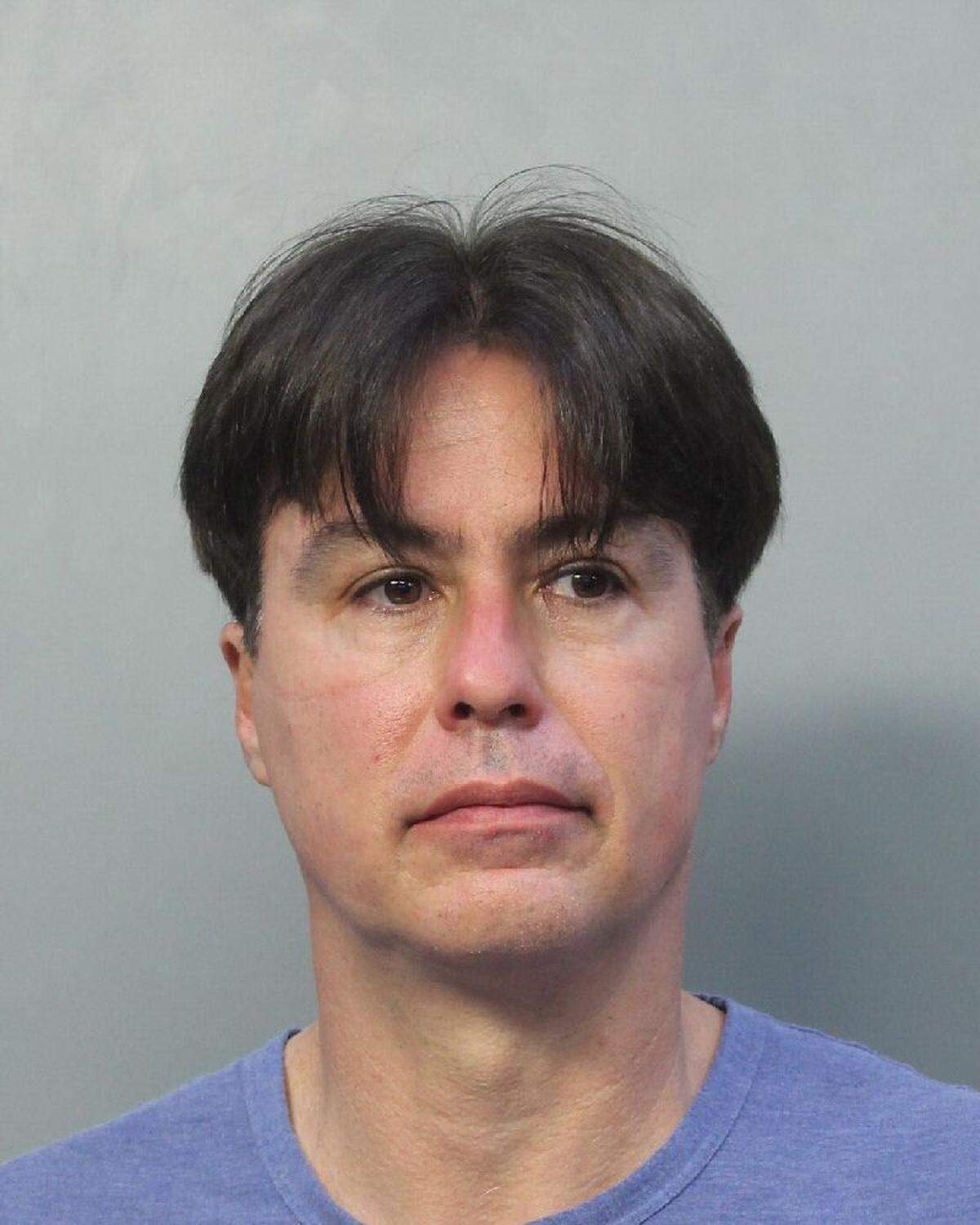
Cox has declined requests from the Herald for an interview.
Fine’s motion and the bulk sale contract contain an unusual feature attaching prices to the townhouses that allows bidders to offer more money for any townhouses they choose. Mela Coconut Grove LLC, the “stalking horse” bidder, can then raise his offer, and that can be countered again. All bids must be made before a Dec. 20 hearing before Rebull.
“There could be an auction during the hearing,” Fine said.
Mela Coconut Grove LLC was incorporated in August, according to state records. The manager and registered agent is Eric Giray, an attorney. Giray’s address at a West Palm Beach condo is the same as that of Mela and 23 other Florida companies for which he’s an officer or registered agent. Among those listed as an officer in his companies including Gry Management, Mela Miami Real Estate, Miami Ela and Ela Real Estate is Giray’s mother, Ayse Giray.
Bulk bidder has ties to Chobani yogurt
Ayse Giray, a family practice physician who uses the same address as Eric, is ex-wife of Hamdi Ulukaya, the billionaire founder of Chobani yogurt. She sued Ulukaya for a 53 percent share of the $2 billion company, claiming they made an agreement when she bankrolled its startup precursor. The three-year court battle was settled for an undisclosed amount in 2015.
Singerman said Mela’s bulk bid was attractive for several reasons.
“The terms from a well-financed buyer are simple and elegant,” he said. “It’s an unconditional sale that provides for a prompt closing with lower transaction costs — and allows competing bids from bidders who don’t want to buy all nine.”
Sales bring cash to the receivership, which needs to pay off a $13.5 million loan from Sylvester accruing $5,000 in interest per day, plus expenses (maintenance, property insurance, hourly fees), plus creditors.
The townhouses, being sold “as is,” finally have permits and certificates of occupancy, Fine and Singerman said. The lack of COs, caused by unpermitted construction, prevented Cox from closing sales.
Cox stalled buyers who signed contracts and gave him deposits by assuring them certificates of occupancy from city of Miami building inspectors were imminent, they said. Behind their backs Cox signed new, higher-priced contracts and collected new, higher deposits from new, unwitting buyers as the housing market boomed during the influx of COVID pandemic transplants.
Same house had four big deposits
Buyers and attorneys on the case described Cox’s alleged juggling act as a real estate Ponzi scheme. The unit at 2960 Coconut Avenue was the house that kept on giving: Four different people signed purchase contracts for it and paid Cox deposits ranging from $500,000 to $1.5 million from 2020 to 2023.
In a June settlement agreement, 32 buyers and investors who were duped by the self-styled “King of Coconut Grove” signed quitclaim deeds, relinquishing any liens on the properties and surrendering their goal of ownership.
Except for Michael Coyne, an investment banker from New York, and his wife Oksana, a nurse, who had planned to move into their new $1.6 million townhouse at 2978 Coconut Ave. in 2021, before their twin daughters were born, with their son and Oksana’s parents, who are from Ukraine. But since they put down their $487,000 deposit, they have lived in seven different rentals, with most of their belongings in storage.
Coyne said he will sue anyone who buys 2978 and assert his claim. He is critical of the expensive, slow pace of the receivership, which took 15 months to obtain COs, sold properties at a discount, favored secured creditors and left victims in the lurch, he said.
“I have many questions about accountability,” said Coyne, one of the people who stepped forward to warn that Cox was conning homebuyers. “I was sent a letter from the receiver last year saying I could buy my house for $3.6 million, not a penny less, and now it may be sold for $2.2 million.
“They could have told the predatory lenders to take a hike and negotiated discounted prices with buyers. They could have told Cox’s business partner he made a mistake joining Cox in this venture and is not entitled to bid on the properties, knowing he’s going to flip them for a big profit. They could have completed this very difficult job they were hired to do rather than drag it out and enrich their friends.”
Fine and Singerman disagree, asserting they have worked diligently to clean up the mess left by Cox and recover as much money as possible despite obstacles such as a $33 million mortgage by Altamar Financial Group that had to be paid, knotty permitting problems with the city of Miami building department and lack of cooperation from Cox, who has been seen around the Grove claiming he’s broke. His wife Nicole Pearl, an attorney who wrote the contracts and helped sell the properties, has the couple’s three young children and may be staying with relatives out of town.
Negotiating lower prices for certain buyers would have left out other depositors, and secured creditors receive priority under the law, Fine and Singerman said.
In decades of handling similar cases, Fine and Singerman said victims often recover only 5 to 10 percent of what they lost as expenses spiral and the pot of assets diminishes. They hold out hope that victims in the Cox case can recover 40 to 50 percent.
Lombardi is not optimistic given that bidders only have 10 days — in the middle of busy holiday season — to make higher offers.
“Maybe I’ll get 20 percent of my deposit back, which would be the $50,000 I spent on attorney’s fees, which means zero,” he said.
Four houses sold to date
Fine has sold four houses so far, including the townhouse at 2972 Coconut Ave for $2.7 million. He sold the townhouse at 3167 Shipping Ave. that Cox planned to reside in and the adjacent one at 3157 for $5.8 million to a New Yorker who had given Cox a $725,387.64 deposit for 3157 in 2022. The Shipping townhouses were originally listed by Fine for $7 million.
The house at 4010 Park Ave., nicknamed “House of Rumors” by neighbors who have watched it being built for a succession of buyers since 2016, sold for $3.2 million. Fine wanted $4 million but the house has flaws.
Fine and Singerman and the forensic accounting firm they hired have found only dead ends in the money trail left by Cox and Pearl. Muddled records show some of the $70 million the couple collected was spent in a vicious cycle of taking out loans at exorbitant rates to repay other loans at exorbitant rates.
This story was originally published December 11, 2024 at 12:24 PM.