Going once, going twice: ‘Cursed’ Coconut Grove townhouses finally sold

READ MORE
Coconut Grove townhouses and ‘The King of Coconut Grove’
Buyers who paid deposits on townhouses never got them from developer Doug Cox. Cox’s wife, Nicole Pearl, asked for disciplinary revocation, essential disbarment, rather than go through the Florida Bar discipline process over her role in this.
Expand All
Nine of 12 townhouses built in Coconut Grove by a developer accused of running a real estate scam have been sold to bidders who capitalized on the homes’ tarnished past to buy them for hundreds of thousands of dollars below their listed prices.
The houses were auctioned off Friday during a three-and-a-half-hour Zoom hearing overseen by Miami-Dade Circuit Judge Thomas Rebull. The highest winning bid was $2,580,000 for a 5-bedroom, 4,089-square-foot house that was listed for $3.3 million, and the lowest winning bid was $1,982,000 for a 4-bedroom, 3,108-square-foot house that was listed for $2.4 million.
Bidding pushed the total to $20,149,000, which is $1,949,000 higher than the $18.2 million bulk offer made for all nine earlier this month but about $8 million less than what the houses were initially listed for in May. A 10th townhouse sold for $2.4 million on Friday. Another sold for $2.75 million in August. One more is for sale for $2.55 million, and a deal is expected soon, according to the court-appointed receiver who has been managing 27 properties — including 12 vacant lots — that were in developer Doug Cox’s portfolio.
Proceeds go into a pot for reimbursing 32 creditors who are owed $34 million by Cox, the self-styled “King of Coconut Grove,” accused of conning home buyers and investors in a Ponzi-like scheme in which he signed double and triple sales contracts on single houses and collected escalating deposits from a succession of unsuspecting buyers as Miami real estate boomed from 2020 to 2023. He repeatedly postponed promised closing dates on the finished houses, keeping buyers in limbo.
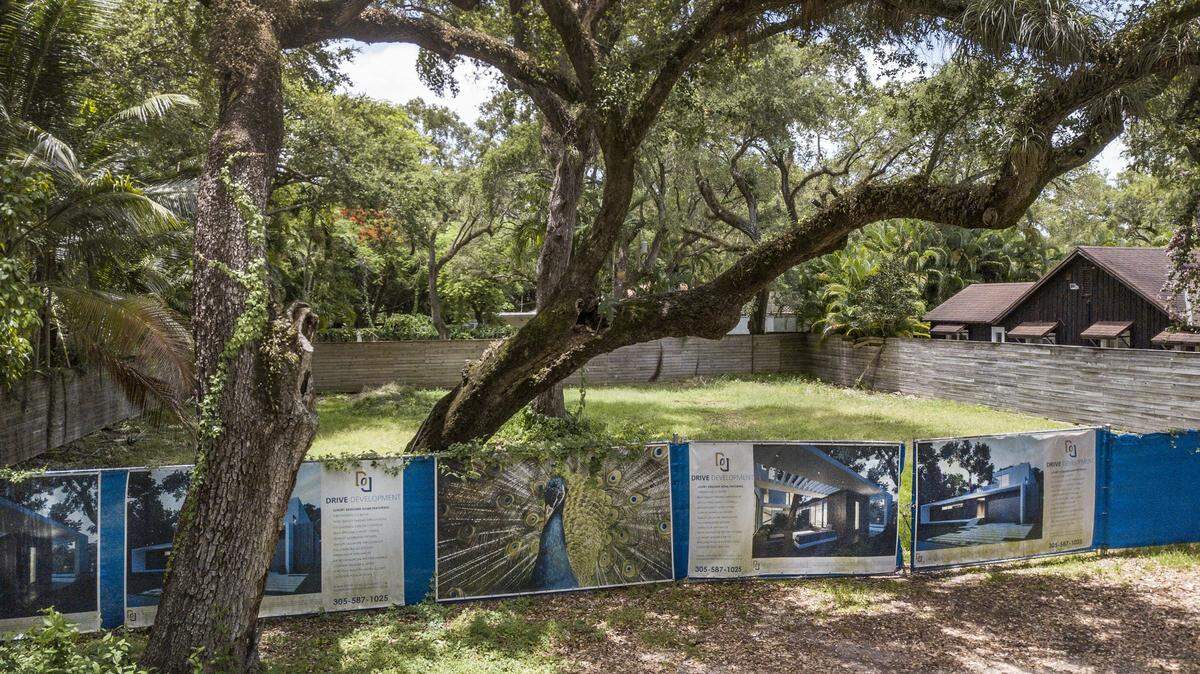
No one ever moved into the houses lining Coconut Avenue, which have been sitting empty for four years in one of the hottest markets in the country.
The sales, approved by Rebull, are “a significant and positive development in the case,” said Paul Singerman, counsel to receiver Alan Fine, who took control of the properties and consolidated lawsuits against Cox when Cox’s former business partner filed a complaint against Cox after reading a 2023 Miami Herald investigation about the plight of buyers.
The tangled case, marked by what Fine called “remarkable and stunning” fraud, has been in court since. Cox and his wife Nicole Pearl, a Miami attorney, ran Drive Development and Send Enterprises into the ground while running through $70 million, forensic accountants found. They collected more than $20 million in deposits, court files show. None of the money has been recovered.
The original group of buyers who came forward in 2022 with suspicions about Cox and Pearl have given up on ever owning their dream houses, with one exception. They remain upset they were only offered the houses at premium market rates and not at a discount. Most of the original buyers have or were starting families and some put down their life’s savings. Thinking the houses were ready, they signed purchase contracts they should not have signed, waiving rights to Cox and Pearl.
They had figured they’d be lucky to get 40-50 percent of their deposits back.
But as it stands now, if the receivership completes all sales of the 27 Cox properties for about $53.3 million — significantly less than the hoped-for market value — creditors would recover about 20 percent of what they lost.
One buyer victim, Alan Lombardi, described the houses as “cursed,” and wondered why anybody would want to buy them given their history of heartache and construction problems.
The new houses that appeared to require only final touches were originally selling for $1.2 to $1.8 million from 2018 through 2021, when mortgage rates were 2 percent and transplants were streaming to Miami during the COVID pandemic. Lombardi put down $260,000 on his $1.3 million townhouse in February 2020, expecting to settle in with his partner and newborn twins within three months. That was almost five years ago; he’s since bought another home in the Grove. His Coconut Avenue unit, 2984, was listed for $2.6 million and sold for $2.1 million on Friday to a real estate investor.
‘Stigma’ hurt prices
Phillip Sylvester, ex-business partner of Cox who is suing Cox and Pearl for $9 million, said sales prices were depressed by the “stigma” on the properties.
“They are devalued by a one-two-three punch,” said Sylvester, who won bids for two of the townhouses Friday and bought the 12 vacant lots for $16.5 million last year. “First, the cloud of Doug and Nicole. Then the long struggle for the certificates of occupancy, and the receiver losing credibility when he said he could get them in 6-8 weeks and it took more than a year. And third, the ongoing litigation and threats of litigation.”
Cox’s inability to complete inspections and obtain certificates of occupancy was the main excuse he used to stall buyers. Several original buyers complained to the city of Miami building department and Mayor Francis Suarez about Cox and construction irregularities, but the city took no action to help them.
Cox, who has declined to talk to the Herald, has not been charged with a crime, nor has Pearl, still a member of the Florida Bar. Cox has been seen around the Grove at a construction site on one of his former properties, claiming he’s broke and at times living out of his car.
Sylvester hoped more money would have been generated for the creditors’ pot.
“I reached out to eight buyer victims trying to get them to bid on their houses but for one reason or another they could not —either they couldn’t afford to or they have moved on from this ordeal,” Sylvester said.
Sylvester said he and the other investor bidder, Mela Coconut Grove LLC, which bought four houses for $9 million, agreed not to bid against three buyer victims during the auction.
Fine, the receiver, and his real estate agent Randi Connell decided to reduce townhouse prices by $200,000 each in October due to the lack of offers.
“There’s a narrative around this project that’s had a huge negative effect on interest,” said Connell, who worked for Cox for six months before quitting, fed up with how he was treating buyers. She agreed to take a reduced commission on the townhouse sales. “Even though the houses are aesthetically beautiful people are extremely hesitant to buy a home in receivership.”
Potential buyers were afraid that former buyers would make claims on the houses, though all creditors except one reluctantly signed quitclaim deeds in a June settlement agreement in return for a pro rata reimbursement of their losses, dependent on how much money Fine can recover in his goal to “maximize the assets.”
Dissatisfied with the slow, expensive pace of the receivership and certain decisions some buyers saw as conflicts of interest, buyer victim Michael Coyne did not sign the settlement. He has said he will sue whomever buys 2978, on which he put down a $487,000 deposit toward the $1.6 million purchase price in 2021 , planning to move in with his family and parents-in-law.
“There’s a claim to title for 2978 and the litigation and threats have had a negative impact on our ability to get a deal done at the highest possible price,” Fine said. “Plus the generalized risk somebody else could sue.”
Three buyer victims get homes
Three individual home buyers who say they were cheated by Cox bought townhouses Friday, albeit at steeper prices than they originally signed contracts for.
Sonal Shah, who moved to Miami to be near grandchildren and planned for 2960 Coconut Ave. to become his retirement home in 2021, bought the 4251-square-foot house for $2,260,000 million. It was listed for $3,245,000. The house at 2960, first listed for $1.6 million, was the one that kept on giving for Cox; four different people had contracts on it from 2020 to 2023 and paid Cox deposits ranging from $500,000 to $1.5 million.
Kelly Royer, who originally had a deal with Cox to build a house on an undeveloped lot, bought 2962 for $2.3 million. The 4,251-square-foot house was listed for $3,245,000.
David Blitz, who moved to Miami from Chicago, had his purchase of 2990 for $2.4 million approved by Rebull on Friday. It was listed for $3,245,000.
Jason Korman, not an buyer victim, won the bidding duel for 2980, which he bought for $2,580,000 million. It was listed for $3,295,000.
Six townhouses were purchased by real estate investors who bid on them during Friday’s hearing.
Eric Giray of West Palm Beach, manager of Mela Coconut Grove LLC, bought 2955, 2978, 2984 and 2992 for $9 million. Giray, who previously made the $18.2 million bulk bid for nine townhouses, is the son of Ayse Giray, a family practice physician who is the ex-wife of Hamdi Ulukaya, the billionaire founder of Chobani yogurt. She sued Ulukaya for a 53 percent share of the $2 billion company, claiming they made an agreement when she bankrolled its startup precursor. The three-year court battle was settled for an undisclosed amount in 2015.
Sylvester bid on four houses and won two -- 2957 and 2986, for $4,009,000. Sylvester, a financier from Chicago who now lives in Miami, said he was deceived by Cox in their joint real estate venture in which he bought the properties expecting Cox to build and sell homes and they’d share the profits. But Cox wasn’t closing any sales. He got caught in a vicious cycle of taking out loans at exorbitant rates. Sylvester confronted Cox after the Herald article was published in March 2023 and filed an emergency request for a receiver to seize control. Sylvester has now bought back 14 properties from the receivership.
Sylvester also loaned the receivership about $33 million to pay off Cox’s defaulted mortgage from Altamar Financial Group. The receivership is using proceeds from sales to pay off Sylvester and the interest that was accruing at about $5,000 per day — as well as the receiver’s $750 hourly legal fees and expenses, such as investigative costs, repairs, maintenance and insurance on the properties.
“The sales will materially reduce the ongoing interest expense and carrying costs of the receivership properties,” Singerman said, adding that sales money will “serve as a source of a future distribution to the unsecured creditors of the receivership estate and the victims of the defendants’ misconduct.”
Sales of Coconut Avenue townhouses
2955: Sold Friday to Mela Coconut Grove LLC for $2,017,000. 4/4, 3108 square feet. Was listed for $2.4 million
2957: Sold Friday to Phillip Sylvester for $1,982,000. 4/4, 3108 square feet. Was listed for $2.4 million.
2960: Sold Friday to Sonal Shah for $2,260,000 million. 5/5, 4251 square feet. Was listed for $3,245,000.
2962: Sold Friday to Kelly Royer for $2.3 million. 5/5, 4,251 square feet. Was listed for $3,245,000.
2978: Sold Friday to Mela Coconut Grove LLC for $2,370,000. 5/6, 4089 square feet. Was listed for $3,295,000
2980: Sold Friday to Jason Korman for $2,580,000 million. 5/6, 4089 square feet. Was listed for $3,295,000.
2984: Sold Friday to Mela Coconut Grove LLC for $2.1 million. 4/4, 3108 square feet. Was listed for $2.6 million.
2986: Sold Friday to Phillip Sylvester for $2,027,000. 4/4, 3108 square feet. Was listed for $2,550,000.
2990: Sale approved Friday to David Blitz for $2.4 million. 5/6, 4089 square feet. Was listed for $3,245,000.
2992: Sold Friday to Mela Coconut Grove LLC for $2,513,000. 5/6, 4089 square feet. Was listed for $3,295,000.
2972: Sold in August for $2.75 million (listed price was $2.8 million). Owner according to Miami-Dade property appraiser is Emilio Busoli and Claudia Marina S.A. Busoli. 4/4, 3,095 square feet.
2970: For Sale, $2.55 million (reduced from May listed price of $2.75 million). 4/4, 3,108 square feet.
This story was originally published December 22, 2024 at 5:30 AM.