Downtown Miami’s Crespi: Awareness is critical to a true economic recovery
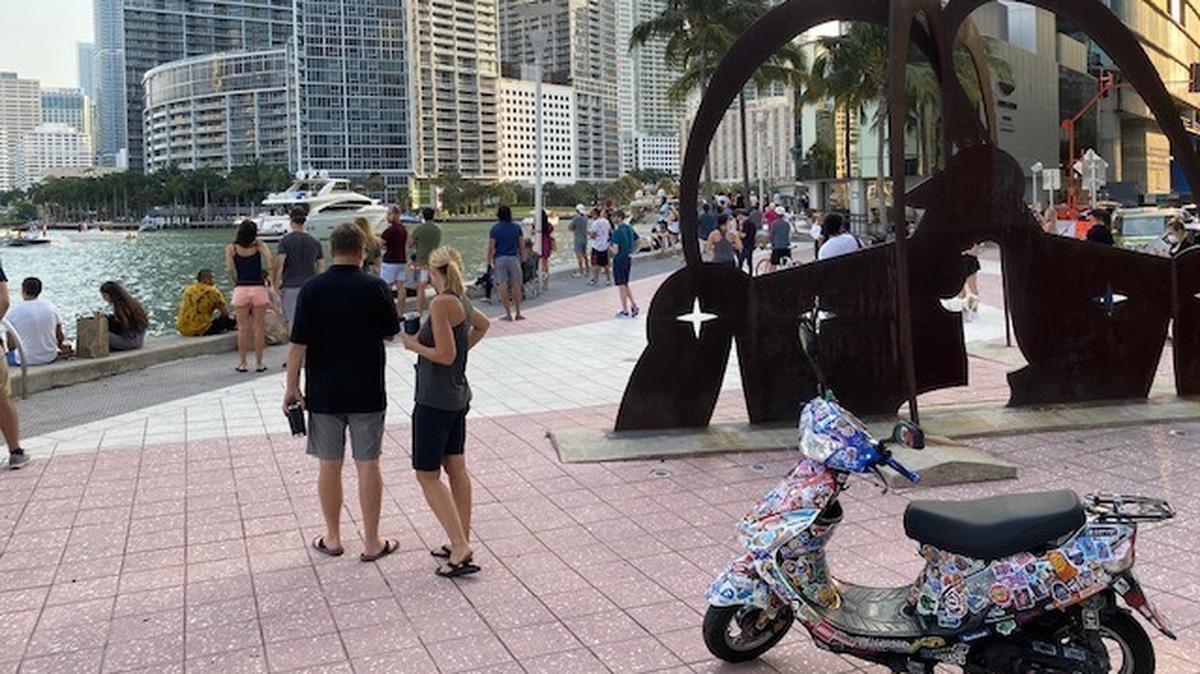
As South Florida begins to reopen, downtown Miami is on the front of lines. Home to 100,000 residents, thousands of businesses, six million visitors each year, and more jobs than any other neighborhood in Florida, Downtown Miami is an economic engine for the entire state of Florida — responsible for $38 billion in economic impact annually (far exceeding that of even Walt Disney World).
Under normal circumstances, the Miami Downtown Development Authority is charged with generating economic impact and supporting businesses, providing services to residents and visitors at street level, advocating for smart urban policies, and branding Downtown Miami around the world.
But these are no normal circumstances. The DDA has shifted gears to encourage public health, help businesses stay afloat and set a path to economic recovery.
Throughout this crisis, RE|source Miami has asked area bankers, policymakers and real estate professionals for on-the-ground reports. Today we hear from Christina Crespi, who was approved as the DDA’s executive director earlier this year.

Q: Now that we’re in Month Two of this pandemic, how has the Miami DDA’s role changed?
In February of this year, our Board and Staff were in the process of updating our strategic plan centered on business growth and recruitment, enhancing the quality of life at street level, and branding our neighborhood as a great place to live, work, visit and invest. Commissioner Manolo Reyes had just arrived as our new chair, and we were emphasizing issues like public safety, cleanliness and helping businesses community navigate through the permitting process.
Within weeks, as the coronavirus situation began to unfold, we pivoted to focusing almost exclusively on promoting health and hygiene, educating our community about the importance of social distancing, cultivating a sense of community among our residents who are staying home, and providing immediate relief to our small businesses.
Today, the Miami DDA is prioritizing initiatives that balance public health concerns with the reality that we are home to a community of 100,000 people and thousands of businesses that are feeling the impacts of this pandemic and want some element of normalcy restored. Our message to stakeholders is simple: The sooner we flatten the curve of infection, the sooner we can get back to growing our downtown economy.
Our agency and downtown district have first-hand experience rebounding from an economic crisis. We navigated the Great Recession and went on to transform our community from a 9-to-5 business district into a 24-7 residential and commercial neighborhood. No two crises are exactly alike, but we have a blueprint for an eventual recovery.
Q: Is the DDA offering any programs that provide relief to Downtown businesses and residents impacted by the economic slowdown?
There is a fine line between putting public safety first and maintaining some semblance of quality of life and sustaining our economy. We recognize that our residents — especially who live in apartments and condos — probably feel trapped inside their homes and that many of our businesses are struggling, so we have rolled out programs that are making a direct impact.
Small businesses are the backbone of our downtown economy and a critical source of jobs. Restaurants, in particular, are going to great lengths to continue serving our community under challenging circumstances.
Within a week of businesses beginning to shut down or scale back, we rolled out our “Go Local, Go Direct” campaign to incentivize residents to stay home and order direct delivery from downtown restaurants. By ordering direct, diners help restaurants avoid costly fulfillment fees charged by third-party delivery services. In exchange, these restaurants are offering customers a small discount. The program has been a hit with restaurants and residents.
The DDA is also a founding partner in a new relief fund launched by FIU and the South Beach Wine and Food Festival that is providing financial support to local restaurants and bars. So far, more than $1.4 million has been raised for the fund, and at least 60 downtown restaurants have secured grants totaling more than $160,000 — with more funds still available.
One of the most well-received initiatives we’ve launched is our Small Business Task Force. Several state and federal funding programs are available to local companies, but many are so focused on running their businesses that they don’t have the time to research the options. We have convened a panel of attorneys and accountants who are volunteering to help guide business owners through the application process. The Task Force has already helped more than 50 businesses secure financial assistance.
We have also organized activations that bring residents together safely and responsibly. Our “DWNTWN Vibes” series features a different DJ performing live on our social media pages every Friday evening. Three weeks ago, we teamed up with international DJ David Guetta to broadcast a set live from Downtown. The performance drew 25 million online viewers and raised more than $700,000 for relief efforts around the world in just two hours. We also kicked off a virtual literary series in partnership with the Miami Book Fair and Books & Books, with Miami native Richard Blanco reading selections from his newest book.
Q: How is the DDA addressing cleanliness and public safety at street level, especially with so many people heading outdoors amidst social distancing?
Keeping our district clean, safe, well-lit, and walkable has always been a priority for the Miami DDA, and Commissioner Reyes doubled down on this commitment when he became our chair. We already had several initiatives aimed at cleanliness and safety in motion when the pandemic struck, so we were prepared to shift our focus to public health.
The centerpiece of our efforts to keep our streets clean is our Downtown Enhancement Team. This is a group of more than 20 DDA employees, most of whom are formerly homeless individuals, who work each day picking up trash, sanitizing public areas, and tending to greenery throughout our urban core. The DET team has been a source of pride for the DDA dating back years, and their work is taking on added importance right now. They are literally on the front lines in keeping our neighborhood clean and our residents safe.
Another critical piece of our public safety plan is the PitStop public restroom program, which provides a street-level solution for Downtown residents, visitors and homeless individuals. The DDA currently operates a public restroom at Bayfront Park, with members of the DET team staffing and cleaning the location 14 hours each day. Earlier this year, our Board voted to expand the PitStop program in partnership with the City of Miami and Camillus House. Together, our three organizations are investing over $1 million to add four new restrooms and handwashing stations that will come online in the next two months.
Q: How is the DDA planning for an economic recovery? What will that process look like?
The first goal of any recovery plan must be ensuring Downtown Miami is prepared for the various trajectories that the virus might take. As we chart a course for restarting our economy in a safe and methodical manner, continued awareness is going to be critical to achieving and sustaining a true recovery.
From there, we need to have a clear understanding of our baseline. How many people will be out of work? To what extent are investors still deploying their capital? How many businesses will ultimately close? What will be the interest level among entrepreneurs when it comes to opening new restaurants and stores? What is the public’s appetite going to be for things such as eating in restaurants, watching a movie or play, traveling, and riding public transit?
These are questions we’ll be answering through Miami DDA market research and data collection, which was a critical element of our rebound from the Great Recession. Once we have that knowledge, we can set clear benchmarks for growth, launch a targeted marketing campaign, and put our Miami DDA resources toward driving investment and supporting businesses on the ground. All of this will be driven by data and collaboration with our partners in the community and across specific industries that are crucial to our Downtown economy.
As a practical matter, we have created a Miami DDA steering committee to oversee our recovery efforts. We are approaching this process with three underlying goals. The first is sustaining what’s already here and preserving our quality of life, recognizing that a recovery needs to capitalize on everything we’ve built up over the years, and on the strength of our global brand.
The second goal is instilling confidence in businesses, their employees, and their customers. If we cannot get people comfortable with the idea of going back to work in an office, eating in a restaurant, or shopping in a store, then a true recovery will be elusive. Our steering committee is going to work with the city, county and downtown businesses to better understand how we can do this in a gradual, safe and controlled manner.
Lastly, we are anticipating where the ‘new normal’ lies post-pandemic so that we can position Downtown Miami for continued long-term growth. This means contemplating topics like the future of public transportation, how we create more outdoor public space, what leisure and business travel patterns look like, and the trends that may unfold in the retail, office and residential sectors.
Downtown Miami has experienced tremendous growth in the past decade, with more than 1,000 businesses opening, 100,000 people now living in our area, and nearly 6 million tourists visiting yearly. We’ve built an urban infrastructure that rivals the country’s largest cities and we entered this slowdown on solid footing. That strength will position us for a full recovery.
Q: Do you believe this experience will result in people or businesses leaving Downtown Miami and other urban neighborhoods in favor of communities with more space?
Downtown Miami is a resilient community. We came back from the Great Recession faster and stronger than anyone predicted and went on to experience a decade of historic growth, so I know we will rally from this pandemic as quickly and safely as possible.
There has been speculation that this crisis could result in fewer people wanting to live in urban areas out of fear of that they cannot safely live their lives. The reality is that there may be some households or businesses who make the move to suburban or rural communities, but we believe that number will be far outweighed by those who see value in being Downtown.
We have built one of South Florida’s most desirable communities in Downtown Miami. More than 100,000 people live here, and children and families represent the fastest-growing segment of our population. People are choosing to live Downtown because our neighborhood is modern, pedestrian-friendly, full of arts and culture, connected to transit, and home to a greater density of job opportunities than any other place in Florida.
It’s difficult to replicate those advantages elsewhere, which is why we are optimistic about the long-term health of our economy and our desirability as a place to live, work, visit and invest. Like all communities, we are experiencing some short-term disruption, but we’ve been down this road before, and we’ve always come out stronger on the other side.
This story was originally published May 18, 2020 at 7:00 AM.