Incogni says it has completed more than 245 million data removal requests.
That’s a huge number for a service doing work most of us never see.
So… what is Incogni actually removing? Does it wipe your name from Google? Delete your information from the internet? Or do something much more specific?
Here’s what the service actually is, what it does, and where its limits are.
Key Takeaways
- Incogni Targets Data Brokers: It sends removal requests to companies that collect and store personal information.
- You Authorize It to Act for You: Incogni needs identifying information and your permission before it can submit requests.
- The Standard Service Covers 420+ Sites: Incogni automatically handles removals across more than 420 data broker sites.
- It Doesn’t Erase You From the Internet: Some records and websites fall outside its reach.
- You Can Do This Yourself: Incogni mainly saves you the time of finding brokers, submitting opt-outs, and following up.
What Is Incogni?
Incogni is a personal data removal service.
Its main job is to contact data brokers on your behalf and ask them to delete information they have about you.
Data brokers collect information from sources such as websites, apps, online stores, public records, and other databases. The FTC groups people-search sites with that same data-broker model. Some keep that information private. Others publish profiles through people-search sites.
Those profiles can include your name, phone number, email address, home address, relatives, or employment history.
Instead of tracking those companies down one by one, Incogni handles the removal requests for you. Its Standard service currently covers more than 420 data broker sites, including roughly 100 people-search sites for U.S. users.
How Does Incogni Work?
Incogni needs enough information to identify your records before it can ask companies to remove them.
When you sign up, you provide details such as your name, address, and email address. You also sign an authorization form allowing Incogni to submit privacy requests for you.
Incogni then sends removal requests to the brokers it covers and tracks their responses.
You can follow the process through your dashboard, including individual requests, their status, and the information Incogni asked a broker to delete.
Removal isn’t always instant. Some brokers respond quickly, while others take weeks. Incogni also sends recurring requests because information can reappear after it has been removed.
What Information Can Incogni Remove?
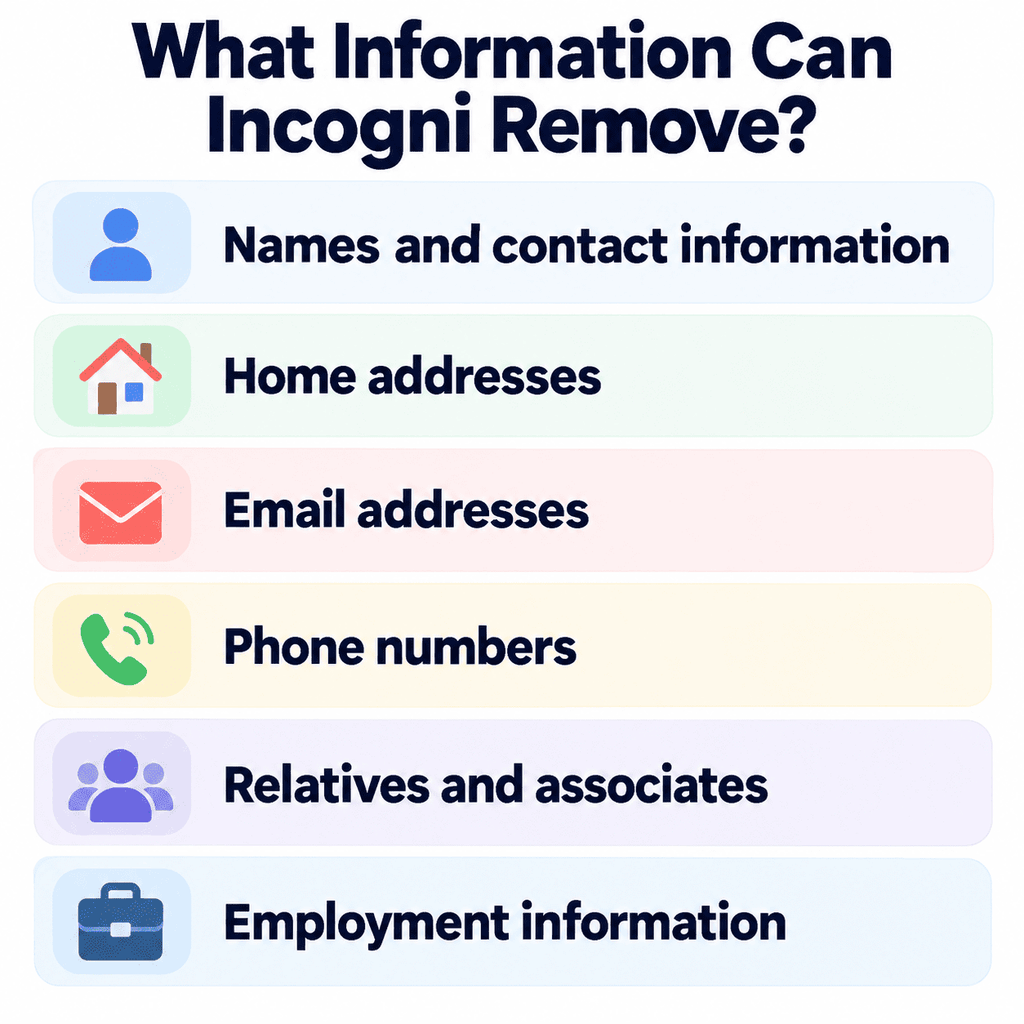
Incogni mainly targets information held by data brokers and people-search sites, including:
- Names and contact information
- Home addresses
- Email addresses
- Phone numbers
- Relatives and associates
- Employment information
The Standard plan handles sites already in Incogni’s network.
The Unlimited plan adds Custom Removals. If you find your information on an eligible site outside that list, you can submit the link and ask Incogni’s privacy team to work on the removal.
What Can’t Incogni Remove?
This is where “data removal service” can sound broader than it really is.
Incogni says Custom Removals can’t process removals from:
- Court records
- Government websites
- Publications about criminal proceedings or convictions
- Social media accounts
- Blogs
- Forums
It also doesn’t remove data from the dark web.
And Incogni doesn’t simply delete your name from Google. For Custom Removals, you submit the webpage where your information appears, not a Google search-results page.
Incogni vs. Removing Your Data Yourself
You don’t need Incogni to ask a data broker to delete your information.
You can find the broker, locate its opt-out process, submit the request, and check later to make sure the listing disappeared. Incogni even publishes guides for doing some removals manually.
The difference is how much of that work you want to handle yourself.
| Doing It Yourself | Using Incogni |
|---|---|
| Find data brokers yourself | Incogni has a list of covered brokers |
| Submit each opt-out yourself | Incogni sends requests for you |
| Track removals yourself | Progress appears in your dashboard |
| Check whether data comes back | Incogni sends recurring requests |
| No subscription required | Requires a paid plan |
You’re mostly paying for automation and time savings, not access to a secret removal method.
Is Incogni Worth Using?
Incogni makes the most sense if you want your information removed from data brokers but don’t want to spend time finding companies, filling out opt-out forms, and checking whether your data comes back.
If you only have a few listings to remove and don’t mind doing it yourself, you may not need a subscription.
The value is convenience. Incogni takes a repetitive privacy task and keeps working on it while your subscription is active.
Bottom Line
Incogni won’t make you disappear from the internet.
It focuses on a narrower problem: personal information sitting in data broker databases and people-search profiles that you may never have known existed.
You can chase those listings down yourself. Incogni gives you another option if you’d rather hand off most of that work and keep the removal process running over time.
To see what a people-search product actually compiles, read what BeenVerified shows before you pay for a report.
FAQs
Is Incogni legit?
Yes. Incogni is a data removal service created by Surfshark. It sends privacy requests to data brokers and lets users track them through a dashboard.
Is Incogni a VPN?
No. Incogni removes personal information from data brokers. A VPN changes how your internet traffic is routed and can hide your IP address from sites you visit.
Does Incogni remove your information from Google?
Not directly. Its Custom Removals process targets the webpage where your personal information appears, not the Google search-results page itself.
How long does Incogni take to remove your data?
It varies. Some brokers respond within a day, while others take longer. Incogni says Custom Removals usually take about 7 to 30 days, although some can take up to 60 days.
Does your information stay removed?
Not always. Data brokers can collect or republish information again, which is why Incogni sends recurring removal requests while your subscription is active.

![Incogni Promo Codes [Verified Discounts]](https://www.miamiherald.com/careers-education/wp-content/uploads/sites/2/2026/10/incogni-promo-code-mh-1024x768.jpg)
![Shopify Promo Codes [Verified Discounts]](https://www.miamiherald.com/careers-education/wp-content/uploads/sites/2/2026/10/shopify-promo-code-mh-1024x768.jpg)