What happens in case of rain or lightning at the Formula One Miami Grand Prix
What happens to Sunday’s Formula 1 Crypto.com Miami Grand Prix when the skies cry, especially if there’s lightning accompaniment?
To avoid finding out, FIA moved the start time from 4 p.m. to 1 p.m.
The Formula 2 race is scheduled for 9:25 a.m., but lightning was in the stadium area around 7:30 a.m., possibly pushing that start time around. A shelter in place warning rang around the facility for the next half hour.
The McLaren Trophy America and the Porsche Carrera Cup North America races were cancelled.
READ MORE: Sunday’s Formula 1 Miami Grand Prix will start earlier to avoid storms’ worst
A race scheduled to start at 4 p.m. and last 57 laps or two hours with a 7:50 p.m. sundown would’ve seemed to have a fat margin for error as regards weather. But, on a course with no lights, rain and, especially, lightning can Ozempic that margin. The National Weather Service’s Sunday morning forecast mentioned “possibly a thunderstorm after 5 p.m.”
READ MORE: Traffic alert: Closed streets, construction, maybe Trump at F1 Miami Grand Prix
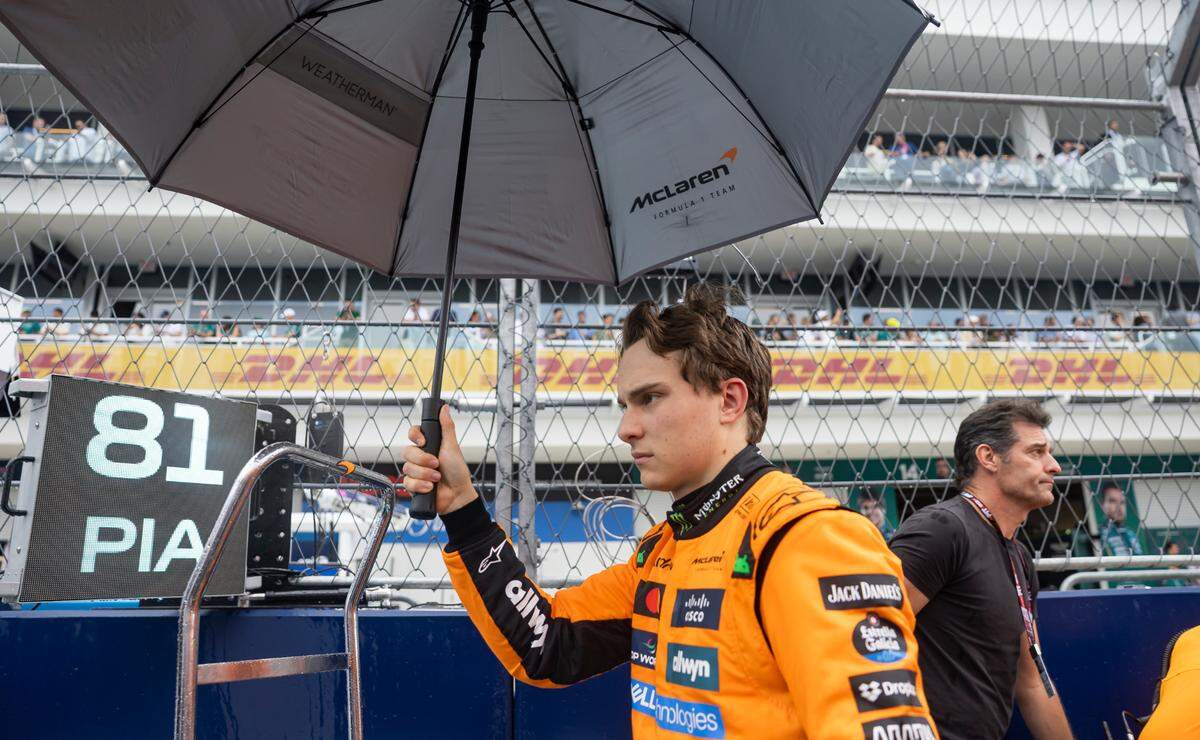
Last year, rain arrived a half hour before the scheduled start of the Saturday F1 Sprint race and Formula 1 raced in the wet as usual, albeit 28 minutes late. As the field did an automotive breaststroke behind the safety car before the start, McLaren’s Oscar Piastri declared Turn 10 “a river” and said he’d never had worse visibility in a race car.
The next day, steady rains caused the F1 Academy race to be cancelled and the first 20 laps of the Miami Grand Prix to be crawled behind the safety car.
As 2025 Miami Grand Prix winner Piastri said Thursday, “Normally if it rains in Miami, it does it properly.”
Williams’ Carlos Sainz said Thursday, “As we saw last year, on the straights, there’s a lot of standing water here. It’s a super flat track. The water stays on the surface. Whether that’s going to be safe enough or not, with the walls close to you and the visibility that we have with these cars, it is certainly going to be a concern.”
But, Sainz also said with the current safety measures limiting the current engines to 250 kw, “We can have a good show, a good race. I think all drivers want to drive in the wet. Wet races are a lot of fun. You guys know I love the wet.”
Electricity from the sky
Nobody loves lightning when it comes to outdoor sports. Lightning nearby red flags everything. Event organizers order stands emptied and everyone off the field, or track.
It’s not out of altruism.
Nobody wants their event associated with — or possibly legally liable for — severe injury or death in the case of lightning hitting a fan or anyone working the event. Under part of the Occupational Safety and Health Act of 1970, “employers are required to provide their employees with a place of employment that ‘is free from recognizable hazards that are causing or likely to cause death or serious harm to employees.’”
Lightning can cause delays in chunks. The general rule events use is waiting 30 minutes from the last lightning strike in the area before letting fans back into the stands and players on the field/drivers on the course.
Now, if that happens a couple of times in the late afternoon, that can push the race into a time crunch. Every racing series has the occasional rain-shortened race, as well as the rare red-and-checkered flag for darkness.
This story was originally published May 2, 2026 at 10:35 AM.