Sunday’s Formula 1 Miami Grand Prix will start earlier to avoid storms’ worst
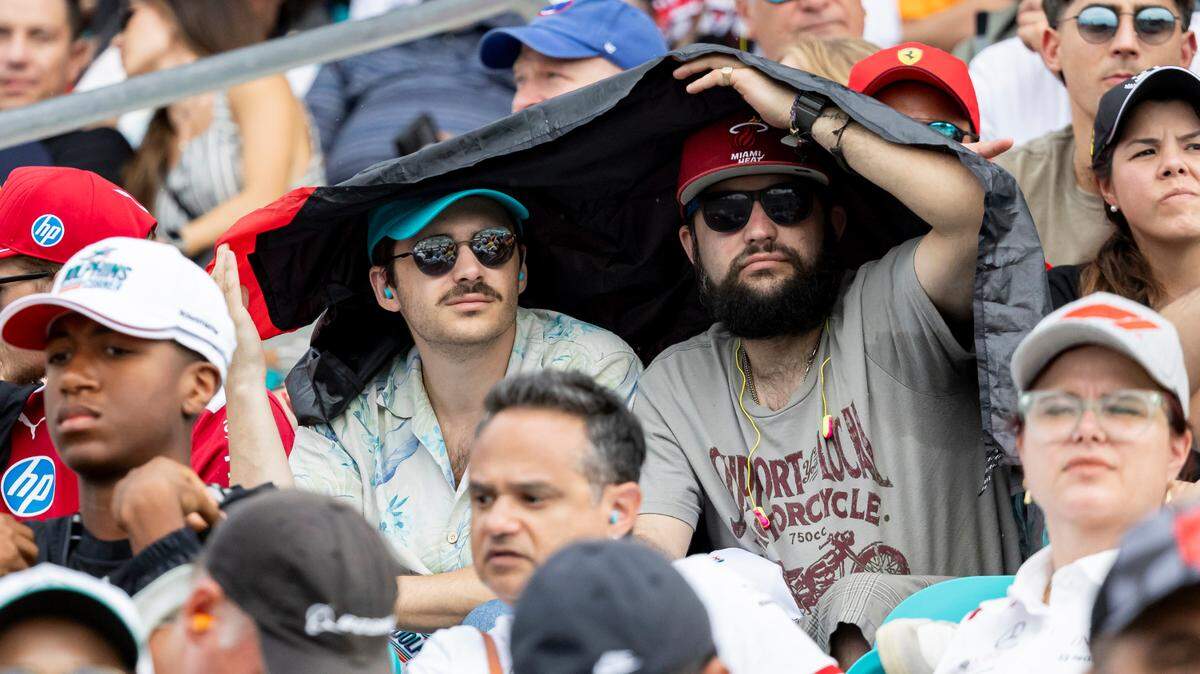
The start of Sunday’s Formula 1 Crypto.com Miami Grand Prix has been moved up three hours in hopes the 57-lap event can get in before the worst of afternoon thunderstorms hits Miami Gardens.
Lights out at Miami International Autodrome will now be 1 p.m. instead of 4 p.m.
Lightning struck the area around the track at about 7:33 a.m. Sunday. At 7:35 a.m., a shelter in place announcement came over the public address. As if to punctuate that, thunder thumped again.
The Formula 2 feature Race is scheduled for 9:25 a.m. with a fixed end of 10:30 a.m.
The McLaren Trophy America and Porsche Carrera Cup North America races have been cancelled.
READ MORE: Kimi Antonelli takes Miami Grand Prix pole for another expected run in the wet
The Federation International de l’Automobile (FIA) announced the Miami Grand Prix time change Saturday night, stating in a social media post that after talks with Formula One Management and South Florida Motorsports, the start time got moved “to ensure the least amount of disruption to the race and to ensure the maximum possible window; to complete the Grand Prix in the best conditions; and to prioritize the safety of drivers, fans, teams and staff.”
Avoiding getting drenched or the threat of lightning strikes and delays doesn’t mean a dry race. The Miami track doesn’t drain quickly. So, Sunday should still test the new rules for wet running, part of the package of adjustments to the new formula during April. According to the FIA:
- “Tire blanket temperatures for intermediate tires have been increased following driver feedback in order to improve initial grip and tire performance in wet conditions.”
- “Maximum ERS deployment will be reduced, limiting torque and improving car control in low-grip conditions.”
- “The rear light systems have been simplified, with clearer and more consistent visual cues to improve visibility and reaction time for following drivers in poor conditions.”
This story was originally published May 2, 2026 at 8:50 PM.