Don’t know much about Formula One racing? Get smart here before the Miami Gardens event
READ MORE
Miami Grand Prix weekend
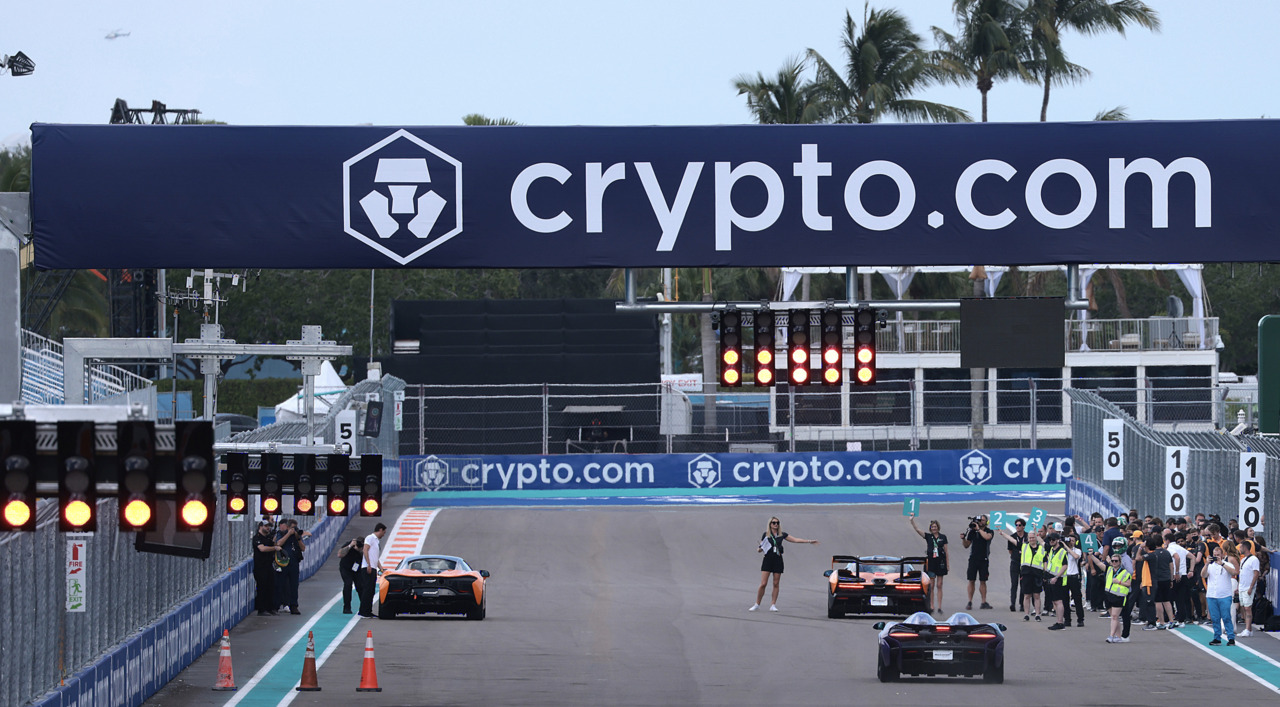
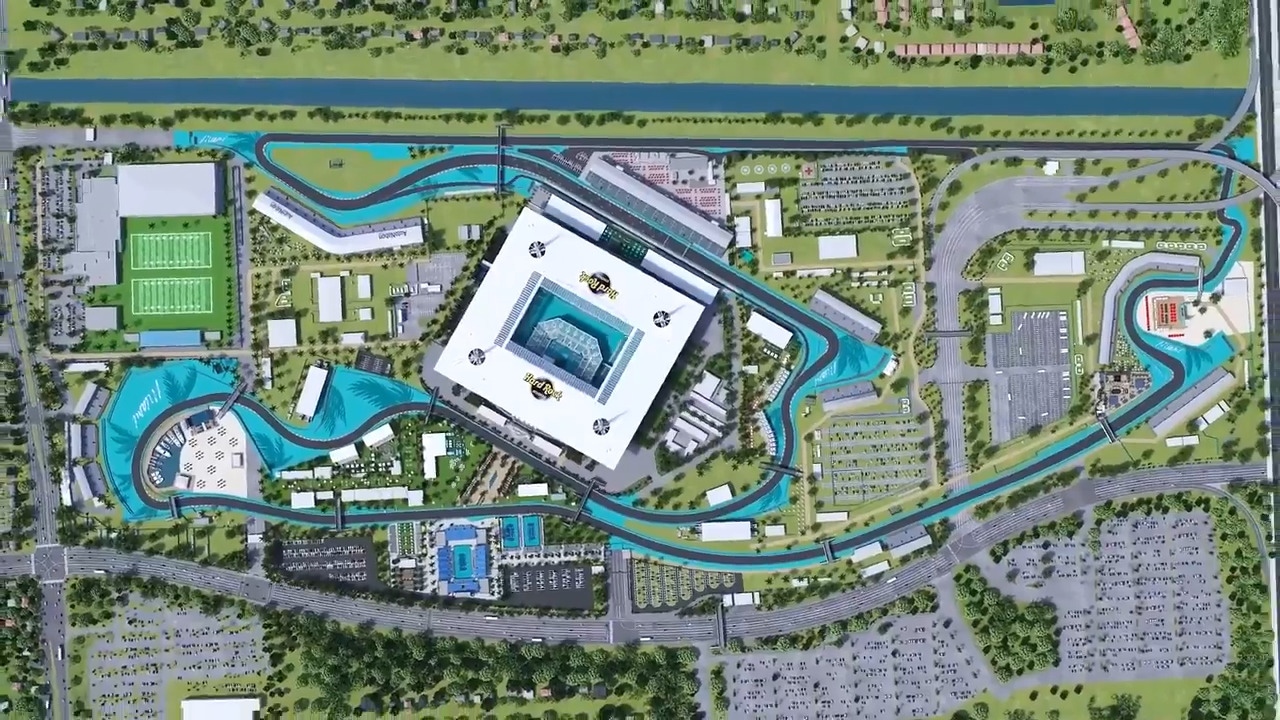
The inaugural Miami Grand Prix takes place Sunday, May 8 at the Hard Rock Stadium site in Miami Gardens.
Expand All
One friend can’t stop yammering about a “Leclerc.” Other friends argue over what’s happening with some Louis Hamilton guy, as well as Ferrari and Mercedes, which you don’t understand because they either Uber or borrow the family Toyota.
Welcome to the world of Formula One auto racing, which comes to Miami at full volume and color for Sunday’s first F1 Miami Grand Prix at Hard Rock Stadium.
Much like soccer, for decades, the worldwide affection for Formula One escaped only the United States. And, much like soccer, that’s changed dramatically over the last decade, despite the lack of a driver from the United States battling for the championship (see below).
This is for those of you who don’t know your Verstappen from your Vettel, but you want to understand what’s happening out in Miami Gardens this weekend.
These are the same guys that run the Indianapolis 500, right?
This is not the racing series that ran downtown in 1995, 2002 and 2003 at Homestead-Miami Speedway from 1996 through 2010 or will be running at the Indianapolis Motor Speedway at the end of the month. Those are called IndyCars (some were called “ChampCars” during that time, but we’re jumping over that rabbit hole).
This is Formula One’s first appearance in Miami. The Formula E series of electric-powered race cars raced downtown in 2015.
It’s easy to understand any casual fan confusion. Both Formula One and IndyCars are open wheel (no fender), rear engine race cars with front and rear aerodynamic wings.
Without going too gearhead, F1 cars are about 40 pounds lighter than IndyCars, the top end engines produce about 300 more horsepower, they have power steering and they’re much more technically sophisticated (and expensive).
Because F1 cars get through the corners at a higher speed, they’re much faster than IndyCars on road and street courses. But when IndyCars run on superspeedway ovals such as Indianapolis Motor Speedway or Texas Motor Speedway, they actually reach higher top speeds. Formula One doesn’t run on ovals of any kind.
Also, each F1 team develops its own chassis and gets its engines from Mercedes, Ferrari, Renault or Honda. In IndyCar, everybody runs the same chassis and Honda or Chevrolet engines.
As for the drivers, there are some former F1 drivers in IndyCar and some younger IndyCar drivers might wind up in F1 someday. But there’s no hopping back and forth.
What are the top Formula One teams?
There are 20 drivers, 10 two-car teams, competing in Formula One. Teammates don’t always get along, most famously Ayrton Senna and Alain Prost while owning the track for McLaren in 1988 and 1989 and Nigel Mansell and Nelson Piquet at Williams in 1986 and 1987.
Since 2010, the award for the team with the most points, the Constructors Championship, has been an exclusive prize for Mercedes and Red Bull — yes, the team is named after the energy drink sponsor, just as there was a team named after the Benetton clothing line in the 1980s and ‘90s.
Actually, that breaks down as Mercedes the last eight seasons and Red Bull from 2010-2013. But Ferrari, which won eight of 10 Constructors titles from 1999-2008, is enjoying a renaissance this season and leads the current standings.
Who are the top drivers?
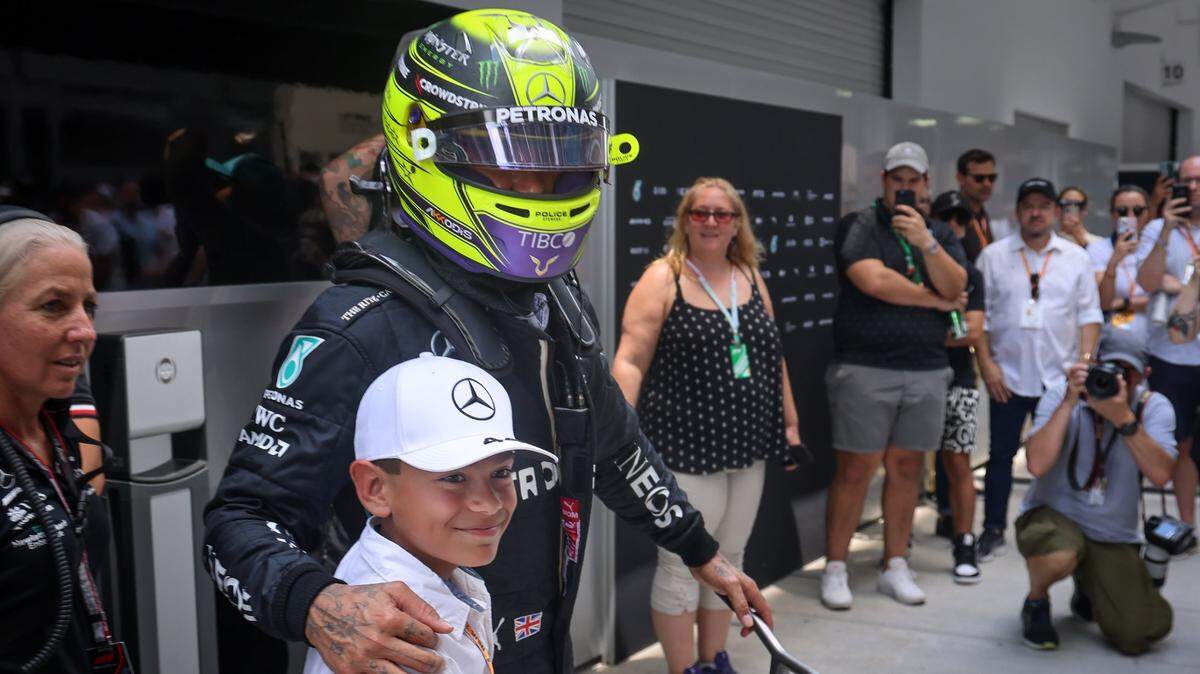
The dominant driver of this era has been Mercedes’ No. 1 man, Great Britain’s Lewis Hamilton. World champion in six of seven seasons from 2014 to 2020 and a controversial ruling late in the season finale from winning in 2021, Hamilton holds all-time F1 records for most wins, most pole positions (fastest qualifier) and shares the record for world titles with Michael Schumacher (seven).
Want to get your F1 geek pals going? Ask “Is Hamilton the greatest of all time? Or, is he a great driver benefiting from equipment superior in performance compared to his contemporaries and in reliability and safety compared to past eras?”
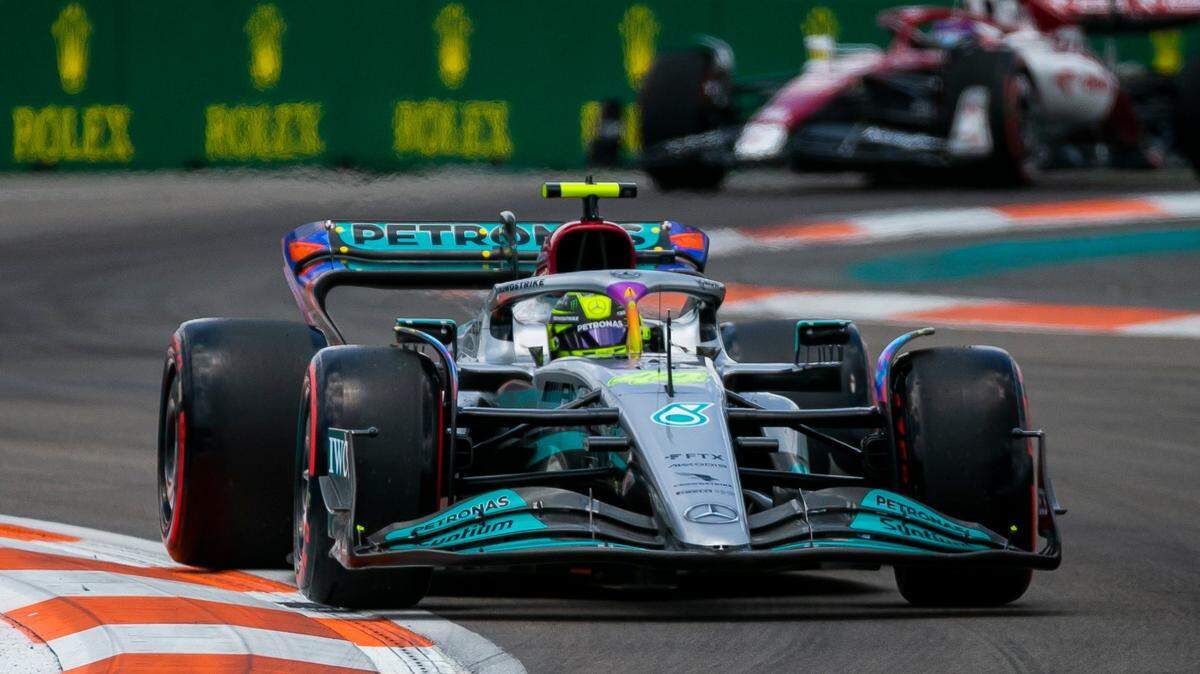
Compared to their usual preeminence, Mercedes and Hamilton, in particular, have struggled through 2022’s first four races. Dutch driver Max Verstappen, a second generation F1 driver, won the 2021 series title for Red Bull and two of the first four races this season.
Though Verstappen won the most recent race, the Emilia Romagna Grand Prix in Italy, he’s a distant second in the points this season to the winner of the other two races. That would be Monaco-born Ferrari driver Charles Leclerc. Leclerc came to Ferrari in 2019 and quickly showed that he’d be a championship contender if Ferrari could catch up to Red Bull and Mercedes. It has.
Also, keep an eye on Red Bull’s No. 2 driver, Sergio Perez from Mexico, and Ferrari’s No. 2 driver, Spain’s Carlos Sainz; Mercedes’ George Russell, actually ahead of fellow Briton Hamilton in the points; and McLaren’s Lando Norris, who has improved his finishing position each race this year and finished third in the last race.
Past world champions still driving in the series besides Hamilton and Verstappen: German Sebastian Vettel for Aston Martin and Spain’s Fernando Alonso for Alpine.
How many U.S. drivers are running F1?
Zero. The last driver to race under the stars and stripes was current IndyCar driver Alexander Rossi in 2015, the year before his shocking win in the 100th Indianapolis 500.
Though 1978 F1 world champion Mario Andretti was born in Italy and didn’t touch U.S. soil until he was 15, he’s a U.S. citizen and raced internationally as an American. Andretti’s world title bore eerie similarities to Phil Hill’s 1961 championship with Ferrari. In each case, the only driver who could catch the U.S. driver in the standings was his teammate (Ronnie Peterson for Andretti, Wolfgang von Trips for Hill) and that teammate died in a crash at the Monza season finale.
Dan Gurney didn’t win a world title, but won four races, including a 1967 race in the Eagle chassis he designed. It’s the last F1 win for an American-made car.
Why has U.S. interest in F1 boomed?
Inside coverage and reality television have trumped predictable racing.
A racing series that once held cameras and the media at arms length started showing the Cool Down Room, where the race’s top three finishers grab a drink, yak about the race, and sometimes fight about it. Like NASCAR and IndyCar, broadcasts regularly include radio communication between drivers and their pit crews, giving a peek at raw emotions
But what really goosed things in this Real Housewives era was the 2019 premiere of Netflix’s “Formula One: Drive to Survive.” The behind-the-scenes look at Formula One drivers, mechanics and team managers reacting to the intense pressure to shave another half second off a lap, get a few more points toward the championship allowed U.S. viewers to bond with F1’s people, never mind the lack of U.S. drivers.
Movies or TV shows that’ll put you in the F1 mood
Obviously, “Drive to Survive.”
But, also, if you’re looking for a taste of history, “Williams,” a 2017 documentary on the man (Frank Williams) and family behind the team that scraped through the 1970s, rose to power in the 1980s and ‘90s, then faded; “Senna,” a documentary on the breathtakingly fast Brazilian driver whose 1994 death sent his nation into three official days of mourning; and “Rush,” a movie on the rivalry between 1975, 1977 and 1984 world champion Nikki Lauda and 1976 world champion James Hunt.
The crowd jewel of Formula One racing movies remains “Grand Prix,” the 1966 movie directed by John Frankenheimer with an all-star international cast making the most of a stiff script. But the movie’s true star was dazzling photography that impressed even actual drivers, some of whom appear as themselves, and was so electric that it won over Enzo Ferrari. Ferrari granted Frankenheimer unprecedented access to the Ferrari factory and equipment.
This story was originally published May 5, 2022 at 1:28 PM.