Too many whites remain willfully blind to America’s racist past. Same old same old | Opinion
READ MORE
They choose to see no evil
The push to eliminate critical race theory is only the latest attempt to wipe the tortured and triumphant history of Blacks in America. Academics and historians push back.
Expand All
There are some stories that can’t be told. This is one of them:
One day in the summer of 1935, a homeless black tenant farmer named Rubin Stacy got thirsty, so he knocked on the door of a white woman named Marion Hill Jones and asked for a glass of water. Witnesses said that at the mere sight of him, she panicked.
Jones claimed Stacy attacked her with a pen knife, which was enough to get him arrested. However, a mob of white people was not satisfied with that. They snatched him from police custody and strung him up to a tree in Fort Lauderdale, near what is now the intersection of Davie Boulevard and Southwest 31st Avenue. For good measure, they shot him full of holes. When it was all done, the crowd — many of them children — cut off pieces of his clothing as souvenirs and posed for pictures with his corpse. No one was ever charged.
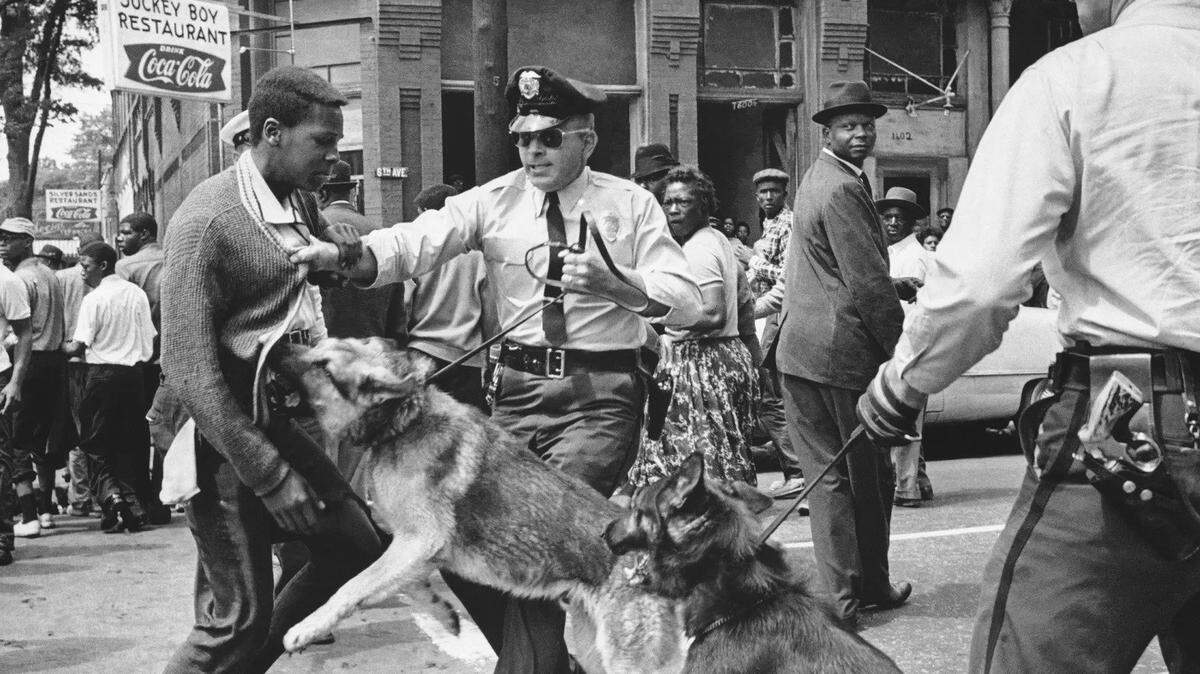
As lynching stories go, it’s a rather routine one, not especially grisly, nor particularly cruel — just a random tale from the annals of African-American history. But it has also become one of many stories that cannot be told. Not these days and not in many school districts, at least. According to the Brookings Institution, as of November of last year, 29 states had either enacted — or were considering — legislation to restrict schools from telling stories like this, essentially to prohibit the teaching of African-American history.
Those states include Ohio (from which a thousand Black people once fled to Canada after rioting white mobs destroyed their community); Mississippi, (where Black people were once barred by law from renting or leasing farmland); Oklahoma, (where a thriving Black neighborhood was firebombed from the air by white thugs); Michigan, (where 800 state troops were once required to protect a handful of African-American families as they moved into a white neighborhood); Alabama, (where white supremacists murdered four little black girls in church one Sunday morning in 1963); Tennessee, (where the Ku Klux Klan was born); and Florida, (where Rubin Stacy was butchered after requesting a drink of water).
Why now?
In America, it seems, there are some stories we don’t allow to be told, some memories we would prefer not to maintain.
The reasoning, as stated by public officials from governors down to school board members, is that these stories are apt to make students — the adjective “white” is never stated but always understood — feel bad. Florida’s Gov. Ron DeSantis, for instance, claimed he was standing against “state-sanctioned racism” in promulgating a new anti-Black history law. It bans teaching that might make a student “feel discomfort, guilt, anguish or any other form of psychological distress on account of his or her race, color, sex or national origin.”
Dr. Carol Anderson, a professor of African-American studies at Emory University, says it’s no coincidence that this sudden flurry of restrictive laws comes so closely after the so-called “racial reckoning” prompted by the murder of George Floyd, the show of force by African-American voters that helped send two Georgia Democrats to the Senate while evicting Donald Trump from the White House and the adoption into school curricula of the “1619 Project,” the Pulitzer Prize-winning New York Times series that many observers thought blasphemous because it centralized slavery in the founding of America.
What we are seeing in response, she says, is a “land, sea and air” campaign with the aim of “putting Black folks back in their place.” In her view, one leg of that campaign is the recent wave of voter-suppression laws, while another is the lionization of people like Kyle Rittenhouse and Mark and Patricia McCloskey (who pointed guns at Black Lives Matter protesters in St. Louis) as some kind of Second Amendment avengers. The last leg, she says, is to silence African-American history, with all its insistent claims upon American conscience.
Lack of empathy
“I call it the Rick Santorum School of History,” she says, referring to the former senator who was fired from CNN last year after his instantly infamous claim that white Christians came to America and built a nation where there was “nothing.” “The vast majority of Americans,” notes Anderson, “do not go to college. So that the history that they get is the history that they get in K through 12.
“And when that history erases Black folk, erases slavery, erases Jim Crow, erases lynching, erases redlining, then you have the vast bulk of Americans seeing inequality and believing that it’s not structural.”
Or, perhaps more to the point, not worthy of empathy. In which case, governors like DeSantis are just giving their people what they want. After all, this spate of laws is not without context. Many white Americans have already expressed their contempt for Black history with visceral clarity and no need of legislative niceties. Consider a few headlines from recent years:
In New York City, a statue honoring George Floyd is splashed with paint.
In Cairo, Georgia, a sign commemorating the birthplace of baseball legend Jackie Robinson is shot up.
In Baton Rouge, a Black history museum is ransacked; a fountain smashed, benches broken, artifacts damaged.
Near Money, Mississippi, a memorial to Emmett Till, the 14-year-old murder victim, is so often shot full of holes that it had to be replaced with a bulletproof sign weighing 500 pounds.
In Portland, Oregon, a statue of York, an enslaved man who was part of the Lewis and Clark expedition of 1804 to 1806 is first spray-painted and then, once restored, torn from its pedestal.
In Santa Cruz, Sacramento, Santa Fe, Ypsilanti, Rochester, Denver and New York City, vandals steal or deface signs and murals that declare “Black Lives Matter.”
Old hatred, new manifestations
So what is new here is not the contempt, but the expression thereof. Governors and legislators are doing the same work as sledgehammers and paint. “You know this notion of, ‘Speak truth to power?’ ” says Dr. Donald Spivey, professor of history at the University of Miami. “I think these folks really believe in, ‘Speak power to truth.’ The power overwhelms truth, the power ‘trumps’ truth.”
It is a starkly cogent observation. Whether by the physical violence of vandalism and disruption or the more orderly violence of legal injunction, what we are seeing is power imposing its will on truth, power demanding that truth be still.
So you get stories that are not allowed to be told.
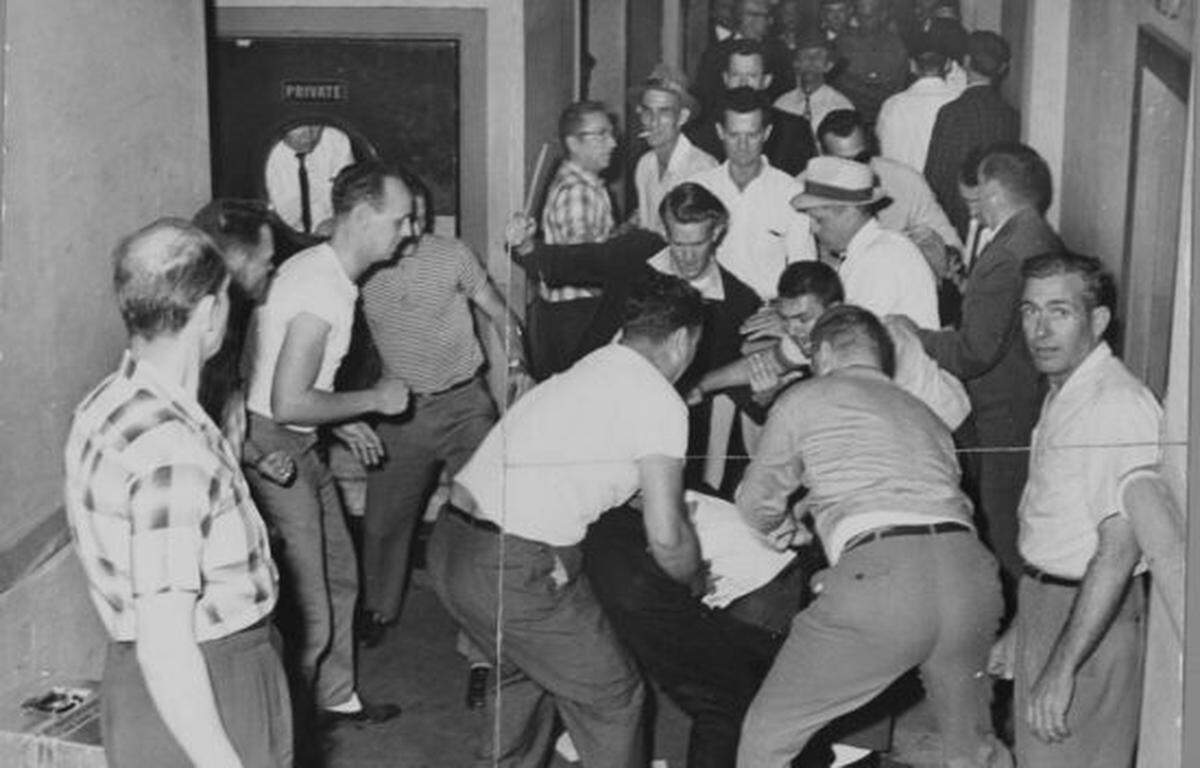
In 1898, when a biracial government took office in Wilmington, North Carolina, a white mob burned an African-American newspaper and stormed City Hall. By some estimates, as many as 250 people were killed, and the mob forced the Black and white officials, duly elected just days before, to resign. A former Confederate officer was then installed as the new mayor. President McKinley was asked to send help, but refused, and the elected government was never restored. Over 2,000 African Americans ran for their lives.
Here is the problem with that story, the thing everybody knows, but nobody says. You cannot tell it without risk of making white folks feel bad — at least those that are inclined to feel guilty or ashamed or personally implicated when confronted with the historical misdeeds of other white folks.
And really, what are we supposed to do with that fact?
For as much as Black history contains epic examples of moral courage and conscience from white men and women like William Lloyd Garrison, Elijah Parish Lovejoy, Viola Liuzzo, James Reeb and James Zwerg, most of the white people in the story will inevitably not be heroes. They will be either villains or people who were complicit in a villainous system by their silence.
Let’s be real. Olaudah Equiano did not place himself up for auction in Virginia. Emmett Till did not knock out his own eye and heave his body into the Tallahatchie River. Clyde Ross did not redline himself into a predatory mortgage on a home in a Chicago ghetto. Rosa Parks did not kick herself off that Montgomery bus.
White people did those things. That is an unalterable truth, but that makes it no less easy for some white people to bear. To put it plainly, it embarrasses them. As Harold McCray, a Black father from Miami, puts it, “If you’ve done somebody wrong so much, you just want that person to get over it.” Because every second they spend not being over it is a second that pinches your conscience. Small wonder that willful ignorance becomes an attractive alternative.
‘Say what?!’
Anderson recalls once teaching about how the United States warned its allies in World War I to be wary of Black soldiers, because they would rape and brutalize white women if given half a chance. “And I had a young white man in my class who just hollered up, ‘Where are you gettin’ this stuff?’
“They don’t want American history,” she says. “What they want is a sanitized, whitewashed American narrative of singular American greatness, without having to really interrogate that it has been folks fighting to make [real] the aspirational values of America: ‘We hold these truths to be self-evident.’ ”
Yolande McCray, a Black mother of three and the wife of Harold, says having their kids learn that unsanitized history likely puts white parents in “an uncomfortable position.” She imagines a white mother calling the school and saying, “Listen. I’m getting these conversations and I don’t normally have these conversations in my house. Now the school system has put stuff in place where now I have to have this conversation, and I don’t like it.”
“Yeah,” retorts Harold, “but the thing is, that conversation needs to be had.”
“By denying them that true history,” says Dr. Michael K. Honey, who teaches at the University of Washington Tacoma, “what they’re doing is setting them up to go out in the real world, unaware, ignorant of a lot of basic things that a lot of other people know. That’s devastating to democracy. And, secondly, if they go on to college, they will be shocked that they didn’t know these things. That’s the biggest comment I get from students. They say, ‘How come I didn’t know this before?’ ”
And, of course, the answer is simple. The truth hurts. So, says Spivey, “They don’t want you to tell the truth. They want to rally around the old lies of the past. All I heard about George Washington, as a kid [who] grew up in the ’50s, was about him and the damn cherry tree. Didn’t learn anything about him being a slave owner. These are the kinds of issues that we need to come clean with in America. Lay it out there. Deal with it.”
Sadly, there is less chance of that now than there has been in many years. Consider that in September, a school board in Kentucky banned “Ruby Bridges Goes To School,” a book Bridges wrote for second-graders about how she integrated New Orleans schools in 1960. In October, a teacher in Texas received a formal reprimand for having in her classroom a copy of “This Book is Anti-Racist” by Tiffany Jewell and Aurelia Durand after a parent complained that the book violated her “morals and faith.” An administrator in the same school district then admonished teachers to teach “opposing” views — even on the Holocaust.
‘Dispassionate? Nah!’
Last month, newly elected Virginia Gov. Glenn Youngkin, who ran on a promise to curb the teaching of African-American history, instituted a tip line for parents to report teachers using “divisive practices” in the classroom. Also last month: In an interview with Jim DeFede on CBS 4, Florida state lawmaker Ileana Garcia, a supporter of Gov. DeSantis’ Black history ban, said there “isn’t a division” in this country and that it’s time to “move on” from the notion that Black people are discriminated against.
It seems clear that forces of anti-historical ignorance are ascendant and feeling emboldened these days. One imagines that some teachers, by contrast, must feel shell shocked and besieged.
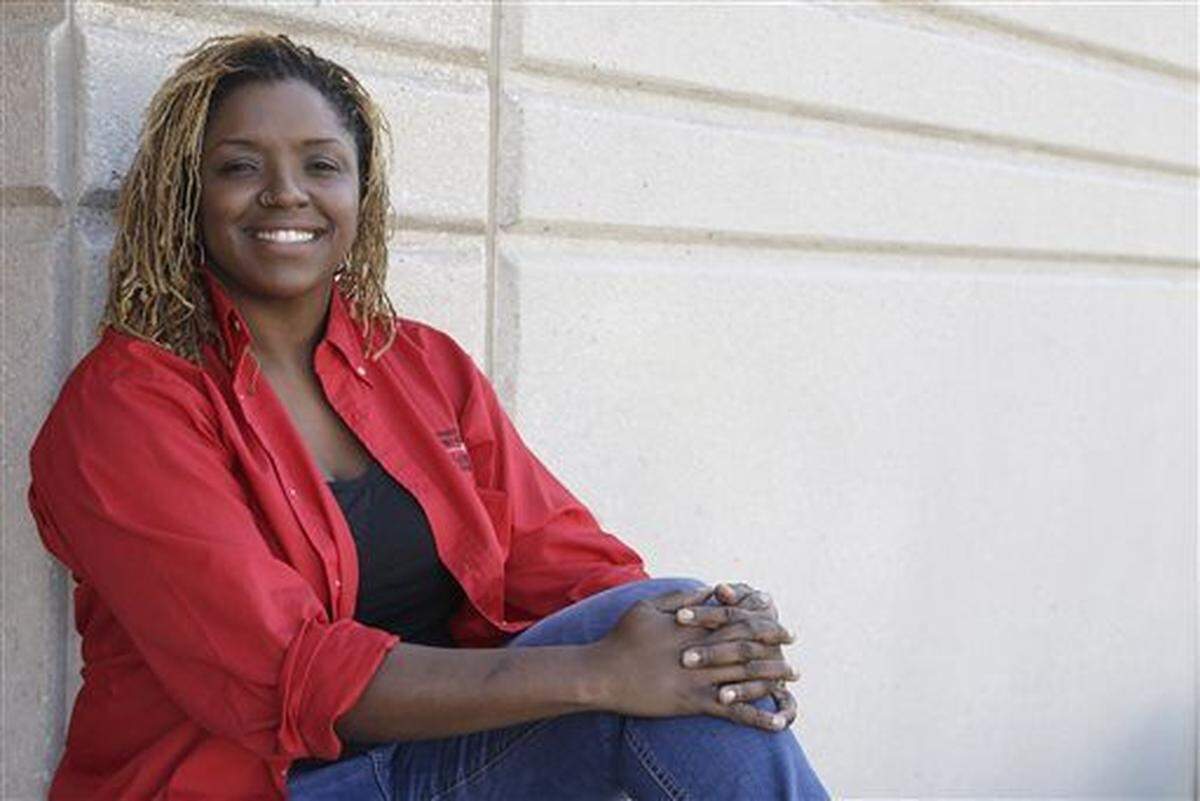
Dr. Roni Dean-Burren teaches teachers for a living at the University of Houston. She made headlines seven years ago when she shamed the McGraw-Hill publishing company into changing history texts that referred to enslaved Africans as “immigrants” and “workers.” She says, “I tell teachers this all the time: teaching is a political act. Every time you stand up in front of kids and you make a choice about what to teach, what book you’re using, the angle, it’s a political act. Sometimes you hear teachers [say], ‘I don’t want to get involved.’ You [already] are, because what you tell kids, what you give kids, it informs the world.”
Says Spivey: “I start off by telling students right away that I’m not objective. I mean, objectivity is a nice idea. I say, I’m trying to be fair, to be accurate. But to be objective? Dispassionate? How am I going to talk about slavery and be dispassionate? How am I going to talk about rape, murder ... and be dispassionate? No, I’m going to be as passionate as I possibly can be.”
Of course, he, like Anderson and Honey, teaches at a university, which means he is relatively insulated from the pressures brought to bear by white parents and governors. High school teachers, on the other hand, are right on the firing line. Somehow, they are expected to teach a hard and sobering tale without being “divisive,” which is apparently a special burden borne by African-American history but not by, say, the history of World War I or the Great Depression. Black history, people say, is supposed to “bring us together.” Yet no one ever explains how this is supposed to work.
How, exactly, are you supposed to tell this story in a way that does not draw a bright, righteous line between the buyers and the bought, the rapist and the raped, the lyncher and the lynched ? And why would you even try? Would that not be an act of educational malpractice and moral imbecility? That teachers are asked to do so anyway reflects three malign forces:
The first is the presence of white fragility (“The smallest amount of racial stress,” writes Robin DiAngelo in her book, “White Fragility,” “is intolerable — the mere suggestion that being white has meaning often triggers a range of defensive responses.”).
The second is the need for white innocence (“... The need,” writes Ta-Nehisi Coates in his book “We Were Eight Years In Power” “to believe that whatever might befall the country, white America is ultimately blameless.”).
The third is the insistence upon white comfort (“… the arrangement,” writes Michael Eric Dyson in his book “Long Time Coming” “of the social order for the convenience of white folk”).
Stories silenced
So in deference to fragility, in defense of innocence and for the preservation of comfort, there are stories — human stories, tragic stories, triumph stories, stories of resilience and durability, humanity and faith — that now, officially, cannot be told.
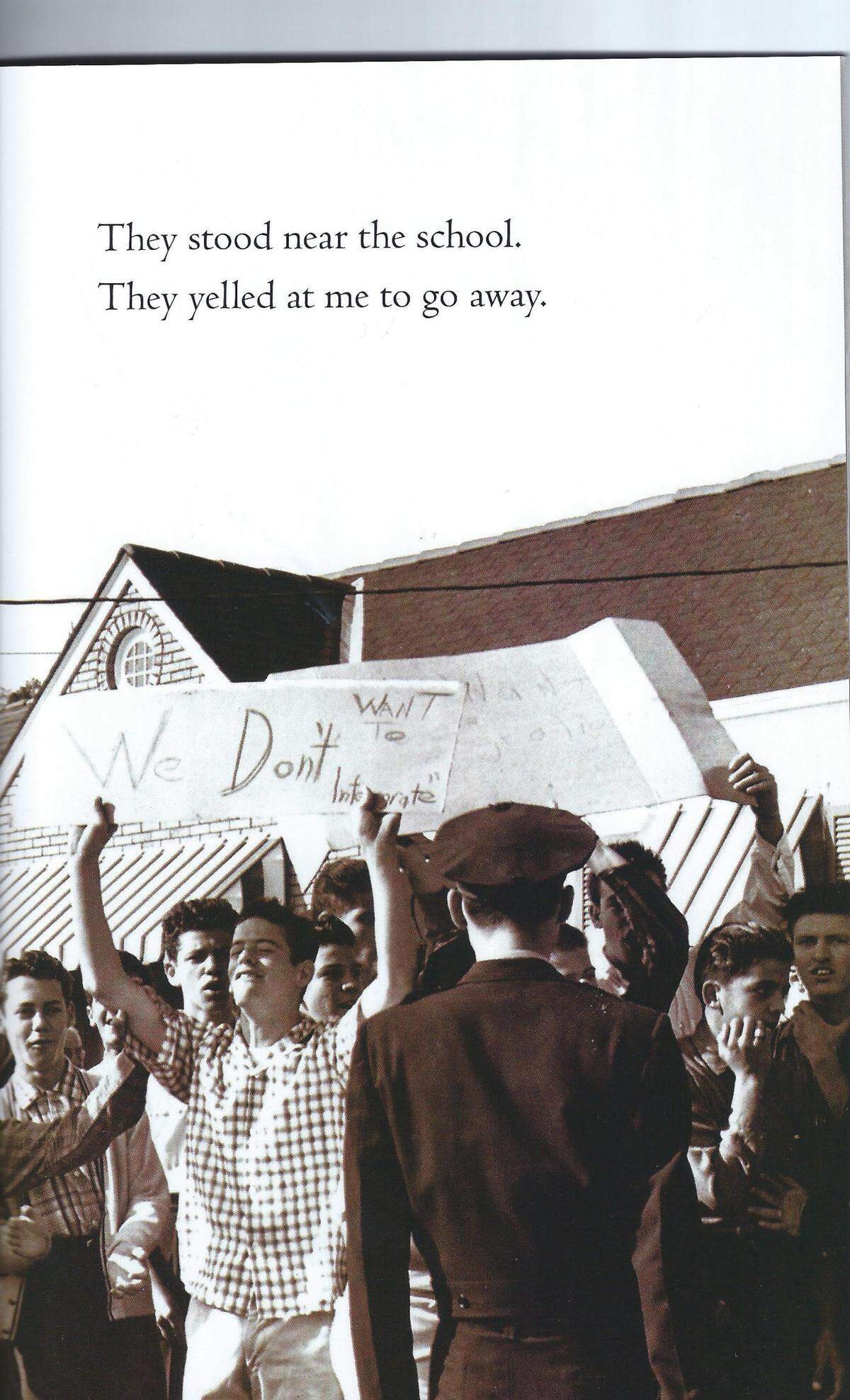
In 1960, when she was 6 years old, four federal marshals escorted Ruby Bridges to William Frantz Elementary School in New Orleans, where she would be the first African-American child to attend. To get there, they walked through a howling gauntlet of rioting white people. They yelled insults and racial slurs. Some threatened to lynch her. Others carried aloft a small casket with a little black doll in it. And they pulled their children out of school.
Ruby’s teacher was Barbara Henry, a young white woman who was the only one willing to teach her. Henry, who hailed from Boston, was ostracized by her colleagues, even as Ruby continued to daily face the angry crowds. Every school day for a year, they were alone in that classroom with a federal marshal standing guard outside. “I was the gym teacher, the music teacher,” Henry told the Boston Globe in 2014. “We sang ‘Davy Crockett.’ We’d do jumping jacks and pretend jumping rope.” The following year, eight more African-American kids enrolled in that school.
And what happens if we do tell that story? Are white children diminished beyond repair? Or do they respond like Ryan Price, a then-20-year-old college student who, after seeing a documentary on the murder of Emmett Till in 2011, told a reporter it left him so embarrassed he wanted to take off his white skin. “Of course,” he added, “you can’t change your skin color, but you can be an ally to those who are marginalized in society, and that’s something it really spurs me to do.”
There are those for whom that might be an even more frightening outcome.
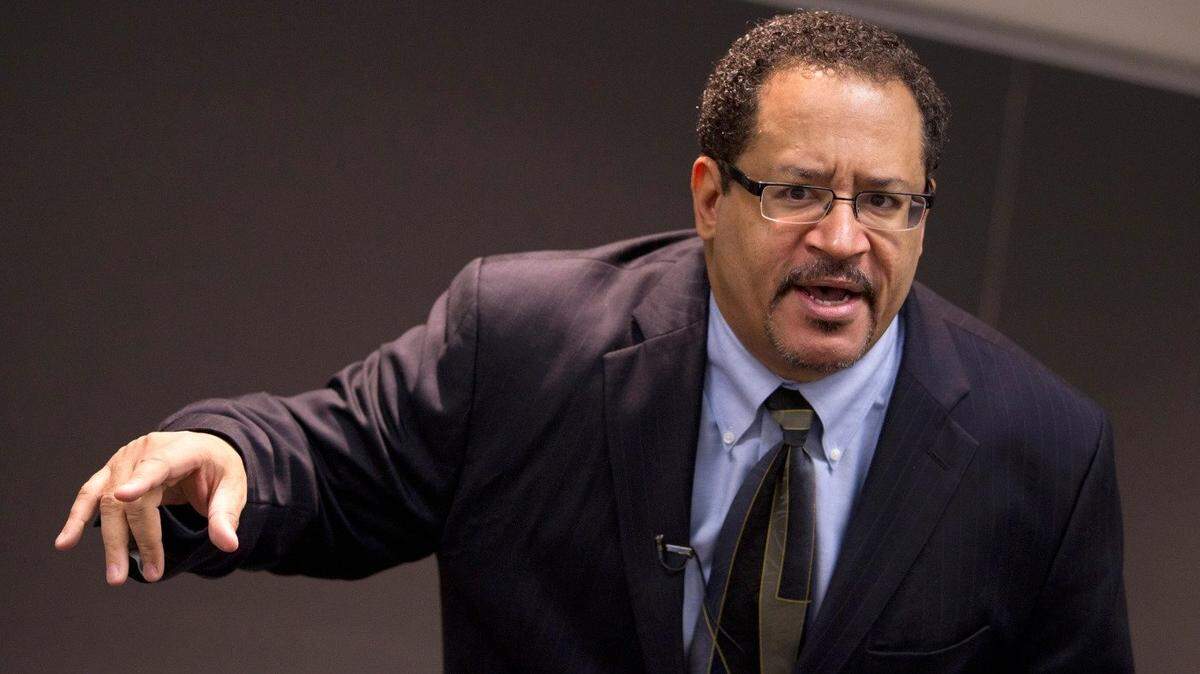
Dyson, a best-selling author and professor at Vanderbilt University, says, “There’s no empirical evidence to substantiate the claim that young white kids will suffer, while we do have empirical proof of the suffering, already, of Black, brown and indigenous kids. We know, for instance, that especially indigenous and Black kids are kicked out of school earlier and for less flagrant offenses than white kids. When you’re 5 and 6 and 7 and 8, and you’re being routinely kicked out of school, expelled, that is a horrible set-up for educational failure. ... That’s not theoretical, that’s provable, that’s empirical.”
Dean-Burren concurs. “Nobody’s having the conversation of what it feels like for Black children to sit in a classroom and never hear their stories. What about that? What about what my kid feels when they’re going through American history, and someone just washes over the enslavement of their ancestors like it was nothing or talks about the Civil War just being about states’ rights and not about the owning of human beings? What does my kid feel? What do my nieces and nephews feel when they never see themselves in books and in stories?
“Nobody cares about their feelings,” she says. “God forbid, a white child be hurt. God forbid, a white child feel bad.”
“And here’s the paradox,” Dyson says about white Americans. “On the one hand, they’re obsessed with history. Can’t get enough of the founding fathers, the founding mothers, the founding brothers, the founding sisters, what they perceive to reinforce the greatness of their culture. But when history is about enslavement, when history is about Jim Crow, when history is about white water fountains and Black water fountains and Emmett Till, then all of a sudden, ‘Can’t you people get over it?’ They don’t want to get over history until it’s the history that exposes the ugliness of their particular practices and traditions.”
CRT misunderstood
Some white parents, of course, will say they are just trying to protect their children from the depredations of “critical race theory.” Until last year, it was a little-known academic framework taught at the college level. Now, at least to hear Tucker Carlson tell it, it’s the end of the world as we know it. “I was a teacher in the classroom 11 years,” says Dean-Burren, “had a master’s degree and did not encounter critical race theory until I took a doctoral level research class.
“Never once has that come across my table as a teacher. It’s a buzzword. It’s a way for people to rile up other people.”
Dyson puts it more succinctly. “Most of these people don’t know the difference between CRT and OPP. They ain’t got no idea.”
Which doesn’t stop them from opposing it. A USA Today/Ipsos poll in September found that just 37% of white parents support the teaching of critical race theory in their schools as opposed to 59% of Hispanics, 71% of Asians and a whopping 83% of African Americans. And if, again, we may safely assume most of those folks have little idea what critical race theory actually is, those numbers do tell us this much: People of color want their stories told, and white people, by and large, do not.
“It seems like it’s very scary times,” says Justin Cardoza, an African-American teacher and father of two from Miami Shores. “I grew up at a time where I don’t think African-American history was actively taught outside of Black History Month. I don’t believe there’s ever been efforts to really educate on that level, and it’s just really scary how comfortable people are to say that it’s not going to be taught now.”
“African-American history is as important as American history itself,” says Denise Conner, a single mother of four in Los Angeles, “and I feel that we need to learn both sides. We need to learn all different cultures, to be honest with you, but especially for our children, our African-American students.”
“I am not happy about the fact that they’re trying to stop knowledge,” says LaTanya Headley, a mother of two in Miami, “because the more you know about a culture, [the more] you know how to work with people, approach a situation and just have a better understanding of what’s going on in that person’s life.”
Nor are the benefits of teaching African-American history simply abstract. A small, but tantalizing body of research suggests that it conveys real and tangible benefits, particularly for African-American students.
Broader benefits
For example according to a 2016 study conducted by the Stanford University Graduate School of Education on a pilot program of high school ethnic studies classes in San Francisco, GPAs go up, attendance improves, graduation rates rise and dropout rates fall. Nor were the benefits of taking ethnic studies classes limited to those classes; test scores also climbed in STEM subjects like math and science. A 2018 survey found similar results at the college level.
Mercedes Muñoz, a Black mother in Portland, Oregon, says understanding African-American history has given her daughter a framework through which to process the world around her, something her mom was thankful for when video of George Floyd’s brutal murder became inescapable. “Had we not had some of those deeper and more complex conversations, what would her mental health and state of being be like? I can’t afford for her to have that level of denial because her life is on the line.”
“I do believe children need to be taught this,” says Cristina Rivera, a Puerto Rican mother in Miami who has four children, including a Black stepson. “I think the earlier, the better. They need to hear everything, the worst parts of it, because I think it’s important for them to know how we got to where we are now. I think that that is the first step in changing future generations. I’m sure kids are going to feel really uncomfortable, and it’s going to make them squirm.
“But you know, African Americans have been dealing with this since they got here. If it makes you feel uncomfortable, as a white person or as a Hispanic person, imagine how an African American felt.”
Or don’t imagine. Ultimately, after all, that’s the crux of all this, the reason the laws have been passed, the tip line was established, the signs were shot up and the stories can’t be told. Some of us don’t want to imagine what African Americans felt — and feel. Some of us refuse.
“It’s really just a shirking of responsibility,” says Dean-Burren. “ Because you know what? As a Black parent, I’ve had to talk about race since my child could talk and walk and go to school. Sorry that it’s going to make your child come home and feel something, but that’s sort of the price you pay for being on the planet.”
Martin Luther King famously spoke of how the arc of the moral universe is long, “but it bends toward justice.” If so, then it also bends toward truth because you can’t have one without the other.
The stories that cannot be told do not disappear. No, as they’ve always done, they sit in communal memory, lie in wait to be discovered. Whether that discovery will be part of an ongoing process that, over the years, deepens and expands a child’s understanding of her country, or whether it will one day explode that understanding like a bomb — “Why didn’t I know that?” — is in the hands of the mothers, fathers and governors now busily working to defend and maintain that child’s ignorance and their own comfort.
Professor Spivey is right. They are speaking power to truth.
But in the end, truth always has the final word.
This story was originally published February 2, 2022 at 6:00 AM.