
Are you scared to vote by mail? Florida’s safeguards tell a different story | Opinion
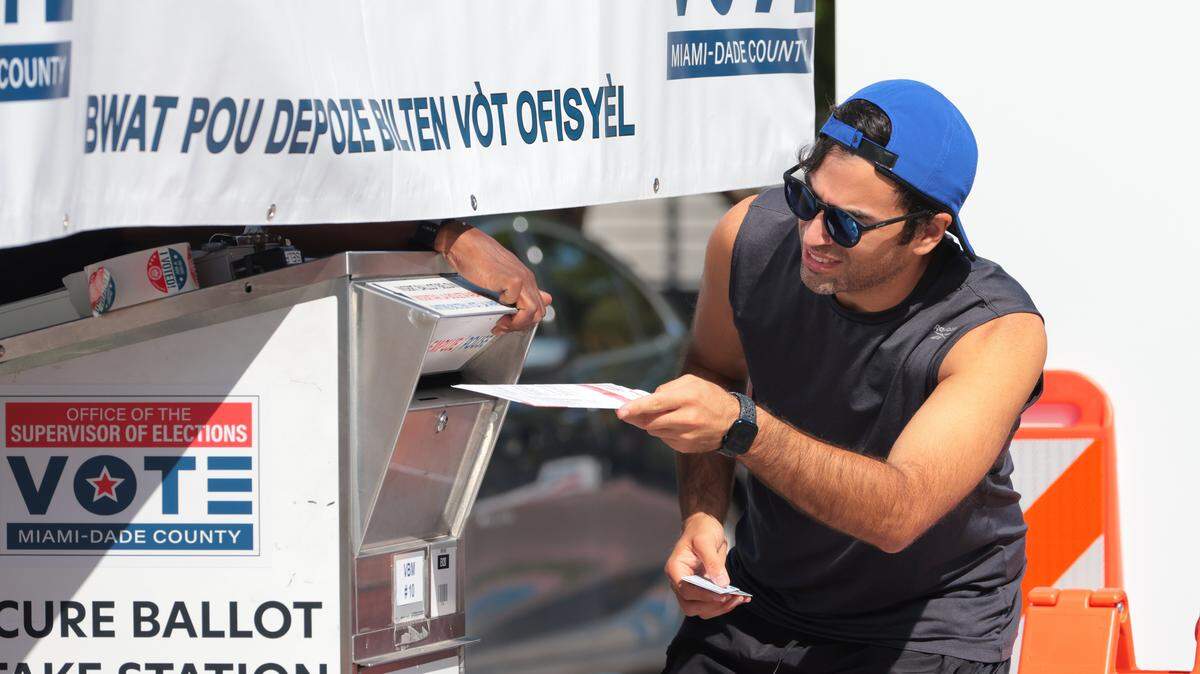
As another election approaches, so do familiar attacks on the vote-by-mail system. The claims are usually the same — uncounted ballots, votes cast in someone else’s name, etc. — and they’re almost entirely unfounded.
Politicians — chiefly President Donald Trump — have sought to cast doubt on this important method of voter access. But Florida has spent years demonstrating that vote-by-mail is both accessible and secure.
Now the November midterms are nearly upon us, with the primary election on Aug. 18. Will there be a blue wave? Or will Republicans, especially in GOP-dominated Florida, prevail? With so much at stake, voters need to feel confident in the election system — and that includes using mail ballots to cast votes.
For many Floridians, voting by mail isn’t political — it’s practical. In the 2024 presidential election, over 3 million Floridians voted by mail, including more than 290,000 in Miami-Dade County. It’s a way to participate in elections without having to go to the polls. That’s especially helpful for voters with limited mobility or people too busy to get to the polls when they are open.
Vote-by-mail’s expansion of ballot access hasn’t come at the expense of election integrity in Florida. The state verifies voter identities, protects ballot security and flags irregularities before ballots are counted. And it was Gov. Ron DeSantis who said, after the 2020 presidential election, that Florida was the gold standard in election security.
Other initiatives have included a requirement that voters make a new request for vote-by-mail ballots every general election cycle rather than every four years. The Legislature also created the Office of Election Crimes and Security to investigate violations of election law — though actual fraud cases remain exceedingly rare. This year, Florida Republicans also passed an elections bill requiring proof of citizenship that will take effect next year.
Earlier this year, the city of Coral Gables held an election on eight referendums, and the only way to case a ballot was vote-by-mail. At the time, Miami-Dade County Supervisor of Elections Alina Garcia said, “Voting by mail in Miami-Dade and throughout Florida is safe and secure. In fact, we are considered a national model for integrity and success.”
Even in the rare instances when voter fraud does happen, it generally doesn’t have a meaningful impact on the outcome of an election. The Brookings Institution, a nonpartisan think tank, found on average, mail voting has extremely low levels of fraud — about four out of every 10 million mail-in ballots cast resulted in fraud.
Yet debate over vote-by-mail continues to be driven by unfounded claims that don’t survive scrutiny of the truth — from its loudest critics. Trump has taken aim at vote-by-mail, calling it corrupt and pushing federal legislation to restrict it — despite having used it himself in 2020 and again this year in a special election in Palm Beach County. If the practice is trustworthy enough for the president to use, it’s hard to see why it’s not safe enough for the average voter.
There are some basic actions you can take as an individual voter to make sure you can cast your ballot without any issue. If you plan to vote by mail in the upcoming election, make a voting plan. Starting July 9, mail ballots will be sent out for the Aug. 18 primary, which is open to registered Republicans and Democrats. The deadline to request one is Aug. 6 at 5 p.m.
Early, in-person voting will start Aug. 3 and run through Aug. 16, and the last day to register to vote in the August election is July 20.
For the general election on Nov. 3, the mail vote request deadline is Oct. 22 by 5 p.m.
Florida has shown that voter accessibility through vote-by-mail doesn’t compromise election integrity. They can — and should — coexist. Vote by mail remains one of the state’s most effective tools for ensuring eligible voters can participate in the democratic process. Rather than questioning a system that has consistently delivered secure elections, Floridians should continue to use it with confidence.
BEHIND THE STORY
MOREWhat's an editorial?
Editorials are opinion pieces that reflect the views of the Miami Herald Editorial Board, a group of opinion journalists that operates separately from the Miami Herald newsroom. Miami Herald Editorial Board members are: opinion editor Amy Driscoll and editorial writers Isadora Rangel and Mary Anna Mancuso. Read more by clicking the arrow in the upper right.
What's the difference between an op-ed and a column?
How does the Miami Herald Editorial Board decide what to write about?
The Editorial Board, made up of experienced opinion journalists, primarily addresses local and state issues that affect South Florida residents. Each board member has an area of focus, such as education, COVID or local government policy. Board members meet daily and bring up an array of topics for discussion. Once a topic is fully discussed, board members will further report the issue, interviewing stakeholders and others involved and affected, so that the board can present the most informed opinion possible. We strive to provide our community with thought leadership that advocates for policies and priorities that strengthen our communities. Our editorials promote social justice, fairness in economic, educational and social opportunities and an end to systemic racism and inequality. The Editorial Board is separate from the reporters and editors of the Miami Herald newsroom.
How can I contribute to the Miami Herald Opinion section?
The Editorial Board accepts op-ed submissions of 650-700 words from community members who want to argue a specific viewpoint or idea that is relevant to our area. You can email an op-ed submission to oped@miamiherald.com. We also accept 150-word letters to the editor from readers who want to offer their points of view on current issues. For more information on how to submit a letter, go here.