
Didn’t Republicans say FL elections were safe? Voter ‘security’ bill is malarkey | Opinion
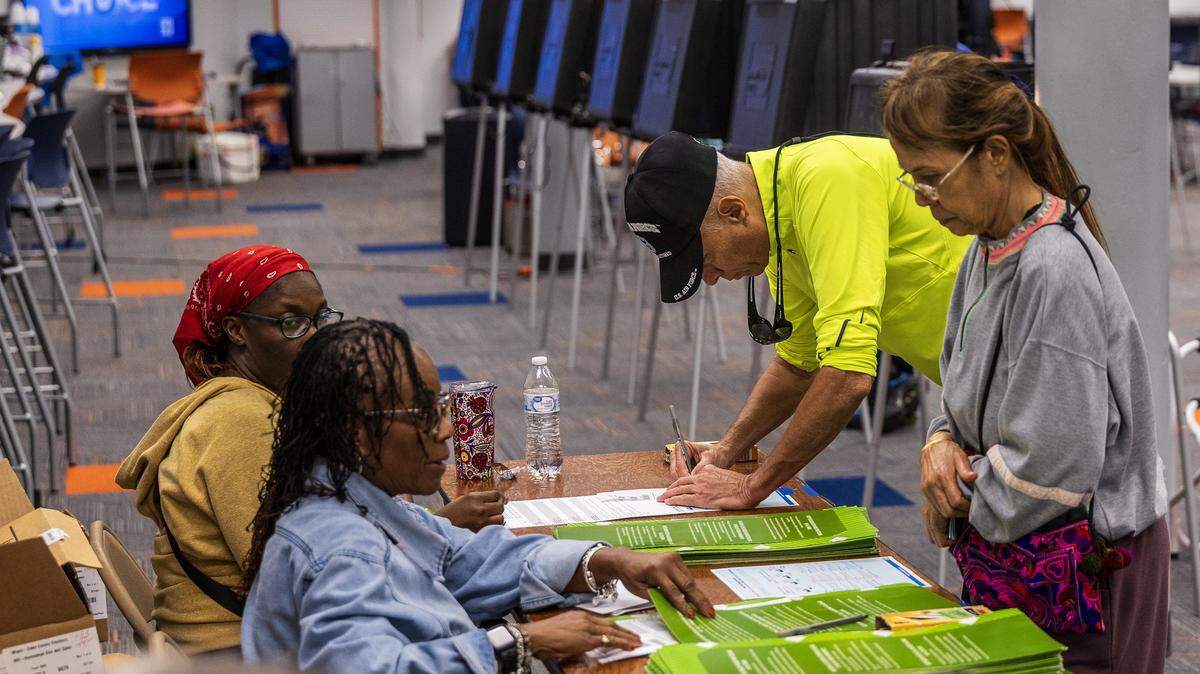
Don’t we already have safe and secure elections in Florida? Gov. Ron DeSantis has certainly said so.
In 2020, he called Florida the “gold standard” for elections. In 2022, he said Florida has become “a national leader by running the most secure elections in the country,” as he was signing yet another piece of legislation designed to “hold bad actors accountable.”
We’ve done it all here in Florida: created an election police force in Florida, changed the requirements for vote by mail to make voters renew their request every two years and tightened the rules for collecting mail ballots.
It’s also illegal for non-citizens to vote in Florida, in case there was any question about that. We require ID to vote, usually a driver’s license. A 2025 report by the Florida Office of Election Crimes and Security said it had completed preliminary investigations into more than 835 people and found that 198 of those were likely non-citizens who had illegally registered or voted. There are over 13 million voters in Florida. Seems like we’re doing a pretty good job already.
But in the zeal to demonize immigrants, all of those measures are not enough for lawmakers in the Florida House. They passed a bill Wednesday, House Bill 991, to require citizenship verification of registered voters, similar to the federal SAVE act that has been stalled in Washington, D.C. even as President Trump pushes for it. There is a companion bill in the Senate, SB 1334, that has yet to be voted on.
Those in favor of this bill call it an “election integrity” move. Bill co-sponsor Rep. Dana Trabulsy, a Fort Pierce Republican, insisted the measure is “not voter suppression. This bill is not driving us toward a dictatorship, that is not what this bill is doing. This bill is saying that only American citizens can vote in Florida.”
But there’s more to it than that. There’s no doubt this would make it harder to vote in Florida. The bill would require supervisors of elections to conduct citizenship checks behind the scenes, flagging anyone who doesn’t meet U.S. citizenship requirements. The individuals would have three days to respond with correct paperwork.
Let’s talk about who is most likely to be harmed. One example: women who have changed their name to get married or divorced, so their ID doesn’t match. Another: People who don’t have the money or time to find the documents they need to prove their identity. And then there’s the example of Rep. Ashley Gantt’s aunt.
The Miami-Dade Democrat has repeatedly told the story about an aunt who was born in South Carolina during the Jim Crow era and has no birth certificate because her mother, who was Black, wasn’t allowed in the whites-only hospital. And she can’t get a driver’s license renewed under the recent REAL ID requirements. That could be a problem for an election office trying to verify her identity. Gantt said she has been through “hell” trying to get a birth certificate for her aunt, who was a federal worker.
The League of Women Voters says people of color are three times more likely to lack documents to prove their identities compared to white U.S. citizens, and reported that a study by the Brennan Center for Justice in 2023 found that 9% of American citizens — like Gantt’s aunt — don’t have immediate access to documents the legislation would require to prove citizenship. But somehow, the Legislature is OK with that?
In discussing the bill, Trabulsy seems to be making the argument that more regulation is better because there may be vague future threats that we must guard against: “We have to keep ahead of the people who want to game our system.”
That’s fearmongering and should be rejected. Any perceived need for more regulation — 198 votes out of 13 million? — should be balanced against the prospect of voter suppression. In the end, voter suppression appears to be the real goal here.
BEHIND THE STORY
MOREWhat's an editorial?
Editorials are opinion pieces that reflect the views of the Miami Herald Editorial Board, a group of opinion journalists that operates separately from the Miami Herald newsroom. Miami Herald Editorial Board members are: opinion editor Amy Driscoll and editorial writers Isadora Rangel and Mary Anna Mancuso. Read more by clicking the arrow in the upper right.
What's the difference between an op-ed and a column?
How does the Miami Herald Editorial Board decide what to write about?
The Editorial Board, made up of experienced opinion journalists, primarily addresses local and state issues that affect South Florida residents. Each board member has an area of focus, such as education, COVID or local government policy. Board members meet daily and bring up an array of topics for discussion. Once a topic is fully discussed, board members will further report the issue, interviewing stakeholders and others involved and affected, so that the board can present the most informed opinion possible. We strive to provide our community with thought leadership that advocates for policies and priorities that strengthen our communities. Our editorials promote social justice, fairness in economic, educational and social opportunities and an end to systemic racism and inequality. The Editorial Board is separate from the reporters and editors of the Miami Herald newsroom.
How can I contribute to the Miami Herald Opinion section?
The Editorial Board accepts op-ed submissions of 650-700 words from community members who want to argue a specific viewpoint or idea that is relevant to our area. You can email an op-ed submission to oped@miamiherald.com. We also accept 150-word letters to the editor from readers who want to offer their points of view on current issues. For more information on how to submit a letter, go here.