
Republicans vote by mail — then tell voters not to trust it | Opinion
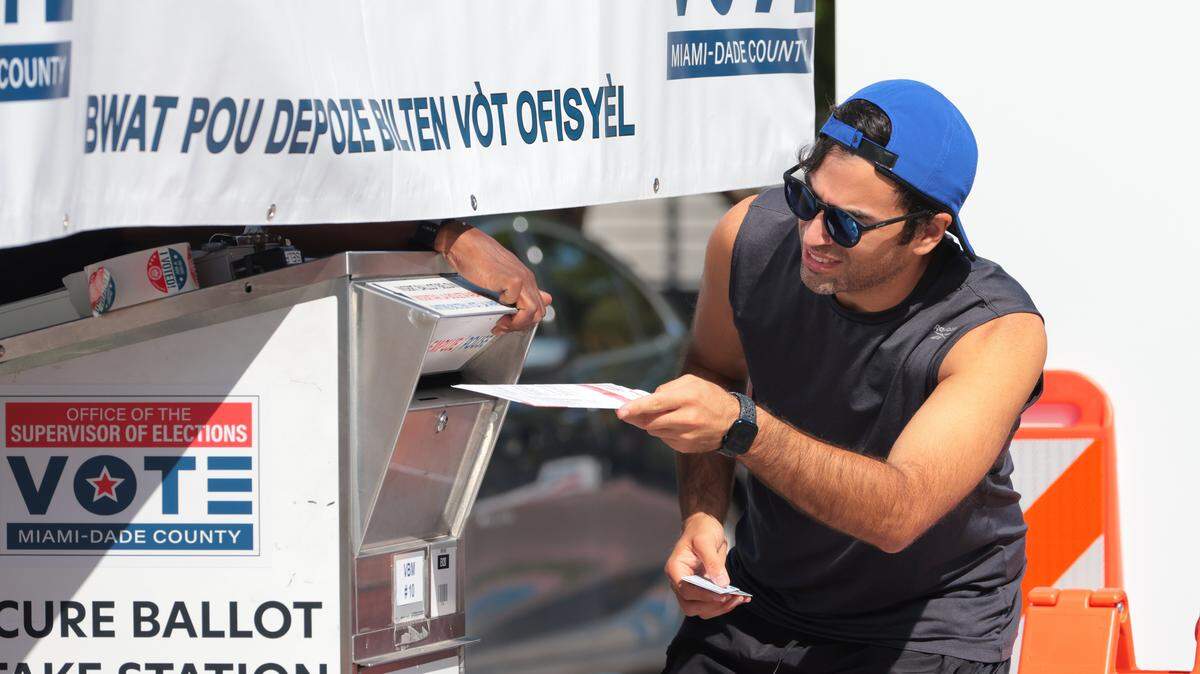
Next month, Coral Gables residents will make history with the city’s first mail-only election, the Miami Herald reported.
Voters will decide eight proposed charter amendments using ballots sent through the U.S. mail — a method of holding an election made possible by Florida’s vote-by-mail system. There will be no in-person voting. All of the city’s registered voters will receive a ballot — that’s over 37,000 ballots sent out.
State and local officials have declared the system is secure. At a press conference last week, Miami-Dade County Supervisor of Elections Alina Garcia said, “Voting by mail in Miami-Dade and throughout Florida is safe and secure. In fact, we are considered a national model for integrity and success. The Coral Gables mail ballot election is a safe, secure, convenient and cost-effective alternative requested by the city.”
This raises the obvious question — why are Republicans casting doubt on a system they continue to use?
President Trump has been loudly disparaging vote-by-mail for years, even though he cast his ballot by mail Tuesday in a special election for Florida House District 87. He was among more than 2,100 Republicans who voted by mail in that election in Palm Beach County. (The Democrat won.)
Even on the day before the election, he was claiming that mail ballots are a vehicle for fraud. “Mail-in voting means mail-in cheating. I call it mail-in cheating, and we got to do something about it,” he said in Memphis on Monday.
He’s been pushing Congress to pass the SAVE America bill, which would bar “universal” mail ballots — when a ballot is sent by mail to every registered voter without the voter having to request it — with a few exceptions, such as for people who have disabilities or are traveling on Election Day. Florida already requires voters to request a mail ballot if they want one — the state imposed
Voting by mail has been popular among Florida Republicans. In 2024, over one million Republicans in Florida voted by mail. In Miami-Dade County alone, more than 84,000 Republicans mailed their ballots in.
Florida’s vote-by-mail system didn’t emerge overnight. After the 2000 presidential election, “no excuse” absentee voting was adopted by lawmakers with bipartisan support. This was an effort to improve voter access. Voting by mail was also critical during the pandemic.
There have been bipartisan initiatives to add safeguards, such as signature verification, ballot tracking, identification requirements and strict deadlines for requesting and returning ballots. Voters also have to make a new request for vote-by-mail ballots every general election cycle rather than every four years, after a bill was passed by the Legislature and signed into law by Gov. Ron DeSantis in 2021.
During this year’s legislative session, Florida Republicans passed an elections bill requiring proof of citizenship that will take effect next year — but they didn’t make any changes to mail-in voting.
State Sen. Erin Grall, a Vero Beach Republican who sponsored the bill, told Politico, “I think Florida has done a great deal to ensure integrity of our mail in process.”
Critics of vote-by-mail claim it contributes to widespread fraud. But those allegations don’t hold up. According to the Brookings Institute, voter fraud by mail is a rare occurrence and only happens in about four out of every 10 million mail votes.
The system isn’t perfect. For example, a Republican Party activist in The Villages in Central Florida was charged in 2023 with forging his father’s signature on a mail ballot in the 2020 election after his father had died. But overall, there’s little evidence of widespread voter fraud of any kind, including via mail.
By attempting to cast doubt on the vote-by-mail system, the GOP is either being disingenuous or making a political play to energize a base constructed on electoral skepticism. For that to work, they don’t have to prove fraud; they just need to sow doubt. But that approach comes with consequences.
Some voters will choose not to cast a ballot in a system they no longer trust. Others will question the results of elections. And in a state where elections are often decided by razor-thin margins — such as this year’s mayor’s race in Boca Raton, which was decided by five votes — even small reductions in voter participation can make a big difference.
Vote-by-mail has worked well in Florida, over and over. Voters in this state are smart enough to see through the president’s words and recognize that truth.
BEHIND THE STORY
MOREWhat's an editorial?
Editorials are opinion pieces that reflect the views of the Miami Herald Editorial Board, a group of opinion journalists that operates separately from the Miami Herald newsroom. Miami Herald Editorial Board members are: opinion editor Amy Driscoll and editorial writers Isadora Rangel and Mary Anna Mancuso. Read more by clicking the arrow in the upper right.
What's the difference between an op-ed and a column?
How does the Miami Herald Editorial Board decide what to write about?
The Editorial Board, made up of experienced opinion journalists, primarily addresses local and state issues that affect South Florida residents. Each board member has an area of focus, such as education, COVID or local government policy. Board members meet daily and bring up an array of topics for discussion. Once a topic is fully discussed, board members will further report the issue, interviewing stakeholders and others involved and affected, so that the board can present the most informed opinion possible. We strive to provide our community with thought leadership that advocates for policies and priorities that strengthen our communities. Our editorials promote social justice, fairness in economic, educational and social opportunities and an end to systemic racism and inequality. The Editorial Board is separate from the reporters and editors of the Miami Herald newsroom.
How can I contribute to the Miami Herald Opinion section?
The Editorial Board accepts op-ed submissions of 650-700 words from community members who want to argue a specific viewpoint or idea that is relevant to our area. You can email an op-ed submission to oped@miamiherald.com. We also accept 150-word letters to the editor from readers who want to offer their points of view on current issues. For more information on how to submit a letter, go here.