
Florida ran up the tab on migrant camp. It’s time to shut down Alligator Alcatraz | Opinion
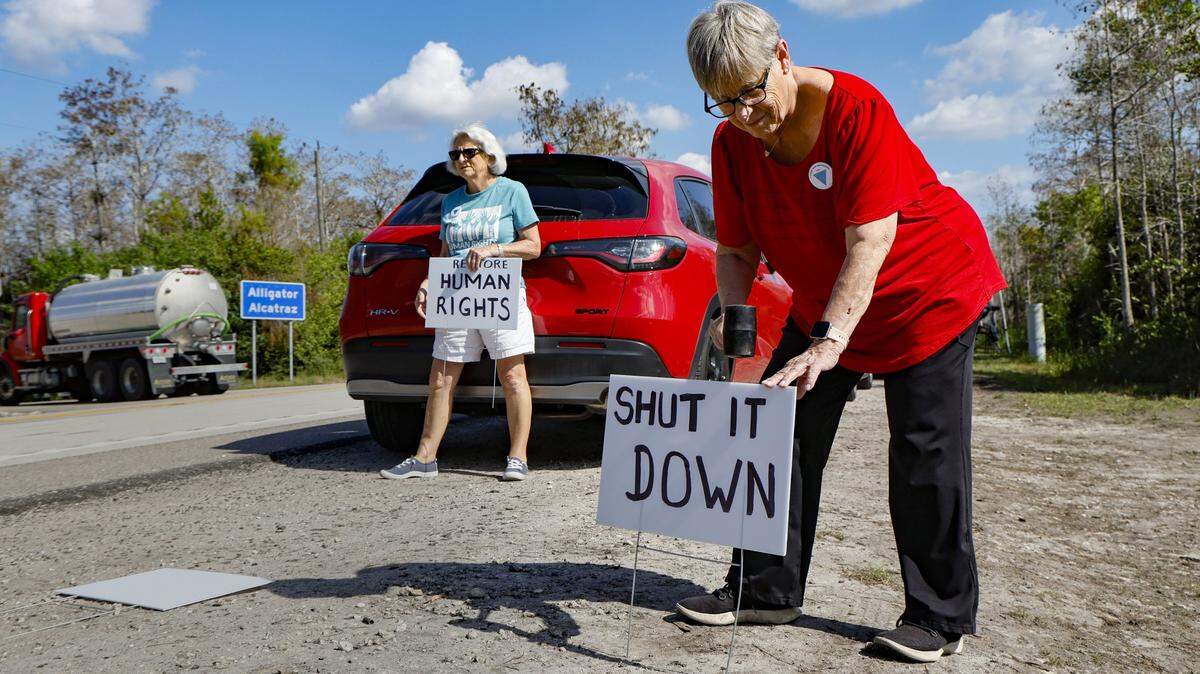
It’s time to shut down Alligator Alcatraz — if not for the allegations of unsanitary conditions and the mistreatment of undocumented immigrants, but also because it’s just too expensive.
We’ve known this for months. The Miami Herald and other news outlets have uncovered the staggering tab taxpayers are expected to pick up for Gov. Ron DeSantis hastily opening a tent-and-trailer immigration detention camp in the Everglades to facilitate President Trump’s mass deportations. The cost of running the facility is projected at $1.4 billion, according to documents the Herald obtained in March. Within the first months of operation, the DeSantis administration had already burned through $390 million.
Now it appears the Trump administration agrees that Alligator Alcatraz might not be worth the cost.
The New York Times reported Thursday that Florida and the federal government are in talks about closing the center. Department of Homeland Security officials have concluded that running Alligator Alcatraz is too expensive and consider it ineffective, the Times reported based on anonymous sources within the Trump administration and close to the DeSantis administration.
Talks about shuttering the center are preliminary, according to the Times. But if this happens, it would be a win for immigration advocates and lawyers, as well as environmentalists and the Miccosukee Tribe, who sued to close the detention center. Or anyone who cares that, as the Times reported, about two-thirds of detainees in the facility were classified as noncriminal.
It should also be a victory for fiscal hawks. The freewheeling way in which the DeSantis administration has spent money on immigration efforts, with minimal accountability, should alarm any conservative who doesn’t trust government with our tax dollars.
DeSantis suggested on Thursday he agrees with the plans to shutter the detention camp, telling reporters “it would be great for us to break that facility down.”
Florida is supposed to get reimbursed for Alligator Alcatraz by the federal government. But the state has yet to see the $608 million it requested. That means Florida taxpayers may be on the hook for the center’s construction. DeSantis said the state will receive the money “very shortly,” the Herald reported.
DeSantis has also spent more than $570 million of Florida’s emergency funds on immigration enforcement — with few questions asked. It’s unclear how much of that money was spent at Alligator Alcatraz, the Herald reported in March.
The Florida Legislature created the Emergency Preparedness and Response Fund in 2022 to give the governor quick access to money, without prior legislative approval, in the case of an emergency. That’s typically a hurricane or natural disaster, but DeSantis declared an emergency on illegal immigration in 2023. Since then, he has renewed the state of emergency at least 20 times.
DeSantis and Florida Attorney General James Uthmeier last year pushed to build Alligator Alcatraz at the site of the Dade-Collier Training and Transition Airport. The lack of infrastructure and the remote, swampy location in the middle of the Everglades looked concerning at the time, but that was exactly the point.
The name “Alligator Alcatraz” became a distasteful running joke — and fodder for campaign merchandise — among Florida Republicans and Trump.
“A lot of bodyguards, a lot of cops in the form of alligators,” Trump said about the center during a visit last July. “You don’t have to pay them so much.”
An Alligator Alcatraz T-shirt sold by Uthmeier’s campaign reads, “Nowhere to run. Nowhere to hide.”
Since the center opened, there have been reports about the poor conditions migrants face.
In April, the Herald reported that detainees said they were subjected to late-night beatings, cages that reek of urine, pepper-spray “bombs” and “meager meals washed down with cloudy water sipped from moldy cups.”
The Herald based its reporting on recordings of phone calls between migrants and their relatives, interviews, 911 calls and written complaints. A woman alleged in a complaint to the DHS Office for Civil Rights and Civil Liberties that her fiancée had lost more than 15 pounds because of persistently small food portions and was developing “skin rashes and open wounds” linked to mold in his drinking cup.
The DeSantis administration has repeatedly denied complaints about mistreatment. DHS has dismissed reports of inhumane conditions as “hoaxes.” Alligator Alcatraz housed almost 1,400 people as of April, according to the Herald.
DeSantis has said the camp is supposed to be temporary and, perhaps, this shameful, costly experiment has finally run its course.
BEHIND THE STORY
MOREWho decides the political endorsements?
In advance of local and state elections, Miami Herald Editorial Board members interview political candidates, as well as advocates and opponents of ballot measures. The Editorial Board is composed of experienced opinion journalists and is independent of the Herald’s newsroom. Members of the Miami Herald Editorial Board are: Amy Driscoll, editorial page editor; and editorial writers Isadora Rangel and Mary Anna Mancuso. Read more by clicking the arrow in the upper right.
What does the endorsement process look like?
The Miami Herald Editorial Board interviews political candidates to better understand their views on public policy and how their policies will affect their constituents. Board members do additional reporting and research to learn as much as possible about the candidates before making an endorsement. The Editorial Board then convenes to discuss the candidates in each race. Board members seek to reach a consensus on the endorsements, but not every decision is unanimous. Candidates who decline to be interviewed will not receive an endorsement.
Is the Editorial Board partisan?
No. In making endorsements, members of the Editorial Board consider which candidates are better prepared to represent their constituents — not whether they agree with our editorial stances or belong to a particular political party. We evaluate candidates’ relevant experience, readiness for office, depth of knowledge of key issues and understanding of public policy. We’re seeking candidates who are thoughtful and who offer more than just party-line talking points.
This story was originally published May 7, 2026 at 6:22 PM.