
Rubio’s flip-flop and Miami-Dade’s new bus system: The year’s top 5 editorials | Opinion
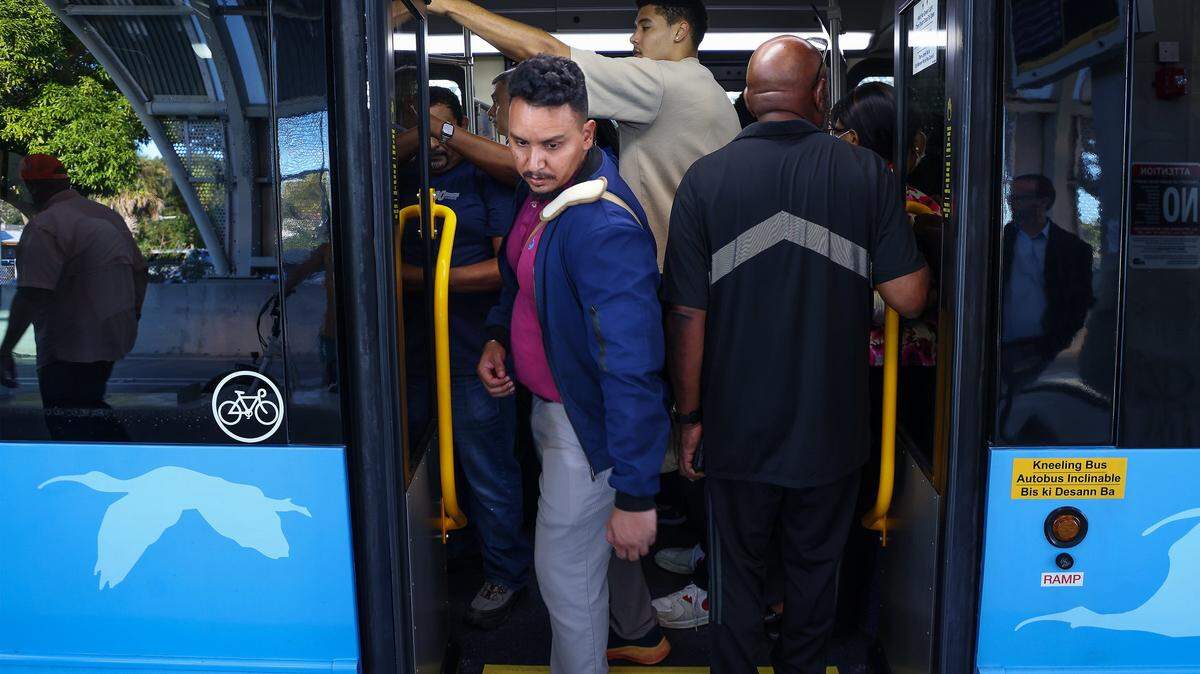
Some of the Miami Herald editorials that local readers liked the most in 2025 included a piece on the opening of a new public transit project, Secretary of State Marco Rubio’s changing stance on Venezuelan migrants and what Miami-Dade could teach Broward County about changing its name.
Here are the best performing editorials among South Florida readers:
BRT finally opens
Ideally, Miami-Dade should have gotten a train extension connecting the MetroRail to Florida City. But that idea turned out to be unfeasible and too expensive. The new MetroExpress Bus Rapid Transit system “might be the next best thing,” the Herald Editorial Board wrote days before the project opened in October, but only “if it is fast enough to encourage drivers to leave their cars at home.” The jury is still out on that.
The BRT runs along U.S. 1 in dedicated bus lanes for 20 miles. There are 14 covered stations with pay stations at the entrances, air-conditioned lobbies and boarding platforms at the same level as the buses. Crossing gates block traffic so the buses can run with fewer interruptions
The BRT is not rail, but it is “rail like.” It might not be what many residents envisioned, but, in a county with insufficient public transportation options, this is a victory.
Learning from Surfside
Four years after the Champlain Towers South fell in the middle of the night in 2021, we learned that poor building construction could have caused the collapse that killed 98 people. The National Institute of Standards and Technology released in June an update of its ongoing investigation into the incident. (The full report is expected in 2026.) Investigators were focusing on “higher-likelihood” hypotheses, each stemming from construction flaws.
The obvious question to ask is: How many other buildings from the 1980s could have the same potential flaws?
It will be hard to answer this question, but Florida has put laws in place that might prevent the next tragedy. Post-Surfside rules now require condo associations to pay for inspections and maintain financial reserves for maintenance. These new requirements are a financial burden on condo owners and wreaked havoc on the condo market. But, as the investigation into the collapse suggests, they were the right move.
Name change
Thankfully, Broward County seems to have more sense than Miami-Dade when it comes to county name changes. That was the conclusion of our editorial on the prospect of Broward changing its name to something that community leaders believe will be more instantly recognizable, like Lauderdale County.
Miami-Dade already did that, going from simple Dade County to the hyphenated version in 1997. County voters had rejected the idea at least four other times. A recent poll in Broward gave us hope that our neighbors to the north won’t suffer the same fate: 80% of those surveyed were against the idea and, of those, 68% were strongly opposed. It’s too late for Miami-Dade but Broward sent a clear message.
Et tu, Rubio?
It has been disappointing to watch Marco Rubio’s transformation from a U.S. senator from Florida who championed immigration reform to President Trump’s secretary of state. Just look at his stances on Temporary Protected Status for Venezuelans.
Rubio championed TPS several times while in the U.S. Senate. In 2022, he asked the Biden administration expand TPS for Venezuelans, co-writing a letter that stated returning them to their home country could amount to “a very real death sentence.”
TPS allows people fleeing conflict and other conditions in their home countries to remain in the U.S. The human rights conditions in Venezuela have not changed under President Nicolás Maduro.
Rubio has.
January court documents showed Rubio endorsing the Trump administration’s decision to end Venezuela’s TPS designation. Rubio, the son of Cuban immigrants who grew up in Miami, should know better. What a betrayal, as the Editorial Board wrote in May.
Do the right thing
We’re not trying to double down on Rubio, but he was the topic of another of our most popular editorials among local readers.
Mike Fernández, a Coral Gables billionaire and former top Republican donor, has used his fortune to pay for billboards and ads calling out Rubio and other South Florida Republicans for not standing up against Trump’s “posture of cruelty towards immigrants.” U.S. Reps. Maria Elvira Salazar, Carlos Gimenez and Mario Diaz-Balart represent many Venezuelans, Cubans, Haitians and others on the verge of losing their legal status to live and work in the U.S.
As we wrote in April, the voice of a billionaire rings louder in political circles. Salazar has become more outspoken since then, but we need a unified delegation to defend the immigrants who helped build South Florida.
BEHIND THE STORY
MOREWho decides the political endorsements?
In advance of local and state elections, Miami Herald Editorial Board members interview political candidates, as well as advocates and opponents of ballot measures. The Editorial Board is composed of experienced opinion journalists and is independent of the Herald’s newsroom. Members of the Miami Herald Editorial Board are: Amy Driscoll, editorial page editor; and editorial writers Isadora Rangel and Mary Anna Mancuso. Read more by clicking the arrow in the upper right.
What does the endorsement process look like?
The Miami Herald Editorial Board interviews political candidates to better understand their views on public policy and how their policies will affect their constituents. Board members do additional reporting and research to learn as much as possible about the candidates before making an endorsement. The Editorial Board then convenes to discuss the candidates in each race. Board members seek to reach a consensus on the endorsements, but not every decision is unanimous. Candidates who decline to be interviewed will not receive an endorsement.
Is the Editorial Board partisan?
No. In making endorsements, members of the Editorial Board consider which candidates are better prepared to represent their constituents — not whether they agree with our editorial stances or belong to a particular political party. We evaluate candidates’ relevant experience, readiness for office, depth of knowledge of key issues and understanding of public policy. We’re seeking candidates who are thoughtful and who offer more than just party-line talking points.