
Miami commissioners gave themselves an extra year in office. It’s time to do this next | Opinion
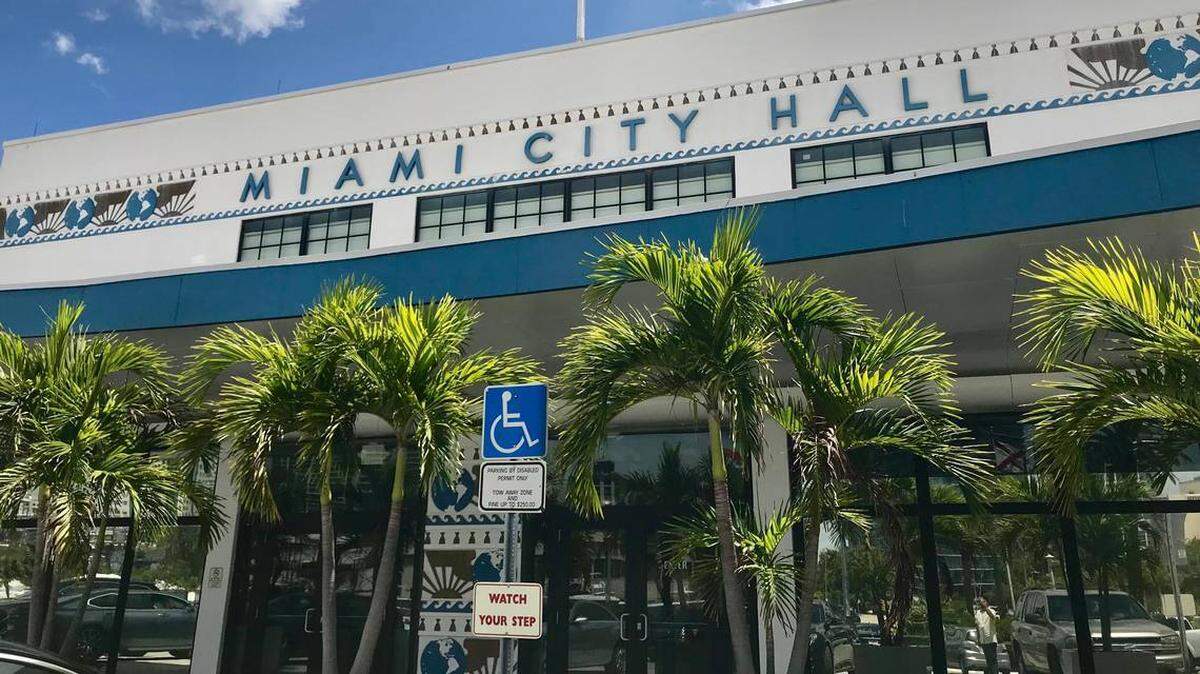
Miami voters don’t always get enough of a voice in how their own city is being run.
Take the vote on elections last month, for example. City commissioners decided to move the election date from 2025 to 2026 — and extend their terms on the board by a year — in the name of moving elections to even-numbered years to increase voter participation — a seemingly good idea for which the Herald Editorial Board has advocated. The problem is the commission didn’t ask for permission from the voters, many of whom were understandably outraged at the idea that elected officials could just decide to stay in their jobs for an extra year — and get another year of salary, courtesy of taxpayers.
The power grab, as many characterized the decision, not surprisingly, spawned national headlines. One would-be 2025 candidate, whose plans were upended by the change, has already filed suit. Miami Mayor Francis Suarez, who benefits from the change, quickly signed the measure into law.
But there’s some better news for voters.
Earlier this week, commissioners passed a proposal, 3-2, to allow voters to decide in November whether to impose a lifetime term limit on the city’s elected officials — two four-year terms as mayor and two four-year terms as commissioner.
There is a loophole in the proposal that should be noted, and it’s one that could allow some legacy politicians a chance to run again. The wording of the proposal specifically excludes “any time served as a result of having been elected to fill a vacancy.”
That means Commissioner Joe Carollo, a highly controversial figure, could run for mayor again. He has already served two terms as mayor and multiple stints as city commissioner, dating back to 1979. But because he won his first term as mayor in a special election (to fill the vacancy created by the death of Mayor Stephen Clark in 1996), he would, under this new proposal, still be eligible to run for mayor one more time.
Also potentially affected by the loophole: Xavier Suarez, another former mayor. Xavier Suarez — whose son is Miami mayor now — served three terms in the 1980s. But only one of those was a four-year term, opening the door to another run for him as well under the proposed term limits.
Those are important caveats for voters to understand, since they are the ones who will be deciding the term-limit question in a special election this November. That the decision rests in the hands of voters is a very good thing.
Term limits are a good idea that voters should approve, but there’s another proposal for a change in the way Miami is governed that we think is more important: expanding the number of seats on the city commission.
The Editorial Board has advocated for this for several years, including as part of our Miami Dysfunction series of editorials. The idea that Miami, a city of almost 450,000 people, has only five commissioners to represent its residents defies common sense. We believe Miami’s City Commission must grow from five districts to seven or nine to put in on par with other cities of similar or even smaller populations. Tampa, for example, with a population of about 400,000, has seven city council members, four elected in districts and three at-large.
The change is also needed because the current structure — five commissioners, each elected in a single district — isn’t working. Anyone who has seen the temper tantrums and in-fighting on the dais — embarrassing displays by our leaders — knows that the frequent 3-2 votes on the commission mean one person can hold enormous power.
Diluting the power with a bigger board would help. And if districts are smaller, Miami residents might get more responsive representation out of the deal, too.
A local citizens’ group, called Stronger Miami, has been gathering signatures on a petition in an attempt to get the question on the ballot in November. But it shouldn’t take a petition drive for Miami commissioners to start taking this idea seriously. If they can vote themselves an extra year in office, surely they can entertain the idea of expanding the commission so it better represents the people.

Click here to send the letter.
BEHIND THE STORY
MOREWhat's an editorial?
Editorials are opinion pieces that reflect the views of the Miami Herald Editorial Board, a group of opinion journalists that operates separately from the Miami Herald newsroom. Miami Herald Editorial Board members are: opinion editor Amy Driscoll and editorial writers Isadora Rangel and Mary Anna Mancuso. Read more by clicking the arrow in the upper right.
What's the difference between an op-ed and a column?
How does the Miami Herald Editorial Board decide what to write about?
The Editorial Board, made up of experienced opinion journalists, primarily addresses local and state issues that affect South Florida residents. Each board member has an area of focus, such as education, COVID or local government policy. Board members meet daily and bring up an array of topics for discussion. Once a topic is fully discussed, board members will further report the issue, interviewing stakeholders and others involved and affected, so that the board can present the most informed opinion possible. We strive to provide our community with thought leadership that advocates for policies and priorities that strengthen our communities. Our editorials promote social justice, fairness in economic, educational and social opportunities and an end to systemic racism and inequality. The Editorial Board is separate from the reporters and editors of the Miami Herald newsroom.
How can I contribute to the Miami Herald Opinion section?
The Editorial Board accepts op-ed submissions of 650-700 words from community members who want to argue a specific viewpoint or idea that is relevant to our area. You can email an op-ed submission to oped@miamiherald.com. We also accept 150-word letters to the editor from readers who want to offer their points of view on current issues. For more information on how to submit a letter, go here.