
Miami Dysfunction: Voters demanded a City Hall shake-up. Commissioners better listen up | Opinion
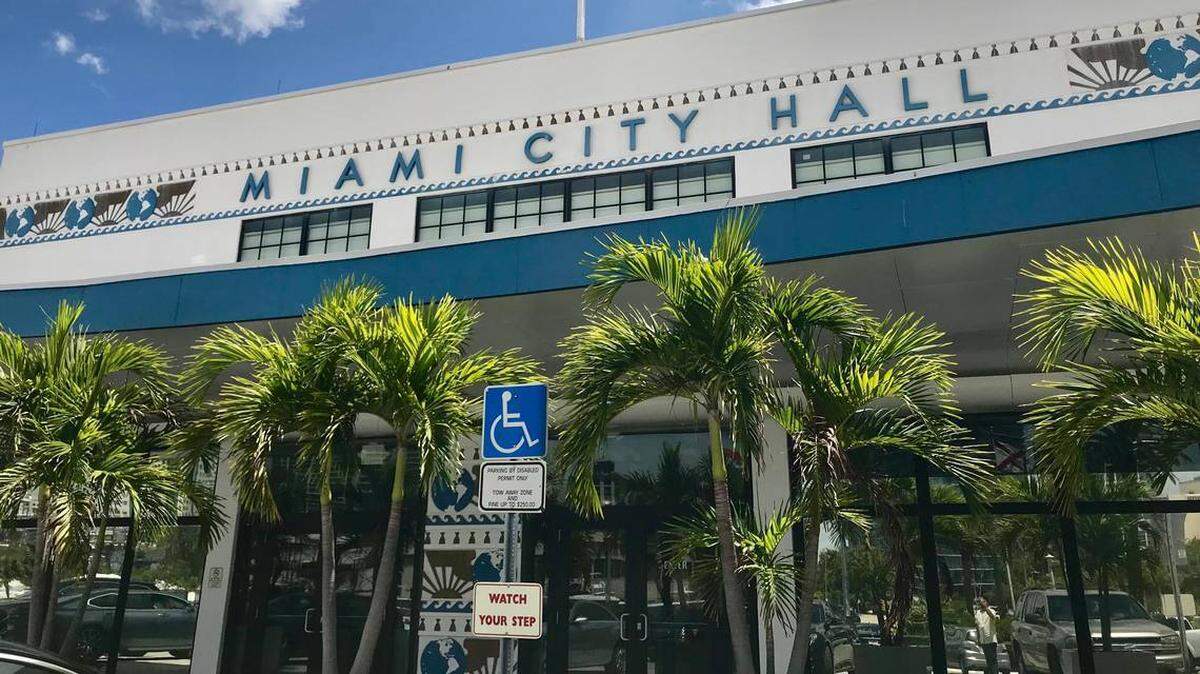
The November elections in the city of Miami couldn’t have made it clearer: Voters want change after they ousted an incumbent and a suspended commissioner previously arrested on corruption and bribery charges.
There are no simple fixes for Miami, but there are reforms the city must explore to make government work for its people and not those in power. First order of business should be expanding the City Commission from five members to seven or nine to account for population growth and to create more representation on a dais that currently lacks it. This was the Editorial Board’s first recommendation in our Miami Dysfunction series, and the idea has gained traction among community activists and voters.
New commissioners Damian Pardo and Miguel Gabela have a mandate to tackle Miami’s systemic issues with abuse of power. But this is not their responsibility alone. Their three colleagues are also on notice.
Miami had a tumultuous 2023, marked by the September arrest of former Commissioner Alex Diaz de la Portilla, who lost to Gabela in November. In June, a federal jury issued a $63.5 million verdict against Commissioner Joe Carollo for targeting two business owners, using police and code enforcement to harass them. Carollo is appealing it. Consulting payments Mayor Francis Suarez received from a developer with business before the city are under federal investigation.
Among the commissioners who spoke to the Editorial Board, Pardo is the only one who is taking reforms seriously. He said he will propose the creation of a charter review committee, which would look at areas in the city charter — which functions like Miami’s constitution — that need change, among them the size of the commission. Any changes to the city’s political structure requires a charter amendment approved by voters.
Pardo also wants to consider limits on outside income by elected officials and moving elections from off years like 2023 to midterms and presidential election years to boost Miami’s dismal voter turnout. The latter was also one of the Editorial Board’s recommendations in Miami Dysfunction.
Pardo said the idea of expanding the commission came up during several voter forums during his campaign to represent District 2, which stretches from Coconut Grove to downtown and Morningside. Pardo defeated former Commissioner Sabina Covo in a November runoff.
“We can use smaller districts that are more service oriented toward residents,” Pardo told the Editorial Board.
Miami, population 450,000, stands out among cities of similar size, such as Tampa and Atlanta, which have similar populations but larger commissions. The size of Miami’s legislative body is more comparable to small towns across Florida with less political importance than America’s gateway to Latin America.
Miami is growing into a world-class destination and financial and business hub. It must act like a big city.
Currently, three commissioners elected with a voter turnout of less than 15% make up the majority on most decisions. This allows a concentration of power that Carollo and Diaz de la Portilla, for example, exploited. With only one more vote needed to reign over the commission, they used their power to bully other city officials.
There’s a common saying in Miami politics that everyone who needs something from City Hall knows how to count to three — and that includes those like us who want to see reforms. In this case, we’re asking commissioners to vote to dilute their own power. But such a display of public service is a tall order in Miami.
Carollo told the Editorial Board, “I always keep an open mind,” but that he does not believe a larger commission would solve the city’s problems. Instead, he blamed “broken” law enforcement and the media for not holding wrongdoers accountable. To that, we note that it was thanks to Herald reporters that Suarez’s outside employment deals and absence from City Hall came to light. Media outlets also covered the federal civil judgment against Carollo for using his public office to retaliate against the two businessmen, William Fuller and Martin Pinilla. And a years-long state and local law enforcement investigation led to the arrest of Diaz de la Portilla and a city lobbyist.
Commissioner Manolo Reyes told the Editorial Board during his reelection campaign this fall, “I don’t think that the answer is the number of commissioners; it is the quality of commissioners.” That’s a solid point, but we think he’s only got it half right.
Gabela and Commissioner Christine King did not return requests for comment. King’s spokeswoman wrote in an email that she “hasn’t heard anything significant” about calls to expand the commission, “so not sure a conversation would be fruitful.”
We disagree, strongly.
Miamians are clamoring for change. Reasonable people might disagree on the solutions. But our commissioners owe it to a distrustful constituency to explore how to shake up City Hall in a positive way.

Click here to send the letter.
BEHIND THE STORY
MOREWhat's an editorial?
Editorials are opinion pieces that reflect the views of the Miami Herald Editorial Board, a group of opinion journalists that operates separately from the Miami Herald newsroom. Miami Herald Editorial Board members are: opinion editor Amy Driscoll and editorial writers Isadora Rangel and Mary Anna Mancuso. Read more by clicking the arrow in the upper right.
What's the difference between an op-ed and a column?
How does the Miami Herald Editorial Board decide what to write about?
The Editorial Board, made up of experienced opinion journalists, primarily addresses local and state issues that affect South Florida residents. Each board member has an area of focus, such as education, COVID or local government policy. Board members meet daily and bring up an array of topics for discussion. Once a topic is fully discussed, board members will further report the issue, interviewing stakeholders and others involved and affected, so that the board can present the most informed opinion possible. We strive to provide our community with thought leadership that advocates for policies and priorities that strengthen our communities. Our editorials promote social justice, fairness in economic, educational and social opportunities and an end to systemic racism and inequality. The Editorial Board is separate from the reporters and editors of the Miami Herald newsroom.
How can I contribute to the Miami Herald Opinion section?
The Editorial Board accepts op-ed submissions of 650-700 words from community members who want to argue a specific viewpoint or idea that is relevant to our area. You can email an op-ed submission to oped@miamiherald.com. We also accept 150-word letters to the editor from readers who want to offer their points of view on current issues. For more information on how to submit a letter, go here.
This story was originally published December 22, 2023 at 11:30 AM.