Broken Promises: Years later, Miami’s ancient history still not on display. One is a dog park | Opinion
READ MORE
Broken Promises: Miami has a trust problem. Here’s why
The vows sound so convincing — a waterfront park, economic revival in a historic Black neighborhood, a new rail line. Decades later, the pledges remain unfulfilled. Elected leaders and developers move on, hoping voters and taxpayers will forget. What happens when no one is ever held accountable? The Miami Herald Editorial Board wanted some answers.
Expand All
Want to see Miami’s most ancient sites, evidence of Tequesta Indian settlements so old they date back an incredible 2,000 years or more?
Good luck.
You won’t find them in carefully marked historic zones or museum-quality displays designed to help visitors understand Florida’s earliest inhabitants.
No, in the two decades or so since archaeologists uncovered traces of prehistoric Native American life right in the middle of the city — some preservationists have called the settlement the actual birthplace of Miami — three such sites have become all but invisible, another failure of private and public sectors to fully honor much ballyhooed agreements with taxpayers.
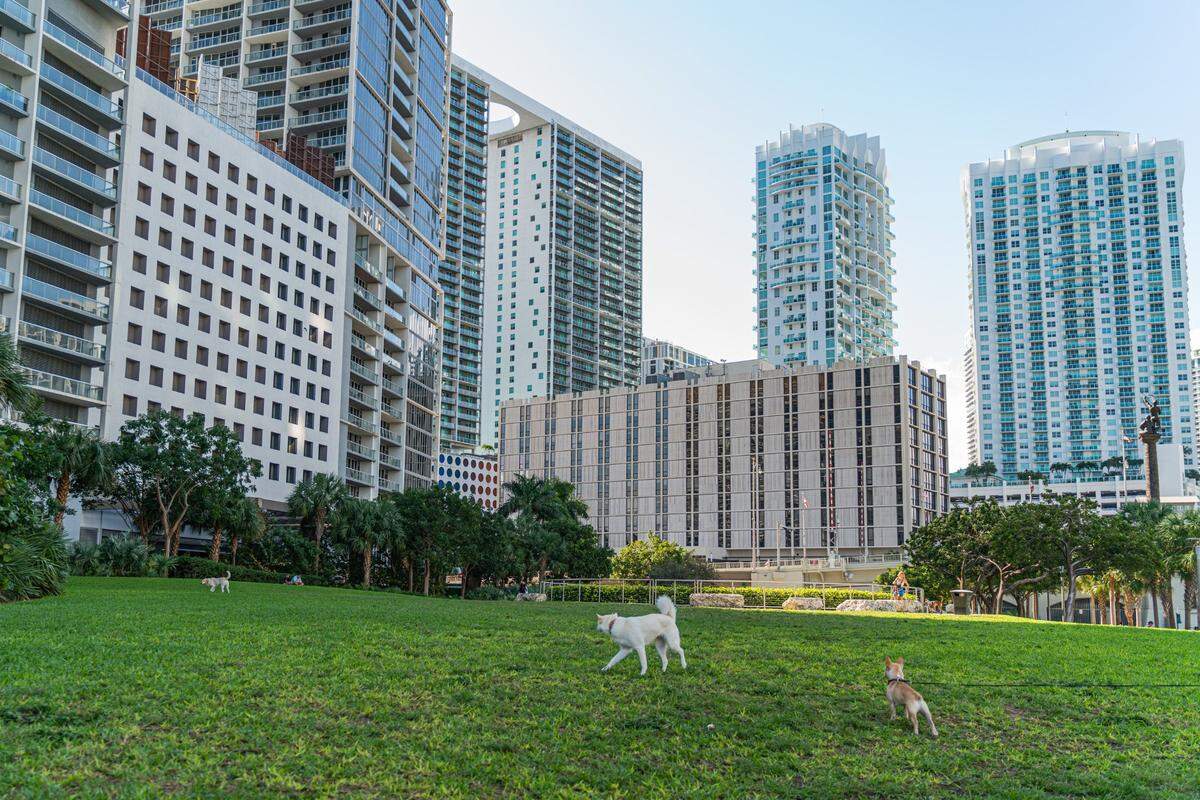
Rome has the 2,000-year-old Colosseum. And Miami? We have what amounts to a 2,000-year-old dog park and a couple of unmarked circles dwarfed by glass-and-concrete high-rises.
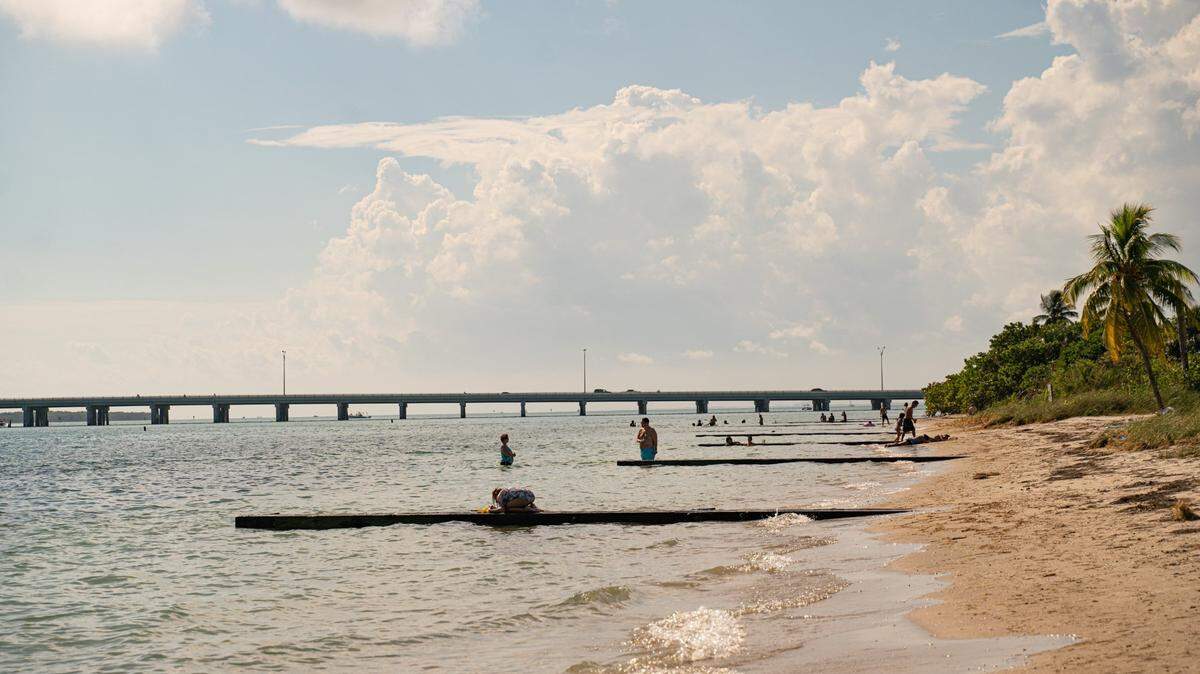
Here’s how we treat this precious legacy: The Miami Circle — a carved limestone circle at the mouth of the Miami River and a National Historic Landmark since 2009 — has become a grassy expanse where nearby condo owners bring their pets to relieve themselves.
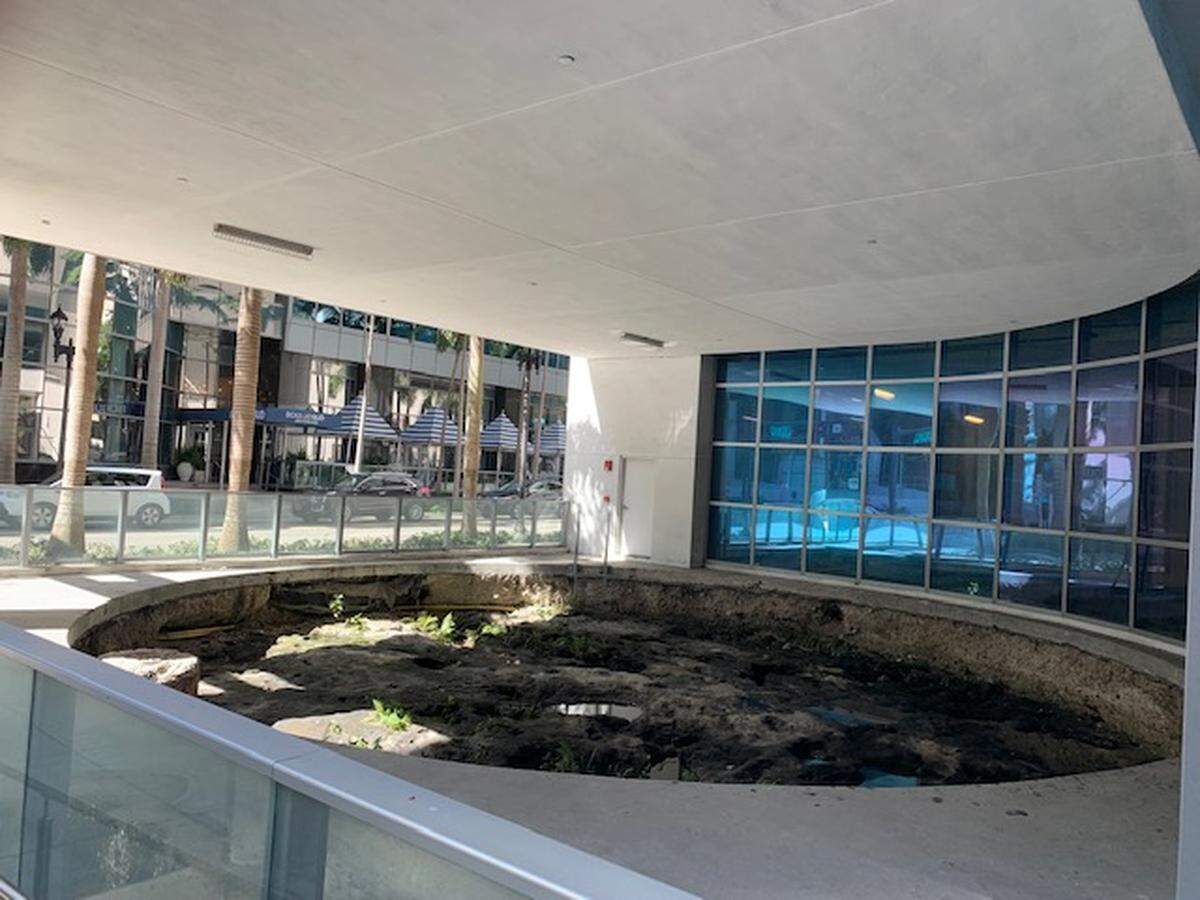
Another Tequesta circle, part of a larger settlement discovered after the better-known Miami Circle, is located on the north side of the river, on an anonymous downtown corner behind a glass railing. A tower looms overhead, cars and buses belch exhaust a few feet away and there are no signs — none — offering any clue to its importance or even what it is.
A third bit of the Native American settlement, also preserved, is even less accessible: a limestone circle enclosed in an unfinished room off the high-rise condo lobby. You can see it only if you know where to look: through a peeled-off spot of the window covering.
Archaeological discoveries of this caliber aren’t made every day. But no one seeing these sites would come away feeling enlightened or moved. Nor, if they knew how we got to this point, would they think that governments and private companies have been held accountable for their many public promises to preserve and interpret these sites.
This was not how it was supposed to be.
A bunch of old post holes
OK, maybe the Tequesta sites shouldn’t be compared to ancient Roman ruins like the Colosseum. But the value we place on history, Miami history, shouldn’t be measured in Greek columns or determined by European standards. Those who seek to dismiss the Tequesta findings as little more than a bunch of old post holes in the ground — the circles are likely places where structures were erected — are missing the point: Just because there’s no marble statuary doesn’t make the roots of civilization in South Florida any less meaningful or less important to learn from.
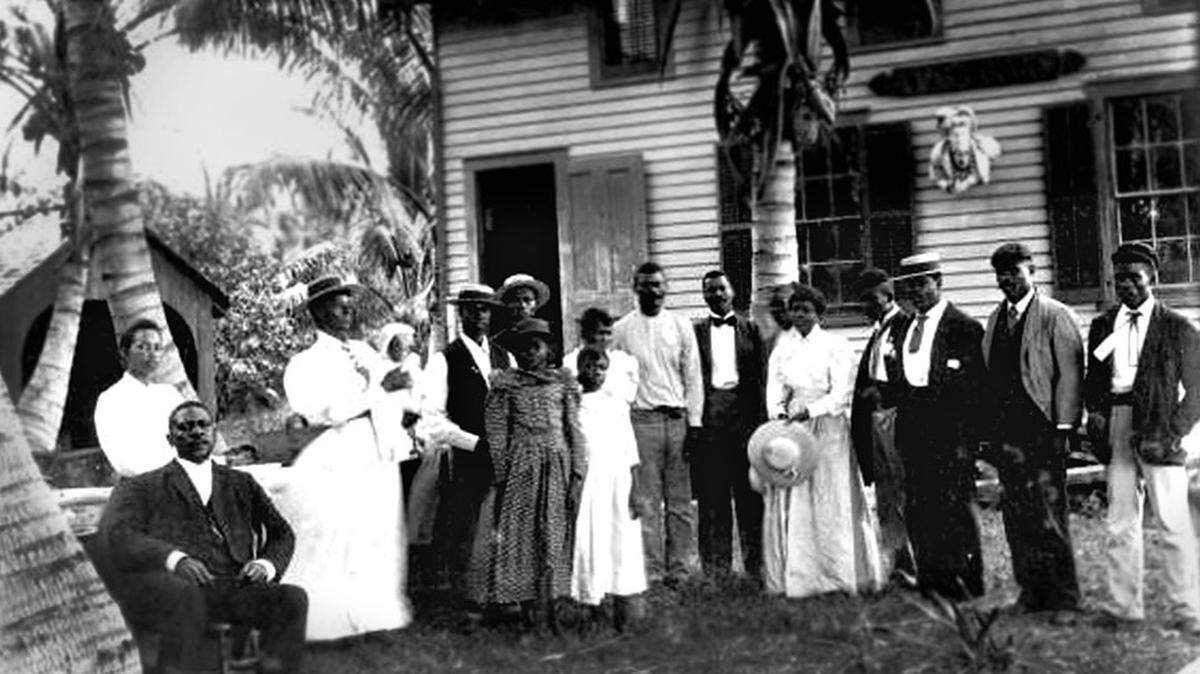
Florida’s disrespect for its cultural past is nothing new, and nothing to be proud of. Back in the 1890s, Henry Flagler, industrialist and founder of the Florida East Coast Railway, built his Royal Palm Hotel on the north banks of the Miami River by leveling a Tequesta Indian mound, on the same spot where modern archaeologists discovered those ancient footprints of civilization. In those days, hotel guests could purchase Tequesta Indian skulls as souvenirs.
That’s dreadful, repulsive, and we’re rightly horrified by that behavior today. But if Miami really wants to exorcise the demons of the past and recognize the people who came before us — something civilized societies generally do — we have to do more than save small portions of the Tequesta settlement foundations. We have to actually honor those slivers of history represented by the Miami Circle and the other “circles” that were discovered afterward.
It’s time for Miami and the state of Florida to take the next step: Pay respect to the indigenous people, and not with a plaque or a sign — the Miami Circle has those, more or less. We’re talking about full-fledged, smartly imagined historical sites that educate and preserve, the kind of thing found in what Miami keeps saying it aspires to be: a world-class city.
We should do it because it’s the right thing to do. We should do it because Miami is nothing if not multicultural, and that should, of course, include our Native American past. But if that’s not enough reason — and because we know how South Florida works — there’s a more lucrative angle: Well-crafted historic sites can be big tourist draws.
To be fair, the reason the first circle — the Miami Circle, discovered in 1998 and now owned by the state — morphed from archaeological site into a place for dogs to romp is because it was covered with a layer of dirt and grass to protect it from the elements and preserve the artifacts for the future. And it makes for a nice green space, swept by breezes from the bay, amid what has rapidly become a condo canyon. We can see why dog owners like it. Or, more relevantly, why the Tequestas chose it.
A perfect circle
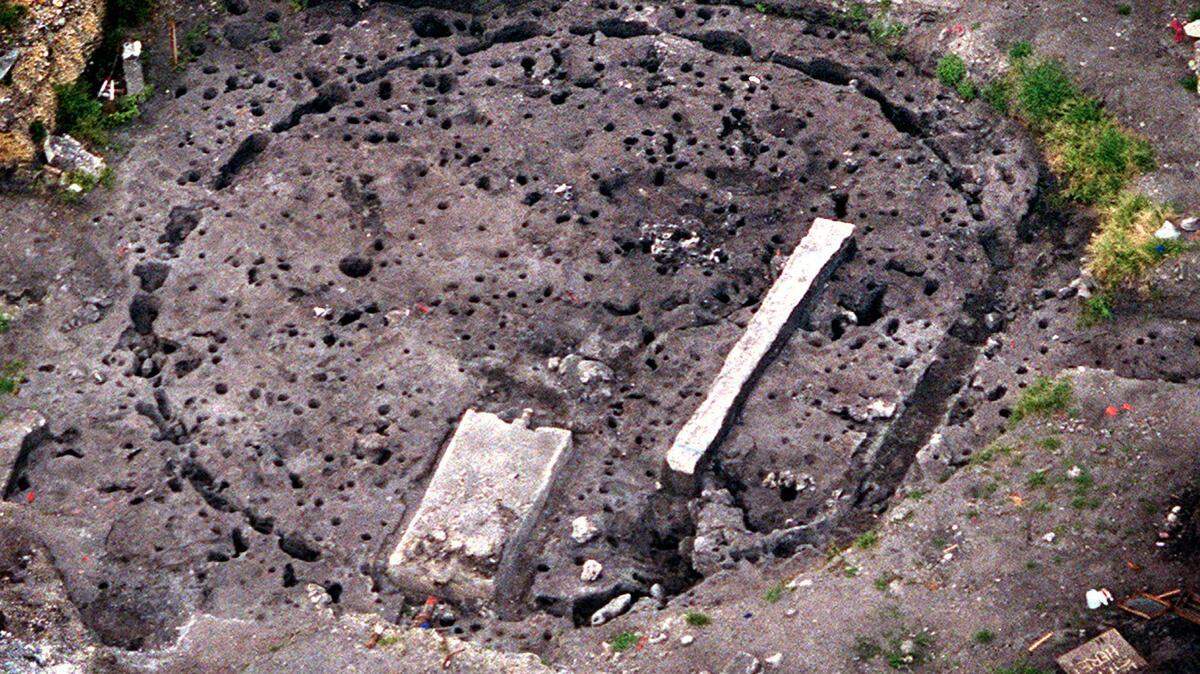
It was almost paved over. A millionaire developer had been planning a condo on the site, after demolishing an apartment building, when archaeologists discovered a perfect circle, 38 feet across, probably part of a council house or ceremonial structure for the tribe of hunters and fishermen at the mouth of the Miami River.
The furor that followed the discovery drove a push to wrest the land from the hands of the developer. There were demonstrations and claims that the circle had mystical properties. Eventually, the developer was paid $27 million in public money not to build there. That was a monumental effort, and we applaud it. But that was a long time ago. Despite the Miami Circle’s status as a National Historic Landmark, a state proposal to create a three-dimensional replica of it never came to be.
The way things are going, a real effort to interpret the site for visitors may never happen. A state historic preservation official came to Miami in October to meet with representatives from state and local organizations involved with the Miami Circle to talk about “the condition of the property, including landscaping and interpretive panels,” the Florida Department of State said. Another meeting is tentatively set for January, but it doesn’t exactly have an ambitious-sounding agenda: It’ll focus on “updating the interpretive signs including materials, copy and funding.” We do not have high hopes.
Right now, the site has little to mark it as anything special, let alone prehistoric. There are a few signs. One informational panel at the entrance is an embarrassment: a mess of peeling plastic and sun-faded words about Miami’s oldest dwellers and the traces of civilization they left on the 2.2-acre spot. For the eagle-eyed, there’s a tiny notice of an audio tour, online and by phone. If you call the number, a narrator calls it “one of the most intriguing places in Florida — in fact, in the world.” Perhaps someone should tell the dogs.
The second set of sites created less fanfare when they were unearthed from beneath asphalt parking lots, but they, perhaps, are even more significant. Archaeologists working on the north side of the river, across from the Miami Circle, discovered the foundations of a Tequesta Indian village, including 11 circles, hundreds of carved post holes and linear walkways.
Bob Carr, the archaeologist who excavated both sites, called it an “unparalleled piece of North American history.” Some preservationists even suggested it should be designated as a UNESCO World Heritage Site, with less development allowed on the property.
In 2014, after much negotiation, the developer, MDM, struck a deal to preserve a fraction of what was excavated and display and interpret those discoveries. The late Arva Moore Parks, Miami’s fierce champion of historic preservation, said at the time that the agreement was “history making” and would “help people understand and appreciate Miami’s beginnings as they build its future.”
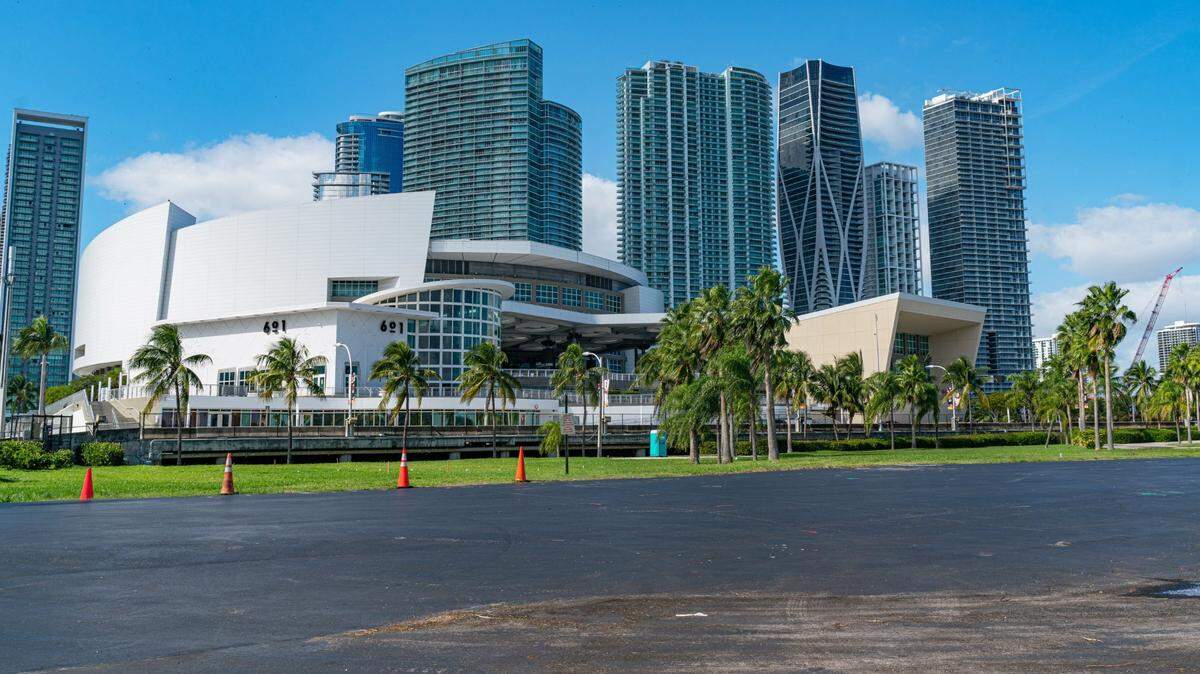
Eight years later, the Met Miami development has gone up. But the two Tequesta Indian circles are a far cry from what anyone would describe as historic showcases — one unmarked, the other totally inaccessible. There’s no two-story glass enclosure on the southwest corner of the property to display one of the circles, as outlined in the agreement with the developer. There’s no glass floor over the other one, with interpretive signs or videos, or a HistoryMiami mini-museum. There’s no glass floor over a brick-lined well believed to have been part of a 19th century U.S. Army fort that was also erected on the site. Is this the history-making agreement that Parks so proudly endorsed? Hardly.
In 2020, a Miami Herald story ran with the headline: “Miami’s ancient Tequesta Indian circles still not on display.” Two years later, virtually nothing has changed.
Except this: The city and developer headed into more mediation this month. It was past due. The city and the taxpayers have all been patient enough. As Carr said, “We’ve waited a long time for these things to be completed — not just preserved, but interpreted. And not just public access, but signage and exhibits that would allow people to experience these very important sites.”
The 2014 agreement allowed MDM to build on the vast majority of the Tequesta site — about 98% of it, according to Vinson Richter, president of the Dade Heritage Trust, a group that was at the table for the original mediation. And still, he said, the developer has not done what was required. “It’s really a shame that however many years later that we’re here still talking about it and that they’re trying to get out of it, to weasel out of it.”
The developer’s lawyer, not surprisingly, said the opposite, that MDM values the history of the site and wants very much to successfully conclude the agreement. “I don’t believe there’s a single developer in Florida who has done as much and spent as much to preserve a site,” MDM attorney Gene Stearns said.
Maybe so. But here’s what needs to happen: The agreement to properly display the few measly bits that have been saved needs to be enforced, in letter and in spirit. As Richter told us, “Archaeological sites of this magnitude are not discovered every day.”
Here’s a thought: Maybe it’s time for Miami to reconsider the idea of paving over prehistoric sites. We know, we know — that’s heresy in Florida, built on exploiting the land with no regard to the future. Back when the second set of Tequesta sites were found, Richter said he knew that, in Miami, given the value of the property, the site would never become a museum. “But anywhere else in the world,” he said, “it might have been.”
History demands that we do right by these sites. It’s an important charge, not one to be wiggled out of or tossed off with half-hearted measures. These places hold some of the deepest imprints of Miami history within them. That’s knowledge that should be shared and honored and carried into the future, long after developments like the Met Miami have, like everything else, slipped into history’s rear view mirror.
BEHIND THE STORY
MOREWhat's an editorial?
Editorials are opinion pieces that reflect the views of the Miami Herald Editorial Board, a group of opinion journalists that operates separately from the Miami Herald newsroom. Miami Herald Editorial Board members are: opinion editor Amy Driscoll and editorial writers Isadora Rangel and Mary Anna Mancuso. Read more by clicking the arrow in the upper right.
What's the difference between an op-ed and a column?
How does the Miami Herald Editorial Board decide what to write about?
The Editorial Board, made up of experienced opinion journalists, primarily addresses local and state issues that affect South Florida residents. Each board member has an area of focus, such as education, COVID or local government policy. Board members meet daily and bring up an array of topics for discussion. Once a topic is fully discussed, board members will further report the issue, interviewing stakeholders and others involved and affected, so that the board can present the most informed opinion possible. We strive to provide our community with thought leadership that advocates for policies and priorities that strengthen our communities. Our editorials promote social justice, fairness in economic, educational and social opportunities and an end to systemic racism and inequality. The Editorial Board is separate from the reporters and editors of the Miami Herald newsroom.
How can I contribute to the Miami Herald Opinion section?
The Editorial Board accepts op-ed submissions of 650-700 words from community members who want to argue a specific viewpoint or idea that is relevant to our area. You can email an op-ed submission to oped@miamiherald.com. We also accept 150-word letters to the editor from readers who want to offer their points of view on current issues. For more information on how to submit a letter, go here.
This story was originally published December 22, 2022 at 6:17 PM.