
Florida bill makes it easier to ban school books. GOP swears it’s ‘transparency’ | Editorial
Florida Republicans are clever. They have wasted no time riding a conservative movement to sanitize our public schools from books and discussions about race and the existence of gay and transgender people. The 2022 Florida legislative session has been all about waging those cultural wars in the name of “transparency” and parental involvement in public education.
But we see right through them.
Their latest iteration is House Bill 1467, approved by the Legislature Thursday. It would make it easier for parents — and we suspect political groups whose members might not have children in a local public school — to challenge and ban instructional material and library books from public schools.
It would also put Tallahassee in charge of compiling a list of books banned by school districts because of an objection so that other districts can consider them “in their selection procedures.” That’s just our state government helping districts self censor. After all, if a book is banned in one part of the state, why risk keeping it on your shelves and becoming the target of angry parents and activists?
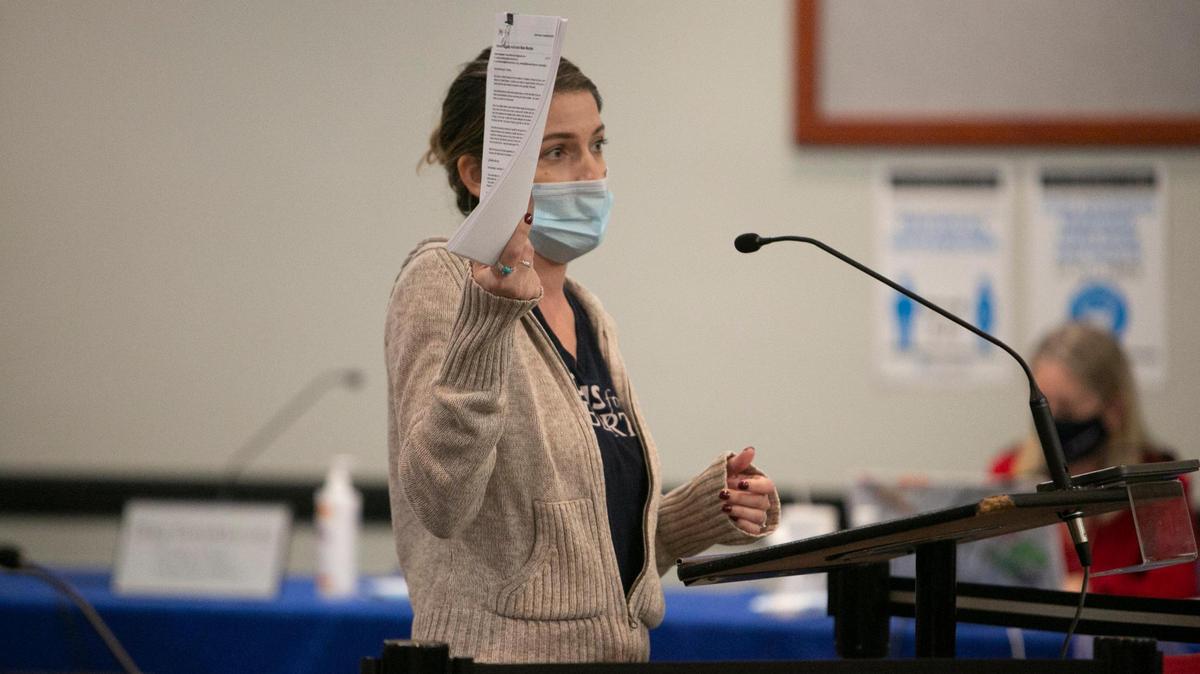
The public testimony heard during legislative hearings provides a sample of what’s to come. Bill supporters wearing “Florida Parents Know Best” T-shirts accused districts of showing LGBTQ “cartoon videos to the kids” without telling parents, as well as porn and providing critical race theory and “gender confusion” material.
The craftiness of it is that the bill isn’t entirely objectionable. It imposes 12-year term limits on school board members, which forces turnover and fresh ideas among school leadership. Critics argue that turnover happens through elections, but incumbents rarely get serious challengers and unseated. Another reasonable provision requires parents be part of school district committees that select books and that they meet publicly.
Democrats are running for the hills, shouting “Nazis!” and evoking Germany’s 1933 book burnings. The comparisons to Hitler are unnecessary and should be reserved only for actions that truly come close to the horrors of his regime.
Plus, conservatives know better than to outright ban books. Their strategy is more insidious. It won’t empty the shelves of school libraries overnight, but it will open the door to fear, self-censorship by school administrators and for activists to make the lives of school districts harder.
Books are the boogeyman
Florida law already prohibits pornography and content that’s not age appropriate. Most important, parental involvement already is required, because each school board must “adopt a policy regarding an objection by a parent or a resident of the county to the use of a specific instructional material.” No books or instructional materials were challenged this or last school year in Miami-Dade County Public Schools, according to the district.
Funny how that seemed to be working until school books became a boogeyman.
HB 1467 would expand the types of books parents and residents can challenge to include those in libraries and reading lists besides instructional material assigned in class, sponsor Sen. Joe Gruters told a Senate committee this month. Elementary schools would have to post on their website, in a searchable format, all books available in the school library or required as part of a reading list. Those titles would be available for all members of the public and some critics questioned why not make it available only for parents.
We think we know why.
Libraries aren’t just a parental concern anymore, they are a battlefield of the culture wars . Conservative groups across the country are trying to ban books such as “I am Jazz,” an autobiographical children’s picture book about a transgender teen, and the work of Nobel Prize laureate Toni Morrison, whose novels depict the pain of racism often through scenes that are uncomfortable to read depicting sex and sexual assault.
Not surprisingly, the books that received the most challenges in libraries and schools in 2020 dealt with “racism, Black American history and diversity in the United States,” an American Library Association official told NPR.
The bill requires employees in charge of choosing books in school libraries to undergo online training provided by the Department of Education. The department reports to the commissioner of education, an appointee of the governor, who has made schools a political tool, banning the teaching of critical race theory, even through districts say it’s not in their curriculum. He successfully pushed another bill to ban lessons about race that makes white kids feel uncomfortable. DeSantis also supports the so-called “Don’t say gay bill” to ban instruction related to sexuality and gender identity in K-3.
What that training would look like is unclear. But we can picture how it might instruct librarians to avoid “critical race theory literature” (say, a book about structural racism or white privilege).
No, this bill isn’t a Nazi-like book ban as Democrats claim. But it’s not all about transparency either as Republicans would have us think.
BEHIND THE STORY
MOREWhat's an editorial?
Editorials are opinion pieces that reflect the views of the Miami Herald Editorial Board, a group of opinion journalists that operates separately from the Miami Herald newsroom. Miami Herald Editorial Board members are: opinion editor Amy Driscoll and editorial writers Isadora Rangel and Mary Anna Mancuso. Read more by clicking the arrow in the upper right.
What's the difference between an op-ed and a column?
How does the Miami Herald Editorial Board decide what to write about?
The Editorial Board, made up of experienced opinion journalists, primarily addresses local and state issues that affect South Florida residents. Each board member has an area of focus, such as education, COVID or local government policy. Board members meet daily and bring up an array of topics for discussion. Once a topic is fully discussed, board members will further report the issue, interviewing stakeholders and others involved and affected, so that the board can present the most informed opinion possible. We strive to provide our community with thought leadership that advocates for policies and priorities that strengthen our communities. Our editorials promote social justice, fairness in economic, educational and social opportunities and an end to systemic racism and inequality. The Editorial Board is separate from the reporters and editors of the Miami Herald newsroom.
How can I contribute to the Miami Herald Opinion section?
The Editorial Board accepts op-ed submissions of 650-700 words from community members who want to argue a specific viewpoint or idea that is relevant to our area. You can email an op-ed submission to oped@miamiherald.com. We also accept 150-word letters to the editor from readers who want to offer their points of view on current issues. For more information on how to submit a letter, go here.
This story was originally published March 12, 2022 at 5:23 PM.