
On DeSantis’ warpath to the White House, Black Floridians are the targets | Editorial
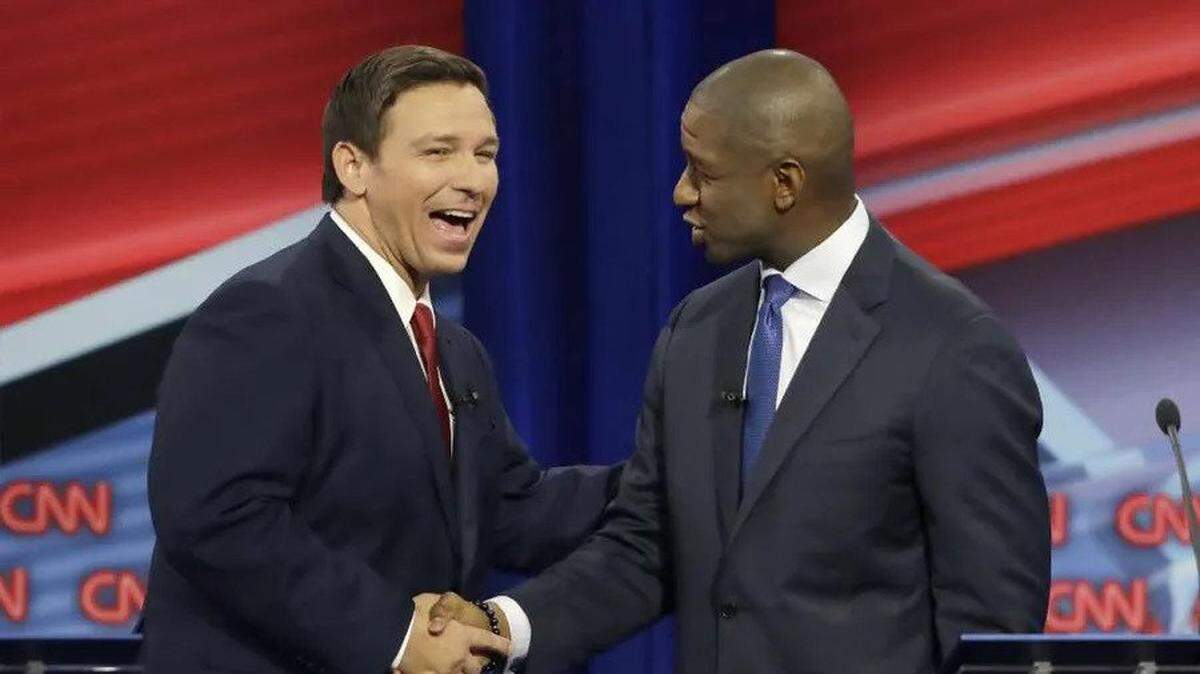
During the 2018 gubernatorial race, then-candidate Ron DeSantis told FOX News Floridians shouldn’t “monkey this up by trying to embrace a socialist agenda” and electing Black Democratic opponent Andrew Gillum. It’s hard to believe the Ivy League-educated DeSantis didn’t understand the racially charged context of his statement, but, faced with national backlash, he said at the time that his comment had “zero to do with race.”
Maybe that was a slip of the tongue for a politician then just getting used to national attention. After getting elected, DeSantis appeared to offer Black Floridians an olive branch by approving a long overdue posthumous pardon for the Groveland Four, Black men wrongly accused of raping a white woman in 1949.
If there was any effort on DeSantis’ part to quell fears that his governorship would be a continuation of Donald Trump’s white-resentment politics, that is no longer the case. Over the past year, DeSantis has, with seemingly no hesitation, used African Americans as scapegoats in his quest to become the next standard-bearer for Trumpism.
It’s not just the off-the-cuff remarks, though those have been plentiful. Most recently, he said Spotify’s Joe Rogan shouldn’t have apologized for using the N-word several times or allowing COVID-19 misinformation on his popular podcast (DeSantis’ spokeswoman later said he would not use the racial slur himself.) He accused Democrats of trying to “smear” him instead of condemning Nazi demonstrators in Orlando (How hard can that be, governor?)
Biased policies
For all the bigoted things Trump said and did in four years, he wasn’t as effective at putting his ideas into law with a divided Congress as DeSantis has been through his executive powers and a friendly Legislature. If DeSantis’ “monkey this up” comment was a dog whistle to white voters, his actions in office can be considered a blast from a bugle.
It started with the “anti-riot” law he pitched after Black Lives Matter protests in the summer of 2020, most of which were peaceful in Florida. (The law has been challenged in court on grounds it may violate the First Amendment.) Most recently, it has turned into a relentless campaign against “critical race theory.” DeSantis banned the theory, an academic area of study that looks at how racism is embedded in seemingly color-blind laws and institutions, from K-12 schools. Then he had the nerve to call the theory “state-sanctioned racism.” which, ironically, seems to be the very point of his policy moves. This year he’s asking lawmakers to prohibit classroom discussions about race that might make white people feel uncomfortable.
Stoking resentment
Critical race theory is the new code phrase to appeal to racial resentment — the equivalent of “forced busing” in the debate over school integration in the 1960s, University of Miami School of Law professor Donald Jones told the Herald Editorial Board. While DeSantis stokes racial fears, the Black Floridians he also represents are deprived of a public education that takes their life experiences into consideration.
“Divisions on race are dangerous,” said Jones, who specializes in anti-discrimination law. “DeSantis needs to call someone who really knows about critical race theory.”
But DeSantis’ disregard for his Black constituents often is displayed in more subtle ways.
There was his refusal to call an election in a timely manner to fill a majority-Black congressional seat in Broward and Palm Beach counties left vacant after Democrat Alcee Hastings’ death last year. It appears DeSantis’ true intent was to hurt Democrats, whose control of the U.S. House hangs by a thread. But the result was the disenfranchisement of Black voters who had to wait nine months for an election, a sharp contrast to the speed at which previous governors called elections to fill open Republican, majority-white seats.
And that wasn’t the only election he delayed.
Double standard
It was only after months of outcry and a lawsuit that DeSantis set the dates for another special election for three legislative seats vacated by Black Democratic state lawmakers who left office to run for Hastings’ seat. But he set the elections so far out — a Jan. 11 primary and a March 8 general election — that he left constituents in heavily-Black districts without representation in the 2022 legislative session that began in January. Only one of those seats was filled in the primary and in time for session. When a white Republican legislator announced his upcoming departure in 2019, DeSantis called a special election on the same day.
Not only was DeSantis’ motivation likely partisan, he had no problem shortchanging Black voters.
The governor has also sought to diminish long-term Black political representation in his attempt to meddle in the Legislature’s redrawing of congressional districts — an unprecedented move for a governor. He created a proposed redistricting map that would slash the number of majority-Black congressional districts from four to two, the Herald reported.
If Black voters were DeSantis’ electoral base, things would likely be different. Treating them as collateral damage will hardly hurt his reelection chances — a recent poll gave DeSantis a sizable advantage against his potential Democratic opponents.
DeSantis’ sights are set on becoming president, and if stoking racial divisions worked on the path to the White House in 2016, who’s to say it won’t work again?
In the meantime, it’s a shame that he seems to be enthusiastically courting white voters by telling Black Floridians that few aspects their lives truly matter to him at all.
BEHIND THE STORY
MOREWhat's an editorial?
Editorials are opinion pieces that reflect the views of the Miami Herald Editorial Board, a group of opinion journalists that operates separately from the Miami Herald newsroom. Miami Herald Editorial Board members are: opinion editor Amy Driscoll and editorial writers Isadora Rangel and Mary Anna Mancuso. Read more by clicking the arrow in the upper right.
What's the difference between an op-ed and a column?
How does the Miami Herald Editorial Board decide what to write about?
The Editorial Board, made up of experienced opinion journalists, primarily addresses local and state issues that affect South Florida residents. Each board member has an area of focus, such as education, COVID or local government policy. Board members meet daily and bring up an array of topics for discussion. Once a topic is fully discussed, board members will further report the issue, interviewing stakeholders and others involved and affected, so that the board can present the most informed opinion possible. We strive to provide our community with thought leadership that advocates for policies and priorities that strengthen our communities. Our editorials promote social justice, fairness in economic, educational and social opportunities and an end to systemic racism and inequality. The Editorial Board is separate from the reporters and editors of the Miami Herald newsroom.
How can I contribute to the Miami Herald Opinion section?
The Editorial Board accepts op-ed submissions of 650-700 words from community members who want to argue a specific viewpoint or idea that is relevant to our area. You can email an op-ed submission to oped@miamiherald.com. We also accept 150-word letters to the editor from readers who want to offer their points of view on current issues. For more information on how to submit a letter, go here.
This story was originally published February 20, 2022 at 6:00 AM.