
Expanding urban boundaries for 11,500 jobs? Miami-Dade is faced with a false choice | Editorial
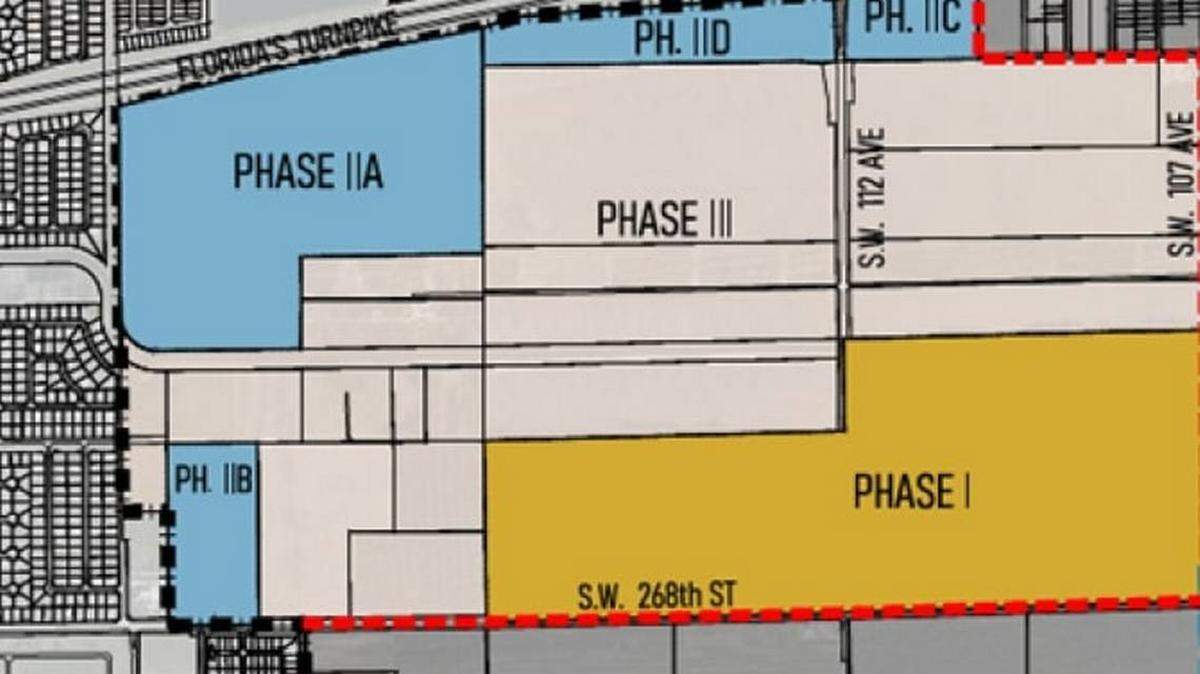
The solution to South Miami-Dade’s problems — from lack of jobs to the pollution of Biscayne Bay — can all be solved with one project.
That’s the alluring pitch for a proposition the County Commission will be tempted to approve next month when a group of developers asks them to make an 800-acre exception to the county’s rules designed to curb urban sprawl.
Our elected officials should look past the slick packaging and vote it down.
Relying on a haphazard proposal county planners said is filled with holes and doesn’t meet standards, developers so far have been successful in convincing two advisory boards to ignore staff recommendations and endorse the construction of an industrial complex on land that’s currently outside the county’s Urban Development Boundary.
That boundary, known as the UDB, is an invisible line drawn by the county to protect rural areas and the Everglades from urban encroachment. Building outside those boundaries should only happen as a last resort — and county staff have determined there is no need to do that now. There’s enough industrial land in the southern part of the county to last through 2040.
However, developers are trying to convince the County Commission there’s no other option but to move that line and allow almost 800 acres of farmland to become Miami-Dade’s largest industrial park — a 9-million-square-foot complex south of Florida ‘sTurnpike, near Southwest 286th Street. The complex, about three miles north of the Homestead Air Reserve Base, would accommodate a 150-room hotel and a distribution hub for Home Depot and other retailers.
On Wednesday, the Planning Advisory Board recommended, with a 8-2 vote, that the County Commission, which is expected to hear the proposal on Sept. 9, approve sending the project to review by the state, a necessary step before full approval.
Bay restoration
There are many problems with this proposal, but let’s start with the biggest one: That land is one of the parcels under consideration for a project — called the Biscayne Bay and Southeastern Everglades Ecosystem Restoration — to clean water that flows into Biscayne Bay, according to Laura Reynolds, president of the Hold the Line Coalition, which seeks to preserve the UDB.
The county has made restoring the Bay a priority, so it would be contradictory to turn the area into an industrial complex before knowing whether it will be needed for restoration. The county might also be risking another lawsuit from environmental groups. Those groups already have a pending challenge to a previous expansion of the urban boundaries to accommodate the western extension of 836/Dolphin Expressway over lands that are key to guaranteeing drinking water for Miami and the Keys.
Developers of the South Dade project have a team of consultants trying to convince the county that an industrial park will actually help Biscayne Bay. They estimate stormwater systems would reduce pollution that currently flows into canals, and eventually into the Bay, by 75% . But it’s hard to believe this will yield better results than efforts years in the making to restore the historical flow of water into the Bay.
Those consultants say they also have a plan to address the land’s location in a low-lying zone subject to hurricane flooding that will only get worse as sea levels rise. They would build the project at a higher elevation — 5 feet for some parts and 9 feet for others. But that means “neighboring properties could face flooding risks from the applicants’ elevation,” according to a county report. No wonder Mike Hall, one of those neighbors, attended a recent public meeting to express his displeasure with the half-baked proposal.
“We need that land to absorb all the water that comes down with the rain,” he told the South Bay Community Council, which endorsed the project on Monday, the Herald reported.
Jobs vs. the environment
The argument that South Dade needs jobs is undeniable and the developers’ projection of almost 11,500 permanent jobs would be a game changer — if they come true. We doubt they will.
That impressive figure is based on three phases of the project, according to the county, but the developers only control land for phases 1 and 2. The land for phase 3, which accounts for more than half of the 800 acres, has not been secured and the applicants have shown “no definitive development program” for it, the county report says. That means the 4,100 jobs attached to that third phase seem like pie in the sky.
And there’s another issue with the proposal. Under current law, UDB-expansion applications must be accompanied by a zoning application. That’s the county’s way of ensuring that “we know what it is we’re getting,” Assistant Director for Planning Jerry Bell told the Herald Editorial Board. But the developers want to circumvent that requirement. They are asking the County Commission to amend its code to exempt non-residential developments from the requirement to submit a concurrent zoning application for the entire area.
That would not only allow this expansion of the UDB to happen without a definite development plan, but also make it easier to build outside urban boundaries in the future.
The Miami-Dade County Commission should reject this false choice between economic development and preserving the environment. There are 430 acres of vacant industrial land in South Dade that are in parcels greater than 10 acres and don’t require the county to expand urban boundaries, according to county staff (developers dispute all of that land is available).
This proposal would surely benefit landowners, who would see their property values skyrocket, but its benefits seem too dubious to justify a potential interference with Biscayne Bay restoration.
BEHIND THE STORY
MOREWhat's an editorial?
Editorials are opinion pieces that reflect the views of the Miami Herald Editorial Board, a group of opinion journalists that operates separately from the Miami Herald newsroom. Miami Herald Editorial Board members are: opinion editor Amy Driscoll and editorial writers Isadora Rangel and Mary Anna Mancuso. Read more by clicking the arrow in the upper right.
What's the difference between an op-ed and a column?
How does the Miami Herald Editorial Board decide what to write about?
The Editorial Board, made up of experienced opinion journalists, primarily addresses local and state issues that affect South Florida residents. Each board member has an area of focus, such as education, COVID or local government policy. Board members meet daily and bring up an array of topics for discussion. Once a topic is fully discussed, board members will further report the issue, interviewing stakeholders and others involved and affected, so that the board can present the most informed opinion possible. We strive to provide our community with thought leadership that advocates for policies and priorities that strengthen our communities. Our editorials promote social justice, fairness in economic, educational and social opportunities and an end to systemic racism and inequality. The Editorial Board is separate from the reporters and editors of the Miami Herald newsroom.
How can I contribute to the Miami Herald Opinion section?
The Editorial Board accepts op-ed submissions of 650-700 words from community members who want to argue a specific viewpoint or idea that is relevant to our area. You can email an op-ed submission to oped@miamiherald.com. We also accept 150-word letters to the editor from readers who want to offer their points of view on current issues. For more information on how to submit a letter, go here.
This story was originally published August 27, 2021 at 11:42 AM.