
Miami-Dade could extend Urban Development Boundary for industrial park near Homestead
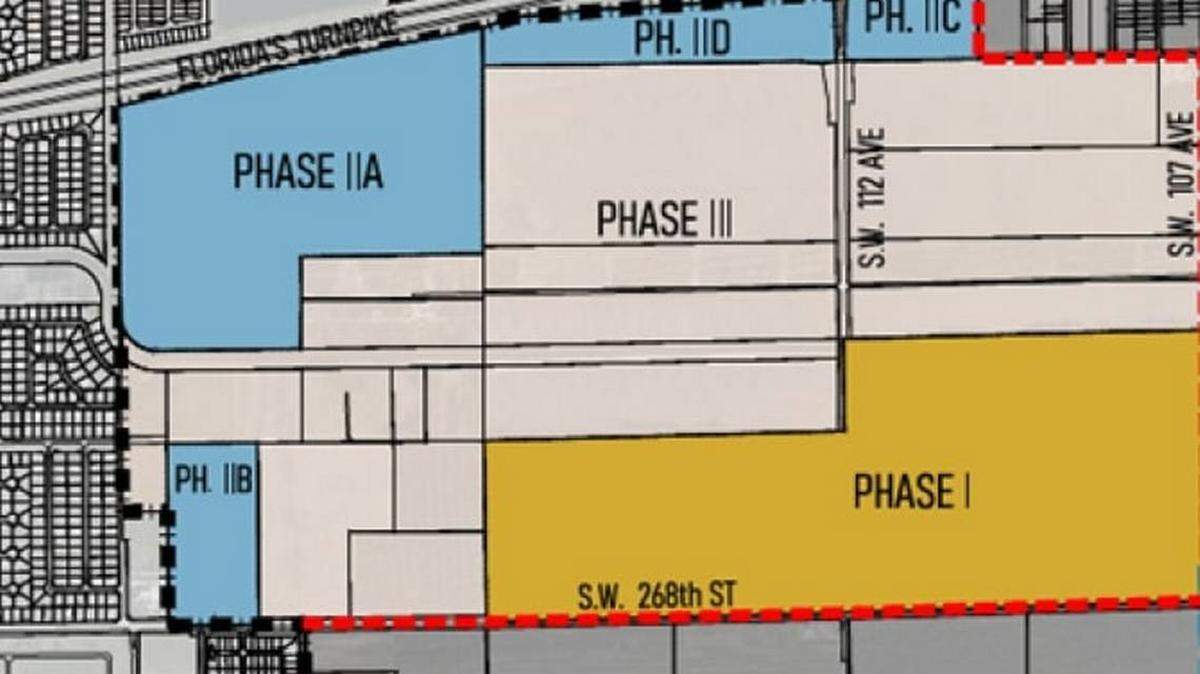
Developers scored another early win Wednesday in their push to build one of Miami-Dade County’s largest industrial parks on farmland in the Homestead area, a project that requires expanding the Urban Development Boundary.
Miami-Dade’s Planning Advisory Board recommended approving the project in an 8 to 2 vote after a hearing Wednesday morning, two days after a local land-use board also endorsed the proposed 9-million-square-foot complex about three miles north of the Homestead Air Reserve Base.
County planners predict the project would dramatically increase suburban sprawl instead of building new warehouses, data centers and other commercial space on land already available elsewhere in the county. They warned the project would bring a major new industrial hub to low-lying agricultural land subject to hurricane flooding that will only get worse as sea levels rise.
“We have some pretty significant threats. So one of the concerns here is how much longer are we as a community going to continue to develop these areas that are just going to be more vulnerable in the future?” Lee Hefty, director of the county’s environmental division, asked board members. “As opposed to trying to improve and harden our existing developed areas.”
Backers call the proposed South Dade Logistics and Technology District industrial park a way to give South Miami-Dade residents decent-paying jobs close to home, rather than the hour-plus commutes required now to get to employment centers around Miami and the Doral area.
“It’s impossible to continue to think we can continue to move everybody up north for those jobs,” said Carlos Huembes, a planning board member that voted for the project. “A good job close to your home is a quality-of-life issue.”
The South Bay Community Council, which makes recommendations on land issues in the Homestead area, endorsed the project in a Monday night vote.
County commissioners make the final decision, and are free to reject the recommendations from the two advisory boards that endorsed the project and from the administration of Mayor Daniella Levine Cava urging denial of the proposal.
A preliminary vote is expected Sept. 9. If the project advances, a final commission vote would come after a state review of the application.
The 800-acre project would target warehouse operations and distribution centers, plus data centers and other commercial uses. Representatives of developers Stephen Blumenthal and Jose Hevia said no residential would be allowed on the project.
The Urban Development Boundary, often called the “UDB,” represents a growth barrier separating land allowed for dense housing and commercial uses, including shopping centers and warehouse districts, and rural land reserved for farming and houses with significant land between them. It’s also considered a protection tool for the Everglades and the agriculture industry.
Miami-Dade’s growth rules call for the UDB to expand once the county runs out of land inside it for homes and commercial projects. The proposed project sits on land designated as an area slated for expansion of the UDB once the county is ready for more development sites.
While county planners say land inventory for single-family homes is running out within the development zone, they predict the southern part of Miami-Dade won’t need new acreage for commercial projects through 2040. Should the proposed project get built, planners say the region would have more than a 100-year supply of industrial land.
“I absolutely agree we need to bring jobs to South Dade,” said Lynette Cardoch, a planning-board member who voted against recommending the project. She pointed to existing job centers in the area to show an expanded development zone isn’t needed in South Miami-Dade, “as evidenced by Amazon, FedEx and UPS having found alternative sites within the UDB.”
While the developers control about half of the land, owners of more than 400 acres who aren’t part of the project would be brought into the urban development zone if commissioners approve the application.
County staff warned the proposal made by Blumenthal and Hevia about future land use wouldn’t apply to the bulk of the site, which is also what’s closest to existing roads and development. The planning board’s approval resolution included language saying Miami-Dade should impose the same rules on the entire site.
“That’s an issue with the application — [for] a large part of it we don’t know when or how it would be developed,” said Jerry Bell, Miami-Dade’s assistant director for planning.
This story was originally published August 25, 2021 at 7:24 PM.